What’s actually slowing this PC down?
Pick the symptom - the matching free tool is one click away.
Google’s greatest April Fools’ Day joke was not fake at all. On April 1, 2004, the company announced Gmail—a real email service offering 1 GB of storage, search, conversation threading, and spam filtering. At a time when that storage allowance seemed absurdly generous, many people assumed the announcement was a prank. That combination of impossible-sounding timing and genuinely useful technology makes Gmail Google’s most effective April Fools’ performance.
From there, Google built an unusually strong tradition of fake products, temporary games, spoof technology, and occasionally ill-advised features. This ranking weighs five things: conceptual originality, execution, audience participation, cultural afterlife, and harmlessness. Extra credit goes to jokes that transformed a real Google product in a way users could understand immediately. The order is editorial, not an official Google ranking.
1. Gmail launches on April 1, 2004
Gmail is the clear winner because it occupied the most entertaining space between a product launch and a practical joke. Google announced a real service on the date most associated with false announcements, then attached numbers and features that sounded too good to be true.
The headline was 1 GB of free storage—vastly more than many contemporary webmail services offered. Gmail also arrived with search, conversation threading, and spam filtering built into the experience. The announcement’s timing made the product seem like a stunt, but the service was real. Google later emphasized that Gmail genuinely launched on April 1, 2004, and that its unusually large storage allowance helped create the confusion. Google’s account of Gmail’s history provides the company’s own perspective.
Do these 3 things before closing this tab:
1Scan for outdated or missing drivers - takes under a minute2Repair Windows errors before they cause bigger problems3Fix the driver behind crashes, sound loss and screen glitches#1 Best Overall

- Compact Mouse: With a comfortable and contoured shape, this Logitech ambidextrous wireless mouse feels great in either right or left hand and is far superior to a touchpad
- Durable and Reliable: This USB wireless mouse features a line-by-line scroll wheel, up to 1 year of battery life (2) thanks to a smart sleep mode function, and comes with the included AA battery
- Universal Compatibility: Your Logitech mouse works with your Windows PC, Mac, or laptop, so no matter what type of computer you own today or buy tomorrow your mouse will be compatible
- Plug and Play Simplicity: Just plug in the tiny nano USB receiver and start working in seconds with a strong, reliable connection to your wireless computer mouse up to 33 feet / 10 m (5)
- Better than touchpad: Get more done by adding M185 to your laptop; according to a recent study, laptop users who chose this mouse over a touchpad were 50% more productive (3) and worked 30% faster (4)
That makes Gmail different from every other entry here. It was not a fictional product pretending to be real; it was a real product that sounded fictional. As a piece of April Fools’ misdirection, it was perfect. As a product launch, it changed what people expected from webmail.
Why it worked: the joke was inseparable from the innovation. Google did not need an elaborate fake demonstration. The date, the storage figure, and the company’s reputation for unconventional ideas did most of the work.
Important caveat: Gmail should not be described as a fake April Fools’ product. It was a genuine service launched on April 1, 2004.
2. Pac-Man in Google Maps, 2015
Google Maps became a playable Pac-Man board in one of the most intuitive digital pranks ever made. Instead of placing a game beside Maps, Google turned actual road networks into mazes and let users guide Pac-Man through recognizable streets.
The idea was immediately legible: open a map, see a familiar neighborhood transformed into a Pac-Man level, and play. No new fictional technology needed explaining, and the underlying map data gave every location a slightly different personality. A city street was no longer just a route; temporarily, it was part of an arcade game.
Google later reported that searches for PAC-Maps rose to roughly 2 million during the week, one of the few official indicators of the public response to a Google April Fools’ feature. The company also brought the idea back in 2017 as Ms. Pac-Maps, saying users could play along city streets worldwide until April 4. Those were temporary features, not permanent additions to Google Maps. Google’s retrospective on the Maps game discusses the response and the later return.
Why it ranks so highly: it made a familiar utility playful without making it confusing. Pac-Man in Maps was surprising, instantly understandable, visually distinctive, and easy to share.
3. Gmail Motion, 2011
Gmail Motion claimed that people could control email with body gestures captured by a webcam. A fictional “spatial tracking” system supposedly interpreted movements such as reaching, pointing, and gesturing as email commands.
Windows Errors? Fix Them Before They Spread
Repair common Windows errors and clear accumulated junk for a smoother, more stable PC - no reinstall needed.Free scan · no reinstallCrashes, No Sound, or Screen Glitches?
Random freezes, missing sound and display glitches usually trace back to one bad driver. Find and replace yours safely.Free scan · under a minuteThe premise was ridiculous, but the presentation was unusually disciplined. Google gave the concept the visual language of a serious product announcement: polished demonstrations, confident explanations, and a product page that treated gesture-controlled email as an engineering breakthrough rather than an absurd office hazard.
Rank #2
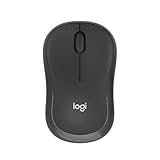
- Pair and Play: With fast, easy Bluetooth wireless technology, you’re connected in seconds to this quiet cordless mouse —no dongle or port required
- Less Noise, More Focus: Silent mouse with 90% reduced click sound and the same click feel, eliminating noise and distractions for you and others around you (1)
- Long-Lasting Battery Life: Up to 18-month battery life with an energy-efficient auto sleep feature, so you can go longer between battery changes (2)
- Comfortable, Travel-Friendly Design: Small enough to toss in a bag; this slim and ambidextrous portable compact mouse guides either your right or left hand into a natural position
- Long-Range: Reliable, long-range Bluetooth wireless mouse works up to 10m/33 feet away from your computer (3)
The joke extended beyond Gmail. Google’s April 1 presentation also imagined related products such as Docs Motion, creating the impression of a whole product strategy built around gesture recognition. The original announcement remains preserved in Google’s 2011 blog post.
Why it worked: Gmail Motion understood that a good technology parody should not merely announce an impossible idea. It should explain the idea with enough confidence and technical detail that the audience briefly wonders whether it might be real.
4. Pokémon Challenge in Google Maps, 2014
Google partnered with Pokémon and Nintendo for an interactive Maps experience that invited users to search the world for virtual Pokémon, catch them, and build a Pokédex. The announcement described the feature as training for aspiring Pokémon Masters and made Google Maps the setting for a global hunt.
Google announced Pokémon Challenge on March 31, 2014, for the April Fools’ period. The feature was specified for Google Maps on iPhone and Android. The original announcement makes clear that this was an interactive, time-limited experience—not a permanent Maps mode.
This ranks below Pac-Man because it was more of a branded interactive event than a pure Google hoax. The Pokémon partnership also made the premise less unbelievable. But the event had exceptional participation mechanics: explore, discover, catch, collect, and complete a Pokédex. It turned a map of the world into a treasure hunt with a goal that fans already understood.
Why it worked: the joke borrowed the core behavior of Pokémon—finding and collecting creatures—and attached it to a product designed for geographic exploration.
5. Google Nose, 2013
Google Nose presented a fictional searchable database of smells. According to the parody, Street View vehicles and Android devices had helped Google assemble an enormous catalog of scents, while technology such as “SMELLCD” and “high-resolution” odor control supposedly made smell-search possible.
Quick wins for a faster PC:
Scan for outdated or missing drivers - takes under a minuteDriver Scan →Clear out junk files and repair common Windows errorsFree Scan →The central gag needs almost no explanation: a screen cannot normally deliver a smell to your nose. Google nevertheless surrounded that simple impossibility with technical-sounding language, mock specifications, and the familiar confidence of a major product launch. The preserved Google Nose material shows how the joke parodied the company’s tendency to explain ambitious products through credible-sounding engineering language.
Why it ranks fifth: it is one of Google’s most recognizable fake products because the premise is universal and immediate. It loses points only because it was primarily a presentation gag rather than something users could meaningfully play with.
Rank #3

- 【Dual Mode Wireless Bluetooth Mouse】: Switch easily between two devices—connect one via Bluetooth (BT5.2/3.0) and the other using a 2.4G USB receiver. No drivers needed; just plug and play. Enjoy a reliable connection up to 33 feet. Note: You can't use both modes simultaneously; the USB receiver is stored in the mouse.
- 【Rechargeable Wireless Mouse】: Equipped with a 500mAh lithium-ion battery, it charges in 2 hours for over 7 days of use and 30 days on standby. The mouse sleeps after 5 minutes of inactivity to save power and can be woken with any click.
- 【Colorful LED Breathing Light】: Features 7 colorful LED lights that change randomly, adding a fun atmosphere to your workspace.
- 【Portable Mouse】Compact size (4.4 x 2.3 x 1.1 inches) makes it easy to fit in your laptop bag. Lightweight and ergonomic, it's perfect for travel. Contact us anytime for support.
- 【Wide Compatibility】: Works with laptops, PCs, tablets, and smartphones across various operating systems, including Android, Windows, and Mac. Ideal for home, office, and travel.
6. Google TiSP, 2007
Google TiSP—short for “Toilet Internet Service Provider”—proposed connecting a household’s toilet-based wireless router to fiber-optic infrastructure through municipal sewage lines.
The official Google Blog presented the idea in deliberately dense technical language and linked readers toward a supposed beta announcement. The humor came from the collision of two registers: infrastructure jargon and an unmistakably juvenile bathroom premise. Google treated sewage-based broadband as if it were a routine extension of home networking.
Google’s April 2007 blog archive preserves the original context. TiSP was a fictional product announcement, not a real broadband service or a permanent Google offering.
Why it ranks sixth: it is memorable and well executed, but the bathroom humor narrows its appeal. TiSP is more of a brilliantly detailed fake press release than a participatory experience.
7. Google Romance, 2006
Google Romance claimed to use personal-search algorithms to find a soulmate and arrange a sponsored “Contextual Date.” The parody extended Google’s search and advertising vocabulary into one of the most emotionally intimate areas of life.
Its best joke was not simply that an algorithm might select a romantic partner. It was the suggestion that contextual advertising could help Cupid’s arrow find its target. The idea of applying search-engine optimization, relevance scoring, and sponsored placement to romance neatly satirized the expansion of online personalization.
The original Google Romance post shows how the fictional service used advertising language to make the premise sound commercially plausible.
Why it ranks seventh: the concept is clever and culturally revealing, but it offered less direct participation than Google’s Maps experiments and less visual absurdity than Google Nose or Gmail Motion.
8. Google Maps as a recurring game platform
Google’s Maps pranks deserve recognition as a broader format, not just as isolated one-day jokes. The company repeatedly used the real-world map as a canvas for temporary games and hunts, including Pokémon Challenge, Pac-Man, Where’s Waldo?, and Snake.
The formula was unusually durable:
- Use a familiar interface. Users already understood how to navigate a map.
- Add a recognizable game or character. The premise required little instruction.
- Make the world itself the level. Real streets and landmarks supplied novelty.
- Keep the experience temporary. Limited availability created urgency without pretending the feature was permanent.
In 2018, Where’s Waldo? let users search for Waldo and his friends across locations through Google Maps on Android, iOS, and desktop, as well as through Google Assistant. Google’s announcement describes that rollout.
Free tools Windows power users keep installed
One-click scans. No signup required.
This recurring strategy ranks as a bridge rather than a single prank because its importance lies in the pattern. Maps was not merely a place where Google occasionally hid a game; it became Google’s most successful prank canvas.
Rank #4

- Your hand can relax in comfort hour after hour with this ergonomically designed mouse. Its contoured shape with soft rubber grips, gently curved sides and broad palm area give you the support you need for effortless control all day long.
- You’ve got the control to do more, faster. Flipping through photo albums and Web pages is a breeze, especially for right-handers—with three standard buttons plus Back/Forward buttons that you can also program to switch applications, go full screen and more. And side-to-side scrolling plus zoom gives you the power to scroll horizontally and vertically through your music library, maps and Facebook feeds, and zoom in and out of photos and budget spreadsheets with a click.* * Requires Logitech SetPoint software (Windows) or Logitech Control Center software (Mac OS X)
- Two years of battery life practically eliminates the need to replace batteries. ** The On/Off switch helps conserve power, smart sleep mode extends battery life and an indicator light eliminates surprises. ** Battery life may vary based on user and computing conditions.
- The tiny Logitech Unifying receiver stays in your laptop. There’s no need to unplug it when you move around, so there’s less worry of it being lost. And you can easily add compatible wireless mice and keyboards to the same wireless receiver.
9. Google Maps Snake, 2019
Google’s 2019 Maps game reworked the classic Snake formula into a sightseeing trip. A train picked up passengers and visited landmarks in cities including Cairo, London, San Francisco, São Paulo, Sydney, and Tokyo.
The game rolled out on Android and iOS. Google also offered a standalone site intended to preserve access after the in-app period ended, which gave the experience a longer tail than a feature that disappeared entirely after the April Fools’ window. Google’s announcement of Snake in Maps explains the cities and the rollout.
Why it ranks below Pac-Man and Pokémon: it was polished, accessible, and nostalgic, but by 2019 Google had already established Maps as a game platform. Snake therefore felt like a strong continuation of a successful format rather than a startling invention.
It was also a temporary experience. Readers should not assume that the original in-app game remains available simply because Google provided a separate site for longer play at launch.
10. Gmail Mic Drop, 2016
Gmail Mic Drop is the cautionary entry on this list. Google added a “Send + Mic Drop” button that appended a Minion image to a message and suppressed subsequent replies. The joke was clear: end an argument, deliver the final word, and symbolically drop the microphone.
The problem was placement. Email is a consequential workflow, and a playful button next to an ordinary send action can create real damage. Users reported accidental clicks, workplace and personal disruption, and a bug that could cause a normal send to trigger the feature in a particular sequence. Google quickly disabled Mic Drop, acknowledged that the joke had caused harm, and apologized in its update about the feature.
Why it ranks last among these notable entries: the joke itself was understandable, but it failed the harmlessness test. A prank should be easy to recognize, easy to undo, and difficult to trigger accidentally. Mic Drop was none of those things for every user and every context.
Recommended Free Tools
Best of the rest
Several other Google jokes helped establish the company’s early reputation for elaborate April Fools’ announcements:
- MentalPlex imagined that Google could read a user’s mind to determine which search result they wanted, turning search intent into a literal psychic exercise.
- PigeonRank spoofed the technical explanation behind search ranking by claiming that trained pigeons could sort web pages more effectively than computers.
- Google Gulp presented a fictional drink that supposedly improved intelligence and helped users make better use of their brains.
- Google Romance, included in the main ranking, applied search and advertising logic to dating.
- Google TiSP, also ranked above, combined mock network engineering with toilet humor.
- Google Nose, likewise ranked above, made an impossible sensory database sound like a credible Google research project.
- Where’s Waldo? in Maps and Snake in Maps showed how the company’s later jokes shifted from fake product pages toward playable, shareable experiences.
The early fake products were often one-way performances: Google announced a technology and invited the audience to admire the parody. The Maps experiments were more participatory. That change helps explain why the later games remain especially memorable even when the underlying mechanics were simple.
Best Value

- 【Plug and Play for Home/Office/School】The wireless computer mouse features 2.4GHz connectivity, delivering a stable, interference-free connection up to 32ft. Designed for 𝐦𝐞𝐝𝐢𝐮𝐦 𝐭𝐨 𝐥𝐚𝐫𝐠𝐞 𝐬𝐢𝐳𝐞𝐝 𝐡𝐚𝐧𝐝𝐬, it ensures comfortable use all day. Simply plug in the USB-A receiver for instant pairing—no drivers needed. 📌📌 If the mouse isn’t suitable, place the USB receiver in the battery compartment and return both.
- 【3 Levels Adjustable DPI】This travel USB mouse offers 3 adjustable DPI settings (800, 1200, 1600), allowing you to customize sensitivity for precise design work. Effortlessly switch to match your task and elevate your productivity. 📌 Please remove the film at the bottom of the mouse before use.
- 【Effortless Browsing】Equipped with forward and backward buttons, this computer mice streamlines your workflow, making it easy to navigate through web pages and files with a simple click. 📌Side button does not work on Mac.
- 【Visible Indicator Light】 The pc mouse features a visual indicator for DPI levels and low battery alerts. The red light flashes once for 800 DPI, twice for 1200 DPI, and three times for 1600 DPI. When the battery level is below 10%, the light flashes red until the mouse is completely out of power.
- 【Click to Wake】With smart sleep mode, it saves power by standby after 10 inactive minutes, just 2-3 clicks to wake. This efficient design delivers 3x longer battery life than motion-wake mice. Engineered for durability, its buttons and scroll wheel are tested for 10 million clicks, ensuring long-term reliability and consistent performance.
Why Google’s April Fools’ tradition worked so well
It made the unbelievable sound operational
Google’s strongest fictional products did not stop at a funny name. They included interfaces, technical terminology, mock documentation, rollout details, and product benefits. Gmail Motion, Google Nose, and TiSP all understood that a straight-faced explanation makes an impossible premise funnier.
It used products people already knew
The most successful jokes were attached to familiar behaviors: sending email, searching, navigating, and looking at maps. That reduced the learning curve. A user did not need to understand a new fictional platform to appreciate Pac-Man streets or gesture-controlled Gmail.
The Tool Desk
Outbyte PC Repair FREERepair Windows errors before they cause bigger problemsFix Now →Outbyte Driver Updater FREEFix the driver behind crashes, sound loss and screen glitchesFind Drivers →It invited participation without demanding commitment
Pokémon Challenge and the Maps games made the audience part of the joke. People could search, play, collect, and share. The experience worked in seconds, which is crucial for a prank intended to spread widely.
It knew that harmlessness is part of execution
Gmail Mic Drop demonstrates the boundary. A joke can be clever and still be badly designed if it interferes with work, communication, or data. The best pranks create surprise without creating costly cleanup.
A short timeline of the tradition
| Year | Prank or feature | Format |
|---|---|---|
| 2004 | Gmail launches | Real product announced on April 1 |
| 2006 | Google Romance | Fictional dating and advertising satire |
| 2007 | Google TiSP | Mock technical product announcement |
| 2011 | Gmail Motion | Mock product demonstration |
| 2013 | Google Nose | Fictional search technology |
| 2014 | Pokémon Challenge | Temporary interactive Maps experience |
| 2015 | Pac-Man in Maps | Temporary playable Maps feature |
| 2016 | Gmail Mic Drop | Temporary Gmail feature, quickly disabled |
| 2018 | Where’s Waldo? in Maps | Temporary Maps search game |
| 2019 | Snake in Maps | Temporary Maps game with a separate site |
Google’s strongest recurring period broadly ran from the early 2000s through 2019. The company paused its April Fools’ tradition in 2020 during the COVID-19 crisis and again in 2021. The available evidence here does not establish a complete policy for every subsequent year, so it would be too broad to claim that Google has never made another April Fools’ joke after 2021. The chronology collected in the Wikipedia list records the broader history, while 9to5Google’s 2021 report covers the pause at that time.
If you want to recreate the spirit of these jokes
The safest lesson from Google’s history is not to imitate Gmail Mic Drop. Recreate the playful premise, not the risk. A good modern prank should be reversible, clearly labeled when necessary, consent-based, and kept away from email, payments, work systems, medical information, public safety, and anything that could embarrass or punish another person.
What’s actually slowing this PC down?
Pick the symptom - the matching free tool is one click away.
Frequently Asked Questions
Was Gmail actually an April Fools’ joke?
No. Gmail was a real Google service that launched on April 1, 2004. The unusually large 1 GB storage allowance and the launch date made many people think the announcement was fictional.
Which Google April Fools’ prank was the most interactive?
Pac-Man in Google Maps is the strongest candidate. It turned real streets into playable mazes. Pokémon Challenge, Where’s Waldo?, and Snake also transformed Maps into temporary games or hunts.
Are Google Maps Pac-Man and Snake still available?
They were announced as temporary experiences. The cited announcements do not establish that the original in-app versions remain available today, so they should be treated as historical features rather than current Google Maps tools.
Why was Gmail Mic Drop controversial?
The feature placed a joke action close to a consequential email workflow. Users reported accidental use and disruption, and Google disabled it quickly, acknowledged the harm, and apologized.
Did Google stop making April Fools’ jokes?
The supplied evidence confirms a pause in 2020 and another pause in 2021. It does not establish Google’s complete policy for every year after that, so a categorical claim about all later years would require newer verification.
The Bottom Line
Gmail wins because it made a real innovation look like a hoax. Pac-Man in Maps is the best pure prank: instantly understandable, genuinely interactive, and built into a product people already used. The larger lesson is that Google’s best jokes respected the audience’s time and agency—while Gmail Mic Drop showed how quickly a clever gag can become harmful when it interferes with an important workflow.
Quick Recap
Product prices and availability are accurate as of the date/time indicated and are subject to change. Any price and availability information displayed on Amazon at the time of purchase will apply.
Recommended Free Tools