Genius musicians are making songs that play when children yell “poop” at Alexa because voice assistants can turn a spoken potty word into a music search. Reported examples include “Poopy Stupid Butt” and “The Poop Song,” while Amazon Music’s unusually strong reported share suggests an opportunity—but does not prove Amazon designed or caused the trend.
The 2022 story sits at the intersection of children’s humor, searchable song metadata, voice recognition, and streaming economics. Children and parents encountered the songs; artists reported unusual Amazon Music performance; and Amazon did not publicly confirm the proposed Alexa-to-royalty explanation.
Key takeaways
- Children discovered that requests such as “Alexa, play poop” could lead a voice assistant connected to a music service to songs whose titles contained words such as “poop” or “poopy diaper.”
- Reported examples include Dandyland’s “Poopy Stupid Butt,” Matt Farley’s “The Poop Song,” and tracks by The Toilet Bowl Cleaners and The Odd Man Who Sings About Poop, Puke and Pee.
- Dan Helpish and Kristen Muir’s “Poopy Stupid Butt” was reported in 2022 coverage as having approximately 10 million streams and approximately $10,000 in total income, but those figures were not independently audited Amazon statements.
- A 2022 NPR report attributed an estimate of approximately 90% of some novelty artists’ plays to Amazon Music, but that figure does not prove that the plays came from Alexa or from children.
- The strongest explanation is metadata-driven voice search: a child says a word, Alexa resolves the word as a music query, and a song with that word in its title becomes a plausible result.
- Amazon has child profiles, content filters, activity tools, and skill controls through Amazon Kids and Parent Dashboard, although those controls do not prove that a current Echo device will reproduce the reported 2022 results.
Why does Alexa play poop songs?
Alexa may play poop songs because a spoken request such as “Alexa, play poop” can be treated as a search for music containing the word “poop,” rather than as a request for one specific famous song. If a streaming catalog contains novelty tracks with that word in their titles, the voice assistant and music service have several possible matches to resolve.
The mechanism was never publicly confirmed by Amazon in the reporting. Families and reporters observed children reaching potty-themed songs through voice requests, while several artists said Amazon Music represented an unusually large share of their listening. That combination makes voice search a plausible discovery route, not a verified explanation of every play.
#1 Best Overall

- Powered by a 47% faster processor, the next-gen dual-tweeter acoustic architecture produces detailed stereo separation while a 25% larger midwoofer deepens the bass.¹
- Place this speaker anywhere and everywhere you want to listen. The compact design fits beautifully on your bookshelf, kitchen counter, desk, or nightstand.
- Stream from all your favorite services over WiFi. Pair a Bluetooth device with the press of a button. Connect a turntable or other audio source using an auxiliary cable and the Sonos Line-In Adapter.²
- Go from unboxing to unbelievable sound in just a few minutes. Simply plug in the power cable, connect your phone or tablet to WiFi, and open the Sonos app.
- With a tap in the Sonos app, Trueplay tuning technology analyzes the unique acoustics of your space and optimizes the speaker’s EQ. So all your content sounds just the way it should.
The distinction matters. The available evidence does not establish what percentage of plays came from Alexa rather than a phone search, a playlist, an autoplay queue, or another device. It also does not establish that Amazon designed its ranking or voice-resolution systems to reward potty words.
What song plays when kids say “poop” to Alexa?
There was no single guaranteed “poop song.” Reported results varied according to the exact request, the music service connected to the device, catalog availability, voice recognition, and the way the platform resolved an ambiguous query.
| Artist or project | Reported example | Why the title is voice-searchable | Evidence and limitation |
|---|---|---|---|
| Dandyland | “Poopy Stupid Butt” | Contains several simple words children commonly say together. | Dan Helpish and Kristen Muir associated the song with a children’s songwriting exercise; the reported stream and income figures were not independently audited. |
| Matt Farley | “The Poop Song” | Matches the central spoken search word directly. | Farley described the track and his searchable-song strategy in NPR reporting. |
| The Toilet Bowl Cleaners | “Poop Poop Poop Poop Song” | Repeats the likely query in the title. | The project is part of Farley’s large catalog of phrase-specific novelty music. |
| The Odd Man Who Sings About Poop, Puke and Pee | “Poop Into A Wormhole” | Uses “poop” as an unmistakable title keyword. | The title is discoverable by text or voice search, but a title match does not prove how any particular listener found it. |
Other reported examples included “Poopy Diaper” and “Poop Into A Wormhole.” Amazon Music’s catalog has also included tracks with poop-related titles, such as “The Alexandra Poop Song” on Amazon Music. Catalog pages and search results can change, so a current device should not be expected to return the same track as a 2022 report.
How did musicians turn potty words into searchable songs?
Matt Farley’s approach was to write songs around names, phrases, and subjects that people might search. A song title can therefore function like a compact search label: when the spoken query and the title share an unusual word, the track has a straightforward route into the results.
The Tool Desk
Outbyte Driver Updater FREEScan for outdated or missing drivers - takes under a minuteDriver Scan →Outbyte PC Repair FREERepair Windows errors before they cause bigger problemsFix Now →Farley explained the deliberately minimal nature of one track in the NPR transcript: The Poop Song was literally me on the piano singing the word poop for a minute-and-a-half.
The song did not need conventional pop structure to serve its purpose. Its subject and title supplied the memorable match.
Dan Helpish’s Dandyland track followed a different path. “Poopy Stupid Butt” was described as emerging from a songwriting exercise with children at a music school run by Helpish and Kristen Muir. A joke suitable for a classroom exercise became a title that could also be recognized by a voice search system.
Rank #2

- [AI Smart Speaker] You can use tozo pm1 speaker to AI Chat by connect with TOZO APP, you can literally Talk to it like a real person, rather than just typing and reading on a screen. It’s perfect for hands-free assistance, learning, and entertainment.
- [Intelligent Meeting Assistant] Recording + real-time transcription: one-click recording, stopping as you go, AI real-time conversion of voice messages into text recordings, and automatically analyzing the recording/text content, intelligently refining the key points, action items, and conclusions, and also translating into multiple languages with one click.
- [Excellent Sound Quality] Experience studio-grade clarity with our precision-engineered 28mm dynamic driver. Delivering 30% louder output and deeper bass resonance, it captures every nuance—from crisp highs to rich mid-ranges, ensuring vibrant, distortion-free sound whether you’re streaming music, or voice call.
- [Up to 20H Playtime] Bluetooth speaker has a built-in robust rechargeable battery. Up to 20 hours playtime, ensuring continuous, uninterrupted playback, whether you use the speaker for lectures, work conversations, or listening to music while running outdoors, etc.
- [Unleash Your Hands] Clip-On Convenience make it secure the rugged built-in clip to jackets, backpacks, or belts, room-filling music or take calls hands-free, perfect for hiking, cycling, or busy workdays.
Farley summarized the broad appeal in another statement carried by NPR: Everyone loves poop, whether they admit it or not.
The joke is culturally familiar, but familiarity alone does not create a hit. The unusual business opportunity came from combining a child-friendly taboo word, an easily spoken phrase, and distribution through streaming catalogs.
How much money did the poop songs make?
According to 2022 reporting, Helpish and Muir’s “Poopy Stupid Butt” had approximately 10 million streams and generated approximately $10,000 in total income. The figures were reported artist or reporter figures rather than an independently audited Amazon statement, and they should not be treated as a current royalty rate.
Recommended Free Tools
The reported economics are more useful as a case study than as a promise. Streaming income depends on the service, territory, subscription type, rights ownership, distributor deductions, reporting period, and whether a play qualifies for payment. The available sources do not establish an exact royalty per stream for these tracks.
According to Katie Notopoulos’s reporting as described in a 2022 NPR report about children yelling “Alexa, play poop”, approximately 90% of plays for some novelty-song artists came from Amazon Music. That is a reported estimate concerning some artists, not a universal figure for all poop-themed songs, all Alexa listening, or all music streamed through Amazon.
Amazon Music is the relevant distribution environment in the story, but distribution is not attribution. A play registered by Amazon Music does not, by itself, reveal whether the listener spoke to Alexa, typed a search, used an app, followed a playlist, or received an autoplay recommendation.
What is known, inferred, and still unproven?
| Question | What the reporting supports | What it does not prove |
|---|---|---|
| Did children reach these songs through voice requests? | Families and parents encountered children using potty-themed requests, and the resulting songs were reported by journalists. | That every play came from a child speaking to Alexa. |
| Did the titles help discovery? | Each example contains the same or a closely related word as the spoken request. | That title matching was the only ranking or selection factor. |
| Was Amazon Music unusually important? | Artists and reporting described a strong Amazon Music share, including an approximately 90% estimate for some novelty artists. | That Alexa caused that share or that Amazon intentionally promoted the songs. |
| Did Amazon confirm the theory? | Amazon Music was part of the reported listening pathway. | Amazon publicly confirming an Alexa-to-royalty causal mechanism. |
| Would the same commands work now? | The commands and results were reported in 2022. | Exact current stream counts or the same results on a device in August 2026. |
The most defensible interpretation is that voice interfaces made ordinary words unusually powerful search inputs. The artists supplied catalog entries whose titles matched those inputs, and some artists reported unexpectedly strong performance on Amazon Music. The Alexa-to-royalty link remains a correlation supported by observation and testimony, not a platform-confirmed fact.
Rank #3
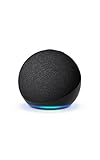
- Your favorite music and content – Play music, audiobooks, and podcasts from Amazon Music, Apple Music, Spotify and others or via Bluetooth throughout your home.
- Alexa is happy to help – Ask Alexa for weather updates and to set hands-free timers, get answers to your questions and even hear jokes. Need a few extra minutes in the morning? Just tap your Echo Dot to snooze your alarm.
- Keep your home comfortable – Control compatible smart home devices with your voice and routines triggered by built-in motion or indoor temperature sensors. Create routines to automatically turn on lights when you walk into a room, or start a fan if the inside temperature goes above your comfort zone.
- Do more with device pairing – Fill your home with music using compatible Echo devices in different rooms, or create a home theatre system with Fire TV.
- Say goodbye to drop-offs and buffering - With eero Built-in, Echo Dot doubles as a mesh wifi extender, adding up to 1,000 sq. ft. of wifi coverage to your existing eero network.
Can parents stop Alexa from playing explicit or silly songs?
Parents can use Amazon’s child-account and device-management tools to limit and monitor children’s Alexa experiences, but the exact controls depend on the device, account configuration, location, and current Amazon interface.
Amazon’s Amazon Kids documentation describes child profiles, age-appropriate content filters, activity review through Parent Dashboard, and Amazon Kids on compatible Alexa devices. Amazon’s documentation also identifies Echo Dot among devices supported by child-oriented Alexa features and describes an Echo Dot Kids Edition that combined an Echo Dot with FreeTime features and parental controls.
For skill access, Amazon says parents can add or remove skills for a child’s Amazon Kids-enabled Echo device through Parent Dashboard and Amazon Kids skill-access controls. Those settings concern skills and child access; they should not be confused with a guarantee that every music-catalog result can be blocked by title or keyword.
- Open the parent-management area associated with the child’s Amazon Kids profile.
- Review the child’s age and content settings rather than assuming the default profile is appropriate.
- Check activity history for unexpected music or skill use.
- Remove skills the child should not access, using the current Parent Dashboard controls.
- Review the connected music service and device settings if a spoken request produces unwanted results.
Amazon’s child-directed-skill policy adds requirements for experiences used by children under 13. The policy states that child-directed skills cannot sell goods or advertise external content within the skill. That rule is relevant to Alexa skill developers, but it does not mean that music available through a separate streaming catalog is automatically child-filtered or unavailable.
Free tools Windows power users keep installed
One-click scans. No signup required.
What does this reveal about voice search and streaming?
The story is a small but revealing example of search-engine optimization escaping the text box. A child does not need to know an artist’s name, genre, or album. A child only needs to say a familiar word; the platform then maps that sound to catalog metadata.
That creates several forces at once:
- Voice-search discoverability: Simple words are easy for children to pronounce and easy for a system to compare with song titles.
- Metadata strategy: A title containing the likely spoken query can be more discoverable than a clever title that hides the subject.
- Platform pathway: The same track can be reached through Amazon Music, Spotify, a direct app search, a playlist, or a voice-assistant resolution, and those pathways are not interchangeable evidence.
- Audience intent: Children may be seeking a joke rather than a sustained interest in an artist, while adults may listen because the novelty is amusing.
- Evidence quality: A parent’s observation, an artist’s statement, a reporter’s estimate, and a platform-confirmed analytics report answer different questions.
- Parent control: A household can manage profiles, filters, activity, and skills, but platform controls change and may not operate at the level of an individual song title.
Amazon’s official Alexa documentation for kid skills shows that Amazon treats children’s voice experiences as a distinct design and policy area. The existence of those tools explains why child-directed voice interaction matters, but it does not validate the specific 2022 theory about novelty-song royalties.
Rank #4
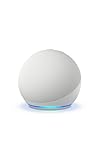
- Your favorite music and content – Play music, audiobooks, and podcasts from Amazon Music, Apple Music, Spotify and others or via Bluetooth throughout your home.
- Alexa is happy to help – Ask Alexa for weather updates and to set hands-free timers, get answers to your questions and even hear jokes. Need a few extra minutes in the morning? Just tap your Echo Dot to snooze your alarm.
- Keep your home comfortable – Control compatible smart home devices with your voice and routines triggered by built-in motion or indoor temperature sensors. Create routines to automatically turn on lights when you walk into a room, or start a fan if the inside temperature goes above your comfort zone.
- Do more with device pairing – Fill your home with music using compatible Echo devices in different rooms, or create a home theatre system with Fire TV.
- Say goodbye to drop-offs and buffering - With eero Built-in, Echo Dot doubles as a mesh wifi extender, adding up to 1,000 sq. ft. of wifi coverage to your existing eero network.
Why the story matters beyond poop jokes
Novelty music usually has difficulty competing for attention with established artists. Voice search changes the entry point. A track can become relevant because its title is a direct answer to a spoken request, even when the listener has no prior relationship with the musician.
That does not make metadata a magic formula. A catalog still needs to be available, a device must correctly hear the request, the music service must resolve the query, and the resulting play must be counted under the relevant rights arrangement. The reported songs illustrate an accidental alignment of language, technology, children’s humor, and streaming distribution.
Quick wins for a faster PC:
Fix the driver behind crashes, sound loss and screen glitchesFind Drivers →Clear out junk files and repair common Windows errorsFree Scan →The central lesson is therefore narrower and more interesting than “Alexa likes poop.” Voice assistants make the words in a catalog searchable by speech. Musicians who create titles around predictable spoken phrases can sometimes become discoverable in surprising contexts. The reported financial outcome suggests that even joke listening can accumulate, while the missing platform confirmation limits how confidently anyone can describe the cause.
Frequently Asked Questions
Why does Alexa play poop songs?
“Alexa, play poop” was reported to produce potty-themed novelty songs when the assistant and connected music service resolved the spoken word as a music search. The result was not guaranteed: the track could vary with the exact request, device, service, catalog, and current voice-resolution system.
What song plays when kids say poop to Alexa?
There was no single guaranteed song. Reported examples included Dandyland’s “Poopy Stupid Butt,” Matt Farley’s “The Poop Song,” “Poopy Diaper,” “Poop Poop Poop Poop Song,” and “Poop Into A Wormhole.” The same results should not be assumed to work on a current device.
Can I stop Alexa from playing explicit or silly songs for my kids?
Parents can use Amazon Kids child profiles, age-appropriate content filters, Parent Dashboard activity tools, and skill-access controls on compatible Alexa devices. Amazon’s current interface and the available controls can vary by device, account, and region.
Do these 3 things before closing this tab:
1Clear out junk files and repair common Windows errors2Fix the driver behind crashes, sound loss and screen glitches3Repair Windows errors before they cause bigger problemsHow do musicians make money from poop songs?
The reporting supports an unexpected Amazon Music audience for some novelty-song artists, including an estimate that approximately 90% of some artists’ plays came from Amazon Music. The available evidence does not establish an exact royalty rate, the share caused by Alexa, or a platform-confirmed payout mechanism.
The Bottom Line
Bottom line: Children’s requests such as “Alexa, play poop” reportedly led to novelty songs whose titles matched the spoken words, giving artists including Dandyland and Matt Farley an unexpected discovery route. The songs’ Amazon Music performance was reported as unusually strong, but Amazon never publicly verified that Alexa caused the streams or that the system was designed to reward potty-word titles. Parents can use Amazon Kids profiles, filters, activity tools, and skill controls, although current results and interfaces may differ from the 2022 reporting.
Quick Recap
Product prices and availability are accurate as of the date/time indicated and are subject to change. Any price and availability information displayed on Amazon at the time of purchase will apply.