Do these 3 things before closing this tab:
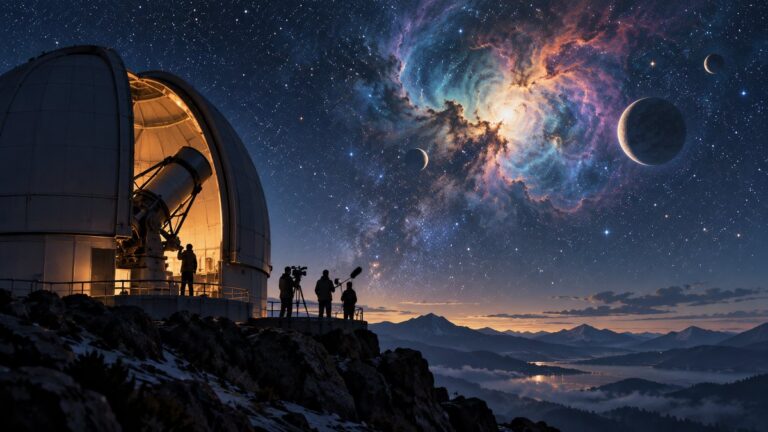
1Clear out junk files and repair common Windows errors2Fix the driver behind crashes, sound loss and screen glitches3Repair Windows errors before they cause bigger problemsThe December 2025 full Moon occurred on Thursday, December 4, 2025, at 23:14 UTC. That was 6:14 p.m. EST, 5:14 p.m. CST, 4:14 p.m. MST, and 3:14 p.m. PST. The event has now passed, but the timing explains what observers saw: the Moon rose locally around sunset, appeared essentially full on December 4 and 5, and was the final entry in 2025’s run of three consecutive full supermoons.
It was commonly called the Cold Moon, a traditional December name rather than an official astronomical classification.
The exact moment the Moon became full
Full Moon: Thursday, December 4, 2025
Exact phase: 23:14 UTC
- 6:14 p.m. Eastern Standard Time
- 5:14 p.m. Central Standard Time
- 4:14 p.m. Mountain Standard Time
- 3:14 p.m. Pacific Standard Time
That timestamp was the instant at which the Moon reached the full phase. It was not a nationwide moonrise time. Full phase is a single astronomical event expressed in a common reference time, while moonrise is a local horizon event that varies with latitude, longitude, elevation, local time zone, and obstructions such as trees or buildings.
Because the Moon changes slowly in appearance around full phase, observers did not need to be outside at precisely 23:14 UTC. To the unaided eye, it looked essentially full during the surrounding nights, including Friday, December 5.
Recommended Free Tools
#1 Best Overall

- Telescope Kit for Astronomy Explorer: With this real refractor telescope for adults and kids beginners, you can observe the Moon, use seven-themed stickers to design your unique telescope, and learn moon fun facts with included moon learning booklet
- Moon Learning Booklet for Hands-On Discovery: Turn every Moon-viewing night into a simple learning activity. Kids can learn how the Moon formed, why its shape changes, what’s on the lunar surface, and record discoveries the Moon Observation Log
- Seven-themed Sticker Packs for Year-Round Creativity: Make the telescope feel new again for every season. You can personalize your own telescope with astronomy, Alphabet and planets, Christmas, Easter, Halloween and Thanksgiving themed stickers
- 80mm Aperture & 20X-150X High Powered Magnification: The 80mm aperture gathers more light for clear views of the Moon, distant landscapes and nature. The 500mm focal length offers a practical balance between magnification for first-time beginners
- Easy First Setup Telescope Kit with Backpack: The telescope kit is easy to setup. Includes telescope tube, 25mm & 10mm Eyepieces, Barlow Lens, Finderscope, AZ tripod, Phone Adapter, Backpack, Moon booklet, Sticker Packs and Telescope Guide Manual
When did the December 2025 full Moon rise?
The most useful general instruction was: look toward the eastern horizon around local moonrise on Thursday, December 4, 2025. In many places, the Moon appeared near sunset, creating the classic full-Moon rise view against a bright or fading sky.
There was no single moonrise time for the United States. As a worked example, the U.S. Naval Observatory calculated moonrise in New York City at approximately 3:54 p.m. EST on December 4, with sunset at about 4:28 p.m. EST. The Moon was therefore already above the eastern horizon as twilight began there.
The situation differed farther west. The exact full phase occurred at 3:14 p.m. Pacific time, before sunset in much of the western United States. The Moon still appeared full that evening, but its exact phase did not necessarily occur after local darkness. Anyone who missed the December 4 rise had another excellent opportunity on December 5, when the nearly full Moon rose later in the day and could be seen after dark in many locations.
For an exact time, a reader must enter their city or coordinates into a reputable moonrise calculator. Even nearby communities can have noticeably different times when hills, coastlines, or a low horizon are involved.
Rank #2

- Superior Optics: The 90mm aperture and 800mm focal length (f/8.89) telescope for adults provides clear, bright views. Fully multi-coated lenses with high-light transmission create stunning images, perfect for exploring stars, the moon, and beyond
- Optimum Magnification (32X-240X): The refractor telescope comes with two replaceable eyepieces (10mm and 25mm) and a 3X Barlow lens. The 3X Barlow lens triples the magnification of each eyepiece. With 5x24 finder scope makes locating objects easy
- Adjustable Tripod: The astronomical telescope includes a sturdy stainless steel tripod adjustable from 28.7 to 46.4 inches, suitable for users of different heights. Comes with an accessory tray for eyepieces and a carry bag for easy travel and storage
- Phone Adapter & Moon Filter: Includes a phone adapter for capturing and sharing photos with your smartphone – great for family fun or travel. The moon filter reduces glare and reveals more lunar detail for clearer, more comfortable moon observation
- Satisfaction: HUGERSTAR telescope offers quick, no-tool assembly, 90% of users complete setup in under 10 minutes. Clear instructions make it beginner-friendly. Perfect for exploring the cosmos at night and nature’s beauty by day, adding fun to every view
Why moonrise was the best viewing and photo opportunity
The Moon was not physically much larger at the horizon. Its apparent size was essentially the same when it was low in the sky as when it was high overhead. The impression that it looked enormous came mainly from the Moon illusion: trees, buildings, ridgelines, and other foreground objects provide familiar scale cues that make the lunar disk seem larger.
Atmosphere also changes its appearance. Near the horizon, moonlight passes through more of Earth’s atmosphere, which can give the Moon a yellow, amber, or orange tint. That color is an atmospheric effect, not evidence that the Moon expanded as it rose.
For photographs, choose a location with a clear eastern horizon and an interesting foreground—such as a skyline, monument, tree line, or ridge. Arrive before the predicted moonrise, because the Moon can emerge quickly and may be difficult to frame once it is higher in the sky.
Why it was a supermoon
Yes—the December 4 full Moon qualified as a supermoon under the commonly used modern definition. A supermoon occurs when a full Moon happens close to perigee, the point in the Moon’s elliptical orbit when it is nearest to Earth. The December event was widely described as the last of three consecutive full supermoons in 2025.
Rank #3

- A Fun STEM Telescope Toy for Young Explorers: Designed as an engaging educational toy for kids ages 6-12, this beginner telescope encourages curiosity, creativity, and hands-on discovery. Kids can enjoy setting up their telescope, experimenting with the accessories, and creating their own fun learning experience through play.
- Hands-On Learning Through Play: This telescope toy turns simple setup and experimentation into an interactive STEM activity. Kids can practice following steps, putting pieces together, and trying different ways to use their telescope while developing patience, problem-solving skills, creativity, and independent thinking.
- Includes Moon Observation Guide for Interactive Learning: The included guide adds an extra educational element to playtime, giving kids simple activities and ideas to follow. It encourages them to observe, record, ask questions, and explore at their own pace while making STEM learning more hands-on and engaging.
- Educational Gift for Boys & Girls Ages 6-12: A thoughtful STEM toy gift for curious kids who enjoy science, creativity, and discovery. Great for birthdays, Christmas, holidays, school projects, camping trips, family activities, and screen-free play, making learning feel more like fun.
- Complete Beginner Kit for Kids & Parents: Includes a tripod, finderscope, 2 eyepieces (6mm & 20mm), and Barlow lens, providing plenty of accessories for kids to assemble and explore. The beginner-friendly set encourages parent-child interaction and makes it easy to turn playtime into a fun educational activity.
“Supermoon” is not a separate lunar phase. It describes the relationship between the full phase and the Moon’s orbital distance. The difference is real but modest in ordinary viewing. NASA’s commonly cited comparison says that a full supermoon can appear up to about 14% larger and 30% brighter than the faintest full Moon of the year. Those are maximum comparisons with a much more distant full Moon—not a claim that the December Moon looked 14% larger than the previous night.
It is also best to avoid calling this event “the biggest full Moon of 2025” unless a source explicitly ranks every full Moon that year by geocentric distance or apparent diameter. Supermoon status alone does not establish that ranking.
Why it was called the Cold Moon
Cold Moon is a traditional North American name associated with December and the arrival of colder weather. It is a cultural or calendrical label, not an official astronomical category. Lunar names vary by tradition, community, and calendar, so the phrase should not be treated as a universal name used by every culture.
The December full Moon’s high winter path
A full Moon lies opposite the Sun in the sky. Around December, the Sun follows a comparatively low path across the daytime sky in the Northern Hemisphere. The full Moon therefore generally follows a higher path across the nighttime sky.
Free tools Windows power users keep installed
One-click scans. No signup required.
Rank #4

- PERFECT ENTRY-LEVEL TELESCOPE: The Celestron PowerSeeker 114EQ is an easy-to-use and powerful telescope. This 114mm Newtonian Reflector offers enough light gathering ability to see planets, the Moon's craters, distant stars, the Orion Nebula, and more.
- MANUAL GERMAN EQUATORIAL MOUNT: With its slow-motion altitude rod, the German Equatorial mount allows you to navigate the sky with ease. Find celestial objects quickly and follow them smoothly & accurately as they appear to drift across the night sky.
- COMPACT AND PORTABLE: The ideal telescope for adults and kids to use together, the PowerSeeker is compact, lightweight, and portable. Take it to your favorite campsite, a dark sky observing site, or simply the backyard.
- MULTIPLE ACCESSORIES: The Celestron PowerSeeker 114EQ Telescope comes with 2 quality eyepieces (20mm and 4mm) plus a 3x Barlow lens to triple the power of each. You'll also receive a FREE download of one of the top-rated astronomy software programs.
- UNBEATABLE WARRANTY & SUPPORT: Buy with confidence from Celestron, a leading telescope brand in California since 1960. Your purchase includes a 2-Year US Warranty and unlimited support from our team of US-based experts.
That geometry made the December full Moon favorable for extended visibility and high-altitude observing in many northern locations. The exact height still depended on the observer’s latitude and the Moon’s orbital position. A high path can keep the Moon above local obstructions for longer, but it does not remove the need for a clear horizon at moonrise.
What equipment was useful?
Unaided eyes
No equipment was required. Once above the horizon and clear of clouds, the Moon was bright and easy to see. The most memorable view was often the simplest: an unobstructed eastern horizon during sunset or twilight.
Binoculars
Binoculars could reveal the broad dark lunar maria, bright crater rays, and the uneven edge of illuminated terrain. 10×50 binoculars for moon viewing are an optional category for readers who wanted more detail than unaided vision provided. They were not necessary for seeing the supermoon, and the full phase was not always the best phase for studying fine relief: direct sunlight illuminated nearly the entire visible disk, reducing the long shadows that make craters especially dramatic near first or last quarter.
Small telescopes
A telescope could show crater rims, maria, and other surface features in greater detail. Start with a low-power eyepiece to fit more of the bright disk into view. A full Moon can be visually intense, so a lunar neutral-density filter may make viewing more comfortable and help manage brightness. It is an optional comfort and contrast accessory, not mandatory safety equipment for ordinary visual observing.
What’s actually slowing this PC down?
Pick the symptom - the matching free tool is one click away.
Moon photography
A phone could record the Moon as a bright disk, especially when it was composed with a skyline or landscape. Detailed lunar images generally required a camera with a telephoto lens or a telescope adapter, manual exposure control, and firm support.
Night-mode settings designed for dark landscapes often overexposed the Moon because its surface is much brighter than the surrounding sky. Tap or meter on the lunar disk where possible, reduce exposure, and take several frames. A stable tripod for moon photography was useful for a camera-and-landscape composition or a long telephoto setup, although the Moon itself moves quickly enough that a very long exposure can blur its detail.
Independent reader supportYour contribution helps us test, update, and keep practical guides available for everyone.A simple observing checklist
- Choose the location: Find an unobstructed view toward the eastern horizon.
- Check the local prediction: Use a moonrise calculator for the exact city or coordinates rather than relying on a national time.
- Arrive early: Be in position before moonrise if you want the Moon beside foreground objects.
- Plan for changing light: The Moon may rise before sunset, during twilight, or after dark depending on location.
- Use optional optics: Binoculars are enough for broad surface detail; a telescope provides a closer view.
- Protect the composition: For photography, use a stable support and expose for the Moon rather than the dark sky.
- Try the next night: If weather or timing prevented a December 4 observation, December 5 still offered a nearly full Moon and often a more convenient after-dark viewing window.
What the event was not
- It did not have one moonrise time for the entire United States.
- The Moon was not necessarily 14% larger than the previous night; that figure refers to a maximum comparison with the smallest full Moon.
- “Cold Moon” was not a universal name shared by every culture.
- Supermoon status did not by itself prove that this was the biggest full Moon of 2025.
- The event should not be confused with a lunar eclipse. The cited authoritative calendars did not identify the December 4, 2025 full Moon as an eclipse.
Frequently Asked Questions
Was the December 2025 Cold Moon a supermoon?
Yes. The December 4, 2025 full Moon occurred close to lunar perigee and was commonly classified as the last of three consecutive full supermoons that year.
Best Value
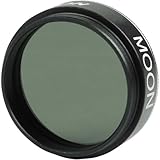
- Reduce glare and increase contrast of the Moon with the Celestron 1.25” Moon Filter
- Also useful for extra bright planets as well as terrestrial viewing over sand or snow
- Threads onto most 1.25” eyepieces in seconds
- Model Number : 94119-A
- UNBEATABLE WARRANTY & SUPPORT: Buy with confidence from Celestron, a leading telescope brand in California since 1960. Your purchase includes a 2-Year US Warranty and unlimited support from our team of US-based experts.
What time was the December 2025 full Moon?
The exact full phase occurred at 23:14 UTC on December 4, 2025: 6:14 p.m. EST, 5:14 p.m. CST, 4:14 p.m. MST, and 3:14 p.m. PST.
What time did it rise?
Moonrise depended on location. In New York City, the calculated moonrise was approximately 3:54 p.m. EST on December 4, 2025. Readers elsewhere needed a local moonrise calculator.
Could the Moon still be seen on December 5?
Yes. The Moon looked essentially full on the surrounding nights, and December 5 was also an excellent opportunity to see a nearly full Moon rise after dark in many locations.
The Bottom Line
The December 2025 Cold Moon was a past event: it reached full phase at 23:14 UTC on December 4, rose at different local times depending on location, and qualified as a supermoon because full phase occurred near perigee. The best visual opportunity was generally the eastern horizon around local moonrise, when the Moon illusion, foreground scenery, and warm atmospheric color made it especially striking.
Quick Recap
Product prices and availability are accurate as of the date/time indicated and are subject to change. Any price and availability information displayed on Amazon at the time of purchase will apply.