Do these 3 things before closing this tab:
1Fix the driver behind crashes, sound loss and screen glitches2Repair Windows errors before they cause bigger problems3Scan for outdated or missing drivers - takes under a minuteBy the time “For Good” arrives in Wicked, the musical has already made its most explosive promises and broken several of them. The friendship that once powered the story has been fractured by ideology, ambition, and the cost of choosing different kinds of courage. What’s left is not a battle cry or a plot twist, but a reckoning.
The song appears late in Act II, just before the show accelerates toward its tragic, myth-shaping finale. Elphaba is now a hunted symbol, Glinda a polished public figure, and the world has decided who they’re allowed to be. “For Good” pauses the spectacle long enough to ask what all of it has meant on a human level.


In narrative terms, this is the quiet hinge of Wicked, where private truth momentarily outranks public myth. Elphaba and Glinda finally speak without performance, admitting how profoundly they’ve changed each other even as they stand on opposite sides of Oz’s moral divide. The stakes aren’t about saving the day anymore; they’re about acknowledging that some relationships define us precisely because they cannot last.
From Rivals to Soulmates: How Elphaba and Glinda’s Relationship Earns This Song
Before “For Good” can land with the weight it carries, Wicked carefully engineers a relationship that begins in friction and ends in quiet recognition. Elphaba and Glinda don’t start as kindred spirits; they start as opposites forced into proximity, each embodying a different survival strategy in Oz. Their eventual tenderness feels earned because the musical never rushes their understanding of one another.
#1 Best Overall

- Wicked: The Soundtrack features performances by the stars of Universal Pictures' cinematic event with music and lyrics by legendary composer/lyricist Stephen Schwartz
The Alchemy of Opposition at Shiz
At Shiz University, rivalry isn’t just personal, it’s ideological. Glinda believes in visibility, charm, and the power of being liked; Elphaba believes in justice, intellect, and the necessity of standing apart. Their early clashes are funny and sharp, but they also establish a crucial truth: each woman represents a path the other cannot easily take.
The genius of Wicked is that it allows admiration to grow inside that tension. Their tentative friendship forms not because they become similar, but because they begin to see the cost of each other’s choices. That mutual recognition is the emotional groundwork “For Good” later stands on.
“Defying Gravity” as the Breaking Point
If “For Good” is the reckoning, “Defying Gravity” is the rupture that makes it necessary. When Elphaba chooses exile over complicity, Glinda chooses safety over solidarity, and both choices are deeply human. Neither woman is wrong, but the consequences are irreversible.
From that moment on, their bond exists in absence. They continue shaping each other from afar, carrying guilt, pride, and unresolved love that has nowhere to go. By Act II, their friendship is no longer active, but it’s never gone.
Parallel Lives, Shared Scars
By the time they reunite, Elphaba and Glinda have become versions of themselves the other helped create. Glinda has learned responsibility and restraint, while Elphaba has learned how heavy moral clarity can be. They meet not as girls competing for approval, but as women marked by the same history.
“For Good” works because it’s not about reconciliation or forgiveness in a neat, theatrical sense. It’s about acceptance: that they changed each other permanently, and that change matters even if the relationship itself cannot continue.
Why the Song Feels Like a Love Duet
The emotional power of “For Good” often reads as romantic, even though it isn’t. That’s because Wicked treats their friendship with the seriousness usually reserved for epic love stories. The song gives them space to articulate a truth rarely spoken in musicals: that some of the most defining relationships in our lives don’t end happily, but they still end meaningfully.
By the time they part, Elphaba and Glinda are no longer rivals, and not quite friends in the traditional sense. They are soulmates shaped by circumstance, bound by impact rather than proximity. “For Good” doesn’t celebrate what they’ll be to each other tomorrow; it honors what they already were, and always will be, in ways neither can undo.
Not a Love Duet, but a Life Duet: What the Song Is Really About
“For Good” is often mistaken for a breakup ballad or a suppressed love song because it carries the emotional intimacy of both. But its true power comes from something broader and rarer in musical theater: it’s a song about how another person permanently alters the course of your life. Not romantically, not temporarily, but fundamentally.
Acknowledging Change Without Rewriting History
At its core, the song is an exchange of perspective. Elphaba and Glinda are not trying to fix what went wrong or imagine a different outcome; they are naming what happened and allowing it to stand. Each woman recognizes that the other reshaped her worldview, even when that influence came with pain, compromise, and loss.
This matters because Wicked refuses to simplify growth into something purely positive. Glinda’s polish and Elphaba’s defiance both come at a cost, and “For Good” allows them to admit that without self-pity or blame. Change, the song suggests, is not always gentle, but it is always consequential.
Why the Song Resists Romantic Framing
Unlike traditional love duets, “For Good” contains no promises of reunion, no longing for a shared future, and no attempt to collapse two lives into one. Instead, it honors divergence. The melody moves in harmony, but the lyrics emphasize separation, individuality, and acceptance of different paths.
Recommended Free Tools
Rank #2
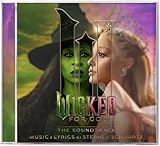
- Wicked: For Good - The Soundtrack features performances by the stars of the electrifying conclusion to Universal Pictures' global cinematic Wicked sensation, Wicked: For Good
That distinction is crucial. Romantic duets often imagine love as something that endures despite circumstances; “For Good” imagines connection as something that endures even after the relationship itself cannot. The bond is real because it doesn’t need to continue to be validated.
Friendship as the Show’s Moral Center
Wicked is ultimately less interested in who is good or wicked than in how people influence one another within flawed systems. Elphaba and Glinda’s friendship becomes the show’s emotional compass, grounding its political allegory in something personal and human. “For Good” is the moment when that friendship is finally understood in full.
The song affirms that moral clarity and social survival are not mutually exclusive, but they rarely coexist easily. Each woman chose differently, and those choices placed them on opposite sides of history. What “For Good” offers is not absolution, but understanding.
The Meaning Behind the Title
The phrase “for good” is deliberately double-edged. It means permanently, but it also implies improvement. The song never fully resolves which definition applies, because both are true. Elphaba and Glinda are changed forever, and those changes are both beneficial and burdensome.
Quick wins for a faster PC:
Scan for outdated or missing drivers - takes under a minuteDriver Scan →Repair Windows errors before they cause bigger problemsFix Now →Fix the driver behind crashes, sound loss and screen glitchesFind Drivers →That ambiguity is the song’s final emotional truth. Some relationships don’t end because they fail; they end because they’ve done their work. “For Good” captures the quiet bravery of acknowledging that truth and letting it be enough.
Change as Destiny, Not Regret: The Deeper Meaning Behind ‘For Good’
“For Good” ultimately reframes change not as something to mourn, but as something inevitable and meaningful. The song rejects the idea that if a relationship ends, it must be mourned as a failure. Instead, it suggests that transformation is the point, not the loss that follows.
Being Changed Without Being Erased
One of the song’s most powerful ideas is that influence does not require permanence. Elphaba and Glinda are not diminished by moving on from one another; they are defined by it. Each carries the other forward, even when their lives can no longer intersect.
This is especially resonant in a show obsessed with labels and public narratives. Elphaba will be remembered as “wicked,” Glinda as “good,” but “For Good” insists on a quieter, truer legacy: the private ways people alter each other beyond history’s distortions. Their bond exists outside propaganda, beyond reputation.
The Tool Desk
Outbyte Driver Updater FREEFix the driver behind crashes, sound loss and screen glitchesFind Drivers →Outbyte PC Repair FREERepair Windows errors before they cause bigger problemsFix Now →Letting Go Without Rewriting the Past
The song also refuses revisionism. Neither woman pretends they made perfect choices, nor do they attempt to soften the pain of their separation with platitudes. Acknowledging change does not require pretending it was easy or painless.
That honesty is what makes the moment feel earned. “For Good” doesn’t ask the audience to believe everything worked out; it asks them to accept that meaning can exist even when outcomes are unresolved. Growth, the song suggests, often arrives without closure.
Choosing Forward Motion Over Nostalgia
In musical theater, climactic duets often look backward, reveling in memory or longing. “For Good” looks forward, even as it says goodbye. The characters are not clinging to what was; they are preparing to live with what is.
This forward gaze is crucial to Wicked’s emotional maturity. The song acknowledges that nostalgia can be comforting, but it can also be paralyzing. Elphaba and Glinda honor their past without allowing it to trap them.
Change as Moral Awakening
On a deeper level, “For Good” frames change as ethical evolution. Both women have been forced to confront who they are within an unjust system, and neither escapes unmarked. Their friendship didn’t save them from difficult choices, but it sharpened their understanding of those choices.
That awareness is the song’s quiet triumph. “For Good” suggests that being changed by someone else is not a weakness, but a form of moral courage. To admit influence is to admit vulnerability, and in Wicked, that vulnerability is what makes goodness possible at all.
How the Lyrics Reflect Each Woman’s Final Transformation
“For Good” works because it doesn’t treat Elphaba and Glinda as opposites frozen in place. The lyrics trace two parallel transformations shaped by the same relationship, even as those transformations lead them in radically different directions. Each line carries the weight of who these women were at the beginning of Wicked—and who they can no longer be by the end.
Elphaba: Accepting Impact Without Vindication
For Elphaba, the song marks the first time she allows herself to acknowledge her own capacity for connection. Throughout Wicked, she defines herself in opposition: to authority, to public opinion, to the system that brands her monstrous. In “For Good,” she stops fighting long enough to admit that someone truly saw her, and that being seen changed her.
The lyrics give Elphaba something she never receives publicly: recognition without conditions. She doesn’t need Glinda to defend her legacy or correct the story Oz will tell. Instead, she accepts that the truest proof of her life’s meaning exists privately, in how she altered another person’s moral compass.
That acceptance is her final evolution. Elphaba’s transformation is not about reclaiming goodness in the eyes of the world; it’s about releasing the need for that validation altogether. The song allows her to move forward without bitterness, even as she remains misunderstood.
Glinda: Redefining What “Good” Actually Costs
Glinda’s arc in “For Good” is quieter but no less radical. Earlier in the show, goodness is performative for her, something tied to popularity, approval, and image. The lyrics force her to confront a deeper truth: that being changed by Elphaba means accepting responsibility, not just admiration.
What the song reveals is Glinda’s dawning awareness that her privilege came with choices she avoided making. Acknowledging Elphaba’s influence means acknowledging the moments she stayed silent, complied, or chose safety over solidarity. The lyrics don’t punish her for that, but they don’t absolve her either.
Windows Errors? Fix Them Before They Spread
Repair common Windows errors and clear accumulated junk for a smoother, more stable PC - no reinstall needed.Free scan · no reinstallCrashes, No Sound, or Screen Glitches?
Random freezes, missing sound and display glitches usually trace back to one bad driver. Find and replace yours safely.Free scan · under a minuteBy the end of the song, Glinda’s transformation is internal and unresolved. She remains in power, but no longer untouched by its consequences. “For Good” plants the seed of a goodness defined not by applause, but by conscience.
A Shared Language of Change, Not a Shared Fate
One of the song’s most powerful achievements is how it gives both women the same emotional vocabulary while denying them the same future. The lyrics speak in mutual terms of influence and growth, yet the staging and context make clear that their paths will never converge again.
This shared language underscores Wicked’s central irony. Elphaba, labeled wicked, emerges morally whole but erased. Glinda, labeled good, survives and thrives, but at the cost of permanent awareness. The song doesn’t resolve that imbalance; it lets it stand.
In that tension, “For Good” becomes less about closure than recognition. The lyrics affirm that transformation does not guarantee justice or happiness. Sometimes, it simply guarantees that you will never be the same person again—and that has to be enough.
Free tools Windows power users keep installed
One-click scans. No signup required.
Rank #4
The Moral Heart of Wicked: Friendship, Choice, and Unintended Consequences
At its core, “For Good” crystallizes what Wicked has been asking all along: how do private relationships ripple outward into public history? The song reframes the musical’s spectacle of witches, politics, and propaganda as something far more intimate. Everything that follows in Oz is traced back to a friendship that altered two lives in ways neither woman could fully predict or control.
Friendship as a Moral Force
Unlike many Broadway friendships that exist to soften a story’s edges, Elphaba and Glinda’s bond actively complicates the world around them. Their connection doesn’t make either woman purely better or worse; it makes them more aware. “For Good” acknowledges that influence itself is morally neutral until choices are made in response to it.
That idea is quietly radical. Wicked suggests that friendship is not just emotional support but a formative ethical pressure, shaping how we act when tested by fear, power, or loss. Elphaba becomes braver because Glinda once believed in her. Glinda becomes more burdened because Elphaba showed her what moral courage actually costs.
Choice Over Destiny
The song also dismantles the notion that either woman was destined to become who she is. Wicked has always resisted simple fate narratives, and “For Good” underscores that their paths diverge because of decisions, not prophecy. Every kindness withheld, every stand not taken, every risk embraced or avoided leaves a mark.
What’s actually slowing this PC down?
Pick the symptom - the matching free tool is one click away.
What makes this painful rather than triumphant is that neither character gets to choose the outcome they want. Elphaba chooses integrity and loses everything else. Glinda chooses survival and inherits a world she now sees too clearly to enjoy. The song insists that moral agency exists even when moral victory does not.
The Weight of Unintended Consequences
Perhaps the song’s most enduring insight is its refusal to frame impact as intentional. Elphaba and Glinda are changed by each other without fully understanding how, or to what end. Wicked argues that this is how most lives are shaped: through moments that feel small at the time but echo far beyond their original context.
“For Good” doesn’t offer redemption through grand gestures or rewritten histories. Instead, it honors the quieter truth that people can alter each other irrevocably without fixing the world. In doing so, the song becomes Wicked’s ethical center, reminding us that meaning is not found in being remembered as good or wicked, but in recognizing that what we do to each other lasts.
Independent reader supportYour contribution helps us test, update, and keep practical guides available for everyone.Why ‘For Good’ Hits Harder Than the Show’s Big Anthems
Wicked is packed with showstoppers built to shake the rafters. “Defying Gravity” electrifies with rebellion, and “No Good Deed” burns with fury and resolve. But “For Good” lands differently, because it doesn’t ask the audience to cheer or gasp—it asks them to sit quietly with the cost of everything that came before.
The song arrives after the spectacle is over. There’s no plot twist left to reveal, no villain left to defeat, and no future in which Elphaba and Glinda can still fix what’s been broken. What remains is reflection, and Wicked understands that reflection can be more devastating than action.
Emotion Without Performance
Unlike the musical’s anthems, “For Good” isn’t about convincing the world of anything. Elphaba isn’t trying to change history, and Glinda isn’t trying to lead or inspire. They’re simply speaking honestly to each other, for perhaps the first and last time, without masks or ambition shaping their words.
That lack of performance is precisely why it hurts. The song strips both characters down to who they are when no one is watching, revealing how much they’ve internalized from one another. It’s intimacy in a show that’s otherwise defined by public perception and political theater.
Closure Without Resolution
Broadway finales often reward audiences with catharsis or victory. “For Good” offers neither. Elphaba will remain a villain in Oz’s history, and Glinda will continue to benefit from that lie. Their goodbye doesn’t correct the injustice of the world; it merely acknowledges it.
Best Value
This unresolved ending gives the song its emotional gravity. The audience feels the ache of acceptance rather than the thrill of triumph, recognizing that many real relationships end not with reconciliation, but with understanding that arrives too late to change circumstances.
The Quiet Universality of Change
What ultimately makes “For Good” hit harder than Wicked’s biggest anthems is its universality. Not everyone has defied gravity or reshaped a nation, but nearly everyone has been changed by someone they no longer walk beside. The song taps into that shared human experience without spectacle or melodrama.
By the time the final notes fade, the audience isn’t thinking about witches or politics or Oz. They’re thinking about the people who altered their lives without staying in them. That recognition lingers long after the curtain falls, making “For Good” the moment Wicked stops being a fantasy and becomes something uncomfortably real.
The Song’s Legacy: Why It Remains Wicked’s Most Enduring Emotional Moment
“For Good” doesn’t just conclude a relationship within Wicked; it extends far beyond the Gershwin Theatre. Long after audiences forget the spectacle of flying monkeys or emerald lighting, this is the moment they carry with them. Its legacy is built on emotional truth rather than theatrical scale, and that truth has proven timeless.
What’s actually slowing this PC down?
Pick the symptom - the matching free tool is one click away.
A Song That Outgrew the Stage
Over the years, “For Good” has become one of Broadway’s most frequently repurposed songs, performed at graduations, weddings, farewells, and memorials. That migration into real life speaks to its rare flexibility as an emotional language. People don’t use it to celebrate achievement, but to acknowledge influence, gratitude, and irreversible change.
The song’s power lies in its ability to articulate something most people struggle to say aloud: that a relationship mattered even if it didn’t last. In that sense, Wicked accidentally wrote a modern standard, one that audiences instinctively reach for when words fail.
The Definitive Expression of Elphaba and Glinda’s Arc
From a narrative standpoint, “For Good” completes the moral equation at the heart of Wicked. Elphaba and Glinda begin as rivals shaped by insecurity, privilege, and misunderstanding. By the end, they have internalized each other’s values, even though the world forces them apart.
Elphaba leaves having learned compassion without recognition, while Glinda remains having learned responsibility without absolution. Their friendship doesn’t rewrite Oz’s history, but it rewrites who they are. The song crystallizes that transformation in a way no plot twist ever could.
Why It Hits Harder With Time
Unlike Wicked’s showstoppers, “For Good” tends to resonate more deeply as audiences age. Younger viewers may hear it as a sad goodbye; older ones recognize it as a truth about life. People drift apart. Circumstances win. Meaning survives anyway.
That evolving relationship with the song is part of its endurance. Each return visit to Wicked brings new context, new faces, and new emotional weight, making “For Good” feel less like a finale and more like a mirror.
A Musical Theater Rarity
Broadway is filled with songs about love gained or lost, but very few focus on love transformed. “For Good” doesn’t argue that everything happens for a reason, or that pain leads to happiness. It suggests something quieter and more complex: that people change us in ways that cannot be undone, and that change itself has value.
In a genre often built on resolution, this restraint is radical. The song trusts the audience to sit with ambiguity, to feel gratitude and grief at the same time. That trust is why it continues to feel honest, even decades later.
Ultimately, “For Good” endures because it captures the emotional thesis of Wicked in its purest form. It acknowledges that moral clarity is rare, that friendships can shape us without saving us, and that doing the right thing doesn’t always look heroic. When the show ends, it’s not the spectacle we remember, but the quiet understanding that some connections change us forever, whether or not we get to keep them.
Quick Recap
Product prices and availability are accurate as of the date/time indicated and are subject to change. Any price and availability information displayed on Amazon at the time of purchase will apply.




