Everest (2015) is based on the real 1996 Mount Everest disaster. The film follows Rob Hall’s Adventure Consultants and Scott Fischer’s Mountain Madness as a storm traps climbers high on the mountain after a late summit push. Several central characters were real people, but the movie compresses the multinational expedition and dramatizes parts of the history.
Yes. Everest (2015) is based on the real May 10–12, 1996 Mount Everest disaster, when a rapidly worsening storm trapped climbers from several expeditions high above the South Col. The film’s central teams are real: Rob Hall’s Adventure Consultants and Scott Fischer’s Mountain Madness. Several characters, including Hall, Fischer, Doug Hansen, Yasuko Namba, Andy Harris, Anatoli Boukreev, Beck Weathers, Jon Krakauer, and Neal Beidleman, were real people.
But the movie is a dramatic feature, not a documentary or a scene-by-scene transcript of events. It gets the disaster’s broad outline right while compressing the expedition roster, rearranging chronology, simplifying relationships, and dramatizing conversations and conflicts.
The historical tragedy was not caused by one bad decision. Late summit attempts, delays on fixed ropes, crowding, exhaustion, limited oxygen, route-finding problems, extreme weather, commercial pressures, and difficult judgments at altitude all interacted.
Quick wins for a faster PC:
Repair Windows errors before they cause bigger problemsFix Now →Scan for outdated or missing drivers - takes under a minuteDriver Scan →#1 Best Overall
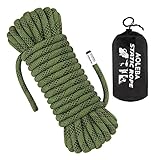
- 10.5mm Static Rope: This 10.5mm climbing rope is enough strong abrasion resistance, moderate soft, strong binding force, anti-slip and tear resistant. Package Content: 1 x Static Rope, 1 x Drawstring Rope Bag.
- CE Certified: Our static climbing rope meets the CE Certification of EN 892: 2012+A2:2021 Standards (Certificate No.: WUX202310235416SC), ensuring quality control. Bright color ensure great visibility in all weather.
- Rope Details: Our static climbing rope has two types: one is both ends sewed, the other is ended with two hook. Diameter 10.5 mm, Pull (Max tensile force): 23 KN(5100 lbs), Max Bearing: 1900 kg (4188 lb).
- Professional Design: Using the high tenacity nylon material which is compact and well elaborated rope construction, making the cord super firm and adding to its excellent outdoor environment adaptation. With a smooth grip, supple for handling, flexible and easy to tie knots.
- Wide Application: This Static Climbing Rope is a good helper for outdoor mountaineering, tree climbing, escaping, hiking, camping, hammock, swing,fishing. etc. Note: This climbing rope is marked as a static rope. If you need a Dynamic Rope with ductility and shock absorption, please choose carefully.
What is Everest (2015) about?
Directed by Baltasar Kormákur and released by Universal Pictures in 2015, Everest follows commercial expeditions attempting to reach the summit during the 1996 spring climbing season. The film focuses primarily on the Nepal-side Southeast Ridge, where Adventure Consultants and Mountain Madness were guiding clients toward the summit.
On May 10, climbers began their final ascent from the South Col. Delays developed around fixed ropes and congested climbing conditions. Some climbers reached the summit late, leaving them a long and dangerous descent just as a major storm moved onto the mountain.
The storm brought hurricane-force winds, blowing snow, darkness, near-whiteout conditions, temperatures approaching 30 degrees below zero Fahrenheit, disorientation, exhaustion, and dwindling oxygen supplies. Climbers became separated from the route and from their camps. Some reached the South Col; others spent the night outside or in exposed tents.
The crisis continued beyond the main summit-day sequence. Rob Hall remained high on the mountain with Doug Hansen, and Hall stayed in radio contact with base camp. Hall died near the South Summit on May 12, 1996. The event is often called the May 10–11 disaster because the summit push and the desperate overnight struggle occurred then, although the deaths and rescue efforts unfolded over the following days.
Windows Errors? Fix Them Before They Spread
Repair common Windows errors and clear accumulated junk for a smoother, more stable PC - no reinstall needed.Free scan · no reinstallCrashes, No Sound, or Screen Glitches?
Random freezes, missing sound and display glitches usually trace back to one bad driver. Find and replace yours safely.Free scan · under a minuteUniversal’s official description of the film captures the basic premise: two expeditions confront an extreme snowstorm during their summit attempt. The real event, however, involved more climbers and more competing expeditions than the film can comfortably follow.
The real people behind the main characters
The following table separates what happened to the people represented by the film’s principal characters.
| Film character | Real person and expedition | What happened |
|---|---|---|
| Rob Hall, played by Jason Clarke | New Zealand guide and founder of Adventure Consultants | Hall had already summited Everest five times. He remained high on the mountain while trying to help Doug Hansen descend, stayed in radio contact with base camp, and died near the South Summit on May 12. |
| Scott Fischer, played by Jake Gyllenhaal | American guide and leader of Mountain Madness | Fischer was an accomplished climber and guide, but 1996 was his first Everest expedition as leader of a commercial team. He reached the summit, became seriously ill and exhausted during the descent, and died high on the mountain during the storm. |
| Anatoli Boukreev, played by Ingvar Sigurðsson | Mountain Madness’s lead climbing guide | Boukreev survived and made repeated rescue efforts during the storm. His account states that he brought Charlotte Fox, Sandy Pittman, and Tim Madsen down alive. His decisions became the subject of a long-running and unresolved debate. |
| Beck Weathers, played by Josh Brolin | Texas physician and Adventure Consultants client | Weathers became snow-blind and was left in extreme conditions after rescuers believed he was unlikely to survive. He later regained consciousness and made his way toward camp. Severe frostbite led to extensive treatment and amputations. |
| Doug Hansen, played by John Hawkes | American postal worker and repeat Everest client on Hall’s team | Hansen reached the summit late on May 10 but could not descend near the Hillary Step. Hall stayed with him and continued trying to assist him as the weather deteriorated. Hansen died on the upper mountain. |
| Yasuko Namba, played by Naoko Mori | Japanese Adventure Consultants client pursuing the Seven Summits | Namba reached the summit but could not descend safely through the storm. She died near the South Col. |
| Andy Harris, played by Martin Henderson | New Zealand guide on Hall’s Adventure Consultants team | Harris disappeared while attempting to help climbers near the upper mountain. His body was never recovered, and later accounts disagree about his precise movements and final actions. |
| Jon Krakauer | Journalist and climber on the Adventure Consultants team | Krakauer survived. He later wrote the first-person account Into Thin Air, which became one of the best-known narratives of the disaster. |
| Neal Beidleman | Mountain Madness guide | Beidleman survived and played an important role in guiding a group of exhausted climbers back toward camp during the storm. |
Rob Hall and Doug Hansen
Hall’s final hours are among the film’s most recognizable storylines. Hansen had reached the summit late and was unable to descend safely near the Hillary Step. Hall did not simply abandon him. He remained with his client high on the mountain while the storm intensified, continuing the attempt to get him down.
Rank #2
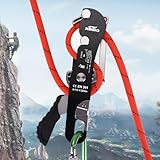
- GUARANTEED SAFETY: CE certified with a maximum weight limit of 330 lbs ,Optimal usage size 9-12 mm/0.4-0.43 inch diameter.
- BRAKE ANTI-PANIC: The stop wheel and stop shaft can be stopped quickly and stay in place, convenient for users to descend and stop at an easy speed.
- MATERIAL: aluminum magnesium alloy. Size: 2.17 inches (W) * 8.27 inches (L).
- EASY TO INSTALL: The device can be quickly installed or removed from the rope without disconnecting it from the harness.
- WIDELY USED: rock climbing, mountaineering, adventure, ice climbing, expansion, caving, rope descent, rescue, engineering protection, aerial work, etc.
That decision has to be understood in the context of Hall’s duty as a guide, Hansen’s determination to complete a return attempt, the late hour, and the rapidly shrinking margin for survival. Hall’s radio conversations with base camp are grounded in the historical record, although a feature film necessarily selects and stages the material for dramatic effect.
Free tools Windows power users keep installed
One-click scans. No signup required.
Scott Fischer
Fischer was not a fictional rival invented to give Hall an opposing team. He was a highly experienced American climber and guide who led Mountain Madness. Unlike Hall, however, 1996 was Fischer’s first time leading a commercial Everest expedition.
Fischer reached the summit but became seriously ill and exhausted during the descent. He ultimately died high on the mountain during the storm. His body was later located near the route below the South Summit.
Anatoli Boukreev and the blame debate
Boukreev survived the disaster and made several trips into dangerous conditions to find and assist missing climbers. His rescues of Charlotte Fox, Sandy Pittman, and Tim Madsen are a documented part of the event, as is the broader role played by Beidleman and other survivors in getting people back to camp.
After the disaster, Boukreev’s decisions became controversial. Jon Krakauer criticized aspects of Boukreev’s judgment and decision-making in Into Thin Air. Boukreev and G. Weston DeWalt presented a different perspective in The Climb. The disagreement should not be reduced to a simple verdict that one account is entirely correct and the other entirely false. The writers occupied different positions on the mountain, saw different parts of the crisis, and emphasized different responsibilities.
Recommended Free Tools
The safest conclusion is specific rather than absolute: Boukreev’s rescue actions are documented, while the wider question of responsibility and judgment remains contested.
Beck Weathers’s survival
Weathers’s story is also substantially real, but it is easy to describe it inaccurately. He was not literally dead and resurrected. He was snow-blind, severely exposed, and judged by rescuers to be unlikely to survive. After regaining consciousness, he managed to move toward camp, where other climbers helped him.
Rank #3

- [Safty Guarantee]:UIAA & CE Certified:1019-435 EN 567:2013 ensures its security.Hand ascender you can trust.Weight limited:140kg/ 308Ib,Breaking strength8.5KN.Tension:4KN,for 8~13MM Rope.
- [Light Weight Ascender]:The aluminum alloy frame is light yet durable,Weighs only 0.52 lbs (237g)
- [Great Grip]: Comfortable rubber handle adds the friction and protects climber's hand.
- [Solid Stainless Steel Cam]: Made of stainless steel, rustproof and anticorrosion, can handle most situation and service for long.
- [Multiple Holes]: For connecting carabiners and webbings. 2 hole attachments in both upper and lower side of ascender to let operator put to great use.
His own memoir, Left for Dead: My Journey Home from Everest, describes arriving at camp blinded, without gloves, and covered in ice after spending the night exposed to the storm. He survived, but severe frostbite required extensive medical care and amputations. The film uses his survival as one of its emotional anchors because it shows both the physical violence of the mountain and the narrow line between apparent death and unexpected survival.
How many people died in the 1996 Everest disaster?
Eight people are commonly counted as the principal storm-related victims of the 1996 Everest disaster. Five died on or in connection with the Nepal-side Southeast Ridge:
- Rob Hall
- Scott Fischer
- Andy Harris
- Doug Hansen
- Yasuko Namba
Three more climbers from an Indo-Tibetan Border Police expedition died during the same storm period on the Tibet-side north route:
- Tsewang Smanla
- Tsewang Paljor
- Dorje Morup
The north-side deaths are part of the historical disaster, but they are not given the same narrative weight in the 2015 film as the two commercial teams on the south side. Some summit claims and details surrounding the north-side expedition were disputed at the time.
There is an important counting distinction. The broader 1996 spring climbing season included additional fatalities outside the central storm narrative, including Taiwanese climber Chen Yu-Nan, who died before the main summit-day disaster. Consequently, some accounts refer to eight deaths in the central disaster, while others discuss twelve deaths across the entire 1996 spring season. Those figures are not necessarily contradictory; they count different events.
What happened on the actual summit day?
- Climbers left the South Col. On May 10, members of several expeditions began the final push toward the summit.
- Delays accumulated. Climbers encountered congestion and delays around the fixed ropes. A late start or a delay of minutes lower down could become a major problem near the summit, where every climber was already operating with little physiological margin.
- Some climbers reached the summit late. Hall and Hansen were still near the summit area at approximately 4:30 p.m., according to David Breashears’s later recollection. That was unusually late for a safe descent.
- The weather turned. A powerful storm brought darkness, high winds, blowing snow, and whiteout conditions. Climbers descending from the summit struggled to identify the route and locate their camps.
- Groups became separated. Some exhausted climbers reached the South Col, while others were stranded above it or spent the night in exposed tents. Oxygen supplies, energy, visibility, and navigational certainty all deteriorated.
- Rescue attempts continued in the storm. Boukreev made repeated sorties, and Beidleman and other survivors helped guide climbers toward camp. These efforts saved lives but could not reach everyone.
The disaster therefore cannot be explained simply as “the storm arrived.” The storm was decisive, but it struck a crowded, delayed, exhausted summit push in which several climbers were already descending later than intended.
What’s actually slowing this PC down?
Pick the symptom - the matching free tool is one click away.
Why did the disaster happen?
Historians, climbers, guides, and survivors have debated the balance of responsibility for decades. The evidence points to interacting causes rather than one universally accepted explanation:
| Factor | Why it mattered |
|---|---|
| Late summit attempts | Climbers who reached the summit late had less daylight, oxygen, energy, and weather margin for the descent. |
| Fixed-rope delays and crowding | Bottlenecks slowed climbers on a route where delays could push the entire schedule into dangerous hours. |
| Severe weather | High winds, blowing snow, darkness, and near-whiteout conditions made route-finding and communication extremely difficult. |
| Exhaustion and oxygen constraints | Climbers had to make complex decisions while physically depleted and, in some cases, running low on supplemental oxygen. |
| Route-finding problems | Once climbers were separated from the marked route or camp, even a short navigational error could become fatal. |
| Commercial and client pressures | Guides were balancing summit ambitions, client expectations, safety rules, and obligations to people who varied widely in experience and condition. |
| Decisions at altitude | Turnaround judgments, rescue attempts, pacing, and choices about whether to continue were made in an environment that severely impaired physical and mental performance. |
This is why accounts of the disaster do not all assign responsibility in the same way. A guide’s choice may look different to a journalist climbing with one team, a guide responsible for another group, a survivor who was lost in the storm, or a person listening to radio traffic from base camp.
Rank #4

- 【Industrial Strength, Superior Stability】Compare to the normal carabiner, our climbing carabiner is ASTM Certified. With its maximum tension is 25KN (5600lbs), high quality alloy steel keeps going strong, retains a higher gear holding capacity than traditional hooks. We designed this heavy duty climbing carabiner to lock with a single hand – just hook, close and twist, then it’s locked. Make you secure when climbing.
- 【Strong Safety Materia】The climbing rope was composed of a 48 strands of reinforced polyester fiber skin and an inner core, the inner core was made of 13 whole core nylon fiber rope. With its weaving precision, our climbing ropes will not absorb water. And it is moderate soft, strong binding force, more wear-resistant, not easy pilling and keep good braking function.
- 【Professional Rope End】The rope end adopts thermal cutting and sealing process, tough polyester seam, heat shrinkable tube wear-resistant and non-slip, smooth surface, effectively prevent the rope from spreading, and ensure the climbers rope performance.
- 【Parameter Details】8MM climbing rope both ends sewed with a steel protection ring and a heat shrinkable tube, and locked with an ASTM-Certified carabiner. The climbing rope max pull force: 15KN(3300lbs). Safe enough to do any outdoor activity. Package Include: 1 x 10M (32ft) Rock Climbing Rope, 2 x ASTM-Certified Climbing carabiner, 1 x Bag.
- 【Wide Application】Our rock climbing rope can easily rolled up to a small part, very compact to carry along the climbing process. Perfect for climbing, camping, hiking, truck cargo lashing, hammock, swings, sling, snow skiing, caving, fishing and engineering. Please feel free to tell us is you have any problem with our product.
How accurate is the movie?
Everest is historically grounded, but it should be treated as an interpretation of the disaster rather than a definitive reconstruction.
What the film gets broadly right
- It is based on the 1996 Everest disaster.
- Rob Hall and Scott Fischer led the two central commercial expeditions.
- The story includes late summit attempts and the sudden arrival of a major storm.
- Hall’s radio communications and his effort to help Hansen are central to the real story.
- Fischer died during the descent in the storm.
- Weathers survived after being left in extreme conditions.
- Boukreev played an important role in rescue efforts.
What the film changes or compresses
- The expedition roster: The real event involved a large, multinational group of climbers and multiple expeditions. The film reduces that population to a manageable ensemble.
- Chronology: Scenes and conversations are rearranged or condensed so that the audience can follow several characters through one dramatic arc.
- Supporting characters: Some people are simplified, combined, or given less screen time than their real-world importance might suggest.
- Dialogue and conflict: The emotional confrontations are shaped for cinema. A dramatic exchange should not automatically be read as a verbatim historical conversation.
- The north-side story: The three Indo-Tibetan Border Police deaths are part of the wider disaster, but the film’s main attention remains on the south-side commercial expeditions.
Jon Krakauer publicly criticized the film in 2015 as highly dramatized and directed readers who wanted a fact-based account toward Into Thin Air. That criticism is useful context, but it is not the final word on every disputed event. Krakauer’s own account was challenged by Boukreev and others, and the surviving record contains disagreements about responsibility, timing, and individual actions.
The Tool Desk
Outbyte PC Repair FREERepair Windows errors before they cause bigger problemsFix Now →Outbyte Driver Updater FREEScan for outdated or missing drivers - takes under a minuteDriver Scan →A fair summary is: the movie gets the disaster’s broad outline right, but not every scene, conversation, timeline, or character relationship.
Who survived?
The film’s central tragedy can make it seem as though nearly everyone shown died. That is not what happened. Important survivors included Adventure Consultants clients Jon Krakauer, Lou Kasischke, Beck Weathers, Stuart Hutchison, Frank Fischbeck, and John Taske, along with guides Mike Groom and Mountain Madness climbers Neal Beidleman, Charlotte Fox, Sandy Hill Pittman, Tim Madsen, Lene Gammelgaard, and others.
Boukreev, Beidleman, and other survivors were not merely witnesses. They were involved in guiding, searching for, or helping exhausted climbers during the storm. The film necessarily gives only a fraction of these efforts screen time.
Independent reader supportYour contribution helps us test, update, and keep practical guides available for everyone.Which books and documentaries tell the fuller story?
No single account settles every argument. Readers get a more reliable understanding by comparing several perspectives rather than treating one survivor’s narrative as an uncontested transcript.
- Into Thin Air by Jon Krakauer: Krakauer’s first-person account grew out of an article originally published in Outside magazine and later expanded into a book. He climbed with Hall’s Adventure Consultants team, making this an especially direct account of that expedition. It is essential reading, but it also became part of the controversy over Boukreev and responsibility.
- The Climb by Anatoli Boukreev: Written with G. Weston DeWalt, this is the Mountain Madness guide’s counter-perspective. It emphasizes Boukreev’s rescue efforts and responds to criticisms associated with Krakauer’s account. It should be read as a perspective, not as an uncontested correction of every other source.
- Left for Dead: My Journey Home from Everest: Beck Weathers’s memoir focuses on his exposure, survival, medical treatment, recovery, and return home. It offers a more personal view of the ordeal represented by Weathers’s character in the movie.
- Storm Over Everest documentary: The PBS documentary incorporates survivor interviews, David Breashears’s perspective, team rosters, and factual summaries. It is particularly useful for separating the central south-side disaster from the north-side deaths and the additional fatalities of the wider season. See PBS FRONTLINE’s Storm Over Everest.
For viewers who want to rewatch the feature rather than investigate the history, Universal’s home-video listing has identified 4K Ultra HD, Blu-ray, DVD, and digital editions of Everest (2015). Physical and digital availability can vary by country, retailer, and date.
Best Value

- Keep Your Safety: It uses the friction between the rope and the Descender device to slow down the descent or brake. Extra thick with ears and belay slot will keep your safety, even in a rescue or emergency situation.
- Superior Braking Resistance: Breaking strength 11,000 lbf (50KN/5000kg). Allows for smooth rope action while descending or belaying, offers superb control on rope.
- Figure 8 Descender: Big Wall Climbings Terminal 8 with Ears is an improvement over standard figure 8 devices with improved breaking and safety features.
- EASY LOCK-OFF: With bent-ear, locking yourself off with both hands free will be much easier and safer.
- It Applies To: Suitable for Mountain Climbing, Rock Climbing, Ice Climbing, Rescue, Working-At-Height, Technical Rope Rescue, Climbers, Cavers and Sport Rappelers
Is the 1998 film Everest the same movie?
No. The 1998 Everest is a separate IMAX documentary film. Its official description presents a four-climber expedition filmed after the 1996 tragedy and identifies the release as 1998. It is historically related to the disaster, but it is not the same production as Kormákur’s 2015 narrative feature.
The real story in one sentence
Everest (2015) dramatizes a real catastrophe in which late summit attempts by commercial expeditions collided with crowding, exhaustion, limited resources, difficult decisions, and a lethal storm; its characters and major outcomes are rooted in history, but its scenes and judgments should be checked against multiple survivor accounts.
Sources and historical perspective
The historical framework here follows the official Universal film description, PBS FRONTLINE’s Storm Over Everest materials and expedition roster, David Breashears’s recollections, the American Alpine Club’s memorial account, and retrospective information from Adventure Consultants. The books by Krakauer, Boukreev and DeWalt, and Weathers provide valuable but differently positioned first-person perspectives. Where those accounts disagree, the disagreement is identified rather than presented as settled fact.
Do these 3 things before closing this tab:
1Clear out junk files and repair common Windows errors2Fix the driver behind crashes, sound loss and screen glitches3Repair Windows errors before they cause bigger problemsFrequently Asked Questions
Is Everest (2015) based on a true story?
Yes. The movie is based on the May 10–12, 1996 Mount Everest disaster, involving Rob Hall’s Adventure Consultants team, Scott Fischer’s Mountain Madness team, and climbers on the Tibet-side north route. Its broad events are historical, but the film compresses people, chronology, and dialogue.
How many people died in the 1996 Everest disaster?
Eight people are commonly counted as the principal storm-related victims: five associated with the Nepal-side Southeast Ridge—Rob Hall, Scott Fischer, Andy Harris, Doug Hansen, and Yasuko Namba—and three Indo-Tibetan Border Police climbers on the Tibet-side north route: Tsewang Smanla, Tsewang Paljor, and Dorje Morup. The wider 1996 spring season had additional deaths, so some sources give a total of twelve.
Did Beck Weathers really survive Everest?
Yes. Beck Weathers was snow-blind and severely frostbitten after being left in conditions where rescuers thought he was unlikely to survive. He later regained consciousness, moved toward camp with help from other climbers, and survived after extensive treatment and amputations. He was not literally dead and resurrected.
Was Anatoli Boukreev portrayed accurately in Everest?
Boukreev’s rescue efforts are documented, including bringing Charlotte Fox, Sandy Pittman, and Tim Madsen down during the storm. However, his wider decisions became the subject of a continuing debate after Jon Krakauer criticized aspects of them in Into Thin Air. Boukreev’s The Climb presents a counter-perspective, so no single account should be treated as an uncontested final judgment.
Is the 1998 Everest movie the same as Everest (2015)?
No. The 1998 Everest is a separate IMAX documentary about a four-climber expedition filmed after the 1996 tragedy. The 2015 film is Universal’s narrative survival drama directed by Baltasar Kormákur.
The Bottom Line
Everest (2015) is based on the 1996 Mount Everest disaster, not a wholly fictional survival story. Rob Hall, Scott Fischer, Doug Hansen, Yasuko Namba, and Andy Harris were real climbers who died in the catastrophe; Anatoli Boukreev, Beck Weathers, Jon Krakauer, and Neal Beidleman were real survivors. The movie is broadly faithful to the disaster’s outline, but its compressed cast, rearranged timeline, and dramatized dialogue mean that readers should compare it with Into Thin Air, The Climb, Left for Dead, and Storm Over Everest before treating any single version as definitive.
Quick Recap
Product prices and availability are accurate as of the date/time indicated and are subject to change. Any price and availability information displayed on Amazon at the time of purchase will apply.