Free tools Windows power users keep installed
One-click scans. No signup required.
Emoji characters are standardized worldwide, but their meanings are not. Unicode defines a character, name and technical behavior—not one mandatory cultural interpretation. A thumbs-up may be approval, a folded-hands symbol may be prayer or thanks, and a peach may be fruit or an internet euphemism. The safest reading comes from the surrounding words, the relationship between senders, the platform artwork and the cultural setting.
Are emojis a universal language?
No. Emoji are an international visual vocabulary, not a self-contained language. Unicode says they supplement written language rather than replace its grammar and vocabulary. Many people recognize 😂 as laughter and ❤️ as affection, yet they may disagree about whether a message is sincere, sarcastic, flirtatious, formal or passive-aggressive.


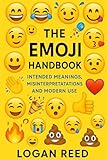

Unicode’s own guidance notes that meanings can vary by language, culture and context, and that users can repurpose symbols over time. A Unicode name is an identifier, not a complete dictionary definition. The character 🍑 remains officially “PEACH” even though some online communities use it as a reference to buttocks. See the Unicode FAQ on emoji and pictographs.
Why one emoji can produce several readings
Three layers of meaning
- Encoding: Unicode assigns a character, sequence, name and annotations.
- Rendering: Apple, Google, Samsung, Microsoft and other vendors draw the same character differently. Research has found that those visual changes can alter perceived sentiment; the findings are discussed in Understanding Emoji Ambiguity in Context.
- Social use: Communities add local, generational, ironic, religious, sexual or professional meanings that Unicode does not control.
Culture, language and generation
Hand signs inherit meanings from physical gestures. Religious imagery can signal identity or solemnity rather than decoration. Facial expressions may be read differently when users focus on the eyes, mouth or overall pose. A comparative study of China, Japan, the United States, the United Kingdom and Canada found differences in frequency, topic and context, but its sample cannot stand for every country in Asia, Europe or the Americas (study PDF).
Online slang also travels across borders without becoming a national rule. Younger or meme-oriented users may use 💀 for “I am laughing” or 😭 for an exaggerated reaction. A manager, customer and close friend may use the same symbol with entirely different force.
Broadly shared meanings—and their limits
Some symbols have a recognizable international core. A Unicode-linked Emojipedia ranking from December 2021 placed 😂, ❤️, 🤣, 👍, 😭, 🙏, 😘, 🥰, 😍 and 😊 among the ten most-used emojis. This is a dated ranking, not a 2026 global leaderboard; rankings change by platform, country, language, sample and date (Emojipedia statistics).
| Emoji | Common core | What can change |
|---|---|---|
| 😂 | Strong amusement or laughter | Affectionate exaggeration, teasing or a generational preference for other laughter symbols |
| ❤️ | Love, affection, support or approval | Romance, family feeling, friendship, fandom, solidarity or condolence |
| 😊 | Warmth and friendliness | Sweetness, careful politeness or excessive cheerfulness |
| 😍 | Strong admiration or attraction | Romantic feeling, fandom enthusiasm or praise for an object |
| 🎉 | Celebration | Party, congratulations, sarcasm or a decorative announcement |
| 🔥 | Fire, heat or intensity | Excellent, fashionable, attractive, exciting or dangerous |
| 💯 | Perfect, exactly right or complete agreement | Emphasis, authenticity or commitment |
Broad recognition does not guarantee identical emotional intensity. “Great job 👍” may be friendly praise, while “Fine 👍” can close a conversation or sound curt.
Hand emojis: the highest cross-cultural risk
A hand emoji is not merely a picture; it can reproduce the social meaning of a physical gesture. Region, palm orientation, age, subculture and the accompanying words all matter.
Recommended Free Tools
| Emoji | Common reading | Main caution | Safer approach |
|---|---|---|---|
| 👍 | Approval, agreement or acknowledgment | The physical gesture can be insulting in parts of the Middle East and elsewhere. An emoji may still be read simply as digital acknowledgment. | Use “Thanks” or “Understood” when stakes are high. |
| 🙏 | Thanks, prayer, request, respect or hope | It is not reliably “a high five” or “prayer only”; a condolence or crisis context can make it solemn. | Pair it with words such as “Thank you” or “I’m praying for you.” |
| 👌 | Okay or agreement | Physical meanings vary and can be rude, vulgar or politically charged in some communities. | Write “Okay” in formal or unfamiliar exchanges. |
| ✌️ | Peace, victory or a cheerful photo pose | Palm orientation can change physical-gesture meaning, and artwork may hide orientation. | Do not rely on it to convey a precise political or cultural message. |
| 🤞 | Good luck or hope | The convention is especially familiar in English-speaking usage and is not identical everywhere. | State the wish explicitly. |
| 🤘 | Rock music, excitement or “rock on” | It can carry different religious or cultural associations. | Use it only when the relationship and topic make the intent clear. |
| 🖕 | Deliberate insult | High-risk and intentionally offensive in ordinary use. | Avoid it in professional or public communication. |
| 👋 | Hello or goodbye | Usually low-risk, but can be dismissive or sarcastic in context. | Attach a greeting or farewell when tone matters. |
| 🫡 | Salute, respect or dutiful acknowledgment | Military, patriotic or ironic readings depend on community and situation. | Clarify whether you mean respect, agreement or humor. |
Faces whose tone changes with context
🙂 and 😊
🙂 can express sincere mild happiness, restraint, formal politeness or passive aggression. 😊 more often signals warmth or gratitude, but some users experience it as overly sweet or socially careful. Facial-emoji research suggests that groups may weigh eyes and mouth differently; broad “East versus West” claims should be avoided because studies cover limited countries and samples. In workplace messages, pair either face with unambiguous wording.
😂, 😭 and 😅
😂 usually marks laughter, amusement or affectionate exaggeration. 😭 conventionally signals intense sadness, but “I can’t 😭” may mean overwhelming laughter, delight or cuteness in some online communities. 😅 can mean nervous relief, embarrassment or “that was close.” Do not infer literal distress from a symbol alone.
Rank #3
🙃, 😬, 😏, 💀 and 🤡
- 🙃 often conveys resignation, irony or “everything is fine” when it is not.
- 😬 can signal awkwardness, tension or an uncomfortable smile.
- 😏 may imply smugness, flirtation or suggestiveness.
- 💀 retains death, danger and horror meanings, but online it can mean “that was so funny or intense I’m dead.”
- 🤡 can depict a circus performer, foolish behavior, self-mockery, ridicule or a political insult.
Food emojis with literal and hidden meanings
| Emoji | Literal reading | Secondary reading and caution |
|---|---|---|
| 🍑 | Peach, fruit, food or summer | Buttocks or sexualized body imagery in some internet contexts. Emojipedia reports 7% fruit-related use in its cited dataset; that statistic is not a worldwide rate (peach reference). |
| 🍆 | Eggplant or aubergine | Penis or sexual content in some online communities; the Unicode name remains a vegetable (eggplant reference). |
| 🍒 | Cherries | Sweetness, youth, breasts or other sexualized readings in particular slang communities. |
| 🍌 | Banana | Food, humor or an occasional phallic joke. |
| 🌶️ | Chili pepper, heat or spicy food | Temperament, attractiveness or sexual innuendo. |
| 🍵 | Tea | Conversation, gossip or “spill the tea” in English-language internet slang. |
Literal context matters: a grocery list, recipe or restaurant review makes food meanings more likely. Pairings such as 🍆 + 🍑 + 💦 or suggestive text sharply increase a sexual reading.
Hearts, colors and cultural symbols
The red heart can represent romance, family affection, friendship, fandom, brand support or condolence. Colored hearts have no dependable worldwide chart. Fandoms, sports teams, political movements, mourning customs, pride identities, religious traditions and national colors can all change their meaning.
Symbols such as 🧿 (Nazar amulet), 🧧 (red envelope), 🕉️, ☪️, ✡️, ✝️, 🪯 and 🛐 may represent identity, ritual, a holiday, metaphor or decoration. A food emoji such as 🍜, 🍣, 🥟, 🫓, 🧉 or 🍵 can signal a meal, regional identity, a festival or political symbolism. A Unicode label does not establish how every culture understands the image.
Rank #4

- Quick reference Statistics chart
- This 8.5" x 11" 4-page laminated Guide provides an easy to follow summary of all basic principles that are the foundation to Statistics and Probabilities
- Detailed descriptions and examples of theory
- Using a combination of charts and sample equations, the key concepts are developed and the essential Statistics theories are outlined.
- Easy-to-read to promoted memory retention. Great quick reference aid.
Emoji etiquette by situation
Work and customer service
Use explicit language for approvals, deadlines, complaints, refunds, safety and policy. A smile can soften a message, but it should not replace the actual instruction. Avoid gesture emojis with unfamiliar international contacts.
Dating and friendship
Hearts, kisses, 😏, 🍑 and 🍆 can escalate intimacy unexpectedly. Let the relationship and preceding words establish whether a symbol is affectionate, humorous or sexual.
Condolences and crises
🙏 may communicate prayer, respect or thanks, while ❤️ can signal support. Add a sentence so a solemn message is not mistaken for casual reaction.
Marketing and public announcements
Test artwork and interpretation with the intended language communities. A campaign that works in one market may turn a hand gesture into an insult or a color into a political signal. Cross-cultural branding research reports both international convergence and meaningful variation (study PDF).
A ten-step method for interpreting an unfamiliar emoji
- Read the surrounding text before interpreting the image.
- Identify the relationship: friend, manager, customer, partner or stranger.
- Ask what the emoji is attached to—food, a person, a political claim, condolences or flirtation.
- Consider the sender’s language and cultural background without guessing nationality from one symbol.
- Check whether it is a hand gesture, which carries particularly high regional risk.
- Compare platform renderings if the expression looks unusually angry, old-fashioned or flirtatious.
- Look for pairings, such as 😂 beside a sad sentence or 🍆 beside 🍑.
- Notice repetition: a sequence can intensify emotion or function as punctuation.
- Use words instead in legal, medical, employment, diplomatic and customer-service communication.
- Ask the sender when the stakes are high. Emoji meaning is probabilistic, not a codebook.
What Unicode standardizes—and what it does not
Emoji developed from Japanese mobile-phone culture: Japanese carriers offered incompatible sets by 1999, and Unicode standardization made characters interoperable across systems. Unicode Technical Standard #51 explains that history and the relationship between emoji and written language.
Unicode standardizes characters, sequences, names, annotations and recommended behavior; vendors control much of the artwork, and communities control evolving social usage. As of September 9, 2025, Emojipedia counted 3,953 emojis in the Unicode Standard, including sequences, flags, skin-tone and gender variants, and listed Emoji 17.0 as the latest release (statistics page). For authoritative names and versions, consult the Unicode Emoji Charts.
Conclusion: globally recognizable, locally interpreted
Popular emoji provide a useful shared layer of expression, but recognition is not agreement. Context, rendering, gesture traditions, religion, language, age and online subculture determine whether a symbol sounds warm, solemn, sexual, ironic or insulting. Treat emoji as clues rather than fixed translations: read the words, consider the relationship and write the meaning out whenever misunderstanding would matter.
Quick Recap
Product prices and availability are accurate as of the date/time indicated and are subject to change. Any price and availability information displayed on Amazon at the time of purchase will apply.