Elon Musk’s car story starts with a used 1978 BMW 320i—not a Tesla or an exotic supercar. From that inexpensive BMW, his automotive history moves through a dream Jaguar E-Type, a McLaren F1 crash, a Porsche 911 Turbo, a James Bond Lotus Esprit, and eventually the Tesla product line he helped shape.
Those vehicles do not all belong in the same category. Some are documented personal cars, some are reported or historically associated with Musk, and others are Tesla products connected to his leadership rather than proof of personal ownership. The distinction matters: the most accurate story is not a complete list of cars in Musk’s garage, but a progression from hands-on car enthusiast to electric-vehicle product strategist.
The short answer: which cars are associated with Elon Musk?
The strongest public record connects Musk with these vehicles:
- 1978 BMW 320i: reported as his first car, purchased for approximately $1,400 in 1994 and repaired by Musk himself.
- 1967 Jaguar E-Type: a long-standing dream car; reports connect its purchase with his early success at Zip2, although the full ownership timeline is not clear.
- McLaren F1: purchased after the PayPal transaction and crashed in 2000 while Musk was driving with Peter Thiel.
- Porsche 911 Turbo: one of the high-performance gasoline cars associated with Musk, though its exact year and specification should not be assumed.
- Lotus Esprit “Wet Nellie”: the submarine-shaped film prop from The Spy Who Loved Me, purchased at auction.
- Ford Model T: reported in automotive coverage as a vehicle Musk possessed or received as a gift.
Separately, Tesla’s product history under Musk’s leadership runs from the first-generation Roadster to the Model S, Model X, Model 3, Model Y, and Cybertruck. Those are company products, not a verified list of Musk’s personal cars.
Free tools Windows power users keep installed
One-click scans. No signup required.
#1 Best Overall

- Made of zinc alloy with ABS plastic parts
- 5.9 inch x 2.2 inch x 1.8 inch(size)
- The two sides of doors could be opened,front and back covercould be opened too
- You can pull back the car,then it can move forwards with Lights and Sound
- Very suitable as children 4 years and up toys for birthday,Christmas gift, new year. Also it can be a gift for your boyfriend
1. The 1978 BMW 320i: Musk’s first car
Musk’s automotive story began with an ordinary used BMW rather than a premium electric vehicle. Forbes reported that his first car was a 1978 BMW 320i. A secondary account based on Musk’s earlier statements places the purchase in 1994, at a price of roughly $1,400, and says he worked on the car himself. [c001]
The price and repair details should be treated as biographical details attributed to Musk, not as independently audited records. Even with that qualification, the BMW is an important starting point. It places Musk’s early car experience in the world of inexpensive, aging machinery that required hands-on attention.
That is a useful contrast with the later Tesla image. The BMW was not a clean-sheet software product, a battery platform, or a futuristic design statement. It was a used conventional car—one that could be maintained and improved by its owner.
The Tool Desk
Outbyte PC Repair FREERepair Windows errors before they cause bigger problemsFix Now →Outbyte Driver Updater FREEFix the driver behind crashes, sound loss and screen glitchesFind Drivers →2. The Jaguar E-Type: the dream car
The 1967 Jaguar E-Type represents a different side of Musk’s automotive interests. He has described the E-Type as a long-standing favorite, and Forbes reported that he had idolized the car for years. The model’s appeal is easy to understand: the E-Type is celebrated for its long, dramatic shape, lightweight sports-car character, and place in automotive history.
One account says Musk bought an E-Type after receiving his first substantial Zip2 bonus. The emotional connection is better documented than the complete ownership record, however. Musk has reportedly compared ownership of the car to having a “bad girlfriend”—an expression of admiration mixed with frustration rather than a straightforward account of a trouble-free collector car. [c002]
The E-Type also shows that Musk’s automotive tastes did not begin with electric propulsion. Its appeal lies in styling, mechanical character, and the romance of a classic sports car. That makes it a useful counterpoint to Tesla, whose public identity is built around batteries, software, acceleration, and electric platforms.
3. The McLaren F1: the famous 2000 crash
The most widely retold episode in Musk’s car history involves a McLaren F1, one of the most coveted performance cars of its era. In an interview hosted by Startups.com, Musk said he bought the car after the PayPal transaction. He described crashing it in 2000 while driving with Peter Thiel. [c003]
According to Musk’s account, he accelerated aggressively on Sand Hill Road, lost traction, and crashed. He also said the McLaren was uninsured. Time later summarized the same episode from an interview with technology journalist Sarah Lacy. [c004]
The supported story ends there. Public accounts should not be expanded into claims about the car’s exact chassis number, mileage, resale value, or whether it was permanently destroyed unless those details are independently documented. The reliable point is that Musk owned or drove a McLaren F1 and crashed it in 2000.
Rank #2
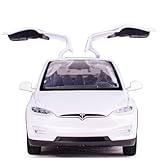
- Made of zinc alloy with ABS plastic parts
- 5.9 inch x 2.2 inch x 1.8 inch(size)
- The two sides of doors could be opened,front and back covercould be opened too
- You can pull back the car,then it can move forwards with Lights and Sound
- Very suitable as children 4 years and up toys for birthday,Christmas gift, new year. Also it can be a gift for your boyfriend
The episode is revealing because it places Musk firmly within the culture of extreme gasoline performance before Tesla became synonymous with electric acceleration. The McLaren F1 was powered by an internal-combustion engine and valued for engineering ambition, light weight, speed, and exclusivity. Tesla’s later performance message would use a different powertrain to pursue some of the same emotional territory.
4. The Porsche 911 Turbo: performance as a benchmark
Multiple accounts identify a Porsche 911 Turbo among the vehicles associated with Musk. The exact model year and trim are not consistently established in the available reporting, so it is safer to discuss the car as a Porsche 911 Turbo rather than assign it a more specific identity. [c005]
Recommended Free Tools
The Porsche is sometimes presented as a direct step toward Tesla, but that causal claim goes too far. The evidence supports a more modest interpretation: Musk was interested in fast, desirable gasoline sports cars, and electric vehicles later had to compete with those cars on performance as well as efficiency.
That distinction matters. A Porsche 911 Turbo did not, by itself, create Tesla. But it helps explain the standard Tesla had to meet. An electric car designed only as an environmental compromise would not necessarily appeal to someone attracted to the responsiveness and speed of high-performance sports cars. The Roadster’s importance was partly that it challenged the assumption that electric meant slow or dull.
5. The Lotus Esprit “Wet Nellie”: a movie prop with a futuristic purpose
Musk’s most cinematic car is the Lotus Esprit submarine car from the 1977 James Bond film The Spy Who Loved Me. The vehicle, nicknamed “Wet Nellie,” was sold at auction for £616,000, approximately $997,000 at the time, according to The Guardian. Musk bought it and said he wanted to make the fictional transformation from car to submarine functional with Tesla technology. [c006]
There is an important technical clarification: the auction vehicle was a film prop built in the shape of a Lotus Esprit. It should not be described as an ordinary production Lotus Esprit that could drive on the road and operate as a submarine. Nor should Musk’s stated intention be presented as proof that the transformation was completed. The documented fact is the purchase and the ambition to bring the movie concept closer to reality.
Quick wins for a faster PC:
Clear out junk files and repair common Windows errorsFree Scan →Scan for outdated or missing drivers - takes under a minuteDriver Scan →The Lotus links two parts of Musk’s public identity: fascination with futuristic imagery and interest in engineering systems that once seemed implausible. It is not simply another expensive car. It is a physical piece of science-fiction history that Musk acquired because the fictional machine fit his interest in turning dramatic concepts into working technology.
6. The Ford Model T and other reported vehicles
Automotive coverage has also reported that Musk possessed or received a Ford Model T, with one account describing it as a gift from a friend. Other reports have listed additional classic or luxury vehicles, including the Porsche 911. [c007][c008]
These cars belong in a reported collection category, not in a definitive current inventory. Public reporting about a famous person’s garage is partial, and ownership can change. There is also a difference between owning a car, receiving one as a gift, driving one, admiring one, and being photographed with one.
Windows Errors? Fix Them Before They Spread
Repair common Windows errors and clear accumulated junk for a smoother, more stable PC - no reinstall needed.Free scan · no reinstallOutdated Drivers Are Slowing You Down
One free scan finds every outdated or missing driver and matches the right update for your exact hardware.Free scan · exact hardware matchRank #3

- Made of zinc alloy with ABS plastic parts
- 5.9 inch x 2.2 inch x 1.8 inch(size)
- The two sides of doors could be opened,front and back covercould be opened too
- You can pull back the car,then it can move forwards with Lights and Sound
- Very suitable as children 4 years and up toys for birthday,Christmas gift, new year. Also it can be a gift for your boyfriend
The Model T is nevertheless symbolically interesting. Ford’s mass-production methods helped make the automobile a transformative industrial product. Tesla’s mission similarly depends on moving electric vehicles beyond a niche audience. That parallel is an editorial interpretation, not evidence that Musk acquired a Model T for a particular strategic reason.
How to separate Musk’s personal cars from Tesla’s cars
The phrase “Elon Musk’s cars” often combines several different categories. The following framework keeps the claims precise:
| Category | Vehicles | What can reasonably be said |
|---|---|---|
| Documented personal vehicles | BMW 320i, McLaren F1, Lotus Esprit | Strong direct statements or high-quality reporting connect Musk with these vehicles. |
| Reported or historically associated vehicles | Jaguar E-Type, Porsche 911 Turbo, Ford Model T | Reputable reports support the association, but the public ownership timeline or exact specification is incomplete. |
| Tesla vehicles associated with Musk’s leadership | Roadster, Model S, Model X, Model 3, Model Y, Cybertruck | These are Tesla products developed under Musk’s leadership. That does not establish that he personally owns every model. |
| Symbolic or media vehicle | The Tesla Roadster launched aboard Falcon Heavy | It was a SpaceX demonstration-flight payload, not an ordinary vehicle in a personal garage. |
This distinction also prevents a common error: describing every Tesla model as one of Musk’s personal cars. Tesla’s official biography says Musk co-founded and leads the company and identifies product design, engineering, and global manufacturing among his responsibilities. That describes a leadership and product role, not personal ownership of every vehicle the company sells. [c009]
The Tesla product story: from sports car to vehicle family
Musk’s personal car history provides context, but Tesla’s larger importance is the sequence of products the company brought to market. The progression was not simply from one model to another; each vehicle addressed a different strategic problem.
Do these 3 things before closing this tab:
1Fix the driver behind crashes, sound loss and screen glitches2Repair Windows errors before they cause bigger problems3Scan for outdated or missing drivers - takes under a minuteRoadster: prove that an electric car could be desirable
The first Tesla product was the Roadster, which debuted in 2008. Tesla’s materials describe the first-generation car as being based on the platform of the Lotus Elise. Musk later said that using the Lotus platform created significant engineering complications. [c009][c010]
The Roadster’s role was to make electric performance visible. A small, expensive sports car was not the fastest route to mass adoption, but it was a way to challenge the idea that electric propulsion automatically meant weak performance. The Roadster connected the instant torque of an electric motor with the emotional appeal of a sports car.
Model S: turn electric performance into a premium sedan
The Model S followed in 2012. It moved Tesla beyond a limited-production sports car and into the premium sedan market. The strategic challenge changed: Tesla now had to demonstrate that an electric vehicle could serve as a serious everyday car while retaining strong performance and a distinctive technology experience.
In narrative terms, the Model S was the point where Tesla’s ambitions became larger than proving a concept. It had to function as a product category rather than simply as an electric novelty.
What’s actually slowing this PC down?
Pick the symptom - the matching free tool is one click away.
Model X: extend the formula into an SUV
Tesla launched the Model X in 2015. The SUV expanded Tesla’s reach into a body style that had become central to the global automotive market. It also showed that the company was trying to develop a broader vehicle range rather than remain identified with sedans and sports cars. [c009]
Model 3 and Model Y: pursue scale
Model 3 deliveries began in 2017, followed by Model Y customer deliveries in early 2020. These vehicles represented Tesla’s attempt to reach a much larger market than the Roadster and Model S. [c009]
Rank #4
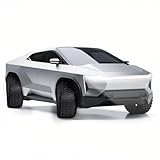
- 1:24 SCALE MODEL: This collectible toy truck measures 9.1" x 3.03" x 2.4" Inches and weighs 18 ounces. Immerse yourself in the toy truck experience with stunning detail in 1/24 scale. These photos capture its realism perfectly, making it a must-have for all toy truck enthusiasts.
- HIGH QUALITY & DURABILITY: Crafted from zinc alloy and ABS plastic, this toy pickup truck boasts exceptional durability. The zinc alloy body ensures authenticity, while ABS plastic components guarantee longevity. Equipped with lights and sounds, simply press the front wheels or open the front door to activate engine sounds and lights.
- COLLECTIBLE GIFTS: Packaged in a beautifully designed color box, it makes for an ideal gift. Whether for play, desk decoration, or collection, this meticulously crafted toy truck is sure to impress. Its high-quality build makes it perfect for kids and collectors alike.
- DIVERSE FUNCTIONS: Enjoy the pull-back function of the rear wheels, allowing the truck to run forward after a short pull. Additionally, trigger sound and light effects by pressing the car body or opening the front door, creating an immersive experience that lasts.
- SERVICES: Rest assured with our comprehensive warranty. Should you encounter any issues with our Toy Model Car Toy Trucks, simply reach out through Amazon's messaging system. We offer a hassle-free refund or replacement within 24 hours.
The shift from Roadster to Model 3 and Model Y is the clearest expression of the “visionary” part of the story. A sports car can attract attention, but a company seeking to change transportation needs higher-volume products. The practical question becomes not whether electric performance is possible, but whether electric cars can be produced, sold, serviced, and adopted at much greater scale.
Cybertruck: make the design itself a statement
Tesla unveiled the Cybertruck in 2019. Its angular exterior made styling part of the product proposition in a way that few mainstream pickups had attempted. Rather than presenting the vehicle as a conventional truck with an electric powertrain, Tesla used the design to signal a different approach to the pickup category. [c009]
Tesla’s current owner-manual index lists manuals for Model S, Model X, Model 3, Model Y, and Cybertruck, with separate production-year groupings for earlier vehicles. That is useful evidence for describing Tesla’s current documented vehicle families, but it is not a guarantee that every model, version, or trim is available in every country at the same time. Availability, specifications, and ordering options are region- and date-sensitive. [c011][c012]
The Roadster in space: when the two Musk stories merged
On February 6, 2018, SpaceX’s Falcon Heavy demonstration flight carried a Tesla Roadster as its only payload. A mannequin nicknamed Starman sat in the driver’s seat. NASA describes the Roadster as permanently attached to the rocket’s second stage. [c013]
This was not a normal Tesla delivery, a private road car, or a vehicle that continued into ordinary ownership after launch. It was a demonstration-flight payload. But symbolically, it fused Musk’s automotive and space projects into a single image: a Tesla sports car traveling beyond Earth with a mannequin at the wheel.
The event also gave the Roadster a second identity. On the road, the first-generation Roadster represented electric performance. In space, it became a piece of technological theater and a visual statement about the scale of Musk’s ambitions. The car itself was no longer the endpoint of the story; it became the object used to connect two different visions of the future.
Independent reader supportYour contribution helps us test, update, and keep practical guides available for everyone.What Musk’s cars reveal about his automotive vision
He did not begin by rejecting conventional cars
The BMW, Jaguar, McLaren, and Porsche associations show an appreciation for conventional automotive design and performance. Musk’s later electric-vehicle agenda should not be simplified into lifelong opposition to gasoline cars. His publicly associated vehicles include some of the most celebrated internal-combustion sports cars ever made.
Performance was part of the electric-car argument
The McLaren F1 and Porsche 911 Turbo help explain why the Roadster mattered as a product idea. Tesla did not only need to argue that electric cars were cleaner or more efficient. It also needed to show that they could be exciting. The connection between Musk’s sports-car interests and Tesla’s performance positioning is plausible and useful, but it remains an interpretation rather than proof that one specific car caused Tesla’s founding.
Futuristic imagery is part of the message
The Lotus Esprit purchase and the Roadster launch illustrate Musk’s attraction to objects that communicate a future before the underlying technology is fully ordinary. The Lotus is a cinematic fantasy of transformation. The Roadster in space is a real vehicle placed in an extraordinary setting. Cybertruck takes a related approach on the road, using its appearance to make the product difficult to confuse with a conventional pickup.
Best Value

- Brand: Matchbox
- Batteries required: False
- Batteries included: False
The product ladder mattered more than the garage
The most consequential vehicles in Musk’s story are not necessarily the cars he personally owned. The Roadster, Model S, Model X, Model 3, Model Y, and Cybertruck form a product sequence: prove the technology, establish a premium car, enter the SUV market, pursue larger volume, and redefine a truck category through design.
That is why a complete “Musk garage” inventory is less important than understanding the categories. His private automotive tastes offer clues about performance and design. Tesla’s vehicle sequence shows how those interests were translated into a company-wide product strategy.
Collector note: replicas are not artifacts from Musk’s garage
The cars in this story naturally attract collectors. A James Bond Lotus Esprit model, Tesla Roadster die-cast model, or McLaren F1 model car can be an honest way to engage with the vehicles without suggesting that the item is connected to Musk’s personal collection.
Buyers should check whether a replica is officially licensed, identify the correct vehicle and film or production version, and treat marketplace descriptions carefully. A model of the Lotus Esprit from The Spy Who Loved Me is a piece of film-related merchandise; it is not the auctioned prop purchased by Musk.
Free tools Windows power users keep installed
One-click scans. No signup required.
What remains uncertain
- There is no reliable, complete, current public inventory of Musk’s garage.
- The exact ownership timeline for the Jaguar E-Type is less clear than the fact that Musk admired it and was associated with owning one.
- The exact model year and trim of the reported Porsche 911 Turbo should not be inferred without stronger documentation.
- Reports of a Ford Model T and other vehicles should be labeled as reported rather than definitive.
- Musk’s stated intention to make the Lotus Esprit’s submarine function work does not establish that the vehicle became a functioning submarine.
- The Tesla lineup and availability are not identical in every country and can change over time.
- The Roadster in space should be treated as a Falcon Heavy payload, not as an ordinary personal vehicle.
The next chapter of this story is therefore unresolved. Tesla’s vehicle families may continue to expand, but the essential pattern is already visible: Musk’s automotive narrative moved from repairing a used BMW, through fascination with performance and cinematic design, to building electric vehicles intended for much broader use.
Sources and scope
This article draws on Forbes reporting about the BMW and Jaguar E-Type [c001][c002]; Musk’s Startups.com interview and Time’s summary of the McLaren F1 crash [c003][c004]; automotive reporting about the Porsche, Ford Model T, and other associated vehicles [c005][c007][c008]; The Guardian’s reporting on the Lotus Esprit auction [c006]; Tesla’s official biography, product chronology, technical materials, and owner-manual index [c009][c010][c011][c012]; NASA’s account of the Falcon Heavy demonstration payload [c013]; and Simon & Schuster’s publisher information for Walter Isaacson’s biography [c014].
Frequently Asked Questions
What was Elon Musk’s first car?
His first car is widely reported as a 1978 BMW 320i. Accounts based on Musk’s earlier statements say he bought it for about $1,400 in 1994 and worked on it himself, although those price and repair details are best treated as Musk-reported biographical information.
Does Elon Musk personally own every Tesla model?
No. Tesla’s Roadster, Model S, Model X, Model 3, Model Y, and Cybertruck are products associated with Musk’s leadership of Tesla. That does not prove he personally owns every model or trim.
Quick wins for a faster PC:
Clear out junk files and repair common Windows errorsFree Scan →Scan for outdated or missing drivers - takes under a minuteDriver Scan →Repair Windows errors before they cause bigger problemsFix Now →Was Elon Musk’s Lotus Esprit a real submarine?
It was a film prop built in the shape of a Lotus Esprit for The Spy Who Loved Me. Musk bought it at auction and said he wanted to make its car-to-submarine transformation functional using Tesla technology, but the documented purchase does not prove that it became a working submarine.
Is the Tesla Roadster in space one of Musk’s personal cars?
It was a Tesla Roadster used as the only payload on SpaceX’s Falcon Heavy demonstration flight on February 6, 2018. NASA describes it as permanently attached to the rocket’s second stage, so it should be treated as a demonstration payload rather than an ordinary personal car.
The Bottom Line
Bottom line: Elon Musk’s car history is best understood as a progression, not a garage inventory. The BMW and classic sports cars show an early fascination with machinery, performance, and design; the Lotus Esprit shows the pull of futuristic imagery; and Tesla’s Roadster-to-Cybertruck sequence shows how those interests became a broader electric-vehicle product strategy.
Quick Recap
Product prices and availability are accurate as of the date/time indicated and are subject to change. Any price and availability information displayed on Amazon at the time of purchase will apply.
Recommended Free Tools