Spoiler-aware review: the sections below discuss early plot developments in “The Hidden Hand.”
“The Hidden Hand” makes a promising shift for Dune: Prophecy: instead of centering Paul Atreides or the desert war, it asks who gets to shape the empire—and whether the Bene Gesserit should advise its rulers or help choose them. The premiere’s political ambition and imposing world-building give the series a clear identity, though its first hour sometimes explains its history faster than it lets its characters breathe.
What “The Hidden Hand” is about
“The Hidden Hand” is the first episode of Dune: Prophecy, released November 17, 2024. Apple TV lists it at 45 minutes and TV-MA, with advisories for language, sexual content and violence. The series takes place roughly 10,000 years before Paul Atreides and turns its attention to the early Bene Gesserit and the Harkonnen sisters who will help shape the order.
The episode moves between two periods. On Wallach IX, a young Valya Harkonnen makes a promise to Mother Superior Raquella: she will protect the Sisterhood by putting one of its own on the Imperial Throne. About 30 years later, Valya is working toward that ambition through a proposed marriage alliance between Princess Ynez-Arat and a young Richese prince. The arrangement makes the Sisterhood’s long game tangible: its influence is not abstract when it reaches into a royal succession and the lives of the people caught in it.
Recommended Free Tools
#1 Best Overall

- Runtime: 390 minutes
That premise gives the premiere a more distinctive question than a simple contest for power. Should the Sisterhood guide the Imperium from behind the scenes, or take a more direct hand in deciding who rules? The split between Valya and Dorotea sharpens the dilemma. Valya sees Raquella’s breeding program as a means of cultivating rulers the order can influence; Dorotea sees it as a betrayal of the Sisterhood’s purpose. The conflict makes Valya’s promise feel both politically consequential and morally uneasy.
How the premiere handles its characters and exposition
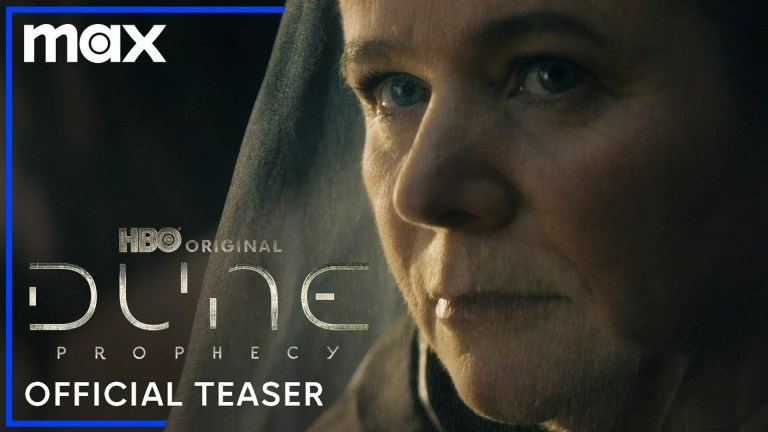
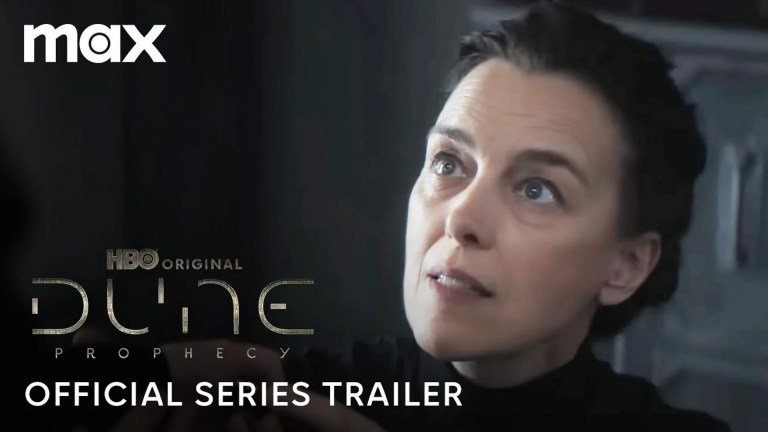
The episode has to introduce a new political landscape, explain the Sisterhood’s ambitions and establish the sisters across different stages of their lives. Its jump between young Valya and the adult Valya, played by Jessica Barden and Emily Watson, gives the story a generational scale. Tula’s younger and adult versions are played by Emma Canning and Olivia Williams. The structure also asks viewers to absorb a lot of names, loyalties and institutional history before they have much time to know the people beneath them.
Rank #2
![Dune: Prophecy Season 1 [Steelbook] [4K UHD] [2025] [Blu-ray] [Region Free]](https://m.media-amazon.com/images/I/413BAEUfKoL._SL160_.jpg)
- Dune: Prophecy Season 1
That density is the premiere’s most persistent weakness. The exposition makes the central political premise understandable, but the early movement can feel more like setup than momentum. The time jump raises the stakes of Valya’s promise, yet the transition does not always give the sisters’ distinct motives enough room to land. Valya’s resolve is legible; the larger challenge is making the dynastic and institutional machinery feel like the pressure shaping personal choices, rather than a diagram viewers must memorize.
That trade-off is reflected in the range of episode-specific critical responses. Reviews collected on Rotten Tomatoes point to a clunky prologue, exposition and uneven momentum, while another response pairs cautious optimism with praise for the world and reservations about character depth. Den of Geek’s Joe George is more negative about the adaptation. These are individual critical judgments, not a single consensus, but they identify the same useful test for the series: whether it can make its lore serve character and drama instead of crowding them out.
Do these 3 things before closing this tab:
1Clear out junk files and repair common Windows errors2Scan for outdated or missing drivers - takes under a minute3Repair Windows errors before they cause bigger problemsRank #3
![Dune: Prophecy Season 1 [Blu-ray] [2025] [Region Free]](https://m.media-amazon.com/images/I/412ZLhLRjuL._SL160_.jpg)
- Dune: Prophecy Season 1
World-building and the Desmond Hart mystery
For a prequel set so far before the familiar Atreides story, the premiere needs to feel like Dune without relying on Paul’s presence. Its scale, costumes and political staging help establish that continuity while making the Sisterhood’s institutions the center of attention. That is the show’s strongest point of difference: this is a story about the systems that produce and influence power, not only the people who inherit it.
Desmond Hart, played by Travis Fimmel, adds a second source of tension. He is a soldier presumed dead who returns from Arrakis claiming extraordinary power. The premiere uses that arrival as an open question rather than an answer, and it risks competing with the Sisterhood’s more carefully developed political conflict. Showrunner Alison Schapker described the uncertainty to TIME: “He really is a mystery of the show. And who has empowered him or what has empowered him is a central mystery that our sisters have to find out.” That statement confirms the thread is intended to continue; it does not, by itself, establish that the mystery will pay off.
Rank #4
![Dune: Prophecy Season 1 [4K UHD] [2025] [Blu-ray] [Region Free]](https://m.media-amazon.com/images/I/41NHQps8OfL._SL160_.jpg)
- Dune: Prophecy Season 1
Verdict: a strong premise, still finding its rhythm
“The Hidden Hand” is most compelling when it turns the Bene Gesserit’s institutional ambition into a question about control, complicity and succession. The idea of a Sisterhood trying to shape the Imperium gives Dune: Prophecy room to tell a different kind of story within the same universe. The premiere’s world-building supports that shift, and Valya’s promise supplies a clear political engine.
Its opening is less assured as character drama. Exposition and introductions sometimes flatten the pace, and Desmond Hart’s unexplained power adds intrigue without yet resolving whether it strengthens or distracts from the central conflict. The episode earns cautious interest rather than a complete verdict: its premise is sharper than its early dramatic execution, but the question it raises is strong enough to carry the series forward.
Best Value
![Dune Prophecy: The Complete First Season (SteelBook Limited Edition, 1-6 Episodes) [4K UHD + Blu-ray] [Region Free]](https://m.media-amazon.com/images/I/51yio7I9QDL._SL160_.jpg)
- All 6 Episodes in 4K UHD + Blu-ray – Watch in stunning 4K Ultra HD quality and crystal-clear Blu-ray for the ultimate viewing experience.
- Region Free – Play the discs anywhere in the world without compatibility issues.
- Exclusive SteelBook Limited Edition – Premium packaging with unique artwork, designed for collectors.
- Perfect for Sci-Fi Collectors – A must-have limited edition for fans of the Dune saga, offering both high-quality visuals and a collectible design.
- Perfect for Collectors – The SteelBook Limited Edition is an essential item for any fan or collector, making it a unique piece in your sci-fi collection.
Optional reading
For readers curious about the literary connection, Sisterhood of Dune by Brian Herbert and Kevin J. Anderson is the first book in the Great Schools of Dune prequel trilogy and is identified by TIME as the series’ literary basis. It is an optional point of comparison, not a promise that the episode adapts the novel beat for beat.
Quick Recap
Product prices and availability are accurate as of the date/time indicated and are subject to change. Any price and availability information displayed on Amazon at the time of purchase will apply.