Recommended Free Tools
Some links on this page are affiliate links: if you buy through them we may earn a commission, at no extra cost to you.
To submit a documentary successfully, you need the right category, a premiere-eligible film, a complete entry form and fee, a working private screener, required subtitles or captions, documented rights clearances, and publicity materials. If the festival selects your film, you will usually deliver an exhibition master such as a DCP or ProRes file in addition to the online screener.
Rules change by festival and edition. Check the current regulations immediately before submitting, record the page date or version, and keep a separate tracking row for every festival you target.
1. Confirm that your film fits the exact category
Start with the festival’s category definitions rather than assuming that every documentary feature, short or series is treated alike. Verify whether the entry is for a documentary, episodic project, short, mid-length film or feature, then compare your final runtime with that festival’s thresholds.
The Tool Desk
Outbyte Driver Updater FREEScan for outdated or missing drivers - takes under a minuteDriver Scan →Outbyte PC Repair FREEClear out junk files and repair common Windows errorsFree Scan →Runtime definitions vary
| Festival | Documentary feature or category rule | What to verify |
|---|---|---|
| Sundance Film Festival | Documentary features are currently 50 minutes or longer. | Separate U.S. and international documentary-feature categories, plus the applicable financing and premiere rules. |
| Tribeca Festival | Documentary features are listed at 40 minutes or longer. | Whether your project belongs in a feature, short, episodic or other category and whether a category exception applies. |
| Hot Docs | Separate short, mid-length and feature categories. | The runtime band for the edition and category you select. |
Sundance also separates U.S. and international documentary features and requires at least half of the financing to originate in the relevant territory. Treat country of origin, financing and runtime as eligibility questions, not marketing descriptions.
Popular on Amazon

- NEARLY 2X FASTER THAN OUR PREVIOUS GENERATION(8) – move 1,000 high-res photos in under 60 seconds(6) with up to 2000MB/s transfer speeds(2).
- IP65 RATING AND UP TO 3M DROP PROTECTION(3) – protects against spills and drops.
- POCKET-SIZED – fits easily in pockets and small bags.
- SPACE TO OWN YOUR AI CONTENT – speed and capacity to download your high-res clips and photo edits.
- 256-BIT AES ENCRYPTION(4) – helps keep private files secure with password protection.
2. Audit premiere status and every prior release
Premiere rules are independent for each festival. Before paying an entry fee, create a release history listing every public screening, broadcast, streaming launch, home-video release and theatrical run, with the date and geography. Include festivals, museums, schools and online events if the public could view the film.
How the major rules differ
| Festival | Premiere or prior-exhibition requirement |
|---|---|
| Sundance Film Festival | Current documentary-feature rules require world-premiere status for U.S. documentary features and international-premiere status for international documentary features, with restrictions on prior public exhibition or release before the stated eligibility date. |
| Tribeca Festival | Generally requires a New York Regional premiere and says the project must not have screened or been publicly exhibited within New York State before the festival, subject to category exceptions. |
| Toronto International Film Festival (TIFF) | Requires World, International or North American premiere status at submission. |
| Hot Docs | Requires an Ontario premiere for feature and mid-length submissions. |
Do not infer a universal premiere standard from one acceptance. A prior online release can make a film ineligible at one festival while another still accepts it. Put each festival’s required geography, eligible release date and exceptions in its own row, and ask the festival in writing about an ambiguous screening before submitting.
3. Complete the official entry and fee payment
- Open the festival’s current entry page. Select the precise documentary category and edition; do not reuse a previous year’s form without checking its fields.
- Enter consistent project data. Prepare the title, country of origin, completion year, runtime, language, contact details, production credits, synopsis and complete premiere history.
- Budget the deadline fee. Sundance publishes different early, official and late fee levels. Tribeca states that fees are charged per project and are non-refundable. Record the amount and deadline you selected before paying.
- Submit before the displayed cutoff. Save the confirmation email, receipt and a PDF or screenshot of the completed form.
- Verify platform status. Sundance requires a FilmFreeway submission to show “In Consideration” by 11:59 p.m. Pacific on the final day of the selected deadline window. A non-working video file or link can disqualify the entry.
Use one master project sheet so the runtime, spelling, director name, country, language and premiere history match across the form, screener page and press materials.
Free tools Windows power users keep installed
One-click scans. No signup required.
Also popular on Amazon
- NEARLY 2X FASTER THAN OUR PREVIOUS GENERATION(8) – move 1,000 high-res photos in under 60 seconds(6) with up to 2000MB/s transfer speeds(2).
- IP65 RATING AND UP TO 3M DROP PROTECTION(3) – protects against spills and drops.
- POCKET-SIZED – fits easily in pockets and small bags.
- SPACE TO OWN YOUR AI CONTENT – speed and capacity to download your high-res clips and photo edits.
- 256-BIT AES ENCRYPTION(4) – helps keep private files secure with password protection.
4. Build a dependable screener
The screener is the file or link programmers actually review. Follow the requested platform and format exactly, and assume that an inaccessible link is equivalent to no submission.
Link, password and playback checks
- Use a private or password-protected streaming link when required. Tribeca’s rules require this type of link and, for TF27 rules, require it to remain active and accessible through June 4, 2027.
- For Hot Docs, paste both the screener link and password into the Screener Information field.
- Test the full film, audio, subtitles, password and viewing permissions in an incognito browser, on a second device and over a separate network.
- Keep the same link active throughout the review period. If the URL or password changes, notify the festival immediately; Tribeca warns that an inactive link or incorrect password can make a submission ineligible after follow-up.
Work-in-progress entries
If the festival accepts unfinished cuts, label the screener clearly as Work in Progress or Rough Cut. State which elements are temporary or missing, such as a temporary score, color grade, visual effects or final captions. Tribeca expressly permits WIP entries when the submission indicates the expected changes or missing elements. Never present an unfinished cut as final if the form asks for that distinction.
5. Prepare subtitles, captions and accessible versions
Language and exhibition requirements are separate from the submission screener. Maintain a version plan so you can supply the right file at each stage.
Also popular on Amazon

- Get NVMe solid state performance with up to 1050MB/s read and 1000MB/s write speeds in a portable, high-capacity drive(1) (Based on internal testing; performance may be lower depending on host device & other factors. 1MB=1,000,000 bytes.)
- Up to 3-meter drop protection and IP65 water and dust resistance mean this tough drive can take a beating(3) (Previously rated for 2-meter drop protection and IP55 rating. Now qualified for the higher, stated specs.)
- Use the handy carabiner loop to secure it to your belt loop or backpack for extra peace of mind.
- Help keep private content private with the included password protection featuring 256‐bit AES hardware encryption.(3)
- Easily manage files and automatically free up space with the SanDisk Memory Zone app.(5). Non-Operating Temperature -20°C to 85°C
- Non-English projects commonly need English subtitles at submission. Tribeca requires them and does not accept a dialogue list as a substitute.
- Hot Docs asks selected English-language features, mid-length films and series to provide a closed-caption track.
- Sundance guidance highly recommends captions on samples and requires them when spoken language is not English. Its delivery guidance refers to both closed-caption and open-caption versions.
- Keep separate clean, captioned and open-caption masters when requested. A captioned screener is not automatically the correct final exhibition file.
Check subtitle readability, speaker identification, sound effects and music cues. Confirm whether the festival wants a separate caption file, captions embedded in a picture master, or an open-caption export, and note the required format in your delivery tracker.
6. Assemble rights and clearance records
Selection does not replace your legal responsibility. Create a chain-of-title folder before submission and retain signed, dated records for every element that could affect screening rights.
- Archive footage, photographs and other archival material, including territory, term and media rights.
- Music licenses for compositions and sound recordings, including festival, online and promotional uses.
- Appearance and participant releases, location releases and permissions for identifiable private property.
- Trademark, logo, artwork and commissioned-material permissions where applicable.
- Agreements with co-producers, sales agents, broadcasters, funders and distributors, checked for conflicting premiere or festival restrictions.
- Written permissions for sensitive subjects and records addressing privacy, publicity, defamation and archival-use concerns.
TIFF requires submitters to warrant that necessary consents, releases, licenses, authorizations and waivers cover people, characters, locations, things, trademarks, sound recordings, musical compositions and other works, and that the submitter has authority to grant screening rights. Have counsel review unusual risks rather than relying on a generic release.
Also popular on Amazon

- 【USB-A + USB-C Dual Interface】Designed with both USB-A and USB-C connectors, F901 makes it easy to transfer files between smartphones, tablets, laptops, and desktop computers without carrying extra adapters. The push-pull design lets you slide out the USB-C or USB-A connector you need while keeping the connectors protected without a separate cap.
- 【SSD-Level Performance, Up to 520MB/s】Experience faster file transfers with USB 3.2 Gen 2 technology, delivering up to 520MB/s read and 450MB/s write speeds under supported conditions. The SSD-level storage solution helps you move photos, videos, documents, and other large files faster than conventional USB flash drives.
- 【Portable with Convenient Lanyard Hole】A built-in lanyard hole gives you an easy way to attach F901 to a lanyard, keychain, bag, or other gear. Keep your 128GB USB flash drive close at hand and ready for quick file transfers wherever you go.
- 【Broad Device Compatibility】Pre-formatted with exFAT, ready for Android smartphones and tablets, MacBook, Windows PCs, car audio systems, and smart TVs with compatible USB ports.
- 【Durable Zinc Alloy Housing】Built with a zinc alloy housing for durability and efficient heat dissipation during high-speed transfers. F901 is designed for stable operation from 32°F to 122°F (0°C to 50°C).
7. Build the editorial and publicity package
Make one clearly named folder with identical spellings and credits throughout. Prepare the following before you submit, even if some items are requested only after selection:
- A one- or two-sentence logline.
- A short synopsis and a longer synopsis.
- A director’s statement and, when requested, a producer’s statement.
- Complete technical and artistic credits.
- Biographies and filmographies for the director, producer and key participants.
- A director headshot and high-resolution film stills.
- Poster or key art and a trailer, if available.
- Official website and social links.
- A digital press kit or production-notes document.
Sundance’s post-acceptance materials specifically ask for a poster when available and recommend a digital press kit containing synopsis, credits, biographies, filmographies, official sites and social pages. Keep filenames descriptive, preserve image resolution and obtain permission before distributing identifiable participant images.
What’s actually slowing this PC down?
Pick the symptom - the matching free tool is one click away.
8. Compare festivals before you commit
Use a spreadsheet rather than a single list of deadlines. The useful comparison is not simply which festival is earliest; it is whether the festival’s rules fit your film’s release history and delivery capacity.
Also popular on Amazon
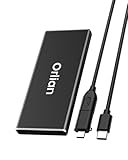
- High-speed Transmission Speed: Equipped with a solid-state drive that supports the USB 3.2 Gen 2 standard, the read speed can reach up to 500MB per second, and the write speed can reach up to 450MB per second, the performance of solid-state drives is much faster.. This enables fast file access and a smooth gaming experience, thereby providing a more efficient and enjoyable usage experience.
- Portable and Lightweight: The product is small in size, light in weight, easy to carry, and convenient to use. The metal design allows for quick heat dissipation.
- Durable Design: Designed with aluminum alloy material, featuring waterproof, dustproof and shockproof functions,stand wear and tear.
- Wide Compatibility: The external SSD can be easily connected to various Type-C devices such as Windows, Mac, iPad Pro, iPhone, and Android devices via USB-C and USB-A interfaces, enabling convenient and fast file transfer.
- What You Get:1 x 250GB Pocket-sized solid-state drive, 1 xUSB-A to Type-C data converter, 1 x USB-A to Type-C data cable (8.66 Inch), 1 x storage bag
| Comparison field | Questions to record |
|---|---|
| Premiere geography | Is the requirement world, international, North American, regional, New York or Ontario premiere? What prior screenings invalidate it? |
| Category and runtime | Does the film fit documentary, episodic, short, mid-length or feature definitions for this edition? |
| Deadline and fee | What are the early, official and late dates, the selected fee, the currency and the refund policy? |
| Screener and captions | Which platform, password method, subtitle language and caption version are required at entry? |
| Rights and delivery | What warranties, licenses, exhibition files, cue sheets or audio materials must be supplied after selection? |
| Audience and market fit | Does the festival serve the film’s subject, geography, form and intended professional audience? |
| Timing of materials | Are press materials required with the entry or only after acceptance? |
9. Prepare for acceptance and exhibition delivery
A festival normally requests a higher-quality exhibition master after selection. Keep a delivery package ready instead of trying to export everything after the acceptance deadline.
Typical exhibition files
- Sundance identifies a DCP for in-person exhibition and a ProRes file for online screenings when applicable. Its FAQ also references closed-caption and open-caption versions.
- Maintain the approved picture master, captioned versions and any requested audio stems.
- Include the DCP package, ProRes export, poster, stills, press kit, cue sheet and checksum manifest.
- Store the package on a labeled portable SSD and keep a second backup in a separate location.
Before shipping or uploading, confirm the festival’s required filename, frame rate, aspect ratio, audio layout, subtitle format and delivery deadline. Do not assume that a DCP made for one venue will meet another venue’s technical specification.
10. A final pre-submission checklist
- Category, runtime, country and financing definition verified.
- Every public screening, broadcast, stream, home-video release and theatrical run logged with date and geography.
- Premiere eligibility checked separately for each festival.
- Entry fields, credits, synopsis, language and contact information proofread against the master sheet.
- Fee, deadline and non-refundable status recorded; receipt saved.
- Private screener tested in an incognito browser, on another device and on another network.
- Password and permissions confirmed; link scheduled to remain active through the review period.
- English subtitles or other required caption files checked for accuracy and readability.
- Chain-of-title folder complete, including archive, music, appearance, location, trademark and third-party permissions.
- Logline, synopses, statements, credits, biographies, headshot, stills, poster and press kit ready.
- Exhibition-master plan, backup storage and delivery specifications documented for a possible acceptance.
Common mistakes that make otherwise strong entries fail
- Assuming one premiere rule applies everywhere: A prior screening or online release can invalidate one submission but not another.
- Submitting the wrong runtime category: Feature thresholds differ, and Hot Docs separates short, mid-length and feature entries.
- Letting a screener expire: A broken link, changed password or blocked permission can make the project ineligible.
- Using a dialogue list instead of subtitles: Tribeca requires English subtitles for non-English projects at submission.
- Waiting for selection to clear rights: Missing archive, music or participant permissions can prevent a festival from exhibiting the film.
- Sending the screener as the exhibition master: Selected films may need DCP, ProRes, captioned versions and additional production documents.
Deadlines, fees, premiere windows, runtime definitions, caption rules and delivery specifications change by edition. Re-open each festival’s current rules immediately before submission and record the page date or version in your tracker.






Say something about this film