Some links on this page are affiliate links: if you buy through them we may earn a commission, at no extra cost to you.
Yes—but their friendship changed. C.S. Lewis and J.R.R. Tolkien became close Oxford friends, creative collaborators and fellow Inklings. In later life they saw less of one another and experienced strain, yet the available evidence supports a cooling of contact rather than a clearly documented, permanent falling-out. Their letters and biographies show a substantial intellectual bond while leaving the weight of particular causes uncertain.
How Lewis and Tolkien became friends
Lewis and Tolkien met in Oxford’s academic world. A 2019 account from the Christian History Institute dates their first meeting to an Oxford faculty meeting on May 11, 1926. That date comes from a secondary narrative, so it is best treated as a reported date rather than an independently verified diary entry. The same account describes an initially unfavorable impression that changed as the two discovered shared interests.


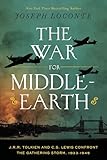
The relationship crossed an important disciplinary boundary. Tolkien was a philologist, a scholar of language and historical texts; Lewis’s own intellectual formation was different. A scholarly article in Review of English Studies discusses how Tolkien’s friendship helped Lewis move beyond an early prejudice against philologists. Their bond was therefore not simply the result of similar literary tastes. It involved a genuine exchange between people whose methods and academic backgrounds were not identical.
What’s actually slowing this PC down?
Pick the symptom - the matching free tool is one click away.
By the late 1920s, the friendship had become close. A later compilation attributes to Tolkien the view that Lewis was his closest friend for roughly the period from 1927 to 1940 and says that they met less often afterward. Because that wording is transmitted through a secondary compilation, it should not be presented as a verified quotation without checking the original letter or the relevant biography. The underlying historical point—intense early closeness followed by reduced contact—is consistent with the broader evidence.
Popular on Amazon
The Inklings made the friendship active, not merely social
Lewis and Tolkien belonged to the Oxford literary circle known as the Inklings. The group’s importance lies in what its members did together. An official C.S. Lewis site describes Tolkien’s Monday morning visits and explains that members read drafts aloud, then encouraged, criticized, corrected, interrupted, argued and advised one another.
This practice made friendship part of the writing process. A manuscript was not treated as finished simply because its author had completed a draft. It was exposed to listeners who could challenge a sentence, question a plot turn or point out a weakness in an idea. Tolkien and Lewis were consequently collaborators in a demanding sense: each served as an informed audience and critic for the other, even when they did not agree.
The Inklings also supplied continuity. Regular meetings created repeated opportunities for conversation about mythology, theology, language, history and imaginative literature. Their relationship was sustained through a shared intellectual routine, not only through occasional personal visits or correspondence.
Quick wins for a faster PC:
Clear out junk files and repair common Windows errorsFree Scan →Fix the driver behind crashes, sound loss and screen glitchesFind Drivers →What “stayed friends” means in this case
The phrase can imply several different things: uninterrupted intimacy, continued affection, frequent meetings or the absence of any serious disagreement. The surviving evidence does not support all of those meanings equally.
Also popular on Amazon
| Question | What the evidence supports | What it does not establish |
|---|---|---|
| Did they form a real friendship? | Yes. Their correspondence, shared criticism and Inklings activities show a substantial intellectual and personal bond. | That every period of the relationship had the same intensity. |
| Did they remain in contact? | Accounts describe continued friendship in a broad historical sense. | That they continued to meet as frequently as they had in Oxford’s earlier years. |
| Did they have later strain? | Yes. Biographical accounts identify several possible sources of tension and distance. | A single, proven event that ended the relationship. |
| Was there a definitive falling-out? | Not on the evidence summarized here. Reduced contact is better documented than a formal rupture. | That they stopped caring about each other or became complete strangers. |
“They stayed friends, though less close and less often together” is therefore the most defensible formulation. It recognizes the later distance without turning it into a dramatic break that the sources do not securely document.
What their letters can—and cannot—tell us
The Letters of J.R.R. Tolkien
The Letters of J.R.R. Tolkien was edited by Humphrey Carpenter with Christopher Tolkien’s assistance. Readers should identify the edition they use because later editions include additions or restorations that can change the material available for consultation. A letter collection is valuable evidence, but it is not automatically a complete transcript of every exchange or a neutral diary of a friendship.
Letters are written for particular occasions. Some are practical, some affectionate, some argumentative and some retrospective. Silence can mean many things: a lost letter, an unrecorded conversation, a busy period or a relationship that had genuinely become less active. It cannot by itself prove hostility.
C.S. Lewis Collected Letters, Volume One
The official C.S. Lewis site describes C.S. Lewis Collected Letters, Volume One: Family Letters 1905–1931 as including letters Lewis wrote to Tolkien. It also identifies a letter describing an evening with Tolkien and Hugo Dyson. Those references confirm that Lewis’s published correspondence is directly relevant to the early friendship.
Also popular on Amazon
The volume’s title matters. It covers family letters from 1905 through 1931, so it illuminates the period in which the relationship was forming but cannot, by itself, answer what happened across the whole of the later friendship. For later claims, readers need additional volumes, Tolkien’s letters and biographical context.
Why a published collection is not the whole relationship
Editors select, date and annotate documents. They may restore material in a later edition, omit items for reasons of space or copyright, or include a letter because it illuminates a particular biographical question. Published correspondence is therefore best read alongside diaries, memoirs and biographies, with each item’s date and provenance kept visible.
What the biographies add
Humphrey Carpenter’s J.R.R. Tolkien: A Biography is identified as an authorized biography and includes discussion of Tolkien’s dealings with Lewis. Carpenter also wrote The Inklings, a broader group history that places their friendship inside Oxford’s literary community. The latter book is useful for context, but detailed claims should be checked against the book itself rather than relying on a brief secondary description.
Do these 3 things before closing this tab:
1Fix the driver behind crashes, sound loss and screen glitches2Repair Windows errors before they cause bigger problems3Scan for outdated or missing drivers - takes under a minuteBiographies perform a different task from letters. They connect events that may be separated in the correspondence, reconstruct routines and introduce testimony from people around the two men. That synthesis is useful, but it is also interpretation. A biographer may infer that a move, marriage or change in companions explains fewer meetings even when no letter says so directly.
Also popular on Amazon

- William Morrow
- The Silmarillion: Illustrated by J.R.R. Tolkien (Tolkien Editions) (Tolkien Illustrated Editions)
A careful account should distinguish four levels of evidence:
- Contemporary letters or diaries: dated records closest to the event, though still selective and written for a purpose.
- Later recollections: memories that may preserve emotional meaning but can compress or reshape chronology.
- Published editions: edited collections whose contents depend on editorial decisions and edition history.
- Biographical inference: an author’s explanation of how separate facts fit together.
Why did their contact cool?
No single explanation is established as exclusive. The accounts available for this question point to several overlapping changes in personal circumstances, geography and intellectual companionship.
Tolkien’s response to Lewis’s marriage
The C.S. Lewis Institute identifies Tolkien’s disapproval of Lewis’s marriage to Joy Davidman as one source of strain. That disapproval is a significant biographical claim, but it should be stated as one reported factor rather than as the proven cause of the entire later distance. Personal disagreement can coexist with affection, and a difficult reaction does not demonstrate that a friendship ended.
The Tool Desk
Outbyte Driver Updater FREEScan for outdated or missing drivers - takes under a minuteDriver Scan →Outbyte PC Repair FREEClear out junk files and repair common Windows errorsFree Scan →Lewis’s move from Oxford to Cambridge
Lewis moved to Cambridge in 1954. A change of university city altered the practical conditions that had supported the Inklings: regular Oxford meetings, Monday visits and easy access to the same network. Geography offers a concrete explanation for fewer encounters without requiring a dramatic personal rupture.
Also popular on Amazon
Marriage and changing priorities
Lewis married Joy Davidman in 1956. The marriage changed his domestic life and the distribution of his time. Secondary accounts associate this period with reduced contact, but the fact of a new household does not, on its own, show that Tolkien’s friendship was abandoned.
Changing intellectual circles
Some accounts connect the later distance with the rise of Charles Williams’s influence in Lewis’s circle. This should be treated cautiously. A new or especially influential companion can change a group’s balance and a person’s schedule, yet the available material does not establish that Williams displaced Tolkien or that one relationship caused another to weaken.
These explanations are compatible rather than mutually exclusive. A move, a marriage, different social circles and disagreement about the marriage could all have contributed to fewer meetings. The sources summarized here do not provide enough primary evidence to assign a reliable percentage or rank to each factor.
Free tools Windows power users keep installed
One-click scans. No signup required.
Did they actually fall out?
The strongest conclusion is narrower than the popular “falling-out” formulation. Evidence supports less frequent contact and some strain. It does not securely establish a final quarrel, a declaration that the friendship was over or a complete loss of mutual regard.
That distinction matters because biographies often turn a pattern into a story. If two friends meet less often after a move and a marriage, a later writer may describe the relationship as cooling. That can be a reasonable interpretation, but it is not identical to proof of an intentional break. Unless a dated letter or firsthand account records such a break, readers should avoid presenting it as settled fact.
A practical way to read the evidence
- Start with the date. Place each letter, recollection or biographical statement in the period it describes. Early Inklings cooperation should not be used as proof that the same routine continued decades later.
- Identify the document type. Mark whether the claim comes from a contemporary letter, diary, later memory, edited collection or biographer’s interpretation.
- Check the edition. For Tolkien’s letters especially, note which edition is being cited because later editions can add or restore material.
- Separate meeting frequency from affection. Fewer visits demonstrate less contact; they do not automatically demonstrate hostility.
- Test causal language. “One reported source of strain” is safer than “the reason they fell out” unless a primary document explicitly supports the stronger claim.
- Look for convergence. A conclusion is stronger when letters, biographies and accounts of the Inklings point in the same direction, even if no single source tells the entire story.
The most accurate historical verdict
Lewis and Tolkien were close friends and intellectual collaborators for decades. Their early relationship was reinforced by regular Oxford contact and the Inklings’ demanding practice of reading and criticizing one another’s work. In later years, their contact diminished amid changes in location, marriage, companions and reported disagreement about Lewis’s marriage to Joy Davidman.
What the evidence does not justify is a simple tale in which one argument ended everything. Published letters and biographies reveal both a powerful bond and a later change in its form. The most accurate answer to “Did they stay friends?” is therefore qualified: yes, in the broad historical sense, but not with the same closeness or frequency throughout their lives.






Say something about this film