For type 2 diabetes, remission means blood glucose has returned below the diabetes range for a sustained period without usual glucose-lowering medication. It does not prove that the condition has permanently disappeared, so “cure” is not the term recommended by international experts. A person in remission still needs regular diabetes follow-up and screening for complications.
Remission and cure describe different things
The distinction is about both measurement and certainty. Remission is a clinical description: a person with type 2 diabetes currently has glucose levels below the diabetes threshold after being off glucose-lowering medicine for the period specified by the international consensus definition. The word does not promise that the result will last forever.
Cure normally implies that a disease has been eliminated and will not return. That degree of permanence has not been established for type 2 diabetes, even when glucose levels become normal or near-normal. Blood glucose can rise again, and the biological factors that made diabetes possible may remain.
The 2021 international expert consensus in Diabetes Care therefore recommends “remission” and advises against describing type 2 diabetes as cured. Its authors wrote: “While cure is a hoped-for outcome, as in cancer patients, the group agreed that the term should be avoided in the context of T2D.”
#1 Best Overall
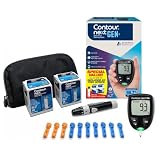
- CLINICALLY PROVEN ACCURACY: Track and manage your diabetes confidently with our reliable blood glucose monitoring system. Readings that are personalized, HI/LO target ranges, and easy-to-understand summaries of your blood sugar test results (1)
- BLUETOOTH CONNECTIVITY: Sync your glucose monitor kit and get readings automatically to a free app via Bluetooth for seamless tracking and data sharing with our blood sugar testing kit
- EASY TO USE: SmartLIGHT target range indicator (2) instantly shows if blood sugar levels are above, below, or within target range for quick, clear feedback
- SECOND-CHANCE SAMPLING (3): Apply additional blood to the same test strip within 60 seconds to help reduce strip waste, avoid unnecessary retesting, and save money over time with our blood sugar testing kit
- NO CODING REQUIRED: Get fast, accurate results without the hassle of manual coding, reducing the risk of user error and making testing simpler, quicker, and more reliable
| Question | Remission | “Cure” |
|---|---|---|
| Is glucose below the diabetes threshold? | Yes, when the consensus laboratory criterion is met. | Would imply this, but the word is not an accepted claim of permanence for type 2 diabetes. |
| Must the person be free of glucose-lowering medicine? | Yes, for the usual definition; the qualifying measurement is made after at least three months without usual glucose-lowering pharmacotherapy. | There is no consensus “cure” test. |
| Can high glucose return? | Yes. Remission may not be permanent. | The ordinary meaning suggests it cannot return, which is why experts avoid the term. |
| Is ongoing care needed? | Yes. Glycemic testing and complication screening continue. | Calling diabetes cured could wrongly suggest that follow-up is unnecessary. |
The three-part test behind the word remission
The consensus definition can be understood as three questions that must be considered together. First, is the person’s glucose below the diabetes threshold? Second, has that level been demonstrated after the required medication-free interval? Third, will follow-up continue even though the current measurement is reassuring?
A normal-looking result answers only the first question. A result obtained while taking glucose-lowering medicine may show excellent control, but it does not answer the medication-free question. A qualifying result answers the first two questions; it still does not answer whether the state will last for years or whether every previous diabetes-related risk has disappeared.
This is why the label is more precise than saying someone “no longer has diabetes.” It records the person’s present glycemic state while preserving the uncertainty about future glucose levels. It also reminds clinicians and patients that the history of type 2 diabetes remains clinically relevant.
The consensus definition of type 2 diabetes remission
The main HbA1c criterion
The usual criterion is an HbA1c below 6.5% (48 mmol/mol), measured at least three months after stopping usual glucose-lowering pharmacotherapy. HbA1c reflects average blood glucose over roughly the preceding several weeks, so the waiting period matters: a low result immediately after medication is withdrawn does not establish that the medication-free state has been sustained for the required interval.
Free tools Windows power users keep installed
One-click scans. No signup required.
This definition applies to type 2 diabetes. It should not be transferred without qualification to type 1 diabetes or to other forms of diabetes, which have different causes, treatment requirements and safety considerations.
Alternatives when HbA1c is unreliable
Some medical situations make HbA1c an unreliable measure of average glucose. In those circumstances, the consensus allows either of two alternatives:
- Fasting plasma glucose below 126 mg/dL (7.0 mmol/L). This is a laboratory fasting measurement, not an isolated home meter reading.
- Estimated HbA1c below 6.5% calculated from continuous glucose-monitoring (CGM) values. The estimate must be derived from CGM data rather than from a single sensor value.
The treating clinician decides whether HbA1c is dependable and which alternative is appropriate. A home glucose meter can help a person observe patterns, but home readings alone do not establish remission under the usual consensus definition.
Why medication timing is part of the definition
A low HbA1c while a person is taking glucose-lowering medicine demonstrates effective treatment, not necessarily medication-free remission. The consensus places the measurement after at least three months without usual glucose-lowering pharmacotherapy so that clinicians can describe the person’s current glycemia without the direct effect of those medicines.
This is a definition, not a treatment plan. No one should stop insulin, tablets, injections or any other prescribed therapy simply to try to satisfy a laboratory criterion. Decisions about changing medicine require an individualized discussion with the clinician managing the diabetes, because abrupt withdrawal can cause dangerously high glucose or other complications.
Rank #2

- Advanced Blood Glucose Meter Kit: The Metene TD-4116 diabetes testing kit utilizes advanced technology to provide more accurate and reliable test results, helping you better control your blood sugar levels. After opening the test strip, it is valid for 6 months. Please refer to the test strip storage instructions in the user manual.
- Easy to Use: The blood glucose monitor is with code-free design, ready for testing once insert the strip correctly; the quick guide inside the package lists the steps to do a test clearly, easy to follow; any problem about operation, we are here ready to answer and provide glucose monitoring system instructional videos
- 7 Seconds And 0.7µl Blood: This blood glucose meter kit just needs 0.7 microliter blood sample and 7 seconds to get you blood glucose value; Fast, minimizes wound and less painful
- More Clearly Glucose Trend: 4 modes to record your glucose value according to different time, shows your glucose trend more clearly; 450 blood sugar values storage, continuous 14/21/28/60/90 day average, which brings more convenient Diabetes management for you and your health provider
- User-friendly for The Aged: 4 reminder alarms could be set everyday to remind the aged to do a test in time, considerate; the display is larger than most glucose monitors, showing the results more clearly, easier to read for the aged
What the threshold does—and does not—show
An HbA1c below 6.5% is a meaningful measurement, but it is not a complete health report. It indicates that the measured average glucose is below the diabetes threshold under the specified conditions. It does not reveal, by itself, whether earlier hyperglycemia affected the eyes, kidneys, nerves or feet. It also does not measure blood pressure, weight, cholesterol, kidney function or other contributors to cardiovascular and kidney risk.
The timing requirement matters just as much as the number. A test drawn before three medication-free months cannot be relabeled as a qualifying remission result simply because the percentage is low. Conversely, a person whose HbA1c is reliable and below the threshold after the interval may meet the glycemic portion of the definition even though continued surveillance remains necessary.
Results should be interpreted with the laboratory report, medication list and treatment dates in front of the clinician. Different units may be used: the consensus expresses the HbA1c threshold as both 6.5% and 48 mmol/mol, and the fasting plasma glucose alternative as both 126 mg/dL and 7.0 mmol/L.
Crashes, No Sound, or Screen Glitches?
Random freezes, missing sound and display glitches usually trace back to one bad driver. Find and replace yours safely.Free scan · under a minutePC Slower Than It Used to Be?
A free scan shows the junk files, broken settings and background clutter dragging Windows down - then fixes them in one click.Free scan · Windows 10 & 11How a clinician establishes whether the criterion is met
The process is retrospective: the clinician first confirms the person’s diabetes history and medication status, then interprets a qualifying glucose measurement in context. A typical evaluation follows these steps:
- Confirm the type of diabetes. The consensus wording concerns type 2 diabetes. The clinician considers the diagnosis, current treatment and any factors that could make the usual criterion inappropriate.
- Review glucose-lowering medicines. The record identifies which medicines have been used and whether the person has been without usual glucose-lowering pharmacotherapy for the required interval. Medication changes are supervised clinical decisions, not a self-directed test.
- Allow the interval required by the definition. At least three months must pass after stopping usual glucose-lowering pharmacotherapy before the qualifying measurement is made.
- Measure HbA1c. An HbA1c below 6.5% (48 mmol/mol) meets the primary glycemic threshold if the test is reliable and the timing requirement is satisfied.
- Use an alternative when necessary. If HbA1c cannot be relied on, the clinician may use fasting plasma glucose below 126 mg/dL (7.0 mmol/L) or a CGM-derived estimated HbA1c below 6.5%, as described by the consensus.
- Plan continued surveillance. Meeting the threshold changes the description of the person’s current status; it does not end diabetes follow-up or routine screening.
Bring dates, rather than relying on memory alone. The date of the last dose, the date of the laboratory test and any intervening illness help the clinician decide whether the timing and measurement are interpretable. If a result is unexpected, the care team can determine whether another measure is more appropriate instead of treating one number as a permanent verdict.
Examples that clarify the difference
A low HbA1c while taking medicine
Suppose a person with type 2 diabetes has an HbA1c of 6.2% while taking prescribed glucose-lowering medicine. That result shows glucose is below the diabetes threshold at the time of testing, but it does not meet the usual medication-free remission definition. The appropriate description is good control on treatment unless a clinician later documents remission under the consensus criteria.
A qualifying result after a supervised medication change
Suppose the same person, after a clinician-supervised change that leaves them without usual glucose-lowering pharmacotherapy for at least three months, has a reliable HbA1c of 6.3%. That measurement is consistent with the laboratory portion of the remission definition. It still does not establish a permanent cure or remove the need for follow-up.
When HbA1c cannot be trusted
If a condition affecting red blood cells or another clinical factor makes HbA1c unreliable, a clinician may rely on fasting plasma glucose or a CGM-derived estimated HbA1c instead. The alternative must meet the stated threshold and be interpreted with the person’s overall medical context; an isolated consumer-device value is not enough.
A result that is close to the threshold
A value just below 6.5% should still be read with its units, reliability and medication history. The consensus does not turn a borderline result into a guarantee about the future. It documents whether the stated criterion is met at that time, while the clinician considers trends, symptoms and the person’s broader health.
Rank #3

- 【Stable & Accurate for Testing】: The Microtech Blood Glucose Meter (BGM) has undergone rigorous clinical and laboratory tests based on strict standards to ensure it meets the highest accuracy criteria. The test strip interface with a double layer 9 electrode and the test strips using a new type of glucose dehydrogenase ensure better stability and anti-interference capabilities. It has obtained certifications such as FDA, CE, GMP, and ISO 15197:2015. It is a reliable and precise choice in blood sugar monitoring.
- 【Get a quick and gentle test in 5 seconds】: The Microtech blood sugar test kit is designed for comfort. The high precision blood sugar detection system only requires a tiny 0.5µl blood sample and can give accurate results in 5 seconds. The adjustable depth lancet device offers a nearly painless testing experience, minimizing pain and providing fast and reliable results every time.
- 【Wider Use for Your Family's Health】: Personalized Alerts + Broader Applicable Population. The Microtech blood sugar test kit has improved accuracy with the HCT range expanded to 10% - 70%. This means it is suitable for a wider range of people, including infants, pregnant women, frail people, and obese people. By setting personalized warning values, the blood sugar concentration limit can be set according to the doctor's advice. Therefore, it is the best choice for your whole family for daily health check-ups and blood sugar control.
- 【Easy to Track】: Our blood glucose test kit can store up to 500 test results, providing 7/14/30/60/90 average blood glucose test values, easily tracking daily blood sugar levels, and better managing your diabetes treatment.
- 【ALL IN ONE】: 1 x Gocheck2 Blood Glucose Monitor, 100 x Blood Test Strips, 100 x 30 gauge Lancets, 1 x control solution, 1 x Lancing device, 1 x Meter User Guide, 1 x Test Strip User Guide, Our Exclusive Lifetime Warranty and Technical Support. Tips: This product doesn't need to use or purchase a control solution for calibration.
Why glucose can rise again after remission
Remission describes the measured state at a particular point in time. It does not erase the mechanisms that contributed to type 2 diabetes. The consensus specifically notes several ways hyperglycemia may recur:
- Weight regain. If weight lost during an improvement period is regained, glucose regulation may worsen again.
- Other illness or physiological stress. An illness can raise glucose or make existing glucose regulation less stable.
- Continued decline in beta-cell function. The pancreatic cells that produce insulin may lose function over time, even after a period of better glucose levels.
These possibilities explain the wording choice. “Remission” acknowledges a substantial improvement while leaving room for recurrence. It is not a prediction that recurrence will happen, nor is it a guarantee that it will not. The duration of sustained remission and its effect on later health outcomes remain uncertain according to the consensus report.
What’s actually slowing this PC down?
Pick the symptom - the matching free tool is one click away.
Recurrence is not a personal failure or proof that the earlier result was meaningless. It is one reason clinicians use a term that allows the state to change. If glucose rises later, the care team can reassess treatment and monitoring rather than treating the earlier remission label as an error.
Remission is not the same as being free of diabetes-related risk
Previous high glucose can have lasting effects
Years of hyperglycemia may affect the eyes, kidneys, nerves, feet, blood vessels and other organs. Lower glucose after remission is beneficial, but it does not prove that previous exposure caused no damage or that existing complications have disappeared.
Remission does not cancel other risk factors
Blood pressure, body weight, cholesterol, kidney health, smoking status and other factors continue to influence cardiovascular and kidney risk. The remission label addresses current glycemia; it is not a complete assessment of health.
Remission does not apply automatically to type 1 diabetes
The thresholds and medication-free wording discussed here come from the type 2 diabetes consensus. A person with type 1 diabetes must not use this explanation as a reason to reduce or stop insulin. The diseases differ biologically and clinically, and insulin can be essential for survival in type 1 diabetes.
Quick wins for a faster PC:
Scan for outdated or missing drivers - takes under a minuteDriver Scan →Clear out junk files and repair common Windows errorsFree Scan →Fix the driver behind crashes, sound loss and screen glitchesFind Drivers →Follow-up that remains necessary
The consensus recommends testing HbA1c or another measure of glycemic control no less often than yearly after remission. Testing may be needed more frequently when symptoms, a previous upward trend, medication changes or other clinical circumstances warrant it.
Routine complication surveillance also continues. The recommended areas include:
- Retinal screening: eye examinations remain important because earlier hyperglycemia can have lasting effects.
- Renal function testing: kidney assessment can identify changes that glucose improvement alone may not reverse.
- Foot evaluation: examination helps detect nerve, skin or circulation problems and supports injury prevention.
- Blood pressure measurement: blood pressure is an independent contributor to vascular and kidney risk.
- Weight measurement: tracking weight can identify a change that may precede worsening glucose control.
These checks are not evidence that remission has failed. They are the safety net that recognizes both the person’s diabetes history and the possibility that glucose levels can change later. The annual minimum is a floor, not a promise that every person needs only one test per year.
Rank #4

- [Complete Starter Kit] The CareSens N Feliz Blood Glucose Monitoring Kit includes 1 blood glucose meter, 100 blood sugar test strips, 100 sterile lancets, 1 lancing device, 1 control solution, and a travel case for convenient blood glucose testing. The meter stores up to 1,000 test results, and the included battery supports approximately 2,000 tests under normal use.
- [Simple and Reliable Testing] The CareSens N Feliz Blood Glucose Monitoring System meets ISO 15197:2013 accuracy requirements. The CareSens N Feliz Meter is designed for convenient self-monitoring of blood glucose. It features automatic strip recognition and provides clear, easy-to-read results to support your daily testing routine.
- [100 Test Strips Included] - This kit includes a total of 100 test strips: - 50 strips are packed inside the carrying case. - The remaining 50 test strips are packaged separately inside the product box. Please check both locations before contacting customer support regarding missing test strips.
- [Small Sample & Fast Results] Only a 0.5 μL blood sample is required, and test results are displayed in approximately 5 seconds. CareSens N test strips are automatically recognized by the meter for quick and convenient testing.
- [Easy to use] Designed with simplicity in mind, the CareSens N Feliz Blood Glucose Monitoring Kit is suitable for everyday personal use. The lightweight meter and portable carrying case make testing convenient whether at home or while traveling.
Using home meters and CGM appropriately
A blood glucose meter can be useful for optional at-home tracking. It may help a person notice patterns, share readings during an appointment or identify a reason to call the care team sooner. However, home readings do not establish remission under the usual definition, and no specific meter or CGM device is endorsed by the consensus.
Do these 3 things before closing this tab:
1Repair Windows errors before they cause bigger problems2Fix the driver behind crashes, sound loss and screen glitches3Clear out junk files and repair common Windows errorsCGM has a distinct role when a clinician determines that HbA1c is unreliable: the consensus permits an estimated HbA1c below 6.5% calculated from CGM values. That is different from pointing to one sensor reading or a short series of home values. The clinician must interpret the CGM-derived estimate and the circumstances that made HbA1c unsuitable.
Do not purchase a device, change medication or set a personal medication-free trial solely to obtain a favorable number. Monitoring tools support clinical decisions; they do not replace laboratory interpretation or medical supervision.
Independent reader supportYour contribution helps us test, update, and keep practical guides available for everyone.What experts do and do not know about remission
The 2021 international consensus established terminology and measurement criteria, but it did not provide a universal promise about how often remission occurs, how long it lasts or how it changes long-term medical outcomes. Those questions depend on the population studied, the definition used, the duration of follow-up and the person’s treatment and health history.
For that reason, a clinician should be cautious about turning one HbA1c result into a forecast. A qualifying measurement can document remission at that time; it cannot specify the date when glucose will rise again, guarantee that complications will be prevented or prove that a particular intervention will work for everyone.
Common misunderstandings to avoid
- “My HbA1c is normal, so I am cured.” A normal result while taking medication is controlled diabetes, not the usual medication-free remission definition.
- “I can stop treatment to see whether I qualify.” Medication withdrawal is not a home experiment. It must be discussed and supervised by the treating clinician.
- “A meter reading proves remission.” The usual criterion uses HbA1c; the named alternatives are fasting plasma glucose or a CGM-derived estimated HbA1c when HbA1c is unreliable.
- “Remission means screening can stop.” Eye, kidney, foot, blood-pressure, weight and glycemic checks continue.
- “The definition covers every type of diabetes.” The consensus definition described here is for type 2 diabetes and should not be generalized to type 1 diabetes.
How to discuss a possible remission result with your clinician
Bring the actual laboratory report, medication list and dates of any treatment changes to the appointment. Useful questions include:
- Was my HbA1c test reliable, or is fasting plasma glucose or CGM-derived estimated HbA1c more appropriate for me?
- On what date did I stop usual glucose-lowering pharmacotherapy, and does the interval meet the consensus timing requirement?
- Does my result meet the type 2 diabetes remission definition, or does it show controlled diabetes while I am still on treatment?
- When should my next HbA1c or other glycemic test occur?
- Are my retinal, kidney, foot, blood-pressure and weight checks current?
- Which symptoms or home readings should prompt an earlier call?
Ask for the clinician’s plan before changing any medicine. If glucose readings rise, symptoms develop or an illness occurs, contact the care team rather than waiting for the next annual test.
The practical bottom line
For type 2 diabetes, the evidence-based term is remission: HbA1c below 6.5% (48 mmol/mol) after at least three months without usual glucose-lowering medication, or an accepted fasting-plasma-glucose or CGM-derived alternative when HbA1c is unreliable. Cure is avoided because it suggests permanent elimination, while hyperglycemia can recur and long-term outcomes are not fully known. Even after remission is documented, continue at least annual glycemic testing and the usual eye, kidney, foot, blood-pressure and weight checks with your healthcare team.
Frequently Asked Questions
Is type 2 diabetes remission the same as being cured?
No. Remission describes glucose below the diabetes threshold under specified conditions. Cure would imply permanent elimination, and international experts advise avoiding that term because hyperglycemia can return.
The Tool Desk
Outbyte PC Repair FREEClear out junk files and repair common Windows errorsFree Scan →Outbyte Driver Updater FREEScan for outdated or missing drivers - takes under a minuteDriver Scan →Best Value

- HSA/FSA eligible. No prescription needed.
- 24/7 GLUCOSE TRACKING. See your glucose response to food, exercise, sleep, and other lifestyle factors via the Lingo app.
- OPTIMIZE YOUR NUTRITION. Discover which foods work for you and those that don't. The Lingo app shows you how specific meals and other factors impact your glucose, so you can learn from your insights and build healthier habits.
- NAVIGATE PREDIABETES WITH A NEW VIEW OF YOU. More time in healthy glucose range is linked to lower diabetes risk. Three out of four users with prediabetes say Lingo was effective in helping to achieve their health goals¹.
- HEALTHY GLUCOSE SUPPORTS HEART HEALTH. What you eat matters to your glucose and your heart. Keeping your glucose in a healthy range (70–140 mg/dL) more often can help protect your heart from heart disease²⁻⁴.
What HbA1c level qualifies as remission?
The usual criterion is an HbA1c below 6.5% (48 mmol/mol), measured at least three months after stopping usual glucose-lowering pharmacotherapy and confirmed to be a reliable measure.
Does a low HbA1c while taking medication count as remission?
Not under the usual medication-free definition. It shows effective control on treatment. A clinician must interpret a later result after the required medication-free interval.
Can I stop my diabetes medicine to test whether I am in remission?
No. The definition is not an instruction to withdraw treatment. Discuss any medication change with the clinician managing your diabetes; abrupt withdrawal can cause dangerously high glucose or other complications.
What if HbA1c is unreliable for me?
The consensus allows fasting plasma glucose below 126 mg/dL (7.0 mmol/L) or a CGM-derived estimated HbA1c below 6.5% as alternatives, interpreted by a clinician.
Recommended Free Tools
Do I still need eye, kidney and foot checks after remission?
Yes. Continue retinal screening, renal function testing, foot evaluation, blood-pressure measurement, weight measurement and glycemic testing at least yearly unless your clinician recommends a different schedule.
Can remission end?
Yes. Weight regain, another illness or physiological stress, and continued decline in beta-cell function can be associated with recurrent hyperglycemia. The duration of remission is not guaranteed.
Does this definition apply to type 1 diabetes?
No. The consensus criteria described here concern type 2 diabetes. A person with type 1 diabetes must not reduce or stop insulin based on this explanation.
The Bottom Line
Remission is documented improvement, not a permanent cure. For type 2 diabetes, the usual criterion is HbA1c below 6.5% after at least three months without usual glucose-lowering medication. Continue annual glycemic testing and routine complication screening, and make medication decisions with your clinician.
The Tool Desk
Outbyte PC Repair FREERepair Windows errors before they cause bigger problemsFix Now →Outbyte Driver Updater FREEFix the driver behind crashes, sound loss and screen glitchesFind Drivers →Quick Recap
Product prices and availability are accurate as of the date/time indicated and are subject to change. Any price and availability information displayed on Amazon at the time of purchase will apply.






Say something about this film