The Tool Desk
Outbyte Driver Updater FREEScan for outdated or missing drivers - takes under a minuteDriver Scan →Outbyte PC Repair FREERepair Windows errors before they cause bigger problemsFix Now →Neither concrete nor asphalt is automatically the better pavement. Choose the material only after comparing the loads your pavement will carry, the condition of the existing surface, local climate, available installation time, drainage, the complete installed bid and the maintenance plan. A low initial quote can be a poor value if it excludes base work or assumes unrealistic maintenance; a higher initial price can make sense when its expected interventions and disruption are lower.
The Federal Highway Administration (FHWA) guidance available for this decision is primarily about transportation pavements, including heavily trafficked roads. It is useful engineering context, not a guarantee of driveway prices, service life or performance. For a residential or small commercial project, obtain scope-matched local bids and have a qualified contractor confirm the design.
The short answer: compare the project, not just the surface
Concrete and asphalt are different pavement surfaces, but the material name alone does not determine whether a project succeeds. FHWA describes pavement work as an integrated chain of material selection, mixture or concrete design, testing, construction and quality control. A well-specified installation can outperform a poorly designed one regardless of the label on the surface.
Start by defining the project in writing: pavement area, expected vehicles and loads, drainage, access limits, required opening date, existing-pavement condition and the maintenance you are prepared to fund. Ask every bidder to price that same scope. Then compare the initial installation and the likely interventions over a stated period, rather than treating the lowest first invoice as the lowest cost.
Free tools Windows power users keep installed
One-click scans. No signup required.
#1 Best Overall
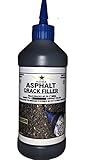
- DIY - Fast & Easy To Apply - No Special Tools Needed
- Formulated To Remain FLEXIBLE in HOT and COLD Weather
- Fill Cracks up to ONE INCH WIDE
- Seals Cracks To Prevent Further Damage
- MADE IN THE U.S.A.
What the available FHWA evidence does—and does not—establish
FHWA’s SHRP2 preservation guidance selects treatments using traffic level, pavement condition, climate, available work hours, treatment performance and cost. Its treatment matrices distinguish asphalt and Portland cement concrete surfaces and match treatments to distress type and severity. That is a roadway-treatment framework; it is not a universal ranking of concrete versus asphalt for every driveway.
FHWA’s 2012 research roadmap says concrete pavements are generally considered more expensive initially than asphalt in most markets, while potentially equal to or lower in life-cycle price under the design procedures discussed there. The statement is historical, transportation-oriented and dependent on analysis assumptions. The same roadmap identifies weak project-specific cost-estimation tools and gaps in long-term maintenance and user-impact data. Do not turn it into a current local price rule.
No current, directly comparable residential-driveway price or service-life statistic was established in the available sources. Local bids, soil and drainage conditions, design thickness, access and regional labor costs can change the result substantially.
Build the decision around six project questions
1. What traffic and loading will the pavement carry?
List the heaviest and most frequent users, not only the vehicle that normally parks there. A private driveway may see passenger cars most of the time but occasional moving trucks, delivery vehicles, trailers or construction equipment. A commercial entrance, loading lane or public road has a different traffic pattern and consequence of failure.
Do these 3 things before closing this tab:
1Scan for outdated or missing drivers - takes under a minute2Clear out junk files and repair common Windows errors3Fix the driver behind crashes, sound loss and screen glitchesGive bidders the information in writing: vehicle types, approximate frequency, turning movements, parking duration and any concentrated loads. FHWA’s treatment-selection work treats traffic level as a primary input. If a contractor does not ask about loading, request an explanation of how the proposed thickness and base design account for it.
2. What is the condition of the existing pavement and base?
Determine whether the project is new construction, an overlay, a partial replacement or a reconstruction. Record visible cracking, depressions, heaving, raveling, broken slabs, standing water and areas that feel soft. A surface treatment cannot compensate for every underlying failure.
Ask for the proposed response to each distress: clean and seal, patch, remove and replace, overlay, restore or reconstruct. FHWA’s concrete-preservation guidance warns that a treatment can address visible symptoms without correcting the underlying cause. If the base is unstable or drainage is inadequate, a crack product or cosmetic patch may only postpone a larger repair.
Rank #2

- IDEAL BLACKTOP — Sikaflex black self-leveling caulk is the perfect choice for filling cracks and gaps in asphalt driveways, pavements, walkways, and similar surfaces
- TOUGH AND DURABLE — Formulated to resist weathering and aging, this asphalt sealer features a permanent elasticity that also helps prevent tearing and cracking
- TOUGH AND DURABLE — Formulated to resist weathering and aging, this asphalt sealer features a permanent elasticity that also helps prevent tearing and cracking
- FAST-ACTING — Once your asphalt sealant is applied, required skin time is typically less than 60 minutes, so long as temperature and humidity is moderate
- READY TO USE — Sealant comes ready for use in handy cartridges that fit most standard caulk guns. No mixing is required. Condition cartridge to between 65 °F and 75 °F prior to use for best results
3. What climate and site conditions apply?
Tell the contractor the project’s location, drainage pattern, shade and exposure, and any known seasonal ground movement or freeze-thaw conditions. Climate is an explicit selection input in FHWA’s SHRP2 guidance, but the available sources do not provide a region-by-region driveway ranking for the two materials.
PC Slower Than It Used to Be?
A free scan shows the junk files, broken settings and background clutter dragging Windows down - then fixes them in one click.Free scan · Windows 10 & 11Outdated Drivers Are Slowing You Down
One free scan finds every outdated or missing driver and matches the right update for your exact hardware.Free scan · exact hardware matchRequire the bid to show how water will leave the pavement and where the finished surface will meet garages, sidewalks, roads and property boundaries. A material comparison that ignores drainage is incomplete because water management affects the pavement system, not merely its appearance.
4. How much installation time is available?
State the date by which the pavement must be usable and how access will be managed during construction. FHWA includes available work hours in treatment selection. A proposal that fits a short closure may be preferable to one that requires a longer disruption, even if its initial price differs.
Have the contractor write the expected sequence: demolition, base preparation, placement, finishing, curing or cooling requirements, joint or crack work, and the point at which vehicles may return. Do not rely on a generic “ready soon” promise; the opening condition should be part of the scope.
5. What performance and maintenance can you realistically fund?
Ask which intervention is expected first, what distress it addresses and what would trigger a larger rehabilitation. FHWA’s preservation materials include long-life design, overlays and restoration as preservation approaches. They also emphasize matching a treatment to the distress and its severity.
What’s actually slowing this PC down?
Pick the symptom - the matching free tool is one click away.
Separate routine preservation from structural repair. Crack sealing can be an appropriate asphalt-preservation treatment when the crack is suitable for sealing, but a retail crack filler is not proof that the surrounding pavement is structurally sound. The contractor should explain whether sealing is preventive, temporary or part of a broader repair.
6. What is the complete cost over a stated period?
Request an analysis period—for example, the period you expect to own the property—and list every assumed intervention, access closure and maintenance allowance. A life-cycle comparison is meaningful only when both bids use the same period and assumptions.
Rank #3

- LONG-LASTING SEALANT - Fortified with plasticizers for added flexibility, Jetcoat Premium Elasto Asphalt Crack Filler is designed to enhance and repair asphalt pavement surfaces. This asphalt driveway filler is polymer-modified and emulsion-based for ultimate sealing power.
- GREAT FOR MULTIPLE SURFACES - Use this extra strength driveway filler on all types of asphalt pavements and blacktop surfaces. Quickly fill in cracks, holes, gaps, and breaks with this dynamic and powerful sealant in parking lots, airports, athletic courts, driveways, traffic safety islands, playgrounds, and walkways.
- READY TO USE - This sealant comes ready to fill and seal any blacktop surface. Simply stir the sealer to a uniform consistency and continue to stir throughout the application process. Dries black.
- EASY APPLICATION - Shake well and use the included spout to pour product into the crack slightly above surface level. The material may settle, requiring a second application. Always allow 24 hours between applications. To prevent cracking or tracking, avoid heavy or uneven application.
- LONG-LASTING REPAIR - Our polymer-modified asphalt emulsion-based crack sealant has resilient characteristics that allow for self-healing quality and lasting results. It has excellent low temperature durability, zero issues with high temperature tracking, and dries fast.
Include demolition and disposal, excavation, subgrade or base correction, drainage, edge restraint, surface thickness or design, testing, traffic control, restoration of adjacent areas and taxes or permits where applicable. A cheap surface-only quote is not comparable with a full reconstruction quote.
Initial price versus life-cycle cost
Initial price answers, “What must I pay to build this scope now?” Life-cycle cost asks, “What will this pavement require over the chosen period, and how much disruption will those interventions cause?” FHWA’s historical highway context places concrete’s initial price generally above asphalt in most markets, while allowing that life-cycle price can be equal or lower under the design procedures studied.
That conclusion cannot be transferred directly to a present-day driveway. The roadmap itself notes limitations in project-specific cost estimation and long-term maintenance and user-impact information. Your comparison should therefore show assumptions rather than a single headline number.
| Decision axis | What to compare in the bids | How to interpret the evidence |
|---|---|---|
| Upfront installed cost | Local price for identical area, base work, thickness or design, drainage, access and installation timing | FHWA’s comparison is historical and roadway-oriented, not a current residential price rule. |
| Life-cycle cost | Initial installation plus scheduled or expected interventions and user disruption over one stated period | Results depend on assumptions; long-term maintenance and user-impact data can be incomplete. |
| Site and use | Traffic/loading, existing condition, climate, work-hour limits and intended treatment performance | These are explicit roadway treatment-selection inputs; a driveway design still needs local confirmation. |
| Construction quality | Design, materials, placement, testing and quality-control responsibilities | FHWA’s asphalt program spans these stages, showing why material name alone is not a quality specification. |
| Repair and maintenance | Distress type and severity, diagnosis, treatment and the cause the treatment is expected to address | Preservation can target symptoms without resolving structural causes. |
Specify the work before comparing materials
Ask each contractor to provide a line-item scope. At minimum, require:
- Measured pavement area and geometry, including edges and tie-ins.
- Removal, excavation and disposal quantities.
- Subgrade and base preparation, with any soft or contaminated areas identified.
- Surface thickness or concrete design, plus reinforcement or joint details when proposed.
- Drainage grades, outlets and transitions to adjoining surfaces.
- Material sources or specifications, placement method and quality-control checks.
- Construction sequence, site access, work hours and traffic-control arrangements.
- Opening requirements, including curing or other restrictions before vehicles return.
- Included maintenance, warranty terms and exclusions.
If one bid includes base correction and another assumes the existing base is acceptable, their surface prices are not comparable. Ask the bidder with the cheaper total to identify every omitted task.
How construction quality changes the outcome
FHWA’s asphalt program covers material selection, mixture design, testing, construction and quality control. The practical lesson applies to either material: the installation needs a defined design and verification process. Ask who approves the design, how delivered material is checked, how grades are verified and what happens if the prepared base does not meet requirements.
Quick wins for a faster PC:
Scan for outdated or missing drivers - takes under a minuteDriver Scan →Clear out junk files and repair common Windows errorsFree Scan →Fix the driver behind crashes, sound loss and screen glitchesFind Drivers →Request photographs or written records of the prepared base before it is covered, especially where access will make later inspection difficult. Confirm how edges, drains, utility covers and transitions will be finished. These details belong in the contract because a polished surface cannot reveal every buried deficiency after completion.
Rank #4

- ASPHALT-MATCHING FINISH: Colored and textured to blend seamlessly with asphalt for a uniform, professional look.
- DURABLE & FLEXIBLE SEAL: Ideal for cracks and joints in driveways, parking lots, and walkways—remains flexible to resist cracking.
- PREVENTS WATER DAMAGE: Forms a strong, water-resistant seal to block moisture, frost, and erosion.
- ADHERES TO DAMP SURFACES: Can be applied in wet or humid conditions, ensuring reliable repairs in less-than-ideal weather.
- EASY TO APPLY: 10.1 fl oz cartridge fits standard caulking guns for fast, clean application. Made in the USA.
Maintenance and repair: diagnose before you seal or patch
When crack sealing is a reasonable path
FHWA’s 2016 preservation brief identifies crack sealing among considered preservation treatments. On an existing asphalt surface, a suitable crack-sealing compound can therefore fit a maintenance plan when the crack is appropriate for that treatment and the surrounding pavement remains stable.
Use the product as a surface-maintenance step, not as evidence that the pavement’s base, drainage or structure is sound. Follow the product’s application limits and have a contractor assess cracks that are widening, displaced, accompanied by depressions or associated with water infiltration.
When a surface treatment is not enough
FHWA’s concrete-preservation report explains that some treatments address visible symptoms while leaving the underlying cause. The same diagnostic caution matters when a pavement has repeated cracking, settlement, pumping, broken areas or persistent ponding. Ask whether the proposed work arrests deterioration or merely hides it.
Possible preservation paths discussed by FHWA include long-life design, overlays and restoration. The correct choice depends on the pavement type, distress and severity; no single treatment should be presented as universal.
Independent reader supportYour contribution helps us test, update, and keep practical guides available for everyone.Practical scenarios for choosing a direction
New residential driveway
Obtain at least two bids with the same measured area, base assumptions, drainage plan and opening schedule. Tell contractors about delivery or moving-truck access. Choose the proposal whose design and scope you can verify, not simply the surface with the lower advertised starting price.
Existing asphalt with isolated, stable cracks
Ask whether crack sealing is an appropriate preservation treatment and what inspection supports that conclusion. If the cracks reflect settlement or an unstable base, price the underlying correction instead of treating the sealant as a structural repair.
Existing concrete with visible deterioration
Request a distress map and a treatment explanation. A preservation treatment may extend service life, but a symptom-only repair can leave the cause in place. Compare restoration, overlay or reconstruction proposals on the same limits and performance assumptions.
Best Value

- High Elasticity & Crack Resistance - Wadities liquid Asphalt crack filler offers a high elasticity formula, making it ideal for filling a wide range of cracks. The cured asphalt concrete sealer delivers long-lasting, reliable repairs for driveways, sidewalks, and patios, withstanding frequent traffic and concrete expansion and contraction to ensure a durable seal
- Excellent Adhesion & Weather Resistance - Asphalt driveway crack filler maintains adhesion even with building movement and temperature changes, making it ideal for high-stress areas such as driveways, sidewalks, and patios. Withstands a wide range of weather conditions, including exposure to UV rays and extreme temperatures, reducing the need for frequent repairs or replacement
- Waterproof & Leakage Protection - Driveway waterproof asphalt sealer provides reliable waterproof protection and once cured, quickly form a strong waterproof barrier that prevents water infiltration. Cement crack filler is Create a seamless waterproof membrane on flat roofs, metal roofs, low slope roofs, foundations, gutters, concrete surfaces, planter boxes, and more, tackling projects from roof leak fixes to basement waterproof
- Fast Curing & Easy Application - Ensure the crack is dry and clean, then open the lid, attach the nozzle and inject the asphalt concrete hole filler directly into the crack and smooth it out with a tool. Our Concrete crack waterproof sealant features a self-leveling, quick-drying formula that significantly reduces curing time and ensure that the surface is smooth and flat. Surface drying time is 4 to 6 hours. 24-48 hours to fully cured
- Multi-Surface Universality - This versatile concrete joint filler is highly versatile and can be applied to a variety of surfaces including concrete, asphalt, brick, tile, metal, and wood. Ideal for a wide range of scenes including driveway, patio, sidewalk, basement, garage, construction site, Parking lot, Cracks in the corners, Garden, provides a comprehensive solution for your asphalt concrete repair needs, ensuring a durable finish
High-traffic or commercial pavement
Provide traffic counts or the best available loading description, turning patterns and closure constraints. FHWA’s roadway guidance is more relevant to this setting than to a private driveway, but it still does not replace a project-specific design and local bid.
A bid-comparison worksheet
Put the following questions in the request for proposal and require written answers:
- What pavement type and design are you proposing, and why does it match the stated loading and site?
- What existing conditions did you assume, and which conditions would trigger a change order?
- What base, subgrade and drainage work is included?
- What area, thickness or design quantities are you pricing?
- What testing and quality-control checks will be performed, and who records them?
- What is the construction sequence and the expected closure or access period?
- What maintenance interventions do you assume during the comparison period?
- Which cracks, settlement, drainage problems or other defects are excluded?
- What warranty applies, and what maintenance is required to keep it valid?
- Are licensing and insurance requirements met for the project’s jurisdiction?
Local licensing and insurance rules vary and were not established in the available FHWA material; verify them with the relevant authority before signing.
Common mistakes that produce a misleading comparison
- Comparing surface prices only: one quote may include excavation and drainage while another does not.
- Using a highway statement as a driveway guarantee: FHWA’s cost and treatment evidence is primarily transportation-oriented.
- Choosing by material reputation: design, construction and quality control materially affect results.
- Sealing without diagnosis: a crack product cannot stabilize an unstable base or correct structural failure.
- Ignoring closure time: a proposal that meets the required opening date may have a different value than one with a longer disruption.
- Accepting an undefined “standard” section: require thickness or design, base preparation and drainage assumptions in writing.
- Mixing analysis periods: a five-year maintenance assumption cannot be compared fairly with a twenty-year one.
A decision sequence you can use
- Document the site: measure the area, photograph distress and note drainage, access and adjacent surfaces.
- Describe use: list routine and occasional vehicles, loads, turning and parking patterns.
- Set constraints: define the opening date, allowable closure and budget range.
- Request scope-matched bids: require identical limits for base, drainage, design, placement, testing and cleanup.
- Challenge assumptions: ask what happens if the existing base is soft, grades are inadequate or distress is structural.
- Compare over one period: add expected interventions and disruption, not only the first invoice.
- Select the explainable proposal: favor the bid that documents diagnosis, design and quality control and that you can maintain.
What a responsible conclusion looks like
The defensible choice is conditional. Asphalt may be the better fit when its proposed design, schedule and maintenance plan match the site’s loading and constraints; concrete may be the better fit when its higher initial cost is justified by the specified design and the expected life-cycle assumptions. The material label cannot settle that question by itself.
Use FHWA’s guidance as a framework for asking better questions—traffic, condition, climate, work hours, treatment performance and cost—then have local professionals apply those questions to your site. The final comparison should be between complete, technically defined scopes, not between two surface names.
FHWA’s 2019 concrete-preservation report defines preservation as “preserving the existing concrete pavement structure to extend its service life for as long as possible, by arresting, greatly diminishing, or avoiding the pavement deterioration process.” That principle applies to the decision process here: select the design and maintenance actions that address deterioration before it becomes reconstruction.
Quick Recap
Product prices and availability are accurate as of the date/time indicated and are subject to change. Any price and availability information displayed on Amazon at the time of purchase will apply.






Say something about this film