PC Slower Than It Used to Be?
A free scan shows the junk files, broken settings and background clutter dragging Windows down - then fixes them in one click.Free scan · Windows 10 & 11Outdated Drivers Are Slowing You Down
One free scan finds every outdated or missing driver and matches the right update for your exact hardware.Free scan · exact hardware matchCasino (1995) is based on real people and the organized-crime story surrounding Las Vegas casinos, but it is a fictionalized drama—not a scene-by-scene historical record. Frank “Lefty” Rosenthal and Anthony Spilotro are the real-life counterparts behind its casino operator and criminal enforcer, while the fictional Tangiers is based on the Stardust. Nicholas Pileggi’s nonfiction book Casino: Love and Honor in Las Vegas was the film’s source.
What is the true story behind Casino?
The film draws on the 1970s history of Las Vegas casino ownership, organized-crime influence, and the people around the Stardust. The Nevada State Library and Archives identifies Pileggi’s nonfiction book as the source from which the 1995 film was created, and the Mob Museum describes the movie as a fictionalized depiction of Rosenthal and Spilotro’s rise and fall in Las Vegas. Those sources support the broad historical foundation; they do not establish every scene or line of dialogue as fact.
![Casino [Blu-ray]](https://m.media-amazon.com/images/I/51WZ87COQZL._SL160_.jpg)
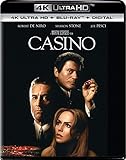
![Casino - 20th Anniversary Edition [Blu-ray] [1995] [Region Free]](https://m.media-amazon.com/images/I/51Z69IYRfRL._SL160_.jpg)
The key distinction is between documented people and events, and the film’s dramatized characters and episodes. Historical records can confirm Rosenthal’s casino role and licensing battles, for example, without proving that a particular on-screen exchange happened as shown.
Who were the real people behind the main characters?
Frank “Lefty” Rosenthal: the casino insider
Rosenthal was a former Stardust executive. The Nevada Supreme Court’s 1991 opinion recounts his licensing litigation and the state’s denial of his key-employee gaming-license applications. UNLV’s archival description characterizes him as the Stardust’s unofficial boss after the property was acquired by Argent Corporation.
#1 Best Overall
The Mob Museum describes Rosenthal as the figure inside casino operations, including the removal of a portion of casino revenue before official tallies. The details of that activity should be distinguished from the film’s specific scenes: the historical sources establish the broad account, not the literal accuracy of each dramatic depiction.
Anthony Spilotro: the criminal figure outside the casino
Spilotro’s role was different from Rosenthal’s. The Mob Museum describes him as an outside figure who handled problems and ran criminal rackets, and says he led a burglary crew known as the Hole in the Wall Gang. The Nevada Supreme Court opinion also records Rosenthal’s admitted association with Spilotro.
The film’s character names and episodes are dramatized. The existence of a real person behind a character does not, by itself, verify the exact actions or dialogue assigned to that character on screen.
Was the Tangiers a real casino?
No. Tangiers is fictional. UNLV identifies the Stardust Resort and Casino as the historical basis for the film’s casino setting. The Stardust was among the Las Vegas hotel-casinos acquired by investor Allen Glick’s Argent Corporation in the 1970s.
Quick wins for a faster PC:
Scan for outdated or missing drivers - takes under a minuteDriver Scan →Repair Windows errors before they cause bigger problemsFix Now →Fix the driver behind crashes, sound loss and screen glitchesFind Drivers →Rank #3
![Casino (Ultimate Collector's Edition, SteelBook) (1995) [Limited - 3,000 copies] [4K UHD + Blu-ray] [Region Free]](https://m.media-amazon.com/images/I/51rDj7hT4JL._SL160_.jpg)
- 4K ULTRA HD + BLU-RAY COMBO – Experience this Scorsese classic in stunning 4K with enhanced detail and immersive audio
- LIMITED COLLECTOR’S EDITION STEELBOOK – Premium SteelBook packaging, limited to 3,000 copies worldwide.
- ICONIC CRIME DRAMA – Directed by Martin Scorsese and starring Robert De Niro, Joe Pesci and Sharon Stone.
- BONUS FEATURES INCLUDED – Behind-the-scenes content and additional material exploring the film’s production
- REGION FREE 4K UHD & BLU-RAY – Compatible with players worldwide
The Mob Museum says Glick obtained a $63 million loan from the Teamsters Central States Pension Fund to purchase and upgrade casino properties. It also describes Rosenthal as an installed operator and says skimmed money was divided among Mafia families in Chicago, Kansas City, Milwaukee, and Cleveland. That account provides context for the movie’s broad plot, but Tangiers and its on-screen events should not be mistaken for literal archival records of the Stardust.
What is documented about the Stardust skim?
UNLV’s description of the Stardust records reports that a 1983 federal grand jury indicted fifteen people in a conspiracy to skim at least $1.6 million from the casino. That figure is the amount attributed to the indictment; it is not a final adjudicated total or proof that precisely that amount was ultimately established in court.
Rank #4

- High quality product
- Durable and design
- Value for money
- Easy to use
For the legal history of Rosenthal’s licensing and exclusion from Nevada casinos, the Nevada Supreme Court’s 1991 opinion is the relevant court record. It documents his status as a former Stardust executive, his association with organized-crime figures including Spilotro, and the course of his licensing proceedings. It does not establish that the film’s portrayal of every hearing is exact.
Independent reader supportYour contribution helps us test, update, and keep practical guides available for everyone.How much of Casino is accurate?
The reliable historical foundation is clear: the film was adapted from Pileggi’s nonfiction book; Rosenthal and Spilotro were real figures; the Stardust informed the fictional Tangiers; and the casino and organized-crime history is supported by archival and legal sources. The sources cited here do not verify each scene, conversation, or character detail as literal history.
Do these 3 things before closing this tab:
1Scan for outdated or missing drivers - takes under a minute2Repair Windows errors before they cause bigger problems3Fix the driver behind crashes, sound loss and screen glitches- Documented: real people, Rosenthal’s Stardust role and licensing history, and the broad setting of organized-crime influence in Las Vegas casinos.
- Attributed allegation: the claim of a skim of at least $1.6 million, as reported in connection with the 1983 indictment described by UNLV.
- Fictionalized: Tangiers, the film’s character names, and scene-level details not established by the historical sources.
For wider context, the FBI’s official Las Vegas history documents federal attention to mob influence in gaming and says a 1979 raid on the Tropicana led to convictions that helped break organized crime’s control of that property. That episode illuminates the era, but it is not evidence for the film’s Stardust plot.
Where can you read the underlying account?
Nicholas Pileggi’s Casino: Love and Honor in Las Vegas is the nonfiction book identified by the Nevada State Library and Archives as the source for the film. Readers seeking the underlying account can start with that book, while treating the movie as a dramatization rather than a substitute for the historical record.
Quick Recap
Sources
- The Mob Museum, “Battle for Las Vegas”
- University of Nevada, Las Vegas Special Collections, “Stardust Resort and Casino Records”
- Supreme Court of Nevada, State v. Rosenthal (1991)
- FBI, “FBI Las Vegas History”
- Nevada Gaming Control Board, “About Us”
- Nevada State Library and Archives, review of Nicholas Pileggi’s Casino: Love and Honor in Las Vegas, in the 1996 Nevada Historical Society Quarterly.
Product prices and availability are accurate as of the date/time indicated and are subject to change. Any price and availability information displayed on Amazon at the time of purchase will apply.