Quick wins for a faster PC:
Scan for outdated or missing drivers - takes under a minuteDriver Scan →Clear out junk files and repair common Windows errorsFree Scan →Breaking down the meaning of every song on ‘The Life of a Showgirl’ reveals a 12-song 2025 album about surviving visibility without surrendering agency: tragic scripts are rewritten, love becomes safety, fame is shown as labor and risk, and happiness is chosen rather than found. Swift confirms many readings, while several real-person theories remain unproven.
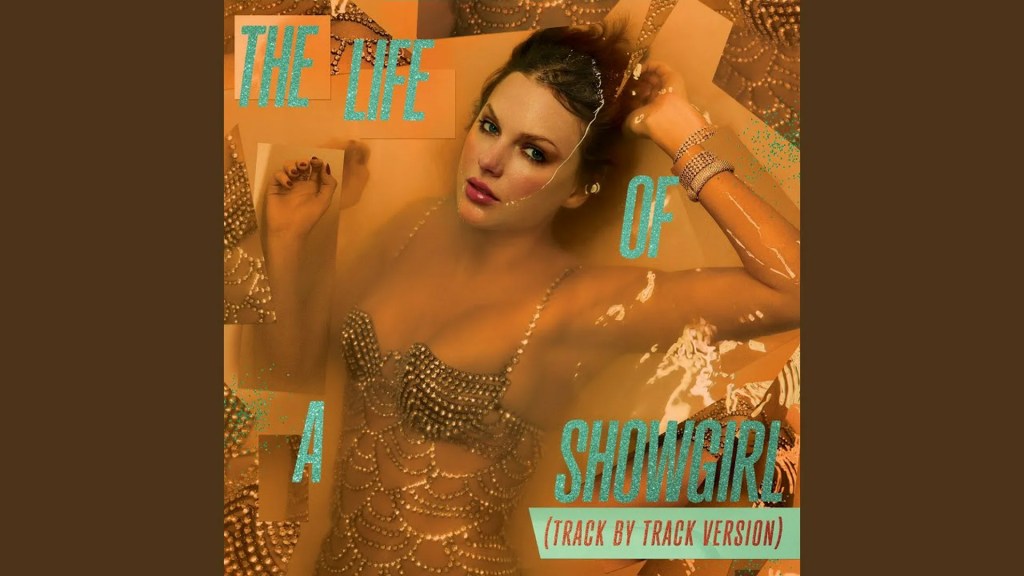
The Life of a Showgirl is a 2025 album with 12 principal songs. According to Amazon Music’s 2025 official track-by-track metadata, the expanded edition has 26 entries and runs 51 minutes because it includes spoken introductions, the songs, and an outro. The distinction matters: the album is not a 26-song collection.
![The Life of a Showgirl: Sweat and Vanilla Perfume CD With Poster [CD]](https://m.media-amazon.com/images/I/41gwYwFbqrL._SL160_.jpg)
Swift’s explanations repeatedly return to what public performance conceals: scrutiny, power, regret, vulnerability, loyalty, and the effort required to keep choosing joy. The analysis below gives each song its confirmed meaning first, then separates literary context, critical interpretation, and fan speculation.
Key takeaways
- The Life of a Showgirl has 12 principal songs. Amazon Music’s 2025 track-by-track edition has 26 total entries and runs 51 minutes because it adds spoken introductions and an outro to the songs.
- The album’s central idea is visibility’s hidden cost. The songs connect glamour with scrutiny, exhaustion, power, regret, vulnerability, loyalty, and the deliberate choice to keep pursuing joy.
- Swift repeatedly rewrites damaging or tragic scripts. Ophelia survives her literary fate, painful words become terms of affection, and public condemnation becomes a reason to judge people independently rather than follow a crowd.
- Several songs are about agency rather than celebrity gossip. “Opalite,” “Eldest Daughter,” “Wi$h Li$t,” “CANCELLED!” and “Honey” focus on choosing happiness, defining a good life, trusting carefully, and reclaiming meaning.
- Popular theories about real people are not confirmed. “Actually Romantic” has been linked by fans to Charli XCX, “Ruin the Friendship” has been linked to a former school friend, and “Father Figure” has been assigned to possible music-business targets, but none of those identifications is established as fact.
Listen or collect the album: Readers who want to follow the songs in order can look for The Life of a Showgirl CD as a physical listening option. Edition, seller, and current availability should be checked before purchase because physical releases and variants can change.
What is the overall meaning of The Life of a Showgirl?
The overall meaning of The Life of a Showgirl is that public glamour is a performance with real costs, but awareness of those costs does not require surrendering love, ambition, pleasure, or creative control. The album treats fame as work and exposure as risk while repeatedly asking how a person can remain emotionally self-directed inside that machinery.
#1 Best Overall
![The Life of a Showgirl[Sweat & Vanilla Perfume CD with Poster]](https://m.media-amazon.com/images/I/41yCcbNzURL._SL160_.jpg)
- Taylor Swift's 12th studio album, The Life of a Showgirl, will be released worldwide October 3, 2025
The title’s “showgirl” is therefore more than a costume or a symbol of pop spectacle. The showgirl represents a woman who is watched, judged, desired, compared, and expected to continue performing even when the audience cannot see the labor behind the image. GRAMMY’s reading of the album similarly emphasizes what audiences do not see when they buy a ticket to a show.
The record is bright and pop-oriented rather than sonically gloomy. GRAMMY identifies Max Martin and Shellback as collaborators whose production helps create that bright, infectious surface. That contrast matters: the album often places difficult questions about scrutiny, ownership, aging, judgment, and vulnerability inside music that still wants to move, flirt, celebrate, and entertain.
Swift’s explanations are the strongest evidence for the songs’ core meanings. The table below separates those artist-confirmed ideas from contextual interpretations and fan theories.
How do the 12 songs compare?
| Song | Reference or frame | Primary emotional problem | Narrative solution | Evidence level |
|---|---|---|---|---|
| “The Fate of Ophelia” | Shakespeare’s Ophelia and Millais’s Ophelia | Inherited tragedy and melancholy | Escape, rescue, agency, and romantic renewal | Swift-confirmed concept; literary context from critics |
| “Elizabeth Taylor” | Elizabeth Taylor’s celebrity mythology and White Diamonds | Scrutiny and the pressure to survive public reinvention | Endurance, glamour, and continued artistic life | Swift-confirmed role-model framing; AP context |
| “Opalite” | Manmade opal and constructed beauty | Waiting for happiness to happen by chance | Choosing and making happiness | Swift-confirmed explanation |
| “Father Figure” | Theatrical authority and empire-building | Unequal power and control | Reversal: the showgirl ultimately controls the empire | Swift-confirmed character approach; critic interpretation of ownership |
| “Eldest Daughter” | Responsibility, caretaking, and public toughness | Performed invulnerability versus private feeling | Trust and emotional disclosure | Swift-confirmed love-song explanation |
| “Ruin the Friendship” | A friendship that might have become romantic | Fear of action and counterfactual regret | Take the risk rather than live with permanent uncertainty | Swift-confirmed theme; named-person theories unconfirmed |
| “Actually Romantic” | One-sided antagonism and unwanted attention | Being made the object of another person’s resentment | Reframe fixation as evidence of significance | Swift-confirmed premise; Charli XCX theory unconfirmed |
| “Wi$h Li$t” | Online comparison and visible consumer aspiration | Borrowing someone else’s definition of success | Define a personal wish list and good life | Swift-confirmed anti-comparison idea |
| “Wood” | Luck charms and showgirl innuendo | Fear that good fortune may disappear | Celebrate love as a lucky, playful state | Swift-confirmed luck motif; sexual reading is textual |
| “CANCELLED!” | Mass judgment and public scandal | Whether a crowd’s verdict should determine personal trust | Judge conduct independently, with loyalty and boundaries | Swift-confirmed experiential premise |
| “Honey” | A loaded term of address | A word associated with belittlement or pain | Reclaim the word through sincere intimacy | Swift-confirmed emotional-reclamation idea |
| “The Life of a Showgirl” | Kitty’s stage fable and show-business mythology | Glamour’s hidden exhaustion and danger | Accept the bargain with open eyes and keep performing | Swift-confirmed ode to show business; Vancouver crowd as album context |
1. What is “The Fate of Ophelia” about?
“The Fate of Ophelia” is about escaping a tragic script and turning a story of drowning and madness into one of survival, rescue, and renewed love. The song opens the album by announcing that the narrator will not remain trapped inside the fate assigned to her by literature, circumstance, or public expectation.
William Shakespeare’s Ophelia in Hamlet is rejected, loses her father, descends into madness, and dies by drowning. TIME’s account of the song connects Swift’s imagery not only to Shakespeare but also to John Everett Millais’s famous painting Ophelia, whose floating figure, water, and flowers have become part of the character’s visual mythology.
Swift described the song as combining “Shakespearean storytelling” with “escaping that fate.” The phrasing clarifies the song’s movement: the reference to Ophelia supplies the danger, while the narrator’s escape supplies the emotional thesis. A romantic partner is presented within the song’s narrative as helping save the narrator’s heart from Ophelia-like melancholy, but that story should not be inflated into a confirmed claim that Swift has equated a named person with Hamlet.
The song is best understood as an opening act of self-revision. Instead of accepting inherited tragedy as destiny, the narrator turns literary doom into a past she can leave behind. Love matters here because it becomes a route back to life, but the deeper point is agency: the narrator is no longer willing to perform the ending that history seems to expect.
Reading companion: A print edition of Shakespeare’s Hamlet is a useful companion for readers who want the source context behind the Ophelia reference. The book is literary background, not an album-adjacent endorsement.
2. Why does “Elizabeth Taylor” matter?
“Elizabeth Taylor” matters because Swift uses one of Hollywood’s most scrutinized stars as a model for surviving public attention while continuing to make art. Elizabeth Taylor represents glamour, romance, scandal, reinvention, and endurance, allowing the song to examine celebrity without reducing Taylor to a decorative name-check.
Swift has called Elizabeth Taylor one of the ultimate showgirls and described her as a role model: “Role models are pretty hard to come by, but I would absolutely say she’s one of mine.” The statement supports a reading based on admiration rather than simple comparison. Swift is drawing a parallel between two women whose work and private lives have been intensely examined; she is not claiming that their careers, relationships, or experiences were identical.
The title also carries a product and pop-culture reference. The Associated Press reports that the song’s title points to Elizabeth Taylor’s White Diamonds perfume, launched in 1991. That reference makes the track’s idea of celebrity more concrete: Taylor’s image exists not only in films and headlines but also in a consumer object that turned star identity into a lasting fragrance brand.
What’s actually slowing this PC down?
Pick the symptom - the matching free tool is one click away.
“Elizabeth Taylor” consequently works as a portrait of celebrity endurance. The song asks what it means to remain visible through scrutiny, romantic mythology, reinvention, and the pressure to keep converting personal life into public spectacle. Taylor becomes a lens through which Swift considers the possibility of surviving the microscope without letting the microscope define the whole person.
3. What does “Opalite” mean?
“Opalite” means that happiness can be made deliberately rather than discovered as an accidental stroke of luck. Swift uses opalite, a manmade opal, as the central metaphor: the stone’s constructed quality becomes a positive image of constructing joy through difficult circumstances.
Swift’s explanation is unusually direct: “It didn’t just happen accidentally for you.” The line rejects the idea that an apparently happy life must have arrived effortlessly. The narrator may acknowledge adversity, but adversity does not receive final authority over her emotional future.
The metaphor also complicates the usual distinction between natural and artificial beauty. Opalite is not presented as worthless because it is made by people. Its manmade quality is precisely what allows Swift to connect beauty with intention, labor, and choice. The song’s optimism is therefore not naïve optimism; it is a decision to build something meaningful even when ideal conditions are unavailable.
Do these 3 things before closing this tab:
1Repair Windows errors before they cause bigger problems2Fix the driver behind crashes, sound loss and screen glitches3Clear out junk files and repair common Windows errors“Opalite” is one of the album’s clearest statements of agency. Where “The Fate of Ophelia” escapes an inherited tragic ending, “Opalite” describes the positive life that can be built after escape. The song’s happiness is not passive, accidental, or granted by fate. It is made.
Rank #2

- Taylor Swift's 12th studio album, The Life of a Showgirl, will be released worldwide on October 3, 2025
4. How does “Father Figure” handle power?
“Father Figure” handles power as a theatrical performance in which an apparently protective authority figure claims control over a family, a legacy, or an empire. The song’s larger reversal is that the showgirl is ultimately the person who controls the empire rather than the subordinate character inside someone else’s structure.
Swift said the song was “a blast to write” and that she loved “stepping into a character like that.” That comment matters because it frames the speaker as a dramatic persona, not automatically as a literal confession about one identified person. The song’s unusually visual and theatrical lines are part of the pleasure of inhabiting a role with exaggerated authority.
GRAMMY interprets the power reversal in the context of Swift’s long-running battles over ownership and creative power. That is a contextual interpretation, not confirmation that the song targets a particular label executive, artist, family member, or business dispute. The safest reading is structural: the song dramatizes who gets to own, protect, name, and command the world being built.
PC Slower Than It Used to Be?
A free scan shows the junk files, broken settings and background clutter dragging Windows down - then fixes them in one click.Free scan · Windows 10 & 11Crashes, No Sound, or Screen Glitches?
Random freezes, missing sound and display glitches usually trace back to one bad driver. Find and replace yours safely.Free scan · under a minute“Father Figure” becomes especially revealing when placed beside the title track. The title track shows the visible performer and the costs of entering show business; “Father Figure” speaks from inside the machinery of authority. Together, the songs ask whether the showgirl must remain someone else’s product or can become the person who controls the stage, the business, and the terms of her own visibility.
5. What is “Eldest Daughter” really about?
“Eldest Daughter” is really about the difference between public toughness and private sincerity. Swift describes it as a love song about showing the self that is hidden from the public and revealed only to people who have earned closeness.
The title naturally evokes responsibility, caretaking, perfectionism, and the expectation that the oldest child should be capable before she is ready. Those associations enrich the song, but Swift’s explanation is broader than a literal family biography. “Eldest Daughter” does not need to be treated as a documentary account of one household; it is a metaphor for the identity built by people who learn to manage responsibility and conceal need.
Modern culture often rewards apparent indifference. Being busy, self-sufficient, and emotionally unbothered can look like strength, particularly for a public person whose vulnerability may be turned into content. The song challenges that performance by treating trust as the place where toughness can be set down.
Love is therefore not presented merely as romance or spectacle. Love creates a private space in which the narrator can admit what actually matters. That makes “Eldest Daughter” one of the album’s clearest examples of love as safety rather than simply desire.
6. Why does “Ruin the Friendship” focus on regret?
“Ruin the Friendship” focuses on the regret created by inaction. Swift frames the song as a look back at a moment when fear or anxiety prevented someone from acting on romantic curiosity, leaving the narrator to wonder whether a kiss or confession would truly have been worse than a lifetime of uncertainty.
The song’s central comparison is between two risks. Acting might change or damage a friendship temporarily. Not acting preserves the friendship’s known form but can create a permanent unanswered question. Swift’s emphasis is on taking chances before the opportunity disappears, not on proving that every friendship secretly contains a romance.
Fans have connected the school setting and death-related details to a particular former friend. That identification is not confirmed by Swift, so it should remain a fan theory rather than the song’s established subject. The confirmed meaning is more universal: counterfactual regret can become its own kind of loss.
The Tool Desk
Outbyte Driver Updater FREEScan for outdated or missing drivers - takes under a minuteDriver Scan →Outbyte PC Repair FREERepair Windows errors before they cause bigger problemsFix Now →“Ruin the Friendship” consequently belongs to the album’s larger argument for agency. “Opalite” says to make happiness; this song says to make a choice. Both reject the comfort of waiting for life to decide on the narrator’s behalf.
7. Is “Actually Romantic” about Charli XCX?
“Actually Romantic” is not confirmed to be about Charli XCX. Swift explains the song as being about discovering that another person has maintained a one-sided adversarial relationship with the narrator without the narrator’s awareness, then reframing that person’s fixation as flattering.
The song’s provocative turn is the word “romantic.” The narrator does not accept the role of wounded target. If another person spends significant emotional energy resenting or monitoring her, the narrator decides that occupying so much of that person’s reality may itself be evidence of importance.
Fans and critics have speculated about Charli XCX because of perceived lyrical connections to “Sympathy Is a Knife” and the artists’ shared social circles. Neither Swift’s explanation nor the cited reporting establishes Charli as the confirmed target. The responsible interpretation is to discuss the theory as speculation or leave the identification out entirely.
Free tools Windows power users keep installed
One-click scans. No signup required.
At the level of theme, “Actually Romantic” is the album’s sharpest example of reframing hostile attention as power. The song does not necessarily say that hostility is healthy or welcome. It says that the narrator can decide what the attention means instead of allowing the other person’s resentment to dictate her emotional position.
Rank #3

- taylor swift the life of a showgirl cd
8. What does “Wi$h Li$t” mean?
“Wi$h Li$t” means that a good life does not have to resemble another person’s visible ambitions. Swift contrasts curated online images and material aspiration with the quieter truth that different people want different futures.
The dollar signs make financial and consumer desire visibly present in the title, but the song is not simply an anti-money statement. The more precise target is comparison: the pressure to perform a wish list because other people have taught the audience what success is supposed to look like.
Secondary descriptions often emphasize domestic and family-oriented wishes, but Swift’s broader artist-confirmed point is individual definition. The narrator wants permission to value her own future without treating someone else’s priorities as a universal ranking system.
Recommended Free Tools
“Wi$h Li$t” therefore extends the album’s agency theme into ordinary life. The showgirl may be surrounded by public measures of achievement, but a successful life still has to be chosen privately. The song asks whose list is being performed when a person says she wants something.
9. Why is “Wood” both lucky and bawdy?
“Wood” is both lucky and bawdy because Swift builds a love song out of superstition while also using unmistakable sexual double meanings. The song’s emotional premise is that being in love feels fortunate; its showgirl persona expresses that feeling through playful, deliberately suggestive language.
Swift’s stated frame includes luck charms and superstitions such as knocking on wood and black cats. Those references make the narrator sound as though she is trying to protect a happy relationship from bad fortune. The repeated luck motif gives the song a sentimental center even when its phrasing becomes knowingly risqué.
The sexual reading is not a hidden theory imposed from outside. The double entendres are part of the text and part of the performance. At the same time, the safest explanation of the song’s core is not a claim about one specific real-life incident. The song combines the feeling of being lucky in love with a comic, flirtatious performance of adult desire.
AP’s reporting places the song among the album’s public-relationship and Easter-egg discussions, but contextual associations should not be mistaken for a confirmed one-to-one explanation of every lyric. “Wood” works even without decoding a private reference.
10. What does “CANCELLED!” say about public judgment?
“CANCELLED!” says that surviving mass judgment can change how a person decides whom to trust. Swift connects the song to experiences with public scandal and condemnation, but the narrator does not respond by automatically accepting every person rejected by the crowd.
The song’s position is more complicated than either total loyalty or total cancellation. The narrator refuses to discard someone merely because a public consensus says to do so, yet she retains the right to examine that person’s behavior and treatment of her. Loyalty is valuable, but loyalty without boundaries would be another form of surrendering judgment.
That distinction gives the song its moral weight. Public condemnation can be unfair, contagious, and detached from the full story. Personal experience can offer information a crowd does not have. But the narrator is not arguing that every condemned person is innocent; she is arguing that she will assess conduct for herself.
Crashes, No Sound, or Screen Glitches?
Random freezes, missing sound and display glitches usually trace back to one bad driver. Find and replace yours safely.Free scan · under a minutePC Slower Than It Used to Be?
A free scan shows the junk files, broken settings and background clutter dragging Windows down - then fixes them in one click.Free scan · Windows 10 & 11“CANCELLED!” also continues the album’s pattern of reclamation. A label imposed by the public becomes material the narrator can examine rather than an identity she must accept. The song turns social judgment into a test of independence.
Independent reader supportYour contribution helps us test, update, and keep practical guides available for everyone.11. How does “Honey” reclaim a painful word?
“Honey” reclaims a painful word by changing who says it and how it is meant. Swift describes a term once used to belittle or criticize the narrator becoming safe and affectionate when it is spoken sincerely by someone who loves her.
The song’s emotional action is small but significant. Language does not have one permanent meaning sealed by its worst use. A word associated with humiliation can be taken back when the narrator has enough agency and intimacy to hear it differently.
That reclamation mirrors the album’s larger work. “The Fate of Ophelia” rewrites a tragic ending; “Opalite” makes happiness rather than waiting for it; “CANCELLED!” questions a public label; and “Honey” transforms a verbal trigger into a sign of safety. The album repeatedly asks who has the authority to define the narrator.
“Honey” is consequently less about a dictionary definition than about emotional context. The same word can wound in one relationship and comfort in another because meaning is shaped by power, intention, trust, and history.
12. What does “The Life of a Showgirl” mean?
“The Life of a Showgirl” means accepting show business with open eyes. The title track presents a fictional showgirl named Kitty, whose performance initially inspires the narrator before Kitty explains that the glitter conceals exhaustion, danger, and obstacles as well as beauty.
Swift calls the song “an ode to show business and the women who move through those pitfalls and obstacle courses.” The description makes the track neither a rejection of spectacle nor a naïve celebration of fame. Show business is alluring, but the women inside it must navigate risks that the audience does not see from its seats.
Kitty’s warning gives the album its governing metaphor. The showgirl is not falsely glamorous; she is a worker whose glamour has a cost. The narrator can admire the performance while understanding what the performance demands. That tension explains why the album can sound celebratory and still be concerned with scrutiny, replacement, judgment, power, and exhaustion.
Sabrina Carpenter’s appearance on the title track extends the album’s conversation across showgirl generations. Amazon’s official metadata identifies the song as “The Life of a Showgirl [feat. Sabrina Carpenter].” The feature shares the spotlight without erasing Swift’s own history as the performer whose tour and public life inspired the album.
The ending includes actual crowd noise from Swift’s final Eras Tour show in Vancouver. Swift said the sound transports her back to the tour that inspired the album. The crowd is therefore not a generic sound effect: it connects the fictional Kitty fable to a specific period of performance, memory, and public connection.
The title track does not present the showgirl as simply retiring from the stage. The ending accepts the bargain with awareness: there is danger and labor behind the glitter, but there is also meaning in choosing to perform, connect, create, and keep finding joy inside an imperfect system.
What themes connect all 12 songs?
1. The album rewrites tragic or damaging scripts
The clearest pattern is transformation. Ophelia escapes drowning; the narrator of “Honey” changes the meaning of a loaded word; “CANCELLED!” refuses to let a public verdict replace personal judgment; and “Actually Romantic” turns another person’s hostility into evidence of the narrator’s significance. These songs do not erase pain. They change who gets to interpret it.
The Tool Desk
Outbyte Driver Updater FREEScan for outdated or missing drivers - takes under a minuteDriver Scan →Outbyte PC Repair FREERepair Windows errors before they cause bigger problemsFix Now →2. Love is safety as well as desire
Love appears as rescue in “The Fate of Ophelia,” private trust in “Eldest Daughter,” emotional repair in “Honey,” and a source of renewed joy across the album. Even “Wood,” with its sexual humor, is built around the feeling of being lucky in a relationship. The record’s romantic songs are not only about attraction; they ask whether intimacy can make visibility less dangerous.
3. Fame is labor and risk, not just glitter
“Father Figure” exposes the authority structure behind the performance, while “The Life of a Showgirl” explains the physical and emotional cost behind the finished spectacle. “Elizabeth Taylor” adds the long view of a woman surviving the public microscope. Together, the songs treat celebrity as an arrangement of work, scrutiny, ownership, reinvention, and endurance.
4. Agency is the album’s central moral
Choose happiness in “Opalite.” Define the future yourself in “Wi$h Li$t.” Take the chance in “Ruin the Friendship.” Decide whom to trust in “CANCELLED!” and decide what a word means in “Honey.” The songs vary in mood and subject, but they repeatedly reject passive acceptance of the script supplied by fate, fans, institutions, crowds, or other people’s expectations.
5. The album is self-aware about legacy without treating the showgirl as finished
The title track’s Kitty and Sabrina Carpenter’s feature bring succession and shared spotlight into the album’s show-business story. Swift remains present as the artist looking back on the machinery that made her visible, but the album does not reduce that reflection to a retirement announcement. The showgirl understands the cost and continues to choose the stage.
Which interpretations are confirmed, and which are speculation?
Swift’s own track-by-track explanations provide the safest foundation for interpreting the album. Parade’s compilation of Swift’s commentary covers the confirmed premises behind songs such as “The Fate of Ophelia,” “Elizabeth Taylor,” “Opalite,” “Father Figure,” “Eldest Daughter,” “Ruin the Friendship,” “Actually Romantic,” “Wi$h Li$t,” “Wood,” “CANCELLED!” and “Honey.” Swift’s official track-by-track material is also available through the Taylor Swift official YouTube channel.
| Interpretation | How to describe it responsibly |
|---|---|
| Ophelia’s literary story and Millais’s painting | Established cultural context for “The Fate of Ophelia,” supported by literary reporting and visual comparison. |
| Elizabeth Taylor as a role model | Artist-confirmed admiration; Swift draws parallels in public scrutiny without claiming identical lives. |
| “Father Figure” and ownership or creative control | A contextual critical reading of the song’s power reversal, not a confirmed accusation against a named person. |
| A specific former friend in “Ruin the Friendship” | Fan speculation based on setting and details; Swift has not confirmed the identification. |
| Charli XCX in “Actually Romantic” | Fan and critic speculation based on perceived lyrical links and social context; not confirmed by Swift. |
| Specific executives, artists, or family members in “Father Figure” | Do not present a target as fact without direct confirmation. |
The distinction between evidence and theory is particularly important for an album that invites Easter-egg decoding. A plausible reference can enrich listening, but plausibility is not confirmation. The songs’ confirmed themes—agency, scrutiny, love, regret, judgment, and the cost of performance—are strong enough to stand without assigning every line to a named person.
Frequently Asked Questions
Does The Life of a Showgirl have 12 songs or 26 tracks?
The Life of a Showgirl has 12 principal songs. Amazon Music’s 2025 track-by-track edition contains 26 entries and runs 51 minutes because the edition includes spoken introductions, the 12 songs, and an outro; 26 entries does not mean 26 principal songs.
Is “Actually Romantic” confirmed to be about Charli XCX?
No. Charli XCX is a fan and critic theory based on perceived lyrical connections and shared social context, but Taylor Swift has not confirmed Charli XCX as the subject of “Actually Romantic.”
Who is “Father Figure” about?
No specific person has been confirmed as the subject of “Father Figure.” Swift described the song as a theatrical character performance, while the song’s broader power reversal can be read as a commentary on authority and creative control.
Is “The Life of a Showgirl” about Taylor Swift retiring from music?
The title track does not simply announce Taylor Swift’s retirement. “The Life of a Showgirl” accepts that show business involves exhaustion, danger, and obstacles while still presenting performance, connection, and creative work as meaningful choices.
The Bottom Line
Bottom line: The Life of a Showgirl is a 12-song album about the hidden work and danger behind glamour, but it is not a rejection of joy or performance. Its songs repeatedly turn tragedy into survival, scrutiny into self-knowledge, pain into intimacy, and comparison into the freedom to define a life on personal terms.
Quick Recap
Product prices and availability are accurate as of the date/time indicated and are subject to change. Any price and availability information displayed on Amazon at the time of purchase will apply.
Recommended Free Tools