Some links on this page are affiliate links: if you buy through them we may earn a commission, at no extra cost to you.
The best keyboard for live performance is the one that lets you reach the sounds and controls you need mid-song without adding unnecessary weight to your rig. For an all-in-one premium instrument, start with the Nord Stage 4. Consider the Roland V-STAGE for its four sound engines and modern stage connectivity, the Roland RD-2000 EX for piano and controller work, the Yamaha YC range for piano-and-organ gigs, or the Korg Nautilus when sequencing and deep sound design matter most.
Those are different kinds of instruments, not interchangeable entries in a universal ranking. Choose by what you play, what you need to change during a song, and what you can realistically transport.
Quick recommendations
| Need | First instrument to consider | Why it fits |
|---|---|---|
| Best all-around premium stage keyboard | Nord Stage 4 | Separate piano, organ, and synth sections with a live-oriented control layout and 88-, 73-, and Compact formats. |
| Premium alternative with modern connectivity | Roland V-STAGE 76 or 88 | Four independent sound engines and dedicated performance sections; choose waterfall action or weighted hammer action by playing style. |
| Piano plus controller rig | Roland RD-2000 EX | Weighted 88-key action, eight zones, 100 Scenes, and extensive audio, MIDI, and physical controls. |
| Piano and organ in one keyboard | Yamaha YC88 | Full weighted 88-key format with direct organ controls. |
| More portable piano/organ balance | Yamaha YC73 | A 73-key format weighing 13.4 kg, lighter than the YC88 while retaining a piano-capable range. |
| Lightweight organ, synth, and band work | Yamaha YC61 | Weighs 7.1 kg and favors portability over a full weighted piano action. |
| Complex programmed shows and sound design | Korg Nautilus | Multiple synthesis engines, Set List mode, and a 16-track MIDI/16-track audio sequencer. |
These recommendations reflect published features and intended workflows, not a claim that one instrument sounds or feels best for every player. Published specifications cannot tell you whether a keybed, patch layout, or sound will suit your hands and band.
What’s actually slowing this PC down?
Pick the symptom - the matching free tool is one click away.
What kind of live keyboard do you need?
“Keyboard” can describe several different jobs. A stage piano centers on acoustic and electric piano sounds, often with extra sounds and controller functions. A stage keyboard is broader: it may combine piano, organ, synth, splits, layers, and hands-on controls intended for performance. A workstation adds deeper synthesis, sampling, sequencing, and production functions. A master controller primarily sends MIDI to software or external sound modules; it may have few or no useful internal sounds. A portable keyboard can be lighter and less expensive, but may trade away premium action, stage-specific controls, or professional outputs.
#1 Best Overall
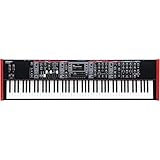
- Premium Stage Keyboards: Professional stage keyboards designed for performers with four independent sound engines powered by Roland's most advanced modeling and sound technologies
- Acoustic Piano Engine: Developed with V-Piano technology and includes two concert grands, an upright piano, a felt piano, and Piano Designer tools for deep sound customization
- Electric Piano Engine: Newly developed engine with the latest SuperNATURAL advancements and includes Tine, Reed, Digital, and Clavinet types with customizable sound parameters, adjustable key touch, and dedicated EP effects
- Organ Engine: Features a three-part console model driven by Virtual Tone Wheel technology, two vintage transistor types, a pipe organ type, and new overdrive and rotary speaker effects
- ZEN-Core Synthesizer Engine: Includes over 400 onboard sounds and supports SDZ Sound Packs and Model Expansions on Roland Cloud with JUPITER-8, JUNO-106, JX-8P, and SH-101 Model Expansion titles available as free downloads for registered V-STAGE owners
Start with the task rather than a feature count. A pianist who needs dependable piano and a few layers may not benefit from a workstation’s sequencing. An organist may value a light action and drawbar-style controls more than 88 weighted keys. A MainStage player should judge the keyboard as a controller and audio/MIDI interface, not just by its internal sounds.
What matters on stage
- Fast sound changes: Can you recall a sound by song or section, and can you move between them without losing sustained notes? Transition behavior can depend on the patch, effects, operating mode, and external gear; test the exact changes you plan to use.
- Immediate control: Splits, layers, section levels, organ drawbars, effects, and EQ are easier to manage when the controls are visible and reachable. A large sound library is not a substitute for useful live access.
- Action matched to repertoire: Hammer action can help piano dynamics but may slow organ glissandi and synth leads. Waterfall or lighter actions suit organ and fast synth work better for many players, but feel less piano-like.
- Stage connections: Balanced XLR outputs are useful for long runs to a house system. Also consider quarter-inch outputs, independent outputs, traditional MIDI, USB audio/MIDI, and the number and type of pedal inputs your rig needs.
- Visibility: Readable displays and clearly labeled physical controls matter under colored or dim stage lighting. Check the instrument in conditions resembling your gigs.
- Transport: Include the case, stand, vehicle, stairs, and whether you load alone—not just the keyboard’s listed weight.
- Recovery: Save setups externally where supported, keep compatible cables and a spare sustain pedal, and have a backup sound source for performances where failure is costly.
Best keyboards for live performance, by use case
Nord Stage 4: best all-around premium stage keyboard
The Nord Stage 4 is the strongest starting point for a player who moves among piano, organ, synth, and layered sounds and wants a performance-oriented layout. Nord describes separate piano, organ, and synthesizer sections, and offers 88-key, 73-key, and Compact versions. The Stage 4 73 uses a 73-key triple-sensor hammer-action keyboard with aftertouch; the 88 weighs about 19.6 kg (43.2 lb). See Nord’s specifications for model details.
It suits cover-band, worship, pop, and other gigs where the player needs to shape sounds or change layers quickly. The 73-key and Compact versions may be more practical than an 88-key board if full piano range is not essential. The trade-offs are premium positioning, a substantial 88-key model, and less emphasis on workstation-style sequencing and production. Choose the model by action and portability; do not assume that one version is best for every keyboardist.
PC Slower Than It Used to Be?
A free scan shows the junk files, broken settings and background clutter dragging Windows down - then fixes them in one click.Free scan · Windows 10 & 11Outdated Drivers Are Slowing You Down
One free scan finds every outdated or missing driver and matches the right update for your exact hardware.Free scan · exact hardware matchRank #2

- Two split points increase flexibility to play three different sounds across the keyboard.
- Focused piano and keyboard sound set that's expressive and authentic for any musical need
- Features a variety of organ types, from vintage drawbar to combo transistor-based from Reface YC, for classic rock, pop, jazz, R&B and country
- Imitative sounds with realistic string sections, brass ensembles, and more add to the musical versatility
- A collection of fat, deep and expressive synth sounds that can be controlled in real-time
Roland V-STAGE 76/88: a modern premium alternative
Roland’s V-STAGE is designed around four independent sound engines and dedicated performance sections. The 76 has a semi-weighted waterfall keyboard aimed at organ and synth playing; the 88 has weighted hammer action with escapement and Ivory Feel keys. Roland also specifies an XLR microphone input, stereo line input, and class-compliant USB-C audio/MIDI connectivity in its product announcement.
Consider it if you want piano, organ, electric piano, and synth in a single instrument with modern connections, particularly in a hybrid hardware/software rig. The 76 may be a better match for organists and synth players; the 88 is aimed at players who prioritize a weighted piano action. Roland announced U.S. launch/MSRP figures of $3,499.99 for the 76 and $3,999.99 for the 88; these are not guaranteed current street prices. As a newer product family than established lines, it has less long-term field history. Check current firmware, software, expansion, and support details before making it central to a touring setup.
Roland RD-2000 EX: best for piano and controller duties
The RD-2000 EX is a strong fit when piano feel and control over external instruments are as important as onboard sounds. Roland lists V-Piano technology, a SuperNATURAL sound engine, a PHA-50 88-key hybrid wood-and-plastic hammer-action keyboard, more than 1,100 non-piano sounds, eight assignable zones, 100 Scenes, nine sliders, eight knobs, XLR and quarter-inch outputs, and 24-bit/192 kHz USB audio/MIDI.
Rank #3

- Gig-Ready Keyboard Design: Professional sounds with an intuitive workflow, enhanced performance features, and support for USB-C mobile battery power
- Essential Live Performance Sounds: Instant access to acoustic and electric pianos, organs, synths, and other stage favorites for live band performances
- Flagship-Class ZEN-Core Engine: Over 3800 ready-to-play sounds powered by advanced sound generation technology
- Expandable Sound Library: Expand your creative possibilities with Sound Packs and Wave Expansions on Roland Cloud
- Sample Import Function: Play and edit user WAV files directly on the keyboard for customized sound creation
The EX version includes German Concert and Essential Upright V-Piano Expansion titles. Roland says owners of the original RD-2000 can obtain EX capabilities through a Roland Cloud upgrade; used buyers should verify the upgrade license and installed content. The RD-2000 EX weighs about 21.7 kg (47 lb 14 oz), so it is a substantial 88-key instrument. Its controller depth may be more than a player needs for a straightforward piano-and-organ gig. Roland announced U.S. launch/MSRP of $2,599.99 for the EX and $199.99 for the upgrade in 2024; check sellers for current pricing.
Yamaha YC88, YC73, and YC61: piano-and-organ options at different sizes
The Yamaha YC series is built around piano, electric piano, and organ sounds, with three markedly different size and action choices. Yamaha lists weights of 18.6 kg (41 lb) for YC88, 13.4 kg (29 lb 9 oz) for YC73, and 7.1 kg (15 lb 10 oz) for YC61 in its specifications. The range includes CFX and S700 piano sounds and organ controls designed for live use. Yamaha lists 200 voices and 320 Live Set Sounds, including 152 preset Live Set Sounds; those are distinct categories, not a simple count of equivalent presets.
Choose the YC88 if you want a full weighted piano format with direct organ controls. The YC73 is a practical middle ground when an 88-key case and weight are a burden. The YC61 is the portability pick for organ, electric piano, synth, and band work, but it is not a replacement for a fully weighted piano action. The YC line is less suited to players who need deep workstation sequencing or advanced sound design. Compare the individual models rather than treating the series as one keyboard.
Rank #4

- Professional RD Stage Piano: Features expanded sounds, including the SuperNATURAL Acoustic Piano 3 Expansion for enhanced performance capabilities
- Acclaimed SuperNATURAL Technology: Delivers authentic pianos and electric pianos with exceptional sound quality and realism
- ZEN-Core Sound Engine: Provides over 3000 additional sounds, including organs, synths, strings, brass, and more for versatile musical expression
- World-Class Playability: 88-note PHA-4 keyboard with hammer action and Ivory Feel provides responsive and expressive playing experience
- Room-Filling Onboard Stereo Speakers: Built-in stereo speaker system delivers powerful sound without requiring external amplification
Korg Nautilus: best for workstation depth and complex arrangements
The Korg Nautilus suits performers who need extensive sound design, samples, layers, and programmed parts, and are willing to prepare them. Korg offers 88-, 73-, and 61-key versions. The 88 has weighted RH-3 hammer action; the 73 and 61 use lighter actions. It includes multiple synthesis and modeling engines, Set List mode, and a sequencer with 16 MIDI tracks and 16 audio tracks. Korg also describes program changes that can preserve the currently sounding tone and effects, but verify the behavior with your own patches and rig.
This is the shortlist’s workstation choice, not the simplest one-knob-per-function stage interface. Korg’s compatibility chart lists the 88 at about 23.1 kg and the 73 at 14.6 kg. That depth is valuable for elaborate theater, electronic, orchestral, and progressive arrangements; it can be overkill if you need only piano, organ, and a few layers. Plan time to program, label, save, and rehearse Set Lists and transitions.
Quick wins for a faster PC:
Fix the driver behind crashes, sound loss and screen glitchesFind Drivers →Repair Windows errors before they cause bigger problemsFix Now →61, 73/76, or 88 keys?
| Format | Often suits | Trade-off |
|---|---|---|
| 61 keys | Organ, synth, pop, rock, worship, compact rigs | Less piano range; often paired with lighter action. |
| 73/76 keys | Mixed piano, organ, synth, and touring use | Not the full range of an 88-key piano; actions vary by model. |
| 88 keys | Piano-led work, classical repertoire, theater, solo playing | More size and weight; a weighted action may be less comfortable for fast organ technique. |
Action matters as much as key count. Weighted hammer action favors piano-oriented playing; semi-weighted action is a general-purpose compromise; waterfall or organ-style action can help with organ technique, glissandi, and fast synth work. Aftertouch can add expressive control, but its usefulness depends on the player, sound, and implementation. More keys and heavier action are not automatically better: buy for the music you actually play.
Best Value
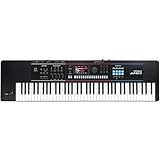
- Gig-ready keyboard with pro sounds, an intuitive workflow, enhanced performance features, and support for USB-C mobile battery power
- Instant access to essential sounds for live band performances, including acoustic and electric pianos, organs, synths, and other stage favorites
- Flagship-class ZEN-Core engine with over 3800 ready-to-play sounds
- Expand your creative possibilities with Sound Packs and Wave Expansions on Roland Cloud
- Sample import function for playing and editing user WAV files
How to choose: a practical checklist
- Rank your sounds. Put acoustic piano, electric piano, tonewheel organ, synth leads and pads, orchestral sounds, samples, external software, and sequencing in order of importance. Be honest about what you use on stage.
- Map the changes in your set. Identify the splits, layers, mutes, level moves, effects changes, and sound recalls you need during songs. Prefer an interface that makes those moves easy to see and reach.
- Choose the action and key count. Test the actual model, not a different keyboard in the same product family. If possible, play repeated notes, piano dynamics, organ glissandi, synth articulations, and aftertouch. Check sustain and half-pedaling behavior if relevant.
- Check connections against your rig. Confirm outputs for the mixer or PA, pedal inputs, MIDI ports, USB audio/MIDI requirements, and any mic or line inputs you need. Do not assume that a computer or external instrument will behave as it does at home.
- Calculate the carry. Add the case and stand to the instrument’s listed weight. Consider stairs, vehicle space, public transit, and whether you load alone. Published keyboard weights illustrate the range: YC61 is about 7.1 kg, YC73 13.4 kg, YC88 18.6 kg, Nord Stage 4 88 19.6 kg, RD-2000 EX 21.7 kg, and Nautilus 88 23.1 kg.
- Rehearse transitions before committing. Test your own patches, effects tails, sustain behavior, and external software or hardware. Seamless switching is not guaranteed for every program change or rig.
What to test before buying
Bring headphones if the store permits, but also try the instrument through an amplifier or PA: a sound that is appealing alone may need different EQ or level in a band. Use your own sustain and expression pedals where possible. Play real songs from your set, not just isolated demos, and practice the splits, layers, and patch changes you will use on stage. For a computer-centered rig, test the intended host, interface, USB hub, power arrangement, and MIDI assignments together. Check display legibility and control locations under lower or colored light if you can.
Specifications establish features, key count, and weight; they cannot establish that the action suits you, that a patch will sit in your band’s mix, or that your complete show will transition reliably. Those are reasons to test the intended workflow rather than shop by sound count alone.
Plan for the gig, not just the instrument
A suitable case protects the keyboard but adds size and weight; check the exact model dimensions before ordering. A stable stand, sustain and expression pedals, and spare compatible cables are practical essentials. A DI box or stereo DI arrangement may help connect to a venue’s system, depending on its inputs and your keyboard’s outputs. Software rigs may also need a secure laptop stand, reliable power, and a tested backup sound source. Keep patches and Scenes backed up on external media where supported, and record firmware and expansion details so you can restore a setup after a problem.
The Tool Desk
Outbyte Driver Updater FREEScan for outdated or missing drivers - takes under a minuteDriver Scan →Outbyte PC Repair FREEClear out junk files and repair common Windows errorsFree Scan →For a two-keyboard rig, one weighted board for piano plus a lighter 61-key board for organ or synth may be more useful than one all-in-one instrument. Solo performers may prioritize playback, accompaniment, sequencing, or microphone inputs; a player in a full band may not need those features at all.
Quick Recap
Product prices and availability are accurate as of the date/time indicated and are subject to change. Any price and availability information displayed on Amazon at the time of purchase will apply.

