Do these 3 things before closing this tab:
1Clear out junk files and repair common Windows errors2Fix the driver behind crashes, sound loss and screen glitches3Repair Windows errors before they cause bigger problemsSome links on this page are affiliate links: if you buy through them we may earn a commission, at no extra cost to you.
Apple Music offers “Suggest Less Like This” as recommendation feedback, not a universal artist-blocking switch. Some listeners say unwanted artists keep turning up in mixes, stations, or other recommendations after they use it, and Apple Music community discussions show recurring requests for a true “Block Artist” option. That is evidence of vocal frustration—not a representative survey proving that Apple Music users overall prefer blocking.
What Apple Music can—and can’t—do
Apple Music’s documented controls include feedback such as Love and Suggest Less Like This. Apple describes these as ways to improve future recommendations, not as commands that permanently exclude an artist from the service. The available user-guide copy is from 2022, so exact labels and menus may vary by device and software version. Apple Music recommendation controls in the user guide.
The distinction matters: recommendation feedback may influence what Apple Music suggests, but it is not the same as a rule that prevents a track from playing. The evidence available here does not verify a current, universal “Block Artist” command that works across recommendations, radio, autoplay, playlists, search, and a listener’s own library. That is narrower and more accurate than claiming Apple Music can never block an artist in any context.
Recommended Free Tools
Why listeners are asking for a block
Apple Music community threads contain recurring requests for artist- or song-level exclusion. Participants describe unwanted acts returning in stations or mixes despite using negative feedback, and some say an artist remains in rotation after they remove music from their library. These are individual accounts, not controlled tests or a measure of how common the problem is across subscribers. One discussion of requested controls and another about blocking specific artists.
#1 Best Overall

- REBUILT FOR COMFORT — AirPods 4 have been redesigned for exceptional all-day comfort and greater stability. With a refined contour, shorter stem, and quick-press controls for music or calls.
- PERSONALIZED SPATIAL AUDIO — Personalized Spatial Audio with dynamic head tracking places sound all around you, creating a theater-like listening experience for music, TV shows, movies, games, and more.*
- IMPROVED SOUND AND CALL QUALITY — AirPods 4 feature the Apple-designed H2 chip. Voice Isolation improves the quality of phone calls in loud conditions. Using advanced computational audio, it reduces background noise while isolating and clarifying the sound of your voice for whomever you’re speaking to.*
- MAGICAL EXPERIENCE — Just say “Siri” or “Hey Siri” to play a song, make a call, or check your schedule.* And with Siri Interactions, now you can respond to Siri by simply nodding your head yes or shaking your head no.* Pair AirPods 4 by simply placing them near your device and tapping Connect on your screen.* Easily share a song or show between two sets of AirPods.* An optical in-ear sensor knows to play audio only when you’re wearing AirPods and pauses when you take them off. And you can track down your AirPods and Charging Case with the Find My app.*
- LONG BATTERY LIFE — Get up to 5 hours of listening time on a single charge. And get up to 30 hours of total listening time using the case.*
A listener may not want “less” of an artist. They may want none—whether because of personal taste, repeated overexposure, or a desire to keep an artist out of a particular listening session. A feedback control that adjusts recommendations is useful for the first problem; it cannot promise the second.
What “Suggest Less Like This” means in practice
Think of the option as a negative recommendation signal. It tells Apple Music that a song is not a good fit for the listener’s recommendations. Apple’s guide frames it as a way to improve future suggestions; it does not promise that choosing it will:
Rank #2
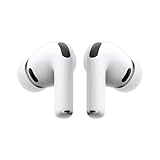
- WORLD’S BEST IN-EAR ACTIVE NOISE CANCELLATION — Removes up to 2x more unwanted noise than AirPods Pro 2* so you can stay fully immersed in the moment.*
- BREAKTHROUGH AUDIO PERFORMANCE — Experience breathtaking, three-dimensional audio with AirPods Pro 3. A new acoustic architecture delivers transformed bass, detailed clarity so you can hear every instrument, and stunningly vivid vocals.
- HEART RATE SENSING — Built-in heart rate sensing lets you track your heart rate and calories burned for up to 50 different workout types.* With iPhone, you will have access to the Move ring, step count, and the new Workout Buddy,* powered by Apple Intelligence.*
- LIVE TRANSLATION — Communicate across language barriers using Live Translation,* enabled by Apple Intelligence.*
- EXTENDED BATTERY LIFE — Get up to 8 hours of listening time with Active Noise Cancellation on a single charge. Or up to 10 hours in Transparency using the Hearing Aid feature.*
- delete a track, album, or artist from Apple Music’s catalog;
- remove music from an existing playlist, album, library, or Up Next queue;
- stop the listener from playing that music manually;
- exclude every song by the artist, including collaborations, remixes, live recordings, or compilation appearances;
- keep the artist out of every station, mix, or curated playlist; or
- produce an immediate, identical change on every device and recommendation surface.
Some users say the control has not stopped particular artists from resurfacing. That does not prove it has no effect: Apple presents it as recommendation feedback, while a hard exclusion would be a different product rule. There is no reliable evidence here for a guaranteed number of dislikes or a set waiting period after which recommendations must change. Users discussing the limits of song-level feedback.
Free tools Windows power users keep installed
One-click scans. No signup required.
Try these steps to reduce unwanted playback
Labels and menu placement can change between Apple Music versions and platforms. On the device where you see the unwanted recommendation, look for the song’s More or context menu and choose Suggest Less Like This (or the closest current equivalent). If the problem is a recurring artist, give feedback on representative tracks when they appear. Treat this as an attempt to tune recommendations, not a blacklist; Apple does not document a required repetition count or response time.
Rank #3
- REBUILT FOR COMFORT — AirPods 4 have been redesigned for exceptional all-day comfort and greater stability. With a refined contour, shorter stem, and quick-press controls for music or calls.
- ACTIVE NOISE CANCELLATION — AirPods 4 with Active Noise Cancellation help reduce outside noise before it reaches your ears, so you can immerse yourself in what you’re listening to.*
- HEAR THE WORLD AROUND YOU — The powerful H2 chip comes to AirPods 4. Adaptive Audio seamlessly blends ANC and Transparency mode — which lets you comfortably hear and interact with the world around you exactly as it sounds — to provide the best listening experience in any environment.* And when you’re speaking with someone nearby, Conversation Awareness automatically lowers the volume of what’s playing.*
- IMPROVED SOUND AND CALL QUALITY — Voice Isolation improves the quality of calls in loud conditions. Using advanced computational audio, it reduces background noise while isolating and clarifying the sound of your voice for whomever you’re speaking to.*
- MAGICAL EXPERIENCE — Just say “Siri” or “Hey Siri” to play a song, make a call, or check your schedule.* And with Siri Interactions, now you can respond to Siri by simply nodding your head yes or shaking your head no.* Pair AirPods 4 by simply placing them near your device and tapping Connect on your screen.* Easily share a song or show between two sets of AirPods.* An optical in-ear sensor knows to play audio only when you’re wearing AirPods and pauses when you take them off. And you can track down your AirPods and Charging Case with the Find My app.*
- Check what is playing. If the song came from a playlist, album, or queue you selected, recommendation feedback may not remove it from that source.
- Remove direct sources you control. Delete unwanted tracks from your library or personal playlists as appropriate, and remove them from Up Next. This prevents those particular entries from being selected through those collections; it does not block the artist elsewhere.
- Check autoplay. If unwanted music begins after the selected album or playlist ends, turn off Autoplay using the control available in your current app version. That stops the automatic continuation in that situation, not recommendations generally.
- Consider whose listening history is involved. Activity from another device or person using the same account may affect what the service learns about that account. If an account is shared, review how it is being used before concluding that a recommendation reflects only your listening.
- Use a manually chosen playlist for more predictable playback. This avoids relying on an unpredictable station or recommendation queue for that session, though it takes curation and does not change Apple Music’s catalog or recommendation system.
Some listeners report trying Siri phrases such as “I don’t like this artist.” The available evidence does not establish that these commands are an official, reliable substitute for artist blocking, so do not depend on them as a guarantee.
Why an artist may appear again
Recurrence does not always mean the same control failed in the same way. Check the source and the track credit:
Rank #4
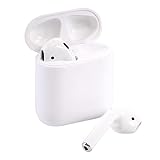
- Automatically on, automatically connected
- Easy setup for all your Apple devices
- Quick access to Siri by saying “Hey Siri”
- Double-tap to play or skip forward
- New Apple H1 headphone chip delivers faster wireless connection to your devices
- It is already in the selected material. A playlist or album can play a track regardless of whether a recommendation control was used.
- The artist is credited differently. A feature, collaboration, remix, compilation, or live performance may surface under a different primary artist or release entry.
- The recording has multiple catalog entries. Singles, deluxe editions, compilations, and alternate versions can make an unwanted song appear to be a new entry. Users report this kind of repetition, but the evidence here does not establish how Apple’s catalog or recommendation system handles each case.
- The surface uses broader signals. A station may draw on genre or mood as well as an individual song. A curated editorial playlist is also not necessarily governed like a personalized mix.
- Listening history is mixed. Older activity or activity from another device or account user may contribute to recommendations.
- The feedback was about one song. Disliking a track should not be assumed to apply to every recording or appearance by its artist.
When “Suggest Less” is enough
The control is a reasonable choice if you dislike one track but still enjoy the artist, want fewer similar recommendations rather than none, or are trying to steer personalized mixes away from a style. It also makes sense when the issue is recommendation drift and you are willing to give feedback without expecting an instant or absolute change.
It is not an equivalent to blocking if you require zero appearances, need to control a specific playlist or queue, or want every collaboration and alternate version excluded. For those cases, the practical options are narrower: remove music from collections you manage, take control of the queue, disable autoplay when it is the source, and choose playback manually. None creates a service-wide artist ban.
Best Value

- Active Noise Cancellation blocks outside noise, so you can immerse yourself in music
- Transparency mode for hearing and interacting with the world around you
- Spatial audio with dynamic head tracking places sound all around you
- Adaptive EQ automatically tunes music to your ears
- Three sizes of soft, tapered silicone tips for a customizable fit
What a real artist block would need to clarify
A useful “Block Artist” feature would have to say what it blocks. Does it exclude only personalized recommendations, or also radio and autoplay? Does it hide the artist from search, skip tracks in followed playlists, and catch featured credits, remixes, and compilations? Does the choice sync across devices, and can the listener reverse it? Those details determine whether a block would solve the problem without unexpectedly removing music the user still wants.
For now, the important distinction is between a request and a shipped feature: users in Apple Music communities are clearly asking for firmer control, but “Suggest Less Like This” is documented as recommendation feedback. Calling it an artist block—or claiming that Apple Music users as a whole have voted for one—goes beyond the evidence.
Quick Recap
Product prices and availability are accurate as of the date/time indicated and are subject to change. Any price and availability information displayed on Amazon at the time of purchase will apply.
Quick wins for a faster PC:
Fix the driver behind crashes, sound loss and screen glitchesFind Drivers →Repair Windows errors before they cause bigger problemsFix Now →
