What’s actually slowing this PC down?
Pick the symptom - the matching free tool is one click away.
Some links on this page are affiliate links: if you buy through them we may earn a commission, at no extra cost to you.
iTunes DJ was more than shuffle and more than a playlist. It was a computer-hosted, semi-automated jukebox that let a roomful of people request songs, vote on them, and influence a constantly changing queue while the host retained control. Apple removed it in iTunes 11, released in late November 2012, and replaced its visible workflow with Up Next—a useful manual queue, but not the same social music system.
The party jukebox that let everyone have a say
Before streaming services made collaborative listening fashionable, iTunes DJ offered a surprisingly sophisticated answer to a familiar party problem: how can many people influence the music without giving one guest complete control of the stereo?
The host played music from a Mac or PC. Guests could use iPhones and, according to a contemporary account, Android remote software to browse eligible tracks, request songs, and vote. Requested songs could be placed next or at the end of the queue. Voting affected priority, allowing popular choices to rise while the host still controlled what could be played.
That combination made iTunes DJ feel less like a playlist and more like a living music system—part personal radio station, part jukebox, and part lightly governed democracy.
#1 Best Overall
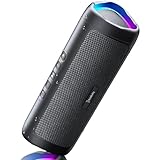
- [Immersive Sound Experience & Dual Connectivity] Experience unparalleled sound quality with this wireless Bluetooth speaker's 2 drivers and advanced technology that delivers powerful, well-balanced sound with minimal distortion. Connect two speakers together to create an immersive stereo sound experience and fill any room with powerful sound. Perfect for gaming, music, and movie playback
- [Tough & Weather-Resistant] Engineered to handle rough use and adverse weather conditions, this speaker features a durable design and an IPX5 rating for protection against water splashes and spills. It's an ideal choice for outdoor events, and is perfect for use at parties, at the pool, on the beach, while camping or hiking, and more
- [Long-lasting Playtime & Extended Bluetooth Connectivity] Experience extended playtime with up to 24 hours(50% Vol and light off) per charge and extended wireless range with Bluetooth 5.3, reaching up to 100 feet from your device. The multicolor lights on the speaker can also be turned off with a simple button press to save the battery and adapt to your needs. Keep in mind that the actual playtime can vary depending on volume level, audio content, and usage
- [Vibrant Light Effects] Bring a new level of excitement to your party with the dynamic multi-color light show that syncs to the beat of the music, you can easily customize the light effects to suit your preference by simply pressing the Light button. Make any gathering more memorable with these visually stunning light effects that will elevate the atmosphere
- [Everything You Need] The package includes 1 waterproof Bluetooth speaker (Item Dimensions D x W x H: 7.87"D x 2.76"W x 2.81"H, Weight: 1.28lb), 1 Type-C charging cable, and a quick start guide, all backed by lifetime technical support. The built-in microphone allows for hands-free phone calls and you can also play music from other devices using the AUX jack (not included). It's a perfect gift for men and women. It is also suitable as white elephant gifts for adult, stocking stuffers for men and women, Christmas gifts,birthday gifts, mothers day gifts,fathers day gifts,Valentine's Day,mens gifts,and various anniversary gifts for him.
What iTunes DJ actually did
The feature combined three systems that are often separated in modern music apps.
- Automated discovery: It could draw music from a library, playlist, genre, decade, or other filtered source. The selection was pseudo-random, with higher-rated songs able to receive greater emphasis.
- Human intervention: Guests could request songs and place them next or later in the queue, while the host could restrict the pool to appropriate music.
- Social ranking: Guests could vote, and higher-voted songs moved up in priority.
The result was not perfectly democratic and not entirely automatic. It was moderated participation: guests supplied suggestions and preferences, but the host controlled the boundaries.
A 2013 retrospective in Ars Technica describes the feature’s evolution and its combination of requests, voting, ratings, and automated selection.
From Party Shuffle to iTunes DJ
The feature was originally known as Party Shuffle. Apple later presented the more socially oriented version as iTunes DJ. These names should be understood as stages in an evolving lineage, not as identical releases with exactly the same capabilities.
Party Shuffle established the idea of a dynamic, party-friendly queue. iTunes DJ expanded that idea into something more interactive. The word “DJ” mattered because the feature was no longer simply deciding what played next. It was creating a setting in which the software, the library owner, and the guests all shaped the soundtrack.
Why it was more than a playlist
A playlist is normally prepared in advance. A standard queue is usually ordered manually. iTunes DJ was different because it could keep making decisions while the music was playing.
That mattered to people with large libraries. A collection containing thousands of songs can be difficult to use at a party: choosing every track is tedious, but completely random playback can produce awkward transitions, forgotten dislikes, or music that does not fit the room. iTunes DJ occupied the useful middle ground. It could provide surprise without abandoning personal taste.
In effect, it could turn a carefully maintained library into a personalized radio station. Ratings, genres, decades, playlists, and other metadata gave the host ways to define the musical territory, while the queue remained flexible enough for guests to influence it.
The smart-playlist trick
Smart playlists were central to the experience. They could filter songs by rating, genre, decade, or other metadata, exclude unwanted categories, and provide a controlled source for the DJ queue.
Rank #2

- Outdoor-Proof Speaker: Portable design with IPX7 waterproof protection to safeguard against splashes, waves, and water vapor. Get incredible sounds at home, on camping trips, or for outdoor adventures.
- 24H Non-Stop Music: With Anker's world-renowned power management technology and a 5,200mAh Li-ion battery, the soundcore 2 speaker delivers a full day of great sound.
- Powerful Sound: The speaker features 12W power with enhanced bass from dual neodymium drivers. An advanced digital signal processor ensures pounding bass and zero distortion at any volume.
- Intense Bass: Our exclusive BassUp technology and a patented spiral bass port boost low-end frequencies to make the beats hit even harder. The soundcore 2 speaker delivers vibrant audio for home theater nights, beach parties, and sitting around a campfire.
- Grab, Go, Listen: A classic design refined with simple controls and effortless portability. Easy to use and take anywhere, and supports wireless stereo pairing.
For example, a host could build a source that favored highly rated songs while excluding Christmas music, children’s music, or any other category unsuitable for the gathering. iTunes DJ could then select from that prepared pool instead of treating the entire library as equally appropriate.
This arrangement also exposed one of the feature’s limitations: its intelligence depended on the quality of the library’s metadata. Ratings had to exist to be useful. Genres and decades had to be reasonably accurate. A carefully maintained library could produce a remarkably personal mix; a poorly tagged one could produce a much less coherent result.
Users could approximate some of the rating behavior with overlapping smart playlists, but that was a workaround rather than an equivalent replacement. It lacked the elegance of a single party system that combined selection, requests, and votes.
iTunes 11 removed the social layer
iTunes 11 arrived in late November 2012 as a major redesign. iTunes DJ disappeared. So did Cover Flow, another familiar feature for longtime users.
The removal was especially jarring because iTunes DJ was not merely moved to a new menu. Apple substituted Up Next, a different model of listening. The contemporary account described the change as occurring without a public warning or explanation. That describes the user experience; it does not establish why Apple made the decision internally.
The distinction is important. Apple did not simply remove a cosmetic feature. It removed a way of organizing a social event around a personal music library.
Free tools Windows power users keep installed
One-click scans. No signup required.
Up Next was useful—but not a full replacement
Up Next improved ordinary manual queue management. It could queue albums, artists, and playlists; reorder or delete tracks; add a song immediately after the current track; and display the queue in the MiniPlayer.
But it addressed a different problem. Up Next was primarily a queue for one person—or for whoever had direct access to the player. It did not reproduce iTunes DJ’s documented combination of guest voting, rating-weighted selection, host moderation, and continuously evolving discovery.
| Capability | iTunes DJ | Up Next |
|---|---|---|
| Manual queueing | Yes | Yes |
| Reordering tracks | Yes | Yes |
| Guest requests | Yes | Different and more limited workflow |
| Guest voting | Yes | No documented equivalent |
| Rating-weighted selection | Yes | No documented equivalent |
| Smart-playlist source | Yes | Indirect or manual |
| Party moderation | Built into the model | Much weaker |
| Continuously evolving mix | Yes | No equivalent documented |
Calling Up Next a replacement is therefore accurate only for manual queueing. It was not a full replacement for iTunes DJ as a social jukebox.
Rank #3

- Wireless Bluetooth streaming
- 12 hours of playtime
- IPX7 waterproof
- Pair multiple speakers with party boost
- Premium JBL sound quality
Why iTunes DJ still feels ahead of its time
Viewed from the present, iTunes DJ anticipated several ideas that later appeared separately in streaming services and party applications: collaborative queues, crowd-controlled music, audience voting, recommendation systems, host moderation, and QR-code or short-code joining.
Recommended Free Tools
This is a retrospective comparison, not evidence that Apple designed iTunes DJ as a blueprint for today’s collaborative-listening products. Still, the resemblance is striking. The feature understood that group listening has two competing needs:
- People want a voice in what plays.
- Someone must retain enough control to prevent the evening from becoming chaotic.
Many modern services solve only one side of that problem. They let everyone add songs but offer little ranking or moderation. Others provide recommendations but do not let the audience participate. iTunes DJ’s appeal came from joining both sides to a personal library.
Independent reader supportYour contribution helps us test, update, and keep practical guides available for everyone.What can replace it now?
No current first-party Apple feature documented in the available material reproduces the entire iTunes DJ model. Modern options divide its capabilities among shared queues, recommendations, and dedicated party tools.
Apple Music SharePlay
Apple’s current SharePlay documentation describes shared playback and a shared Up Next queue. Apple’s web guide says the host needs an Apple Music subscription, while participants can join without their own subscription through the documented workflow.
Quick wins for a faster PC:
Fix the driver behind crashes, sound loss and screen glitchesFind Drivers →Repair Windows errors before they cause bigger problemsFix Now →Scan for outdated or missing drivers - takes under a minuteDriver Scan →SharePlay is the natural choice for Apple-centric households that want first-party integration and shared queue control. It is not a documented voting-based jukebox, does not reproduce rating-weighted shuffle, and is less suitable when guests use several music platforms.
Spotify Jam
Spotify Jam offers shared playback, a collaborative queue, recommendations, invitations by link or QR code, and host controls over guest permissions. Spotify states that Premium is required to start and host a Jam; remote participation also has plan restrictions.
Jam is a strong mainstream option for groups already using Spotify. Its documented controls focus on adding and managing music and playback rather than an explicit upvote-driven ranking system, so it should not be described as an exact iTunes DJ restoration.
Dedicated party-queue services
Some specialist tools target the part of iTunes DJ that mainstream streaming services leave out: requests, voting, moderation, and event control. DJ Party Mix advertises party codes, real-time votes, host controls, and support for Jellyfin, Spotify, and Apple Music. PartyQueue advertises QR-based requests, voting, moderation, playlist import, and event-oriented features.
The Tool Desk
Outbyte PC Repair FREEClear out junk files and repair common Windows errorsFree Scan →Outbyte Driver Updater FREEFix the driver behind crashes, sound loss and screen glitchesFind Drivers →Rank #4
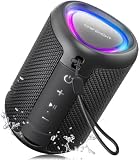
- Compact and Powerful Design: Engineered with premium craftsmanship, this portable speaker features a space-saving form measuring a mere 2.99 inches (7.6 cm) in width and length, and 4.25 inches (10.8 cm) in height. Ultra-lightweight at just 0.582 lbs (264g), it slips effortlessly into any bag. Driven by a robust 20W peak power, it delivers immersive audio with punchy bass and crisp highs, while its 15W continuous output ensures crystal-clear sound for indoor relaxation or outdoor adventures
- 【IPX5 Waterproof – Beach, Pool & Outdoor Adventures】Built for everyday outdoor fun, this portable Bluetooth speaker features IPX5 waterproof protection to handle splashes, light rain, and wet environments. Take it to the beach, pool, campsite, backyard, patio, or shower for music wherever you go. A reliable companion for travel, camping, outdoor gatherings, and weekend adventures
- 【Portable Companion – Travel, Camping & Everyday Use】At just 0.58 lbs, this compact wireless speaker easily fits into a backpack, tote, suitcase, or travel bag. The built-in lanyard makes it easy to carry or hang from a backpack, bike, hook, or shower caddy. Great for road trips, beach days, camping trips, dorm rooms, home offices, and relaxing at home
- 【Dynamic Lights – Create the Right Mood Anywhere】Dynamic LED lights add colorful visual effects to your favorite music, bringing extra energy to parties, gatherings, and everyday listening. Use it in the bedroom, dorm, backyard, patio, campsite, or party space. A fun choice for Halloween music, movie nights, sleepovers, game nights, and outdoor hangouts
- 【15W HD Sound & 15H Playtime – Music for Every Moment】Powerful 15W HD sound delivers clear, enjoyable audio for music, podcasts, games, and more. With up to 15 hours of playtime, enjoy your playlist during travel, beach trips, camping, pool days, backyard gatherings, or a relaxing night at home. Keep the music going without frequent recharging
These tools may be the closest conceptual match for a crowd-controlled party, but their advertised capabilities should not be confused with independently verified reliability. Catalog matching, playback permissions, connected accounts, platform APIs, pricing, and long-term availability can all affect the experience. “Works with Apple Music,” for example, may mean catalog lookup rather than independent playback.
A conventional playlist or human DJ
Sometimes democracy is not the goal. A carefully prepared playlist is more predictable, and a human DJ is better at responding to the room, managing transitions, and rejecting requests that do not fit the event. iTunes DJ’s charm was precisely that it occupied the space between those extremes.
The trade-offs iTunes DJ could not escape
Nostalgia should not erase the feature’s limitations. It depended on a computer-hosted iTunes library, compatible remote software, and a functioning local network. Its recommendations were only as good as the library’s ratings and metadata. A large collection could also contain duplicates, poorly tagged tracks, or songs that sounded inappropriate when the room’s mood changed.
Voting was not automatically wise judgment, either. A group could elevate novelty songs, jokes, or disruptive requests. The host’s ability to restrict the eligible pool was therefore essential to the design.
Nor should readers treat old iTunes installations as a practical modern solution. The 2013 retrospective discusses retaining iTunes 10.7 as a personal workaround, but relying on obsolete software today introduces compatibility and security concerns. The historical feature is worth remembering; that does not make unsupported legacy software a sensible recommendation.
The honest verdict
iTunes DJ was removed in iTunes 11, but the reason it remains memorable is not simply that it was old or familiar. It solved a distinct problem with unusual balance: automation supplied discovery, ratings supplied personal taste, guests supplied requests and votes, and the host supplied moderation.
Apple Music SharePlay now provides a shared queue. Spotify Jam provides collaborative listening and group recommendations. Specialist party-queue tools may add voting and event controls. Yet no single current first-party Apple feature documented here recreates the full blend of personal-library discovery and democratic party control that made iTunes DJ special.
That is why “died before its time” remains a fair description—not as a claim that iTunes DJ was perfect, or that everyone loved it, but as a judgment that its central idea was more durable than the product that carried it.
Do these 3 things before closing this tab:
1Scan for outdated or missing drivers - takes under a minute2Clear out junk files and repair common Windows errors3Fix the driver behind crashes, sound loss and screen glitchesQuick Recap
Product prices and availability are accurate as of the date/time indicated and are subject to change. Any price and availability information displayed on Amazon at the time of purchase will apply.

