Do these 3 things before closing this tab:
1Repair Windows errors before they cause bigger problems2Scan for outdated or missing drivers - takes under a minute3Clear out junk files and repair common Windows errorsYes—but not as an objective ranking. These eight films can reasonably be called Netflix documentary masterpieces because they combine exceptional filmmaking with subjects of real consequence, distinctive access or form, and recognition that extends beyond a single enthusiastic audience. They are presented in an editorial sequence, not from “best” to “worst.”
The selections refer to the Netflix U.S. catalog. Availability was checked against Netflix listings on August 12, 2026, but licensing varies by country and titles can leave the service.
What makes a documentary a “masterpiece”?
“Masterpiece” is a judgment, not a measurable category. For this list, the word means a documentary that clears several demanding tests at once:
- Exceptional filmmaking: The structure, editing, sound, cinematography, interviews, archival material, or observational access do more than deliver information.
- A consequential subject: The film gives serious attention to a political, historical, scientific, social, or deeply personal question.
- A distinctive method: It finds a form suited to its subject, whether that means archival suspense, an evolving investigation, close observation, staged fiction, or an essayistic journey.
- Enduring recognition: Major awards, critical consensus, historical importance, or sustained cultural impact support the film’s reputation.
That standard deliberately includes different kinds of achievement. A political argument, a workplace drama, a nature film, and a family memoir should not be judged by exactly the same technical criteria. The films below are therefore eight defensible masterpieces across eight documentary modes—not a definitive ranking of every great film Netflix has ever carried.
#1 Best Overall

- Breathtaking picture: Sharp 4K brings out rich detail on our 50" flat screen TV, while the QLED screen and HDR10 create bright, accurate colors. Roku Smart Picture cleans up incoming TV signals, optimizes them, and chooses the right picture mode.
- Seamless streaming: With fast Wi-Fi and apps that launch in a snap, Roku Select Series TVs get you to your entertainment quickly. You get excellent picture quality, clear sound, automatic updates, and more. It’s simple to use. Hard to outgrow.
- TV, simplified: With setup that only takes minutes, a simple-to-navigate Home Screen, and an uncluttered remote control that does all you need—Roku makes it easier to watch the TV you love.
- A world of free entertainment: Enjoy a huge selection of free live TV, news, sports, movies, shows, and much more—all just a click away.
- More streaming, less searching: With personalized picks right on your Home Screen, quick access to the sports and entertainment you watch most, and fast and easy search in one place—the days of endless scrolling are over.
The eight documentaries
1. 13TH (2016)
Best for: Political history, criminal justice, and a forceful civic argument.
Ava DuVernay’s 13TH examines the relationship between the Thirteenth Amendment, the criminalization of Black Americans, and the expansion of mass incarceration in the United States. Scholars, activists, and politicians help trace the argument through American history, while archival footage and contemporary testimony connect constitutional language to policing, punishment, and political power.
The film’s great strength is its accessibility without abandoning urgency. DuVernay builds a complex historical case through an energetic combination of expert interviews, archival montage, music, headlines, speeches, and visual pattern. The result feels less like a classroom lecture than a carefully assembled political prosecution: every transition pushes the viewer to see a connection that might otherwise remain abstract.
13TH is a masterpiece not because every interpretation in it is beyond debate, but because it makes its interpretation clear and gives the viewer substantial historical material with which to engage. It is DuVernay’s argument, supported by interviews, archival evidence, and historical analysis—not a neutral, uncontested account of the entire history of American criminal justice. That distinction makes the film more, not less, useful as a work of documentary persuasion.
The film was an Academy Award nominee and has retained strong critical recognition, including a 97% critics score in the Rotten Tomatoes Netflix listing used for this selection. It is the ideal opening film for this list because it shows how a documentary can function simultaneously as historical investigation, political argument, and cinema.
Why it earns the label: It turns a difficult national history into a coherent visual argument without pretending that the subject is emotionally or politically comfortable.
2. Icarus (2017)
Best for: Investigative suspense and documentaries that change genre in real time.
Bryan Fogel begins Icarus by investigating performance-enhancing drugs in cycling. His initial project is personal and experimental: he wants to understand how doping works and whether an athlete can evade detection. Then his relationship with Grigory Rodchenkov, a Russian scientist involved in the country’s state-sponsored Olympic doping system, transforms the film into an international whistleblower story.
The Tool Desk
Outbyte Driver Updater FREEFix the driver behind crashes, sound loss and screen glitchesFind Drivers →Outbyte PC Repair FREEClear out junk files and repair common Windows errorsFree Scan →That transformation is the film’s defining achievement. The early material establishes a risky, sometimes uncomfortable investigation into athletic performance. The later material reveals that the filmmaking process has been overtaken by events much larger than Fogel’s original plan. What might have been a niche sports documentary becomes a story about institutional deception, geopolitical pressure, personal danger, and the responsibilities of recording evidence.
The suspense is not manufactured through a conventional thriller plot. It grows from the documentary’s changing circumstances. Fogel must respond to new information, Rodchenkov’s escalating vulnerability, and the practical consequences of exposing a powerful system. The film’s structure makes the viewer feel the instability of an investigation whose stakes keep increasing.
Icarus won the Academy Award for Documentary Feature and is recognized by Netflix in its sports and critically acclaimed documentary groupings. Its early self-experimentation should be understood as part of the film’s investigative setup—not as medical advice, a safe practice, or a model for athletic performance.
Why it earns the label: It captures the rare moment when reality overwhelms the filmmaker’s original premise and forces the documentary into a more dangerous, consequential form.
3. American Factory (2019)
Best for: Labor, globalization, workplace culture, and the human scale of economic change.
Rank #2

- A treat for the eyes: Sharp 4K brings out rich detail on our 43" flat screen TV, while colors pop off in lifelike clarity with HDR10. Roku Smart Picture cleans up incoming TV signals, optimizes them, and chooses the right picture mode.
- Seamless streaming: With fast Wi-Fi and apps that launch in a snap, Roku Select Series TVs get you to your entertainment quickly. You get excellent picture quality, clear sound, automatic updates, and more. It’s simple to use. Hard to outgrow.
- TV, simplified: With setup that only takes minutes, a simple-to-navigate Home Screen, and an uncluttered remote control that does all you need—Roku makes it easier to watch the TV you love.
- A world of free entertainment: Enjoy a huge selection of free live TV, news, sports, movies, shows, and much more—all just a click away.
- More streaming, less searching: With personalized picks right on your Home Screen, quick access to the sports and entertainment you watch most, and fast and easy search in one place—the days of endless scrolling are over.
Steven Bognar and Julia Reichert’s American Factory follows the reopening of a shuttered General Motors plant in Ohio by a Chinese company. The new factory promises jobs and industrial renewal, but the working relationship soon exposes conflicting expectations about production speed, management, safety, communication, hierarchy, and the meaning of a good job.
The film becomes a portrait of globalization by staying close to the people who must live inside its consequences. Workers, managers, owners, and supervisors are not reduced to symbols in a simple story about benevolent employees versus exploitative executives, or American workers versus Chinese management. Instead, the documentary allows contradictions to accumulate through meetings, shop-floor conversations, training sessions, visits between countries, and small moments of mutual misunderstanding.
That patience is crucial. The larger economic argument emerges from ordinary interactions: what one side calls efficiency, another experiences as pressure; what one side sees as loyalty, another reads as resistance; what appears to be cultural difference is sometimes a conflict over power and working conditions. The factory remains a real workplace rather than a backdrop for a prewritten thesis.
American Factory won the 2019 Academy Award for Best Documentary Feature and received Emmy recognition for documentary direction. Its observational balance does not mean the film lacks a point of view. The editing shapes what we see and how we understand it, but the filmmakers resist the temptation to turn a complicated labor environment into a single moral lesson.
Why it earns the label: It translates the abstract language of globalization into faces, routines, compromises, ambitions, and tensions that remain understandable long after the economic headlines fade.
4. My Octopus Teacher (2020)
Best for: Intimate nature filmmaking, ecological attention, and a contemplative watch.
Pippa Ehrlich and James Reed follow filmmaker Craig Foster as he develops an unusual relationship with an octopus in a South African kelp forest. The premise sounds like a novelty, but the film’s achievement is not simply that it places an octopus at the center of a story. It uses close observation of animal behavior to explore attention, grief, ecological interdependence, and the human desire to find meaning in the natural world.
The underwater cinematography creates an unusually intimate sense of place. The kelp forest is not presented merely as scenery or as a collection of wildlife facts. It becomes a living environment in which the animal’s intelligence, vulnerability, camouflage, curiosity, and daily survival can be observed over time. The patient rhythm gives small actions emotional weight without requiring the film to turn every moment into spectacle.
Foster’s personal circumstances are essential to the film. His encounter with the octopus becomes a way of re-entering the world and reconsidering his relationship with family, work, and nature. That makes the documentary moving, but it also creates an important tension: the film’s human interpretation of the octopus’s behavior is not the same thing as scientific proof of the meanings Foster assigns to it.
The most persuasive way to appreciate My Octopus Teacher is to hold both ideas together. The relationship can be emotionally genuine and cinematically powerful without assuming that the animal experiences the connection in precisely human terms. Netflix classifies the film as a nature and ecology documentary and identifies it as award-winning; it won the Academy Award for Documentary Feature.
Why it earns the label: It makes disciplined observation feel intimate while remaining aware—if not always free—of the human tendency to project stories onto animals.
Windows Errors? Fix Them Before They Spread
Repair common Windows errors and clear accumulated junk for a smoother, more stable PC - no reinstall needed.Free scan · no reinstallOutdated Drivers Are Slowing You Down
One free scan finds every outdated or missing driver and matches the right update for your exact hardware.Free scan · exact hardware match5. Crip Camp: A Disability Revolution (2020)
Best for: Disability-rights history, community organizing, and collective political energy.
Rank #3

- Breathtaking picture: Sharp 4K brings out rich detail on our 55" flat screen TV, while the QLED screen and HDR10 create bright, accurate colors. Roku Smart Picture cleans up incoming TV signals, optimizes them, and chooses the right picture mode.
- Seamless streaming: With fast Wi-Fi and apps that launch in a snap, Roku Select Series TVs get you to your entertainment quickly. You get excellent picture quality, clear sound, automatic updates, and more. It’s simple to use. Hard to outgrow.
- TV, simplified: With setup that only takes minutes, a simple-to-navigate Home Screen, and an uncluttered remote control that does all you need—Roku makes it easier to watch the TV you love.
- A world of free entertainment: Enjoy a huge selection of free live TV, news, sports, movies, shows, and much more—all just a click away.
- More streaming, less searching: With personalized picks right on your Home Screen, quick access to the sports and entertainment you watch most, and fast and easy search in one place—the days of endless scrolling are over.
Crip Camp: A Disability Revolution traces how a summer camp for teenagers with disabilities helped energize a broader movement for disability rights and equality. Its archival footage is immediately striking because it shows disabled teenagers as socially vibrant, funny, unruly, political, affectionate, and fully present—not as passive recipients of care or as inspirational examples for nondisabled viewers.
The film then expands from the camp experience into a history of activism and organizing. Personal memories connect to demonstrations, legal campaigns, public pressure, and the long effort to make institutions recognize disabled people’s rights. The movement does not appear as the achievement of a single heroic individual. It is built through relationships, persistence, disagreement, strategy, and collective action.
That structure gives the documentary two complementary identities. It is partly a coming-of-age film about young people discovering community and confidence. It is also a movement documentary about how private experiences of exclusion become organized political demands. The emotional force comes from the connection between those levels: community changes what people believe is possible, and organizing turns that belief into public action.
Recommended Free Tools
Netflix describes the film as an Oscar-nominated political documentary. Its importance also lies in its language and perspective. Disabled people should not be framed only through “overcoming” personal obstacles or achieving individual triumph. Crip Camp is more powerful when understood as a story about identity, access, solidarity, and structural change.
Why it earns the label: It combines unusually alive archival material with a clear account of how belonging can become the foundation of a rights movement.
6. Apollo 11 (2019)
Best for: Archival spectacle, technological history, and pure documentary suspense.
Todd Douglas Miller’s Apollo 11 reconstructs the 1969 Moon landing primarily through previously unreleased archival footage and audio. The film follows the mission through the people, machines, procedures, control rooms, launch preparations, and moments of waiting that surrounded the historic landing. Neil Armstrong, Buzz Aldrin, and Michael Collins appear through the historical record rather than through newly recorded commentary.
Free tools Windows power users keep installed
One-click scans. No signup required.
Its central formal decision is restraint. Instead of explaining every image with contemporary talking heads, the film trusts the footage, the sound design, the mission communications, the editing rhythm, and the institutional choreography of the space program. That approach turns a familiar historical event into a suspense film. Even viewers who know the outcome can feel the pressure of a countdown, the fragility of a technical procedure, and the silence surrounding an uncertain result.
The film also understands that achievement is made from systems, not only icons. Armstrong’s landing matters, but so do the engineers, technicians, controllers, routines, calculations, and layers of communication that make the event possible. The archival material gives the mission a physical texture that retrospective explanation could easily smooth away.
Apollo 11 should not be mistaken for a complete history of the Apollo program or of the space race. Its focus is the Apollo 11 mission and the experience of the landing. Within that boundary, its editorial control is extraordinary: it shows how archival material can be both historical evidence and cinematic action.
Why it earns the label: It proves that a well-shaped archive can generate immediate suspense without embellishment or conventional narration.
What’s actually slowing this PC down?
Pick the symptom - the matching free tool is one click away.
7. Dick Johnson Is Dead (2020)
Best for: Family, caregiving, dementia, mortality, and unconventional documentary form.
Rank #4
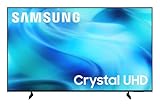
- CRYSTAL PROCESSOR: Powerful processor enhances colors and sharpens details for a vibrant 4K viewing experience. Experience every shade of color as it was meant to be seen in dazzling 4K. Plus, make your movies, TV shows, games and sports look even better with powerful 4K upscaling.
- ENDLESS FREE CONTENT: Watch 2,700+ free streaming options, including 750+ subscription-free channels on Samsung TV Plus. Enjoy news, sports, movies, kids' shows and reality TV — all without a subscription. Discover endless entertainment with new content added regularly, tailored to your mood and interests.*
- MOTION XCELERATOR: Experience clear picture and smooth motion in games and sports. Enjoy smooth motion and clear visuals with technology that estimates and adjusts frame transitions in real time. Whether gaming or watching sports, enjoy up to 4K 60Hz performance that brings every play, move and scene to life with realistic clarity and motion.
- COLOR BOOSTER: Supercharge your color. From fiery reds to sparkling blues, make every color come to life with intensity. Color Booster transforms your content into a visual masterpiece.
- 4K UPSCALING: Upgrades what you watch to crisp 4K clarity. Upgrade your favorite shows, movies and more. Experience incredible details and clarity in every frame, even from lower-quality sources, with advanced upscaling technology.
In Kirsten Johnson’s Dick Johnson Is Dead, the filmmaker stages elaborate fictional deaths for her aging father as a way of confronting dementia, mortality, love, and anticipatory grief. The premise is playful and sometimes absurd: the father repeatedly participates in scenes that imagine his own death. But the comedy is not an escape from the subject. It is a coping mechanism within a film about the approaching loss of a parent.
The staged accidents test the boundary between documentary and fiction. They also reveal the ethical center of the film: the relationship between a daughter trying to prepare for an unbearable future and a father willing to join her imaginative project. The fantasy sequences are not decorative “quirky” interludes. They give the family a language for discussing fear, memory, care, faith, and the loss of independence.
Johnson’s formal invention works because it is inseparable from emotional honesty. The film acknowledges that documenting a loved one is never a neutral act, particularly when cognitive decline changes the terms of consent, memory, and family responsibility. Its theatricality does not make the emotions less real; it exposes how families use stories, jokes, rituals, and performance to live with realities they cannot control.
Quick wins for a faster PC:
Repair Windows errors before they cause bigger problemsFix Now →Scan for outdated or missing drivers - takes under a minuteDriver Scan →Clear out junk files and repair common Windows errorsFree Scan →Netflix describes the premise as inventive and comical and classifies the film as a critically acclaimed biographical documentary. The better description is both stranger and more serious: it is a film that uses comedy to make mortality speakable.
Why it earns the label: It turns formal experimentation into an intimate ethical conversation about love, caregiving, and the fear of losing someone before they are physically gone.
8. Into the Inferno (2016)
Best for: Volcanoes, philosophical science, and documentaries that leave room for mystery.
Werner Herzog and volcanologist Clive Oppenheimer travel among volcanoes in North Korea, Ethiopia, Iceland, and Vanuatu. Into the Inferno combines reportage, scientific observation, history, local belief, and philosophical reflection. It is interested in volcanic activity, but it is equally interested in what volcanoes mean to the people who live near them—and in what they reveal about human scale and vulnerability.
The Tool Desk
Outbyte PC Repair FREERepair Windows errors before they cause bigger problemsFix Now →Outbyte Driver Updater FREEScan for outdated or missing drivers - takes under a minuteDriver Scan →This is not a conventional science documentary designed to supply a complete volcanology lesson. Oppenheimer and other experts provide scientific grounding, while Herzog’s narration pushes toward questions of danger, ritual, faith, extinction, power, and insignificance. Eruptions and landscapes provide visual grandeur, but the film’s deeper subject is the unstable boundary between what humans can measure and what they continue to mythologize.
The international scope allows the film to move between radically different political and cultural contexts. North Korea, Ethiopia, Iceland, and Vanuatu are not interchangeable examples in a generic story about volcanoes. They become distinct settings in which science, history, survival, and belief meet. The documentary’s unusual power comes from that synthesis rather than from explanatory completeness.
It is important to distinguish Herzog’s poetic and philosophical interpretation from the volcanological evidence supplied by Oppenheimer and the other experts. The film is not asking the viewer to treat every lyrical assertion as scientific fact. It is asking what scientific knowledge can coexist with awe, fear, tradition, and the human need to tell stories about forces larger than ourselves.
Why it earns the label: It transforms a scientific subject into an essay about nature, belief, danger, and human insignificance without abandoning its factual foundation.
Windows Errors? Fix Them Before They Spread
Repair common Windows errors and clear accumulated junk for a smoother, more stable PC - no reinstall needed.Free scan · no reinstallOutdated Drivers Are Slowing You Down
One free scan finds every outdated or missing driver and matches the right update for your exact hardware.Free scan · exact hardware matchHow to choose the right one tonight
There is no universal winner because each film offers a different kind of achievement. Choose according to the experience you want:
- For political history and mass incarceration: 13TH.
- For investigative suspense: Icarus.
- For labor, globalization, and workplace conflict: American Factory.
- For intimate nature and ecological reflection: My Octopus Teacher.
- For social movements and disability-rights history: Crip Camp: A Disability Revolution.
- For archival spectacle and mission-driven suspense: Apollo 11.
- For family, dementia, and mortality: Dick Johnson Is Dead.
- For philosophical science and volcanic grandeur: Into the Inferno.
Netflix currently associates the selected films with documentary, critically acclaimed, history, science, sports, award-winning, or human-connection collections. That catalog placement is useful confirmation, but it is not a permanent guarantee of availability. Check your local Netflix library before planning a screening, especially outside the United States.
The Bottom Line
These eight films are best understood as different answers to the same question: what can nonfiction cinema do exceptionally well? 13TH argues, Icarus investigates, American Factory observes, My Octopus Teacher attends, Crip Camp remembers and organizes, Apollo 11 reconstructs, Dick Johnson Is Dead reimagines, and Into the Inferno reflects. Their differences are precisely why calling all eight masterpieces is defensible.
Quick Recap
Product prices and availability are accurate as of the date/time indicated and are subject to change. Any price and availability information displayed on Amazon at the time of purchase will apply.
Free tools Windows power users keep installed
One-click scans. No signup required.