For a math-focused family watch, Donald in Mathmagic Land is the clearest direct pick. Hidden Figures and Stand and Deliver put mathematical work at the heart of their stories, while Queen of Katwe and October Sky offer more indirect links through chess strategy and applied STEM. These five films make a useful shortlist; the evidence supports five, not ten equally strong math picks.
How these films connect to math
The titles below are ranked by how explicitly they feature mathematical ideas or practice, alongside their family-viewing context and the kind of discussion they can prompt. A film can spark curiosity or provide a story to discuss, but watching one is not established as a way to improve math achievement.

| Film | Math connection | Family context |
|---|---|---|
| Donald in Mathmagic Land (1959) | Directly explores mathematical ideas | Animated family fantasy; NR |
| Hidden Figures (2016) | NASA mathematics and engineering are central to the story | PG; heavier themes and language noted by Common Sense Media |
| Stand and Deliver (1988) | Students work toward AP calculus | PG; Common Sense Media recommends ages 13+ and notes language and mature material |
| Queen of Katwe (2016) | Indirect connection through chess strategy, patterns, and reasoning | PG |
| October Sky (1999) | Adjacent STEM inspiration through building rockets; specific math instruction is not established | PG; language, brief teen sensuality, alcohol use, and thematic elements |
1. Donald in Mathmagic Land: the most direct math pick
Disney’s animated short sends Donald Duck into a fantasy land of square-root trees and rivers of numbers. D23 describes connections between mathematics and art, architecture, nature, chess, and sports. Its runtime is 28 minutes, according to D23; Disney lists it as animation, family, and fantasy, rated NR, with a June 26, 1959 release date. NR is not a formal all-ages recommendation, and Disney’s page does not give a child age recommendation.
This is the strongest choice for starting a conversation about where math appears outside a worksheet: in patterns, games, buildings, or music. D23 attributes to Walt Disney the observation that the cartoon could “stimulate interest” in mathematics. That statement describes the film’s intent, not a measured learning result.
Do these 3 things before closing this tab:
1Repair Windows errors before they cause bigger problems2Fix the driver behind crashes, sound loss and screen glitches3Clear out junk files and repair common Windows errors#1 Best Overall

- TURN MATH INTO AN ADVENTURE! – Make math practice fun with this interactive math board game for kids! This addition and subtraction game is perfect for preschool, 1st, 2nd, and 3rd graders, and family game night.
- LEARNING THROUGH PLAY – No boring worksheets! With Number Hunter kids board game, kids embark on a fun expedition around the world, learning addition, subtraction, and even and odd numbers without even realizing it.
- EASY TO LEARN, FUN TO PLAY – Roll the dice, add or subtract the numbers, and move forward. Land on a star tile to complete a fun action or math challenge. Be the first to reach the finish line to win!
- BUILD EARLY STEM SKILLS – This number game for kids 5-7 supports early math learning, critical thinking, and problem-solving in a playful, stress-free way.
- HOMESCHOOL ESSENTIAL – This kids game is a great choice for parents and teachers looking for a fun number game that can be used as part of homeschool supplies.
2. Hidden Figures: mathematics in a NASA story
This biographical drama follows NASA mathematicians Katherine Johnson, Dorothy Vaughan, and Mary Jackson, with mathematics and engineering central to the story. 20th Century Studios lists the film as PG, 2 hours 6 minutes, released January 6, 2017. Common Sense Media notes heavier themes and language, making it a better fit for older children and family discussion than for very young viewers.
The film is not a math lesson. Its value for a math conversation is in showing mathematical work as part of a larger story about expertise, teamwork, representation, and barriers. Educators looking for a structured follow-up can use NASA’s Modern Figures Toolkit, which describes activities and standards alignment.
Rank #2
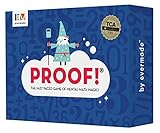
- Fast-Paced Math Card Game for Kids & Adults: Loved by teachers, families, and players of all ages! This engaging numbers game is perfect for family game night, classroom activities, or homeschool curriculum. A fun alternative to math workbooks and flash cards that makes learning exciting.
- Improve Mental Math Skills & Brain Training: Sharpen critical thinking with fast-action math challenges. Players race to find equations using addition, subtraction, multiplication, division, and square roots. Excellent STEM game for kids ages 9-12, teens, and adults.
- Award-Winning Educational Game: Proud winner of the Teacher's Choice Gold Award! Evaluated by educators and selected for exceptional quality and outstanding classroom performance. A trusted learning game for teachers and parents seeking proven educational toys.
- 100 High-Quality Number Cards Included: Carefully crafted deck with optimal mix of easy-to-use lower numbers for fast, exciting gameplay. Designed for maximum fun and replayability across all math skill levels.
- Perfect for 2-6 Players, Ages 9 to Adult: Quick to learn, plays in just 15 minutes! Adaptable rules for younger players, different skill levels, and solo play. Great as board games for kids, tween gifts, family party games, or adult brain teasers. So fun, everyone will want to play again!
3. Stand and Deliver: a classroom story about calculus
This 1988 drama centers on students striving to succeed in AP calculus. Common Sense Media rates it PG and recommends it for ages 13 and older, noting language and mature content. It is best approached as an older-teen story about teaching, expectations, and persistence—not as a substitute for instruction or a neutral picture of every classroom.
4. Queen of Katwe: chess as a bridge to strategy
Disney describes this PG biographical drama as the story of a Ugandan girl who discovers an aptitude for chess. Chess offers an indirect connection to math through planning, patterns, and reasoning. The film is not an explicit math curriculum, but it can prompt children to explain why a move is strategic and what possibilities it opens.
Rank #3

- Hunt & Solve Math Through Play – Kids race to find the addition or subtraction pepperoni that solves to the number on their pizza slice, then place it to claim the spot. Learning feels like a game, not homework.
- Spin, Solve, and Place – Players spin the spinner, solve simple math, and collect colorful pepperonis to fill their pizza slice. Special actions like Burnt Pepperoni and Wild Pepperoni keep every round exciting.
- Everything You Need to Play – Includes 4 pizza slices, 50 colorful pepperoni math tokens, a game spinner with numbers and action spaces, 1 Burnt Pepperoni, and easy-to-follow instructions. Designed for 1–4 players.
- Build Essential Math & Social Skills – Reinforces number recognition, counting, addition, subtraction, turn-taking, and strategic thinking through hands-on, interactive play.
- Fast-Paced & Replayable Fun – Multiple problems for each number and action-packed spinner twists mean every game feels different, keeping kids engaged round after round.
5. October Sky: applied-STEM inspiration
Universal’s synopsis follows teenager Homer Hickam and his friends as they build rockets with help from an encouraging teacher. The PG film runs 1 hour 48 minutes, according to Universal Pictures At Home. The studio’s descriptor mentions language, brief teen sensuality, alcohol use, and thematic elements.
Think of this as an applied-STEM and persistence story, not a film shown to teach specific mathematics. Its rocket-building premise can still invite a conversation about how people use measurement, testing, and evidence when solving practical problems. Universal lists digital purchase, DVD, and Blu-ray formats; availability depends on the current listing and territory.
Independent reader supportYour contribution helps us test, update, and keep practical guides available for everyone.Make the viewing conversation useful
Ask questions that connect the story to an idea a child can explain, rather than asking whether the film “taught” them math. Choose a prompt that fits the title:
- Spot the idea: What pattern, calculation, or problem did you notice?
- Explain the reasoning: How did a character use evidence, a strategy, or another person’s expertise to make progress?
- Make it everyday: Where might you see a similar idea in a game, building, sport, or practical project?
For Hidden Figures, educators can extend the conversation with NASA’s Modern Figures Toolkit. For the other films, a specific activity or measured learning outcome is not established by the cited materials, so keep follow-up discussion grounded in what the story actually shows.
The Tool Desk
Outbyte PC Repair FREEClear out junk files and repair common Windows errorsFree Scan →Outbyte Driver Updater FREEFix the driver behind crashes, sound loss and screen glitchesFind Drivers →Best Value

- 【Great for Number Learning】: This math board provides tangible objects to illustrate, teach, experience, and understand abstract Math concepts. Great educational value to teach your children to count from 1 to 100 and reinforce the sequence of numbers 1 though 100.
- 【100% Safe Material】: CICITOYWO 1-100 Montessori Hundred Board are made of high quality beech wood , lightweight and sturdy, very safe, and no harm to the human body.
- 【Best Education Gift】: The portable size appropriate for outdoors, classroom, and home use, convenient to carry around. Great Christmas new year gifts for boys girls kids 3 4 5 6 years old.
- 【Portable Size to Carry】The size of 100 board is 8.46 * 8.46 * 0.6 inch, Wooden cards: 0.8 * 0.8 inch. A portable size appropriate for outdoors, classroom and home use, convenient to carry around.
- 【What You Will Get】: A 100-grid board, A wooden control board, 1-100 wooden number cards, A cloth storage bag, A colorful paper box.
What the evidence does—and does not—show
East Orange School District includes all five films in a math/physics movie list. That inclusion supports treating them as educationally adjacent selections; it does not establish that each one teaches math directly or that watching them improves achievement. The available film metadata—such as runtimes and ratings—is descriptive, not evidence of learning gains. Family ratings and age guidance can help with a decision, but they do not replace checking the current local classification or considering a particular child’s needs.
Quick Recap
Product prices and availability are accurate as of the date/time indicated and are subject to change. Any price and availability information displayed on Amazon at the time of purchase will apply.