Quick wins for a faster PC:
Fix the driver behind crashes, sound loss and screen glitchesFind Drivers →Clear out junk files and repair common Windows errorsFree Scan →Scan for outdated or missing drivers - takes under a minuteDriver Scan →The Lord of the Rings is the best movie franchise of all time because it combines exceptional films with unusually coherent world-building, visual design, character development, emotional payoff, and literary adaptation. The Godfather, Star Wars, Batman, and James Bond follow closely, each dominating a different part of film history.
This is an editorial ranking, not a mathematical truth. It evaluates feature-film franchises available by the research cutoff of August 11, 2026, across six measures: peak-film excellence, consistency, originality and formal influence, characters and world-building, cultural durability, and rewatchability. Box-office performance and franchise size provide context and occasional tie-breakers, but commercial scale alone does not make a series one of the best.

![Smokey and the Bandit Pursuit Pack [DVD]](https://m.media-amazon.com/images/I/518ep3taMHL._SL160_.jpg)
![How to Train Your Dragon: 3-Movie Collection [DVD]](https://m.media-amazon.com/images/I/51+XV4Ohp7L._SL160_.jpg)
How these movie franchises were ranked
A great franchise needs more than one famous film. The highest-ranked series either sustain quality across several installments or produce peaks so influential and accomplished that they permanently alter cinema. The ranking also considers whether a franchise has a recognizable identity, whether its characters develop rather than simply reset, whether its world invites continued exploration, and whether the films remain rewarding after the novelty has disappeared.
That approach explains some of the unexpected placements. A compact trilogy can outrank a larger commercial brand if it is more consistent. A franchise with two masterpieces can rank above one with many merely competent sequels. Conversely, a single brilliant film is not enough to guarantee a place here.
The Tool Desk
Outbyte PC Repair FREERepair Windows errors before they cause bigger problemsFix Now →Outbyte Driver Updater FREEFix the driver behind crashes, sound loss and screen glitchesFind Drivers →#1 Best Overall

- Brand New in box. The product ships with all relevant accessories
The 30 best movie franchises of all time
1. The Lord of the Rings
Peter Jackson’s The Lord of the Rings trilogy is the most complete large-scale achievement on this list. The three films feel like one sustained work rather than three loosely connected products: characters change, victories carry costs, and the final emotional resolution is earned by everything that comes before it. Its world-building, miniatures, locations, costume design, effects, music, and ensemble performances operate as parts of one coherent imagination. The Return of the King winning all 11 of its Oscar nominations, including Best Picture, is an extraordinary awards record, but the trilogy’s deeper accomplishment is artistic unity. Start with The Fellowship of the Ring in theatrical order; the extended editions are ideal for repeat viewings.
2. The Godfather
The Godfather and The Godfather Part II form one of cinema’s most powerful studies of family, power, immigration, masculinity, ambition, and moral corrosion. Francis Ford Coppola’s first film is nearly perfect as a transformation narrative, while the second expands the story across time and generations, placing Michael Corleone’s consolidation of power beside his father’s origins. The third film lowers the franchise’s average, but it cannot diminish the force of the first two. AFI’s placement of the original at No. 2 and its recognition of Part II reflect their canonical status. Watch the first two films in release order before deciding whether to continue.
3. Star Wars
The original Star Wars trilogy changed the grammar of the blockbuster. It fused serialized adventure, mythic character roles, groundbreaking effects, memorable sound, merchandising, and an instantly legible fictional history into a worldwide popular mythology. Later prequels, sequels, spin-offs, and animated or television extensions have produced both strong work and considerable unevenness, so the franchise does not rank first for consistency. It ranks this high because the foundational films remain enormously entertaining and because their influence on studio filmmaking and popular culture is almost impossible to overstate. For a first viewing, the original trilogy in release order remains the clearest introduction; a complete chronological watch is better saved for a second pass.
Free tools Windows power users keep installed
One-click scans. No signup required.
4. Batman
Batman is not one consistent cinematic continuity so much as an unusually fertile movie property. Tim Burton’s films established a gothic, expressionist version; Christopher Nolan turned the character into the center of a grounded crime epic; and Matt Reeves emphasized detective noir and urban decay. Animated features and other interpretations add further range. The tonal inconsistency that comes with repeated reinvention prevents a higher placement, but no other superhero property has generated such a broad run of major cinematic approaches. New viewers should choose a creative cycle rather than attempt a single continuity: Burton, Nolan, or Reeves each offers a complete way into the character.
5. James Bond
James Bond is the longest-running major action-film franchise and one of the clearest examples of durable reinvention. Different actors have changed the character’s humor, vulnerability, physicality, political context, and relationship to technology, while the series has retained recognizable pleasures: espionage, international locations, gadgets, villains, music, and spectacle. Not every installment is equally strong, but the brand’s ability to adapt without losing its identity is exceptional. The official 007 film archive documents the breadth of the series, whose film and licensing activity remains active. Start with Dr. No for history, Goldfinger for the classic formula, or Casino Royale for the modern reboot.
6. Marvel Cinematic Universe
The Marvel Cinematic Universe is the most ambitious shared-continuity experiment in blockbuster history. Its films trained audiences to follow characters and consequences across separate series, made crossover events into theatrical destinations, and reshaped how studios planned releases, casting, marketing, and long-form storytelling. The achievement is partly industrial and partly creative: at its best, the MCU makes an enormous fictional universe feel accessible through distinct character films. Its later phases are less consistent than its strongest early and middle-period work, and sheer scale creates fatigue. Watch in release order if the evolving experiment interests you; otherwise, begin with a character-led sequence such as the Iron Man and Avengers films.
7. Toy Story
Toy Story is one of the rare family franchises in which technical innovation and emotional storytelling remain closely connected. The first film was the first computer-animated feature, but its importance is not merely historical: Woody, Buzz, and the other toys provide a durable framework for stories about friendship, jealousy, responsibility, change, and letting go. Toy Story 3 won the Oscar for Animated Feature and provided a remarkably effective emotional conclusion, while Pixar lists Toy Story 5 as a 2026 feature, keeping the franchise active at the research cutoff. Watch the four released main films in order; the character relationships make chronology especially valuable.
Rank #2
8. Indiana Jones
The original Indiana Jones trilogy established an ideal combination of pulp adventure, historical mystery, physical action, humor, suspense, and star charisma. Harrison Ford’s performance gives the series a hero who is brave without being invulnerable and knowledgeable without losing his capacity for panic. The films also understand the pleasure of serial adventure: traps, chases, relics, villains, and escalating peril are presented with clarity rather than self-importance. Later entries weaken the average, but the original run’s influence on modern adventure cinema is immense. Begin with Raiders of the Lost Ark; it remains the essential test of whether the franchise’s particular rhythm works for you.
9. Alien
Alien and Aliens are radically different films that both became foundational. Ridley Scott’s original is claustrophobic industrial science-fiction horror, built around silence, uncertainty, and the terror of an unknowable organism. James Cameron’s sequel transforms the premise into militarized action without abandoning dread, character vulnerability, or the creature’s biological horror. The series’ creature design, production design, feminist iconography, and body-horror vocabulary have influenced generations of filmmakers. Later sequels and prequels add intriguing ideas but do not match the first two films consistently. Watch those two first, then approach the rest as separate interpretations rather than a perfectly stable mythology.
10. Mad Max
George Miller’s Mad Max series is a model of cinematic reinvention. It begins with relatively grounded Australian road violence, expands into mythic post-apocalyptic spectacle, and eventually reaches the formally audacious propulsion of Mad Max: Fury Road and Furiosa. The films repeatedly rethink scale, editing, production design, gender, movement, and the meaning of civilization without losing their focus on survival and the road. The series’ unevenness and changing lead performers are part of its identity rather than simple defects. Release order offers the clearest view of that evolution, while Fury Road is the ideal starting point for viewers who want the franchise at its most visually extreme.
11. Planet of the Apes
Planet of the Apes has lasted because it can support several kinds of storytelling at once: science fiction, political allegory, social satire, action adventure, tragic drama, and rebooted character narrative. The original cycle uses the premise to question human civilization and the assumptions of its audience. The later reboot trilogy finds a more intimate route through Caesar’s life, building its spectacle around relationships and moral choices. Not every installment is equally successful, but the series’ ability to change form while retaining its central questions is impressive. The 1968 original and the modern reboot trilogy make good entry points; choose based on whether you prefer satire or character-driven world-building.
12. Harry Potter
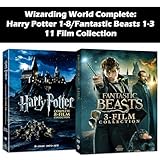
The eight principal Harry Potter films create a rare sustained coming-of-age epic. The cast ages with the story, the visual world expands from school mystery to open conflict, and a stable production team gives the series an unusual sense of continuity. Its strongest achievement is cumulative: friendships, rivalries, family histories, and moral decisions gather weight over many years. The broader Wizarding World, including the Fantastic Beasts films, has not matched the original run’s consistency, which keeps the franchise outside the top ten. Watch the eight main films in release order before exploring related material; the central story is complete on its own.
13. Jurassic Park
The original Jurassic Park remains a landmark in effects-driven suspense and blockbuster science fiction. Its dinosaurs are spectacular, but the film’s lasting power comes from the contrast between scientific wonder, corporate irresponsibility, family vulnerability, and carefully staged fear. The sequels preserve the iconography and audience appeal while varying widely in execution and ambition. That quality gap keeps the broader franchise below the very top tier, despite its enormous cultural reach. Start with the 1993 original, then watch the later films according to your interest in expanded dinosaur spectacle rather than expecting the same level of suspense. Physical editions and themed products are especially likely to vary by territory and release cycle.
14. Mission: Impossible
Mission: Impossible improved as it went. What began as a stylish espionage procedural gradually became a practical-stunt showcase centered on Tom Cruise’s Ethan Hunt, while maintaining team dynamics, double-crosses, technical problem-solving, and a strong sense of place. The later films understand that spectacle is most effective when the audience can see the physical problem and the human risk. The series’ commitment to theatrical action and increasingly elaborate set pieces gives it unusually high late-period consistency. The first film can be watched independently, but release order is the best route because the team relationships and recurring consequences become more important over time.
15. The Matrix
The Matrix changed the visual and conceptual vocabulary of science-fiction action. Its digital-age anxieties, cyberpunk design, martial-arts choreography, bullet-time imagery, and questions about reality and control arrived with unusual formal confidence. The sequels are more divisive because they broaden the philosophy and mythology in ways that do not always match the original’s clarity or momentum. That unevenness matters, but it cannot erase the first film’s influence or the franchise’s distinctive identity. Begin with the 1999 original and treat it as a complete experience before deciding whether the expanded mythology is rewarding for you.
What’s actually slowing this PC down?
Pick the symptom - the matching free tool is one click away.
Rank #3
16. Rocky and Creed
Rocky and Creed are linked brands built around one of Hollywood’s most durable sports-drama mythologies. Across the films, boxing becomes a language for work, dignity, aging, mentorship, grief, family, and reinvention. The best entries are emotionally direct without being disposable, and the later Creed films demonstrate how a legacy character can support a new protagonist rather than merely repeat the past. The quality varies across the full run, but the central values remain legible. Watch the Rocky films first, followed by the Creed films, to experience the handoff from one generation to the next.
17. The Terminator
The first two Terminator films show how one premise can sustain radically different genres. The Terminator is lean, anxious science-fiction horror, while Terminator 2: Judgment Day expands into muscular action and humanist science fiction without losing the terror of an unstoppable machine. Their time-travel paradoxes, practical effects, performances, and clear visual storytelling remain influential. Later sequels repeatedly revisit the same ideas with diminishing returns, lowering the overall franchise average. The essential watch is the original followed immediately by Terminator 2; the later films are optional continuations rather than required chapters.
18. Back to the Future
Back to the Future is a compact trilogy with exceptional internal design. Its time-travel rules, comic timing, character pairings, visual callbacks, and escalating causal complications make the films unusually satisfying to rewatch. The series also understands that changing the past should affect personal relationships, not just create large spectacle. With only three principal films and no prolonged period of franchise fatigue, its proportion of genuinely rewatchable material is exceptionally high. Watch in release order, beginning with the first film; its setup is so efficient that explaining the premise further would spoil much of the pleasure.
19. Spider-Man
Spider-Man has supported multiple cinematic eras and styles without losing his central appeal as a hero balancing responsibility, adolescence, humor, guilt, and ordinary life. Sam Raimi’s trilogy gives the character an operatic emotional scale; the animated Spider-Verse films turn multiverse storytelling into visual invention; and the MCU partnership offers another version of Peter Parker’s development. The films vary substantially in quality, but that adaptability is itself a major achievement. Spider-Man is ranked separately from the MCU because audiences and the industry treat it as a distinct movie and commercial brand, even though some films intersect with Marvel’s shared continuity. Start with Raimi’s Spider-Man or the first Spider-Verse film depending on whether you want live-action drama or animation.
Windows Errors? Fix Them Before They Spread
Repair common Windows errors and clear accumulated junk for a smoother, more stable PC - no reinstall needed.Free scan · no reinstallOutdated Drivers Are Slowing You Down
One free scan finds every outdated or missing driver and matches the right update for your exact hardware.Free scan · exact hardware match20. X-Men
The first X-Men films helped establish the modern superhero cycle and used mutant identity as a flexible metaphor for exclusion, prejudice, family, assimilation, and political power. The series produced several outstanding entries, especially when its ensemble cast and social themes worked together. Its continuity problems, tonal shifts, and repeated timeline revisions make the overall body of work difficult to evaluate as one unified story. That prevents a higher placement despite the franchise’s historical importance. Begin with the original X-Men and continue in release order if you want to see the series develop; a selective viewing is more rewarding if continuity is a concern.
21. Shrek
Shrek made fairy-tale satire, pop-cultural wit, expressive animation, and sincere emotion function together inside a major family brand. The first two films are the essential peak: they are funny for children, layered enough for adults, and grounded by a surprisingly persuasive argument about self-image, prejudice, performance, and acceptance. Later installments are less consistent, although the characters remain culturally recognizable. The series earns this place because its early films changed the tone of mainstream animated comedy and because its emotional core is stronger than its reputation as a reference-heavy parody suggests. Watch the first two before deciding whether to continue through the spin-offs.
22. The Fast and the Furious
The Fast and the Furious transformed from a street-racing crime series into a global action family saga with a distinctive vocabulary of loyalty, cars, found family, impossible missions, and escalating stunts. The shift is not uniformly successful, but it is one of the most remarkable examples of a franchise discovering a new commercial and tonal identity in public. Its cultural and box-office impact is substantial, even when later excess overwhelms character or physical plausibility. Start with the 2001 original for the series’ street-racing foundation, then decide whether the increasingly extravagant later films are your kind of spectacle.
23. The Hunger Games
The four-film original Hunger Games cycle translates a politically charged young-adult story into a commercially successful dystopian series with a strong central performance and a clear visual identity. Its most compelling ideas concern spectacle, propaganda, celebrity, trauma, resistance, and the way political power turns suffering into entertainment. The films vary in pace, particularly when one novel is divided across two installments, but the cycle maintains a coherent emotional and political direction. Watch the original four films in release order, then approach the later prequel as historical expansion rather than a replacement for Katniss’s story.
Recommended Free Tools
Rank #4
24. Pirates of the Caribbean
Pirates of the Caribbean: The Curse of the Black Pearl revitalized the swashbuckler through comic fantasy, elaborate production design, supernatural adventure, and Johnny Depp’s defining performance as Jack Sparrow. The first film remains the franchise’s clearest achievement, while the subsequent entries expand the mythology with varying success. The initial trilogy still has substantial personality because it combines practical-looking action, memorable supporting characters, maritime spectacle, and a willingness to be strange. Begin with The Curse of the Black Pearl; it works as a satisfying standalone adventure even if you never continue through the later films.
25. The Before Trilogy
Richard Linklater’s Before trilogy demonstrates that a franchise can be built from conversation, performance, and the passage of years rather than escalating action. Before Sunrise, Before Sunset, and Before Midnight preserve real-time intimacy while allowing the characters and their relationship to age, change, disappoint, and deepen. The films’ cultural footprint is narrower than that of the blockbusters above them, which is the main reason for this placement. Artistically, however, they are among the clearest examples of long-form character continuity in cinema. They must be watched in release order; each film gains force from the time between it and the previous one.
26. Scream
Scream repeatedly tests and updates the rules of slasher cinema while preserving the pleasures of mystery, ensemble chemistry, suspense, and horror-comedy. Its self-awareness is most effective when it remains grounded in character: the films understand why people know horror conventions and still make terrible decisions under pressure. The series has survived changing eras of genre filmmaking because it can comment on the latest horror cycle without abandoning the mask, the whodunit structure, or the pleasure of a well-built set piece. Start with the 1996 original, then watch in release order to see how each revival responds to a new media environment.
27. Halloween
John Carpenter’s Halloween is foundational horror filmmaking: atmospheric, economical, carefully composed, and driven by an unforgettable sound design and the unnerving blankness of Michael Myers. The broader series has produced several strong or interesting reinterpretations, but its multiple timelines, remakes, retcons, and uneven sequels make the franchise less consistent than its influence would suggest. The original’s restraint remains the key to its power. Watch Carpenter’s 1978 film first and treat the later timelines as alternate continuations rather than trying to force every installment into one coherent chronology.
28. John Wick
John Wick is a modern action franchise with unusually clear visual rules, choreography, color design, sound, and underworld mythology. Its central pleasure is precision: movement, weapons, spaces, costumes, and ritual all contribute to a world that feels heightened but internally legible. The films also understand how to turn a simple revenge premise into a steadily expanding criminal cosmology. It ranks below older franchises primarily because its track record is shorter, not because its identity is weak. Watch in release order, beginning with the first film, whose relatively contained revenge story provides the foundation for the increasingly elaborate mythology.
29. How to Train Your Dragon
The How to Train Your Dragon trilogy is one of the strongest modern animated trilogies. It combines polished animation, memorable music, an appealing friendship, a persuasive coming-of-age arc, and a coherent emotional conclusion. Hiccup’s growth is not merely a sequence of victories: the films ask what leadership, independence, family, and letting go require. Its cultural reach is narrower than that of Toy Story or Shrek, but its internal consistency is arguably stronger than many larger animated brands. Watch the trilogy in order, because the relationship between Hiccup and Toothless provides the emotional architecture for all three films.
30. The Evil Dead
The Evil Dead earns the final place through originality, formal energy, and cult durability. Sam Raimi’s series moves from raw horror to slapstick, fantasy adventure, remake, and television-adjacent expansion while retaining a recognizable comic-grotesque spirit. Its films do not form a perfectly even or unified body of work, but they demonstrate how a franchise can reinvent itself without losing its visual aggression or dark humor. Begin with the original if you want the scrappy horror foundation, or choose Evil Dead II for the most concentrated blend of terror and physical comedy.
Independent reader supportYour contribution helps us test, update, and keep practical guides available for everyone.How to watch or own the franchises
For most of these series, release order is the safest first-viewing strategy. It preserves the way audiences discovered the characters, reveals the evolution of filmmaking styles, and prevents prequels from explaining mysteries that were designed to unfold later. The main exceptions are franchises with separate creative cycles: Batman can be watched as individual director-led trilogies or reinterpretations, and Planet of the Apes works either as the original cycle or as the modern reboot trilogy.
Best Value
Readers who want a physical way to revisit several entries can compare a movie franchise box set or a 4K movie collection, but check the individual listing before buying. A box labeled complete may cover only one trilogy, omit spin-offs, use different cuts, or exclude newer films. Confirm the included titles, disc format, region compatibility, subtitles, bonus features, and whether the package contains theatrical or extended editions. Home-media availability and inventory change by country and retailer, so no collection should be assumed to be in stock or region-free.
For collectors, franchise merchandise can be a more selective purchase than trying to own everything. A James Bond model kit suits fans interested in the series’ vehicles and design history, while a Jurassic World LEGO set offers a tangible way into the dinosaur films. Star Wars models, Marvel figures, posters, books, and other collectibles can be worthwhile, but marketplace listings should be checked for licensing, edition details, seller reputation, and condition rather than assumed to be officially licensed.
Why some major franchises are not here
Leaving a franchise out is not the same as denying its importance. Transformers, Resident Evil, Twilight, The Conjuring, Saw, Despicable Me, The Chronicles of Narnia, The Mummy, Men in Black, Divergent, and the broader DC universe all have major individual films, devoted audiences, or substantial commercial influence. They were omitted because the ranking emphasizes sustained quality and distinctive cinematic achievement across the franchise as a whole. Some would enter a list weighted more heavily toward cultural impact, genre loyalty, or box office.
Best is not the same as biggest
Cumulative gross is useful context, but it cannot function as a quality ranking. A franchise’s total is affected by the number of releases, changing ticket prices, inflation, international market growth, re-releases, and which spin-offs or connected brands a database includes. The Marvel Cinematic Universe, Star Wars, Spider-Man, the Wizarding World, Jurassic Park, James Bond, Fast & Furious, Middle-earth, Toy Story, and other brands are commercial giants, but commercial scale and artistic consistency measure different things.
That is why reasonable readers may move Star Wars, The Godfather, Batman, James Bond, or Toy Story several places in either direction. The ranking is meant to make the criteria visible and start an argument, not to pretend that taste can be reduced to a single objective score. Which franchise would you move into the top five?
Editorial note
Franchise and studio names are used descriptively. Posters, logos, promotional stills, and other copyrighted artwork require the appropriate permissions and should not be reproduced merely because a film is discussed. Streaming availability, physical editions, release plans, and product inventory are volatile; check current regional listings immediately before publication or purchase.
Frequently Asked Questions
What is the best movie franchise of all time?
On a balance of peak quality, consistency, influence, world-building, cultural durability, and rewatchability, The Lord of the Rings is the strongest overall choice. The Godfather, Star Wars, Batman, and James Bond are equally defensible choices if you weight influence, canonical status, reinvention, or cultural reach more heavily.
Why are the MCU and Spider-Man ranked separately?
Although Spider-Man appears in and intersects with the Marvel Cinematic Universe, the character also functions as a separate cinematic and commercial brand through the Raimi films, animated Spider-Verse films, and other adaptations. Listing them separately avoids treating one character’s distinct movie history as merely a subset of the larger shared universe.
Do these 3 things before closing this tab:
1Repair Windows errors before they cause bigger problems2Scan for outdated or missing drivers - takes under a minute3Clear out junk files and repair common Windows errorsShould movie franchises be watched in chronological or release order?
Release order is usually best for a first viewing because it preserves the intended reveals and shows how the series evolved. Separate creative cycles, such as the different Batman films or the original and rebooted Planet of the Apes series, can be watched independently. For The Lord of the Rings, Toy Story, Harry Potter, and Back to the Future, watching the main films in release order is strongly recommended.
Does this list include television universes or every spin-off?
No. The scope is feature-film franchises available by the August 11, 2026 research cutoff. A spin-off or shared universe is considered where audiences and industry sources conventionally treat it as part of the same movie brand, but television-only universes are excluded. Middle-earth is represented through The Lord of the Rings rather than receiving a duplicate Tolkien ranking.
The Bottom Line
Bottom line: The Lord of the Rings takes the top spot because it combines the rarest qualities in franchise filmmaking: sustained excellence, unified ambition, memorable characters, a fully realized world, and a genuinely earned ending. But the most defensible ranking is one that leaves room for different definitions of greatness. If influence is your priority, choose Star Wars; if consistency is the test, choose Toy Story or Back to the Future; if reinvention matters most, choose James Bond, Batman, or Mad Max.
Quick Recap
Product prices and availability are accurate as of the date/time indicated and are subject to change. Any price and availability information displayed on Amazon at the time of purchase will apply.
Free tools Windows power users keep installed
One-click scans. No signup required.