For more than two decades, the Rage virus has loomed large over modern horror, a snarling symbol of post-millennial anxiety that helped redefine what apocalyptic cinema could look and feel like. 28 Days Later didn’t just revive the zombie subgenre; it stripped it to the bone, marrying social collapse to raw, nerve-fraying immediacy. 28 Weeks Later expanded the scope with brutal ambition, but the franchise then went silent, its absence only sharpening its legend.
That silence is why the first reactions to 28 Years Later: The Bone Temple have landed with such force. Critics emerging from early screenings aren’t just praising a strong sequel; they’re openly calling it a potential movie of the year, a claim that carries weight in a genre often sidelined during awards conversations. The consensus points to a film that understands the original’s cultural power while pushing its ideas forward, using horror not as spectacle alone, but as a lens on survival, memory, and moral erosion.
This groundswell of acclaim raises bigger questions than simple franchise revival. If The Bone Temple truly delivers on its promise, it could reshape the commercial and critical ceiling for modern horror, positioning the series as a generational touchstone rather than a nostalgic callback. To understand why reactions have been so effusive, and what that means for the film’s box office prospects and long-term legacy, it’s worth examining how this return to Rage feels both timely and unsettlingly inevitable.
Shockwaves from the First Screenings: What Critics Are Actually Saying
Early reactions to 28 Years Later: The Bone Temple didn’t trickle out quietly—they detonated across genre circles with an intensity usually reserved for true cultural events. Critics exiting the first press screenings described a film that feels both ferociously contemporary and deeply haunted by the past, an evolution rather than a resurrection. The most striking throughline in these reactions is not just enthusiasm, but a sense of disbelief that the franchise has returned with this level of confidence and control.
#1 Best Overall
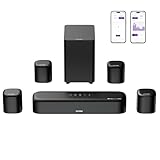
- 7.1ch Dolby Atmos Surround Sound System for TV: This 7.1ch sound bar features 3 main channels for crisp dialogue and 4 surround speakers. Power the rear right surround speaker to pair it wirelessly with sound bar. The setup delivers an immersive surround sound audio experience, making you feel fully engaged in the action. Note: Recommended for space of 108 to 270 ft².
- 4 Surround Speakers for Home Theater Sound System: The Aura A60 Pro soundbar for tv comes with 2 wired front surround speakers and 2 wired rear surround speakers, positioned to create a wide, room-filling soundstage. The rear speakers connect wirelessly with the soundbar, minimizing cable clutter and optimizing space efficiency.
- Dolby Atmos Delivers an Immersive 3D Soundscape: This 7.1ch dolby atmos soundbar enhances your listening experience with multidimensional audio that surrounds you from every direction, upgrading your home theater with powerful, dynamic sound that brings each scene to life.
- 5.25-inch Wired Subwoofer with BassMX Technology: The Aura A60 Pro sound bar comes with a 5.25" wired subwoofer powered by BassMX technology to boost low-frequency performance. An optimized magnetic structure and diaphragm produce deep, powerful bass. Enjoy enhanced low-end sound and experience the impact of every beat.
- Precision Audio Tuning Redefined: Customize your audio experience with the Ultimea App, designed for precise sound control. It provides 121 professionally tuned EQ presets across styles such as Bass, Pop, Classical, and Rock, along with 10-band control and 6 tailored EQ modes including Movie, Music, Voice, Sport, Game, and Night. Using the advanced “Customize” option, you can adjust audio details to suit your personal taste, ensuring every sound is tuned exactly how you prefer.
“The Movie of the Year” Isn’t Hyperbole—Here’s Why
Several prominent critics have already labeled The Bone Temple a movie of the year contender, a phrase often thrown around loosely, but here it’s backed by specificity. Praise centers on the film’s ability to fuse visceral horror with thematic weight, balancing relentless tension against a sobering meditation on what decades of survival have done to humanity’s moral core. This isn’t just about scares; it’s about endurance, legacy, and the quiet horrors that emerge once the screaming stops.
What seems to have surprised critics most is how assured the film feels tonally. Rather than chasing modern horror trends or indulging in fan service, The Bone Temple reportedly commits to a bleak, disciplined vision that recalls the raw immediacy of 28 Days Later while expanding its emotional and philosophical scope. That confidence has prompted comparisons not just to prior franchise entries, but to the upper echelon of post-apocalyptic cinema as a whole.
A Return to Rage That Feels Uncomfortably Relevant
Another recurring note in early reactions is how unsettlingly timely the film feels. Critics have highlighted its portrayal of long-term societal decay, where the apocalypse isn’t a sudden collapse but a slow corrosion of empathy and memory. In that sense, The Bone Temple appears to reflect contemporary anxieties about isolation, generational trauma, and the normalization of crisis, themes that resonate far beyond genre boundaries.
Several reviewers have pointed out that the film’s horror derives as much from human behavior as from the infected themselves. This emphasis echoes the original’s bleak worldview but reframes it through the lens of time passed, asking what kind of world remains after decades of fear have become routine. That thematic maturity is a key reason critics are positioning the film as something more substantial than a legacy sequel.
Do these 3 things before closing this tab:
1Fix the driver behind crashes, sound loss and screen glitches2Clear out junk files and repair common Windows errors3Scan for outdated or missing drivers - takes under a minuteCritical Momentum and the Shape of Things to Come
The intensity of these first reactions has immediate implications for the film’s trajectory. Strong early buzz from respected critics often translates into crossover interest, particularly when horror is framed as culturally relevant rather than purely sensational. If this momentum holds, The Bone Temple could benefit from a rare alignment of genre credibility and mainstream curiosity, boosting its box office prospects well beyond typical expectations for an R-rated horror sequel.
More importantly, the critical response suggests a potential recalibration of how the franchise is viewed within modern horror history. Rather than existing as a beloved relic of early-2000s cinema, 28 Years Later is being positioned as a defining work of the current era, one capable of standing alongside the original not out of nostalgia, but necessity.
Why ‘The Movie of the Year’ Is Not Hyperbole: Craft, Confidence, and Creative Risks
Early reactions calling The Bone Temple “the movie of the year” aren’t rooted in hype alone; they’re grounded in an unusual convergence of craft, restraint, and audacity. Critics aren’t just responding to how intense the film is, but how deliberately it’s constructed, with a clear sense of purpose guiding every creative decision. That level of confidence is rare in legacy horror, and it’s what separates strong sequels from defining ones.
Formally Precise, Emotionally Relentless
One of the most consistent points of praise centers on the film’s formal discipline. The direction reportedly favors sustained tension over shock tactics, allowing scenes to breathe while still tightening the vise. Cinematography and sound design work in tandem to create a sense of unease that feels constant rather than episodic, reinforcing the idea that survival itself has become an exhausting, unending condition.
This precision gives the film an authority that many post-apocalyptic stories lack. Rather than chasing scale for its own sake, The Bone Temple keeps its focus intimate, making the world feel vast precisely because it is so inhospitable. Critics have noted that this restraint amplifies the horror, turning silence, distance, and routine into threats as potent as any outbreak.
Performances That Treat Horror as Drama First
Another reason the “movie of the year” label is sticking is the seriousness with which the performances approach the material. Early viewers describe characters who feel worn down by decades of fear, not heightened by it, bringing a lived-in authenticity to the film’s emotional core. The acting reportedly avoids genre shorthand, instead grounding the horror in recognizable human responses: fatigue, denial, and moral compromise.
This dramatic weight elevates the film beyond visceral thrills. When violence erupts, it carries emotional consequences rather than functioning as spectacle, reinforcing the franchise’s long-standing belief that survival is rarely heroic. That commitment to character over carnage is a key reason critics see awards-season potential rather than just cult admiration.
Risk-Taking Worldbuilding That Expands the Mythology
Calling a sequel “the movie of the year” also implies ambition, and The Bone Temple appears unafraid to take narrative risks. Instead of rehashing outbreak mechanics, the film explores how belief systems, rituals, and power structures mutate over decades of isolation. This expansion of the world doesn’t dilute the original premise; it sharpens it, suggesting that time itself may be the franchise’s most terrifying antagonist.
Free tools Windows power users keep installed
One-click scans. No signup required.
Rank #2

- Simplified 5.1ch Dolby Atmos Setup: Enjoy immersive 4D sound with real Dolby Atmos and 5.1-channel audio. Five built-in speakers, including two side-firing drivers, create wide surround without rear speakers. Precision DSP ensures <0.5 ms latency for smooth, theater-like sound. Setup takes less than 1 minute.
- Voice Clarity Enhancement: VoiceMX technology uses advanced DSP algorithms to isolate and enhance vocal frequencies in real time. Dialogue remains crisp and easy to follow by separating speech from background effects and music, even at low volumes or during intense scenes.
- 300W Output with 6-Driver System: Featuring five precision-tuned full-range drivers and a dedicated wired wooden subwoofer, the system delivers up to 300W of peak power for bold, room-filling sound. With a frequency response of 45 Hz–18 kHz and a maximum SPL of 99 dB, it reproduces everything from subtle nuances to explosive cinematic effects.
- 18 mm High-Excursion Driver: Powered by BassMX technology, the wired wooden subwoofer features a 18 mm high-excursion driver, a 5.3L tuned cabinet, and a high-density magnetic circuit. This design delivers deeper, tighter bass with greater air displacement and enhanced low-frequency performance—bringing more realism to every scene.
- HDMI eARC for True Dolby Atmos: HDMI eARC supports up to 37 Mbps of bandwidth, unlocking the full potential of lossless Dolby Atmos 5.1-channel audio. Compared to standard ARC, eARC delivers richer surround effects and greater detail. CEC integration allows the TV and soundbar to work together with unified control.
Such choices could have alienated longtime fans, but early reactions suggest the opposite. By trusting the audience to engage with unfamiliar ideas and unsettling developments, the film earns its boldness. That trust is being rewarded with praise that frames The Bone Temple not as fan service, but as evolution.
What This Praise Could Mean for Horror’s Place in the Conversation
If the early consensus holds, the implications extend beyond this single release. Labeling a bleak, R-rated horror film as a potential “movie of the year” challenges persistent assumptions about the genre’s ceiling. It positions The Bone Temple as a crossover event, one capable of attracting viewers who might normally bypass post-apocalyptic horror entirely.
From a box office perspective, that kind of discourse matters. Prestige framing can transform a genre sequel into a cultural appointment, expanding its reach and longevity. More importantly, it cements 28 Years Later as not just a return to relevance, but a statement about what modern horror can achieve when it’s allowed to be uncompromising, thoughtful, and fearless.
Evolving the Infected Mythos: How ‘The Bone Temple’ Rewrites the Rules of the Franchise
For all the early praise surrounding 28 Years Later: The Bone Temple, much of the fascination stems from how decisively it reframes the infected themselves. This is not a sequel content to recycle the rage-virus chaos that defined 28 Days Later or the militarized containment horrors of 28 Weeks Later. Instead, the film treats the passage of time as a biological and cultural force, reshaping the infected into something far more unsettling than simple vectors of violence.
The Infected After Decades, Not Days
Early reactions emphasize that the infected are no longer frozen in the moment of outbreak. Decades of decay, adaptation, and environmental pressure have altered their behavior in ways that feel disturbingly plausible. They are less erratic, more patterned, and in some cases almost ritualistic, blurring the line between disease-driven instinct and learned behavior.
This evolution adds an eerie intelligence to the threat. Critics note that the infected are no longer just obstacles to survival but active participants in the world’s ecology. The horror emerges not from constant motion, but from the sense that these creatures belong here now, while humanity does not.
The Bone Temple as a Symbol, Not Just a Setting
The titular Bone Temple has been singled out as one of the film’s most provocative ideas. Rather than serving as a conventional stronghold or battleground, it operates as a mythic space shaped by belief, fear, and misinterpretation. Early viewers describe it as a place where remnants of human spirituality collide with the infected’s altered existence.
This reframing transforms the franchise’s usual survivalist logic. The question is no longer how to escape the infected, but how meaning itself has been corrupted by prolonged catastrophe. In that sense, the temple is not about answers, but about the terrifying persistence of faith in a world that no longer supports it.
Recommended Free Tools
From Viral Horror to Existential Dread
What seems to truly excite critics is how The Bone Temple shifts the franchise’s thematic center. The rage virus is still present, but it’s no longer the sole engine of fear. Instead, the film interrogates what happens when humanity has had generations to rationalize the apocalypse, turning trauma into tradition.
This pivot deepens the horror in ways that feel uniquely mature for a long-running franchise. Violence remains brutal, but it’s framed as an outcome of belief systems hardened over time rather than momentary panic. That evolution is a major reason early reactions frame the film as awards-worthy rather than merely shocking.
Why This Reinvention Matters for the Franchise’s Legacy
By rewriting the rules of its own mythology, 28 Years Later avoids the stagnation that often plagues legacy sequels. Critics are responding not just to novelty, but to coherence; the changes feel earned, rooted in the logical consequences of a world left to rot for nearly three decades. The film respects what came before while refusing to be bound by it.
That balance is crucial to the “movie of the year” conversation. Reinvention on this scale signals confidence, not desperation, and positions The Bone Temple as a benchmark for how horror franchises can age gracefully. If these ideas resonate with wider audiences, the infected mythos may no longer be remembered solely for rage-fueled sprinting, but for its unsettling meditation on how time itself becomes the ultimate infection.
Rank #3

- Your purchase includes: 1 AV receiver, 5 speakers, 1 Sub-Woofer and Speaker wire.Waterproof : No
- Dimensions: AV Receiver – 17” W x 6” H x 12” D | Four Speakers (each) – 4” W x 6” H x 4” D | Center speaker – 10” W x 4” H x 4” D | Subwoofer – 11” W x 11” H x 13” D
- Technical specs: HDMI – 4 | Standby Power Consumption – ≤ 0.2 W | Frequency Response – 28Hz/25kHz
- Bluetooth for streaming all your favorite music and podcasts. No wireless functionality
- Easy setup with Yamaha YPAO room optimization and flexible speaker placement options, including virtual cinema front
Danny Boyle, Alex Garland, and the Power of Creative Reunion
If The Bone Temple feels unusually assured for a legacy sequel, critics are quick to point to the reunion at its core. Danny Boyle and Alex Garland returning to the same creative axis that defined 28 Days Later has reframed the film as more than a continuation; it’s being treated as a long-delayed conversation between artists and their own mythology. Early reactions consistently describe a sense of authorship that’s rare in modern franchise filmmaking.
This isn’t nostalgia-driven fan service. Viewers note that Boyle’s kinetic instincts and Garland’s philosophical density have both evolved, and the film allows those changes to coexist rather than cancel each other out. The result is a sequel that feels deliberate, patient, and unnervingly confident in its refusal to explain itself too neatly.
Boyle’s Visual Urgency Meets Garland’s Moral Unease
Boyle’s direction has been singled out as a reminder of why his original approach felt so destabilizing in 2002. Critics highlight the return of aggressive editing rhythms and tactile camerawork, now tempered by a mournful stillness that reflects a world no longer in immediate collapse, but long past it. The infected may still move with terrifying speed, but the film itself knows when to slow down and stare back.
Garland’s script, meanwhile, is being praised for embedding horror in ideology rather than spectacle. The Bone Temple reportedly withholds easy metaphors, instead letting belief systems rot in plain sight. That restraint is a key reason early viewers are using “movie of the year” language; the film trusts its audience to sit with discomfort rather than chase adrenaline alone.
What’s actually slowing this PC down?
Pick the symptom - the matching free tool is one click away.
Why This Reunion Elevates the Film Beyond Franchise Expectations
The critical excitement surrounding The Bone Temple isn’t just about quality, but about intention. Boyle and Garland aren’t revisiting the franchise to correct or overwrite its past; they’re interrogating what that past would realistically become after 28 years of moral erosion. That clarity of purpose is resonating strongly with critics exhausted by sequels that exist only to reset the board.
This creative reunion also reframes the film’s cultural and commercial prospects. Early word positions it less as a niche horror event and more as a prestige genre release, the kind that can draw crossover audiences without diluting its identity. If that perception holds, The Bone Temple could follow the path of modern horror landmarks that pair box office strength with long-term critical relevance, cementing its place not just within the franchise, but within the evolving canon of post-apocalyptic cinema.
Horror as Cultural Mirror: Themes of Survival, Faith, and Ruin in a Post-Pandemic Age
What’s pushing early reactions into “movie of the year” territory isn’t just craft, but timing. The Bone Temple arrives after a real-world global trauma that has permanently altered how audiences read apocalypse narratives. Critics are responding to a film that understands this shift and refuses to offer comfort where none feels honest.
Survival Without Salvation
Unlike many post-apocalyptic stories that frame survival as an inherent good, The Bone Temple reportedly treats it as an open moral question. Early viewers describe a world where endurance has become rote, stripped of heroism and increasingly divorced from meaning. Survival is no longer a victory; it’s simply the default state of a society that never learned how to rebuild.
PC Slower Than It Used to Be?
A free scan shows the junk files, broken settings and background clutter dragging Windows down - then fixes them in one click.Free scan · Windows 10 & 11Crashes, No Sound, or Screen Glitches?
Random freezes, missing sound and display glitches usually trace back to one bad driver. Find and replace yours safely.Free scan · under a minuteThat perspective lands harder in a post-pandemic context, where audiences have lived through prolonged crisis rather than cinematic collapse. Critics note that the film captures the exhaustion of existing in emergency mode for too long, making its horror feel uncomfortably familiar rather than fantastical.
Faith as Structure, Control, and Decay
Faith, both spiritual and ideological, appears to be the film’s most provocative terrain. Reactions suggest The Bone Temple explores belief systems not as sources of hope, but as frameworks people cling to when institutions fail completely. The titular “temple” is being described less as a sanctuary and more as an indictment of how meaning calcifies into control.
This thematic focus is a major reason critics are responding so strongly. In an era defined by polarized belief and performative certainty, the film’s depiction of faith as something that can rot while still appearing sacred feels pointed without being preachy. Garland’s refusal to declare villains outright allows the audience to confront how easily conviction becomes justification.
Ruin as the New Normal
Perhaps most striking is how The Bone Temple treats ruin not as spectacle, but as background noise. Reviewers highlight environments that feel lived-in, eroded, and emotionally hollow, suggesting a world that has accepted collapse as permanence. The horror emerges not from sudden shocks, but from the quiet realization that nothing is coming to save anyone.
Quick wins for a faster PC:
Repair Windows errors before they cause bigger problemsFix Now →Fix the driver behind crashes, sound loss and screen glitchesFind Drivers →Rank #4

- An all-in-one home theater package - The YHT-4970U comes with a Dolby Atmos AV Receiver (Yamaha RX300A), a 5.1 speaker package (two front channel speakers, a center channel speaker, two surround channel speakers, and a powered subwoofer), plus a subwoofer cable and speaker wire all in one box.
- Step into lifelike sonic worlds - Dolby Atmos and DTS Virtual:X for deeply dimensional, lifelike sound that draws you into every moment of your favorite entertainment, plus crystal-clear dialogue so you can hear every word.
- Stunning visual realism - Supports ultra-high definition 4K/120 and 8K/60 video, high-performance HDMI switching, advanced Dolby Vision and HDR10+ dynamic range technologies, HDMI eARC/ARC and next-gen gaming features like ALLM and VRR.
- Room Correction - Experience perfect sound in any room. An included setup microphone measures your room’s acoustics and speaker characteristics, allowing the receiver to automatically optimize sound performance.
- Easy streaming with Bluetooth Multipoint - Stream all your favorite music, podcasts and audiobooks wirelessly. Built-in Bluetooth Multipoint lets you pair two source devices and instantly switch between them.
That sensibility aligns closely with why early praise is so effusive. Critics aren’t just reacting to scares; they’re responding to a film that articulates a shared cultural fatigue. By framing devastation as stable rather than catastrophic, The Bone Temple reflects a modern anxiety that resonates far beyond genre fans.
Why This Resonates Now—and What It Signals
Calling a horror sequel “movie of the year” is less about hyperbole than recognition. Early reactions suggest The Bone Temple taps into a collective unease that prestige dramas often chase but rarely capture with this level of clarity. Its genre framework allows it to say uncomfortable things directly, without softening them for accessibility.
That resonance could translate into more than critical acclaim. If audiences respond to the film’s thematic weight as strongly as critics have, The Bone Temple is positioned to perform as both a box office draw and a cultural touchstone. In modern horror, relevance is currency, and early word suggests this film spends it with rare precision.
Independent reader supportYour contribution helps us test, update, and keep practical guides available for everyone.Early Buzz vs. Audience Expectations: Can the Film Cross Over Beyond Horror Fans?
Early reactions have framed The Bone Temple as more than a genre high point, but that framing comes with pressure. Calling any horror sequel “the movie of the year” invites scrutiny from audiences who may not typically engage with post-apocalyptic or infection-based cinema. The question isn’t whether the film satisfies horror loyalists, but whether its ambitions translate beyond them.
The Tool Desk
Outbyte PC Repair FREERepair Windows errors before they cause bigger problemsFix Now →Outbyte Driver Updater FREEFix the driver behind crashes, sound loss and screen glitchesFind Drivers →There’s reason to believe it might. Critics are emphasizing mood, theme, and moral unease over set pieces, positioning the film closer to a prestige drama that happens to be terrifying. That distinction matters for audiences who associate horror sequels with diminishing returns rather than expanding ideas.
The Weight of the Franchise Name
The 28 Days Later brand carries credibility that few horror franchises can claim. Danny Boyle and Alex Garland’s original film wasn’t just scary; it was formally disruptive, politically alert, and culturally influential. Early buzz suggests The Bone Temple is consciously tapping into that lineage rather than trading on nostalgia.
For general audiences, that pedigree lowers the barrier to entry. Even viewers who skipped later zombie waves remember 28 Days Later as something different, something serious. The marketing challenge will be signaling that The Bone Temple continues that tradition without requiring encyclopedic knowledge of the series.
Prestige Horror and the Crossover Question
Modern audiences have shown an appetite for horror that carries metaphorical weight, from Hereditary to Get Out. The Bone Temple appears to sit comfortably in that space, using genre as a delivery system rather than the destination. That approach often broadens the audience, even as it risks alienating viewers expecting more conventional thrills.
Early reactions suggest the film is restrained, unsettling, and intellectually confrontational. That may limit repeat viewings for casual moviegoers, but it also positions the film as an event rather than disposable entertainment. For crossover success, that sense of importance can be as valuable as accessibility.
Box Office Reality vs. Cultural Impact
Even with rapturous early praise, expectations should remain grounded. This is still a bleak, uncompromising sequel in a franchise defined by despair and moral ambiguity. Massive four-quadrant appeal may be unrealistic, but sustained interest and strong legs are well within reach.
Where The Bone Temple seems poised to dominate is conversation. If audiences engage with its ideas as deeply as critics have, the film’s impact will extend beyond opening weekend metrics. In the current horror landscape, cultural penetration often matters more than raw numbers, and early buzz suggests this film understands that calculus instinctively.
Box Office and Awards Potential: Is This the Rare Horror Juggernaut?
If the first reactions hold, The Bone Temple could occupy a rare space where critical rapture and commercial viability overlap. Horror has produced breakout hits before, but few arrive with this level of pre-release seriousness and cross-genre credibility. The question now is whether that acclaim can translate into sustained box office momentum rather than a sharp opening-weekend spike.
Windows Errors? Fix Them Before They Spread
Repair common Windows errors and clear accumulated junk for a smoother, more stable PC - no reinstall needed.Free scan · no reinstallCrashes, No Sound, or Screen Glitches?
Random freezes, missing sound and display glitches usually trace back to one bad driver. Find and replace yours safely.Free scan · under a minuteBest Value

- 5.1.2ch Surround Sound System: A 5.1.2-channel system featuring up-firing speakers, surround sound, and a powerful subwoofer creates lifelike, multidimensional audio. Feel the Sky Around You—raindrops falling from above, helicopters circling overhead, thunder rumbling in all directions. Sound isn’t just around you, it engulfs you, as if the ceiling disappeared. This is Dolby Atmos: not just heard, but felt.
- Up-Firing Drivers with Neodymium Core: The up-firing channels use neodymium internal magnets and 18-core large voice coils to enhance height precision and vertical throw. This aerospace-grade configuration ensures better high-frequency dynamics, delivering focused and elevated sound images that unlock the true potential of Dolby Atmos.
- 360° SurroundX Audio: SurroundX technology combines two rear surround speakers and dual up-firing Atmos drivers to build a true 360° sound field. Powered by intelligent spatial algorithms, the system precisely positions audio around and above you—enhancing Dolby Atmos with a more natural, three-dimensional soundstage. Note: Not compatible with DTS.
- Lossless Audio Transmission: Unlock full Dolby Atmos performance with HDMI eARC, supporting up to 37Mbps bandwidth for lossless 5.1.2-channel audio. Compared to regular ARC, eARC delivers richer detail and better surround effects with no compression. With CEC, your TV and soundbar work as one—power, volume, and input sync automatically for effortless control.
- Advanced App Control: Customize every detail of your audio experience with the Ultimea App. Fine-tune your surround sound with 13-step level adjustment (-6 to +6), optimize with a 10-band graphic EQ, and choose from 121 preset sound settings. Enjoy seamless OTA updates that unlock new features and keep your system performing at its peak.
Opening Weekend vs. Long-Tail Power
Early indicators suggest a strong debut fueled by franchise loyalty, curiosity from prestige-minded viewers, and the weight of “movie of the year” rhetoric. Sony’s marketing appears calibrated to sell the film as an event rather than a thrill ride, emphasizing atmosphere, legacy, and thematic ambition. That strategy may cap the ceiling slightly but could significantly improve word-of-mouth longevity.
The Bone Temple feels built for legs rather than fireworks. Its reputation as a film to be discussed, debated, and unpacked could drive repeat business among cinephiles and genre fans who value depth over spectacle. In a marketplace crowded with disposable IP, that kind of staying power can quietly add up.
The Awards Conversation Horror Rarely Gets to Enter
Calling any horror film an awards contender is always fraught, but early reactions suggest this isn’t empty hype. Comparisons to Get Out and The Silence of the Lambs aren’t about surface scares; they’re about thematic resonance, control of tone, and cultural relevance. If The Bone Temple truly marries political anxiety with visceral filmmaking, it has a plausible path into year-end critics’ lists.
Craft categories may be its most realistic entry point. Cinematography, sound design, and score are already being singled out in early notices, areas where genre films have historically broken through. A screenplay nod for Alex Garland, especially if the film’s ideas linger, would further legitimize its prestige positioning.
Quick wins for a faster PC:
Repair Windows errors before they cause bigger problemsFix Now →Fix the driver behind crashes, sound loss and screen glitchesFind Drivers →Cultural Impact as the Real Prize
Even if awards bodies remain cautious, the film’s cultural footprint may prove more significant. Being labeled “the movie of the year” this early reframes The Bone Temple as a reference point rather than just a sequel. That perception can elevate the entire franchise, repositioning it as a cornerstone of serious modern horror.
In that sense, box office totals and trophies may be secondary to influence. If The Bone Temple reshapes expectations for what long-dormant franchises can return as, it becomes a case study in how horror can age, evolve, and still feel urgent. For a genre often dismissed as disposable, that kind of impact is the ultimate victory.
Where ’28 Years Later’ Stands in Modern Horror History—And What Comes Next
The most striking aspect of the early reaction to The Bone Temple is how quickly it’s being framed not just as a successful sequel, but as a corrective to modern franchise horror. In an era dominated by reboots that chase relevance through louder spectacle, 28 Years Later is being praised for restraint, patience, and thematic weight. That alone places it in rare company.
This is a film emerging at a moment when horror is splintered between elevated indies and algorithm-driven IP. The Bone Temple appears to bridge that divide, pairing arthouse sensibilities with a mainstream franchise legacy. That synthesis is why critics are reaching for “movie of the year” language so confidently.
Free tools Windows power users keep installed
One-click scans. No signup required.
A Franchise That Grew Up With Its Audience
The original 28 Days Later arrived as a jolt of post-millennial anxiety, while 28 Weeks Later amplified that dread into militarized chaos. The Bone Temple, by contrast, seems preoccupied with aftermath and inheritance. Its horror isn’t just infection or violence, but the erosion of meaning after decades of survival.
That thematic evolution mirrors its audience. Many early champions of the franchise are now older, more politically aware, and arguably more exhausted. By leaning into those feelings, the film positions itself as a rare example of a long-running horror series that matures rather than resets.
Why the “Movie of the Year” Talk Has Teeth
Early praise suggests The Bone Temple is resonating because it feels singular within its release window. Critics aren’t responding to novelty, but to coherence: a film that knows exactly what it wants to say and how to say it. In a year crowded with content, clarity can feel radical.
That’s also where its box office prospects become interesting. This isn’t a four-quadrant crowd-pleaser, but strong word-of-mouth among tastemakers can give it legs. If the film continues to be framed as essential viewing rather than optional franchise upkeep, it could outperform conservative projections through sustained interest.
Setting a Template for What Comes After
The success of The Bone Temple could have ripple effects beyond its own franchise. Studios are watching closely to see whether patience and seriousness can still move the needle. If this film proves that audiences will show up for thoughtful, challenging horror tied to recognizable IP, the door opens for similar revivals to take creative risks.
As for the 28 universe itself, early signals suggest room to expand rather than conclude. Whether that means additional films or a deliberate end point, The Bone Temple has already reframed the conversation. It’s no longer about keeping the franchise alive, but about deciding how much more it has to say.
Ultimately, where 28 Years Later stands in modern horror history may depend less on final box office tallies than on influence. If it becomes a touchstone for how legacy horror can return with purpose, it earns its place alongside the genre’s most meaningful evolutions. For a series born out of chaos, that kind of lasting relevance is the most fitting outcome imaginable.
Quick Recap
Product prices and availability are accurate as of the date/time indicated and are subject to change. Any price and availability information displayed on Amazon at the time of purchase will apply.

