Free tools Windows power users keep installed
One-click scans. No signup required.
The Muppet Christmas Carol (1992) is the best all-around screen adaptation of Charles Dickens’s story. It is funny enough for children, genuinely moving for adults, dark enough to preserve the ghosts, and unusually faithful to the novella’s structure. Michael Caine plays Scrooge without a trace of irony while the Muppets handle the comedy around him, a balance that most versions never quite achieve.
That choice is not the only defensible one. Alastair Sim’s Scrooge (1951) remains the strongest traditional interpretation, George C. Scott’s A Christmas Carol (1984) is an excellent serious television film, and Patrick Stewart’s 1999 version is especially rewarding for viewers who value Dickens’s language. The ranking below weighs fidelity, lead performance, atmosphere, emotional force, originality, and rewatchability rather than treating literal faithfulness as the only measure.

How these 24 adaptations are ranked
A Christmas Carol has been filmed more than 400 times worldwide by some counts, beginning with the surviving 1901 British short Scrooge, or, Marley’s Ghost. A list of 24 cannot represent every version, and it should not pretend that a 25-minute animated special, a television film, a theatrical feature, and a loose modern comedy are competing on identical terms.
Direct adaptations receive a preference here, but a film can rank highly by doing something exceptional with Dickens’s material. The criteria are:
#1 Best Overall

- Runtime: 2334 minutes
- Fidelity: how well the adaptation preserves the novella’s characters, structure, social concerns, and spirit.
- Performance: whether the actor playing Scrooge makes the transformation convincing.
- Atmosphere: the quality of the Victorian world, the Christmas setting, and the supernatural encounters.
- Emotional effectiveness: whether Scrooge’s regret and renewal feel earned rather than automatic.
- Originality and rewatchability: whether the version has a distinctive identity and remains rewarding after the first viewing.
The result is an editorial ranking, not an objective scorecard. The lower-ranked titles are not necessarily worthless; several are useful for particular audiences, historical periods, or styles of adaptation.
Dickens’s 1843 novella is still the best companion to this list. Viewers who want to compare what the films preserve, omit, or reinvent can read Dickens’s A Christmas Carol before or after watching their preferred version.
Streaming catalogs change, especially for older television and theatrical films. If you plan to revisit the story every December, an A Christmas Carol DVD can be more dependable than relying on a title remaining on one subscription service.
The 24 best A Christmas Carol adaptations, ranked
-
The Muppet Christmas Carol (1992)
Best for: almost everyone, especially families and longtime Christmas viewers.
Special offer. See more information about Outbyte and uninstall instructions. Please review EULA and Privacy policy.Brian Henson’s film is the rare adaptation that is simultaneously comic, musical, spooky, accessible, and substantially faithful to Dickens. Michael Caine plays Ebenezer Scrooge entirely straight, treating Kermit the Frog, Miss Piggy, Gonzo, and the rest of the Muppets as genuine people in the story’s world. That decision gives the jokes room to land without weakening the moral stakes.
Kermit makes an effective Bob Cratchit, Gonzo narrates as Charles Dickens, and the original songs give the film a personality beyond simple parody. The opening ensemble number establishes its warmth, while the Marley sequence supplies real supernatural menace. The film follows the novella’s central progression—Marley, the three spirits, the memories of Fezziwig and Belle, Tiny Tim, and Scrooge’s morning transformation—without becoming a dutiful illustration of the text. At 87 minutes, it is also an unusually efficient family introduction.
If you want one version to watch with different generations, this is the safest recommendation. A physical The Muppet Christmas Carol DVD is also a sensible choice for viewers who expect it to become part of an annual holiday tradition.
-
Scrooge (1951)
Best for: the definitive traditional interpretation.
Special offer. See more information about Outbyte and uninstall instructions. Please review EULA and Privacy policy.Alastair Sim gives the most finely calibrated classic Scrooge performance on film. He begins as a miser who is cruel, petty, and almost comically unpleasant, but the comedy gradually gives way to fear, shame, and authentic relief. His Christmas morning is exuberant without erasing the pain of what he has seen.
The black-and-white photography creates the foggy, crowded London many viewers imagine when they read Dickens. The ghost scenes have a sinister, old-fashioned theatricality, and the film gives the story enough space to feel like a complete Christmas fable rather than a quick morality play. It was released in Britain as Scrooge and in the United States as A Christmas Carol, so both titles refer to the same 1951 adaptation.
It is not as playful as the Muppet film or as expansive as some later productions, but for viewers who want atmosphere, a commanding central performance, and a traditional presentation, it is still the benchmark.
-
A Christmas Carol (1984)
Best for: viewers who want a serious, emotionally direct television version.
Recommended Free Tools
Special offer. See more information about Outbyte and uninstall instructions. Please review EULA and Privacy policy.George C. Scott plays Scrooge as a hard, powerful man whose authority has curdled into contempt. His transformation is less broadly comic than Sim’s and less theatrical than Patrick Stewart’s, but it is direct and persuasive. Scott’s Scrooge appears capable of warmth from the beginning, which makes the question of how he lost it especially important.
Clive Donner’s production leans into the darkness of the Victorian setting: cold rooms, narrow streets, poverty, and ghosts that feel like intrusions from another order of reality. It retains the recognizable narrative while allowing the human scenes to carry the emotional weight. The film first aired on CBS on December 17, 1984, and also received a theatrical release in Britain.
This is one of the best choices for adults who want a version that takes Dickens’s social criticism and supernatural terror seriously without becoming austere.
-
A Christmas Carol (1999)
Best for: viewers who prioritize textual fidelity and Patrick Stewart.
Special offer. See more information about Outbyte and uninstall instructions. Please review EULA and Privacy policy.Patrick Stewart brings a theatrical, articulate, morally severe quality to Scrooge. His performance feels shaped by the language of the novella and by his earlier one-man stage version of the story. He is not simply a grumpy businessman who learns to be nice; he is a man forced to confront the meaning of his choices.
The television format allows a relatively complete treatment of Dickens’s narrative. Richard E. Grant plays Bob Cratchit, and Joel Grey appears as the Ghost of Christmas Past. The production is more interested in delivering the story than in reinventing it, which makes it a good option for viewers who want the major episodes and language preserved.
Its stage origins can sometimes make the presentation feel formal, but that formality is also part of its appeal. This is the adaptation to choose when the literary texture of Dickens matters as much as the Christmas atmosphere.
-
Scrooge (1970)
Best for: musical fans and viewers who enjoy a colorful, expansive Carol.
The Tool Desk
Outbyte Driver Updater FREEScan for outdated or missing drivers - takes under a minuteDriver Scan →Outbyte PC Repair FREERepair Windows errors before they cause bigger problemsFix Now →Special offer. See more information about Outbyte and uninstall instructions. Please review EULA and Privacy policy.Rank #2
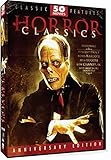 HORROR CLASSICS 50 MOVIE MEGAPACK
- An instant library of 50 horrorics assembled on 12 DVD's.
Ronald Neame’s production turns the story into a large-scale musical, with Albert Finney playing both young and old Scrooge. Finney’s older miser is energetic, irritable, and physically expressive; his younger Scrooge helps the film show that the character’s emotional collapse happened over time rather than appearing fully formed.
Leslie Bricusse’s score makes this version more exuberant than the austere 1951 film or the serious 1984 television production. The songs broaden the supporting cast and give the film a rich theatrical variety, though they also make it less purely Dickensian. It is not the most literal adaptation, but its visual scale and emphasis on transformation give it a strong identity.
Choose this one when you want the Christmas Carol as a traditional movie musical rather than a restrained literary adaptation.
-
A Christmas Carol (1971)
Best for: animation enthusiasts and viewers seeking a compact but powerful version.
Do these 3 things before closing this tab:
1Repair Windows errors before they cause bigger problems2Fix the driver behind crashes, sound loss and screen glitches3Clear out junk files and repair common Windows errorsSpecial offer. See more information about Outbyte and uninstall instructions. Please review EULA and Privacy policy.Richard Williams’s animated adaptation, produced by Chuck Jones, is short, concentrated, and remarkably ominous. Its expressive limited animation, striking color design, and distorted views of London create a nightmare quality that many longer versions lose. The supernatural material is not treated as decorative holiday imagery; the spirits are frightening forces that break through Scrooge’s defenses.
Alastair Sim supplies Scrooge’s voice, with Michael Hordern as Marley. Sim’s vocal performance connects this film to the 1951 classic while the animation gives the character’s visions a different visual life. The Oscar-winning short is an especially efficient introduction for viewers who want the core story without a feature-length commitment.
-
Mickey’s Christmas Carol (1983)
Best for: young children and Disney families.
This compact theatrical animated featurette casts familiar Disney characters in Dickensian roles: Scrooge McDuck is Scrooge, Mickey Mouse is Bob Cratchit, and Goofy is Marley. The casting makes the plot immediately legible to children, but the film does not remove the story’s darker elements. Marley and the later ghosts retain genuine menace, giving the moral transformation some weight.
Burny Mattinson directed and wrote the film, which Disney released on December 16, 1983. Its short length, clean structure, and recognizable characters make it one of the best first versions for a child who is not ready for a longer live-action production.
What’s actually slowing this PC down?
Pick the symptom - the matching free tool is one click away.
Special offer. See more information about Outbyte and uninstall instructions. Please review EULA and Privacy policy. -
Disney’s A Christmas Carol (2009)
Best for: viewers who want spectacle, motion-capture animation, and a darker family film.
Robert Zemeckis uses performance-capture animation to turn Dickens’s London into a vertiginous supernatural adventure. Jim Carrey plays Scrooge and all three principal ghosts, while the film’s flying camera movements carry viewers through chimneys, streets, graveyards, and the spirit world. The technology is central to the experience rather than an invisible tool.
The aggressive ghost sequences and sometimes uncanny character designs make this a darker choice for younger children than Mickey’s Christmas Carol. For older children and adults who want visual spectacle, however, the film communicates the scale and terror of Scrooge’s visions effectively. It was released in the United States on November 6, 2009.
-
A Christmas Carol (1938)
Best for: viewers who want a polished classical-Hollywood version.
Special offer. See more information about Outbyte and uninstall instructions. Please review EULA and Privacy policy.MGM’s 1938 film stars Reginald Owen as Scrooge and places Dickens’s story inside a warm, polished studio production. Compared with the more severe British adaptations, it softens some of the novella’s bleakness and foregrounds charm, family feeling, and accessibility.
That gentler approach is not a defect if it is what a viewer wants. The film provides a useful contrast with the 1951 and 1984 versions: it presents A Christmas Carol less as a frightening confrontation with death and poverty than as a classical Hollywood Christmas story. It is especially suitable for viewers who enjoy older studio films and a less threatening ghost story.
-
Scrooge, or, Marley’s Ghost (1901)
Best for: film-history enthusiasts.
This surviving British silent short is generally identified as the earliest surviving screen adaptation of Dickens’s A Christmas Carol. It is historically more important than it is dramatically complete. Silent cinema had to compress narrated prose into gestures, tableaux, costumes, and visual effects, and this film shows filmmakers discovering how naturally Dickens’s ghosts and transformations could be translated to the screen.
Modern viewers should expect visual shorthand rather than developed characterization. The images are primitive by later standards, but the basic attractions of the story are already present: the miser, the nocturnal visitation, the ghosts, and the possibility of moral change. It belongs near the top of any history of the story on film, even if it is not the best first viewing for someone seeking a full narrative.
Crashes, No Sound, or Screen Glitches?
Random freezes, missing sound and display glitches usually trace back to one bad driver. Find and replace yours safely.Free scan · under a minutePC Slower Than It Used to Be?
A free scan shows the junk files, broken settings and background clutter dragging Windows down - then fixes them in one click.Free scan · Windows 10 & 11Special offer. See more information about Outbyte and uninstall instructions. Please review EULA and Privacy policy. -
Scrooge (1935)
Best for: classic-film viewers and Seymour Hicks devotees.
Rank #3
 4 Film Favorites: Classic Holiday Vol. 2 (All Mine to Give, Blossoms in the Dust, Holiday Affair, It Happened on 5th Avenue)
- DVD
- Multiple Formats, Box set, Color
- English (Original Language)
- 4
- 518
Seymour Hicks’s Scrooge is broad, theatrical, and more eccentric than the restrained performances that later became the norm. The result is a version with a strong stage personality: it is less interested in naturalistic behavior than in presenting Scrooge as a memorable grotesque who must be shaken out of his habits.
The film is also notable for giving the Ghost of Christmas Past a female form, an adaptation choice that reminds viewers that there is no single neutral way to visualize Dickens’s spirits. It is a valuable stop between the early silent films and the more polished mid-century classics, particularly for audiences interested in how performers carried theatrical traditions onto the screen.
-
Mr. Magoo’s Christmas Carol (1962)
Best for: families who enjoy classic television animation and musical comedy.
Quick wins for a faster PC:
Scan for outdated or missing drivers - takes under a minuteDriver Scan →Clear out junk files and repair common Windows errorsFree Scan →Special offer. See more information about Outbyte and uninstall instructions. Please review EULA and Privacy policy.Jim Backus voices Mr. Magoo as Scrooge in this musical television special. The character’s poor eyesight supplies the comic premise, but the production still preserves the central ghost story and the sequence of spiritual confrontations. Its stage-like presentation and songs make it a bridge between early television animation and the more elaborate animated adaptations that followed.
It is more genial and performative than frightening, making it a comfortable family choice for viewers who enjoy vintage television style. Its historical significance comes partly from showing how an established comic character could be placed inside a canonical literary story without discarding the basic plot.
-
An American Christmas Carol (1979)
Best for: viewers interested in a Depression-era American reimagining.
This television film relocates the story to Depression-era New England and changes Ebenezer Scrooge into Benedict Slade, played by Henry Winkler. The alteration is substantial: the period, setting, and social context are American rather than Victorian English. Yet the economic hardship gives Dickens’s questions about charity, poverty, and concentrated power a fresh interpretive frame.
Special offer. See more information about Outbyte and uninstall instructions. Please review EULA and Privacy policy.It works best when approached as an adaptation with an argument rather than as a literal reconstruction. The familiar pattern remains—an isolated powerful person is forced to confront memory, present suffering, and future consequence—but the setting asks viewers to consider how the Carol’s moral concerns operate outside Dickens’s original London.
-
A Christmas Carol (1982)
Best for: viewers seeking a straightforward animated adaptation.
This Australian production from Burbank Films is modest in design and direct in storytelling. It follows Dickens’s basic plot without the visual invention of the 1971 short, the character comedy of the Disney films, or the spectacle of the 2009 feature.
That modesty makes it useful as a storybook-style version. It is a serviceable choice for a classroom, a casual family viewing, or anyone who wants a clear animated retelling without a strong modernization or elaborate musical framework. It is better understood as functional than artistically definitive.
Do these 3 things before closing this tab:
1Repair Windows errors before they cause bigger problems2Fix the driver behind crashes, sound loss and screen glitches3Clear out junk files and repair common Windows errorsSpecial offer. See more information about Outbyte and uninstall instructions. Please review EULA and Privacy policy. -
Scrooged (1988)
Best for: viewers who prefer modern satire and Bill Murray.
Richard Donner’s film turns Scrooge into Frank Cross, a ruthless television executive preparing a live broadcast of A Christmas Carol. Bill Murray’s performance gives the character a modern rhythm: cynical, fast-talking, self-aware, and increasingly unable to dismiss the supernatural harassment invading his professional life.
The ghosts and moral structure remain recognizable, but the film’s targets are corporate television, media spectacle, professional ambition, and the emotional emptiness of commercial Christmas culture. It is a loose adaptation, not a replacement for a faithful Dickens film. Its strengths are its comic energy and its willingness to make Scrooge’s selfishness contemporary.
-
Christmas Carol: The Movie (2001)
Best for: viewers interested in a feature-length animated interpretation.
Recommended Free Tools
Special offer. See more information about Outbyte and uninstall instructions. Please review EULA and Privacy policy.This British animated feature uses Simon Callow as the voice of Scrooge and includes Kate Winslet and Nicolas Cage in the voice cast. It expands Dickens’s material with additional plot and musical elements, making it more elaborate than the classic animated shorts.
The expansion gives the film room for a fuller feature structure, but it can also make the adaptation feel less disciplined than the strongest versions. Its appeal lies in its combination of literary source, animation, celebrity voice cast, and musical storytelling. Viewers looking for a feature-length animated alternative to Disney’s 2009 film may find it worth seeking out.
-
A Christmas Carol (1997)
Best for: younger viewers and fans of direct-to-video animation.
This version belongs to the late-1990s wave of family releases that retold canonical stories in an accessible format. It presents the familiar sequence of Scrooge, Marley, the three spirits, and reform in a clear, uncomplicated way.
Special offer. See more information about Outbyte and uninstall instructions. Please review EULA and Privacy policy.Its value is primarily functional rather than stylistic. It does not have the singular atmosphere of the 1971 short or the performance-driven identity of the major live-action productions, but it can serve as an uncomplicated introduction for children who want the plot explained plainly.
-
A Christmas Carol: Scrooge’s Ghostly Tale (2006)
Best for: children looking for a simple animated introduction.
This BKN direct-to-video adaptation is designed for the family market. Its animation and characterization are less distinguished than those of the major theatrical versions, but its narrative is easy to follow and retains the key movement from Scrooge’s isolation to his encounter with the ghosts and his renewed generosity.
It is a practical choice for younger children who need a simple presentation of the story, not for viewers searching for a definitive artistic interpretation. Its clarity is its main virtue.
Special offer. See more information about Outbyte and uninstall instructions. Please review EULA and Privacy policy. -
Barbie in a Christmas Carol (2008)
Best for: children and Barbie fans.
This adaptation recasts Scrooge as Eden Starling, a spoiled opera singer whose supernatural encounters change how she treats the people around her. The gender, profession, and social setting changes are significant, so it should be viewed as an imaginative modernization rather than a close rendering of Dickens.
Even so, it retains the source story’s basic dramatic architecture: memories reveal how the protagonist became hardened, the present exposes the effects of that behavior, and the future forces a confrontation with its consequences. Its accessibility and familiar franchise identity make it a reasonable children’s introduction to the Carol’s redemption pattern.
-
A Christmas Carol (1910)
Best for: silent-film and early-cinema researchers.
The Edison production is an early American screen treatment of Dickens’s novella. Like other silent adaptations, it compresses character development into visual tableaux, gestures, costume, and staging. The result is less psychologically detailed than later versions, but it is valuable for tracing how filmmakers converted a heavily narrated literary work into visual storytelling.
Recommended: Update Every Outdated Driver on Your PC in One Scan - Free →Recommended: Fix Windows Errors and Clear Junk Files in Minutes - Free Scan →Special offer. See more information about Outbyte and uninstall instructions. Please review EULA and Privacy policy.Its importance is archival and historical rather than primarily emotional. Seen alongside the 1901 British short, it helps show how quickly early cinema recognized that Dickens’s ghosts, transformations, and Christmas imagery could communicate across the limits of silent film.
-
The Flintstones’ A Flintstones Christmas Carol (1994)
Best for: children and fans of animated television.
The Flintstones stage a Christmas Carol play within the cartoon’s prehistoric world, with Fred Flintstone taking the Scrooge role. The framing device makes the adaptation intentionally comic and places the Victorian story inside the series’ familiar domestic setting.
Despite the parody, the central redemption arc remains recognizable and comparatively faithful. It is best for viewers who already enjoy the characters and want a light television version, rather than for someone encountering Dickens’s story for the first time.
PerformanceWindows Errors? Fix Them Before They SpreadDriversCrashes, No Sound, or Screen Glitches?PerformancePC Slower Than It Used to Be?Special offer. See more information about Outbyte and uninstall instructions. Please review EULA and Privacy policy. -
A Carol Christmas (2003)
Best for: viewers who enjoy made-for-television modernizations.
This television adaptation changes Scrooge into a hostile talk-radio personality. The supernatural intervention becomes a route to both personal and professional reform, translating Dickens’s concern with public influence and private cruelty into a modern media setting.
It is a lightweight modernization rather than a definitive screen version. The familiar moral machinery is present, but the film’s main interest is the contemporary occupation and the way the Carol’s premise can be adapted to a personality whose voice affects other people for a living.
Best Value
Sale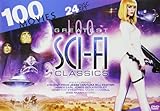 100 Greatest Sci-Fi Classics DVD Collection
- 100 films on 24 DVDs
- Over 130 hours of entertainment in color and black & white
- Films include:
- 984: Prisoner of the Future (1982) Color, Stephen Markle
-
Spirited (2022)
Best for: viewers seeking a contemporary musical comedy inspired by Dickens.
Outdated Drivers Are Slowing You Down
One free scan finds every outdated or missing driver and matches the right update for your exact hardware.Free scan · exact hardware matchPC Slower Than It Used to Be?
A free scan shows the junk files, broken settings and background clutter dragging Windows down - then fixes them in one click.Free scan · Windows 10 & 11Special offer. See more information about Outbyte and uninstall instructions. Please review EULA and Privacy policy.Sean Anders and John Morris’s film does not retell the story directly. Instead, it follows the Ghost of Christmas Present as he selects a new Scrooge and becomes entangled in the consequences of the spirits’ work. The point of view is reversed: the supernatural agents, rather than the miser, become the center of the narrative.
That makes Spirited a meta-adaptation. It uses Dickens’s framework to explore manipulation, redemption, entertainment, and the possibility that a person cannot be reduced to the role assigned to him by a moral story. Viewers wanting the original plot should choose one of the higher-ranked direct adaptations; viewers wanting a large contemporary musical comedy will find this the more distinctive option.
-
Scrooge: A Christmas Carol (2022)
Best for: families wanting a current animated musical.
Netflix’s animated film features Luke Evans as Scrooge and Olivia Colman among the voice cast. It presents the familiar Christmas Eve transformation with new songs and a polished contemporary animation style, giving younger viewers an immediate and accessible route into the story.
What’s actually slowing this PC down?
Pick the symptom - the matching free tool is one click away.
Special offer. See more information about Outbyte and uninstall instructions. Please review EULA and Privacy policy.Its direct family-musical approach is easy to recommend when a current-looking animated version is the priority. It does not have the historical importance of the 1901 short, the emotional singularity of the 1971 animation, or the accumulated affection attached to the Muppet and Disney classics, but it is a straightforward modern entry point.
Quick recommendations by viewer
| What you want | Start with | Why |
|---|---|---|
| One version for nearly everyone | The Muppet Christmas Carol (1992) | Faithful structure, comedy, songs, atmosphere, and genuine feeling. |
| The best traditional Scrooge | Scrooge (1951) | Alastair Sim’s remarkable emotional transformation and classic black-and-white atmosphere. |
| A serious television film | A Christmas Carol (1984) | George C. Scott gives the story a hard, emotionally direct center. |
| The most literary performance | A Christmas Carol (1999) | Patrick Stewart’s theatrical command and relatively complete treatment. |
| A conventional movie musical | Scrooge (1970) | Albert Finney, Leslie Bricusse’s score, and expansive production design. |
| A short but powerful film | A Christmas Carol (1971) | Oscar-winning animation, concentrated storytelling, and an ominous supernatural mood. |
| Young children | Mickey’s Christmas Carol (1983) | Short, clear, familiar, and still willing to make the ghosts scary. |
| Modern satire | Scrooged (1988) | Bill Murray’s media executive replaces the Victorian miser. |
| Modern meta-musical comedy | Spirited (2022) | The Ghost of Christmas Present becomes the protagonist. |
| Film history | Scrooge, or, Marley’s Ghost (1901) | The earliest surviving screen adaptation and a key early-cinema document. |
Where to watch or buy these versions
Availability varies by country, date, edition, and service. Older films and television productions can disappear from subscription catalogs or appear under alternate titles: the 1951 film, for example, was released in Britain as Scrooge and in the United States as A Christmas Carol. Search by both titles when looking for it.
The supplied listings identify The Muppet Christmas Carol as a 1992 film on Disney+ and Scrooge: A Christmas Carol as a 2022 family musical on Netflix, but neither listing should be treated as permanent or universal. A U.S. viewer should check the relevant service immediately before watching, and viewers elsewhere should verify their local catalog.
For older adaptations, physical media may be the more reliable option if you want a particular performance or cut. Check the release year, runtime, subtitles, restoration quality, and seller details rather than assuming that every DVD uses the same source. That matters most for early films, classic television productions, and versions that circulate under more than one title.
Quick wins for a faster PC:
Scan for outdated or missing drivers - takes under a minuteDriver Scan →Repair Windows errors before they cause bigger problemsFix Now →Fix the driver behind crashes, sound loss and screen glitchesFind Drivers →Why the best version depends on the audience
The story has survived so many adaptations because its central structure is unusually flexible. A production can preserve Victorian London, move the action to Depression-era New England, place Scrooge in television or radio, or turn the ghosts themselves into the protagonists. Each choice changes the emphasis.
- For fidelity: begin with the 1951, 1984, or 1999 versions. They give the original narrative and Scrooge’s moral crisis more room than the compact animated films.
- For accessibility: choose The Muppet Christmas Carol for a mixed-age group or Mickey’s Christmas Carol for younger children.
- For fear and atmosphere: try the 1951 film or the 1971 animated short. Both understand that the ghosts should unsettle Scrooge, not merely decorate a cheerful Christmas story.
- For music: choose Scrooge (1970) if you want a classic theatrical musical, or The Muppet Christmas Carol for a lighter and more character-driven score.
- For reinvention: choose Scrooged for satire, An American Christmas Carol for a historical relocation, or Spirited for a meta-fictional approach.
- For a historical survey: compare the 1901 and 1910 silent films with the 1935, 1938, and 1951 productions to see how the story moved from visual shorthand into mature feature filmmaking.
Frequently Asked Questions
Which A Christmas Carol movie is the most faithful to Dickens?
Scrooge (1951), A Christmas Carol (1984), and A Christmas Carol (1999) are the strongest choices for viewers who prioritize a serious, relatively complete treatment of Dickens’s narrative. The 1999 film is especially suited to viewers who value the language and theatrical character of the novella.
What is the best A Christmas Carol movie for young children?
Mickey’s Christmas Carol (1983) is the clearest first choice because it is compact, familiar, and easy to follow. The Muppet Christmas Carol is better for a mixed-age family audience, while the 2009 Disney film and some ghost scenes in other versions may be too intense for very young children.
Is Scrooged a faithful adaptation of A Christmas Carol?
No. Scrooged is a loose modern adaptation. It changes Scrooge into a cynical television executive and redirects Dickens’s concerns toward corporate television, media spectacle, and professional selfishness. Its moral and supernatural structure is recognizable, but it should not replace a direct adaptation for viewers seeking Dickens’s original story.
Free tools Windows power users keep installed
One-click scans. No signup required.
Should I watch the 1951 or 1984 version first?
Choose the 1951 Scrooge for the classic black-and-white atmosphere and Alastair Sim’s celebrated performance. Choose the 1984 A Christmas Carol for George C. Scott’s harder, more emotionally direct interpretation and a serious television-film presentation.
Why are some films called Scrooge and others A Christmas Carol?
The same story has been released under different titles in different countries and periods. The 1951 film was released in Britain as Scrooge and in the United States as A Christmas Carol. Checking both titles can help when searching catalogs or physical-media listings.
The Bottom Line
Watch The Muppet Christmas Carol if you want the best single recommendation. Choose the 1951 Scrooge for a traditional classic, the 1984 film for serious television drama, the 1971 short for concentrated animation, and Scrooged or Spirited when a loose modern reinvention is the point.
Quick Recap
Product prices and availability are accurate as of the date/time indicated and are subject to change. Any price and availability information displayed on Amazon at the time of purchase will apply.
The Tool Desk
Outbyte Driver Updater FREEFix the driver behind crashes, sound loss and screen glitchesFind Drivers →Outbyte PC Repair FREERepair Windows errors before they cause bigger problemsFix Now →