Some links on this page are affiliate links: if you buy through them we may earn a commission, at no extra cost to you.
Mirza Ghalib reimagined what it means to be human by making one short couplet carry desire, doubt, faith, wit, mortality and social pressure at the same time. His sher—a self-contained two-line poem—can be lifted from a ghazal and still work as a complete thought, which is why his words remain quotable in ordinary conversation. The title’s “227 years” refers to the anniversary reached in 2024, counting from Ghalib’s birth on 27 December 1797; on 20 November 2026, 228 years have elapsed and his 229th birthday is still ahead. The number is therefore an anniversary frame, not his current age.
| Aspect | Research-backed detail | Why it matters |
|---|---|---|
| Birth | 27 December 1797, Agra | Defines the 227-year anniversary reached in 2024 |
| Death | 15 February 1869, Delhi | His life spanned the late Mughal world and the upheaval around 1857 |
| Languages | Urdu and Persian | His Urdu ghazals made him widely quotable; Persian shows a broader literary ambition |
| Core form | Sher: an independent poem of two lines | Each couplet can travel outside its original ghazal |
| Literary range | Ghazals, Persian verse, prose letters and historical writing | His humanity appears in lyric compression as well as everyday observation |
Birth, death and court appointments are documented by the Islam Museum and India’s Ministry of Home Affairs. The two-line definition of a sher comes from the CBSE literature module.



Who was Mirza Ghalib?
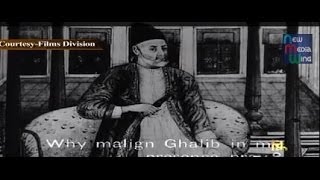
Mirza Asadullah Baig Khan, who wrote under the name Ghalib, was born in Agra and spent most of his adult life in Delhi. He lived within the late Mughal court while the political and cultural order around it was weakening. The Islam Museum records his appointments and honors, including Dabir-ul-Mulk and Najm-ud-Daula, his work as poet-tutor to Bahadur Shah Zafar, and his role as a royal historian.
The Tool Desk
Outbyte PC Repair FREEClear out junk files and repair common Windows errorsFree Scan →Outbyte Driver Updater FREEFix the driver behind crashes, sound loss and screen glitchesFind Drivers →Those titles did not guarantee security. The Ministry of Home Affairs describes financial strain, intellectual independence and a life shaped by changing patronage. Ghalib’s death in Delhi on 15 February 1869 came after the 1857 rebellion had transformed the city and ended the Mughal court’s political authority. His biography is useful not as a catalogue of suffering, but as the pressure behind a voice that can sound playful, skeptical and wounded in the same breath.
What is a sher, and why does Ghalib’s couplet stand alone?
A sher is a poem of two lines whose meaning does not depend on the stanzas around it. The CBSE module describes this formal independence and notes Ghalib’s unusual lyricism, sophisticated vocabulary and intensity of thought and feeling. A reader can therefore detach a couplet from a ghazal, remember it, and apply it to a new situation without reducing it to a mere slogan.
Consider the example presented in that module:
ye na thī hamārī qismat ke wisāl-e-yār hotā
agar aur jīte rehte yahī intezār hotā“It was not in our fate to meet the beloved;
had we lived longer, this waiting would have remained.”Free tools Windows power users keep installed
One-click scans. No signup required.
Special offer. See more information about Outbyte and uninstall instructions. Please review EULA and Privacy policy.
The first line appears to accept separation as fate. The second turns that acceptance into a bitter joke: longer life would not have solved the problem, only extended the waiting. The couplet is emotionally complete, yet its irony leaves room for a reader’s own disappointment.
How did Ghalib make one couplet contain contradictory feelings?
His innovation was not inventing entirely new emotions. It was concentrating incompatible states—hope and resignation, devotion and skepticism, self-mockery and pride—inside a small verbal space. A useful way to read a Ghalib sher is to move through four questions.
Also popular on Amazon
- What is the literal scene? Identify the beloved, the cup, the ruined house, the debt or the night before interpreting it.
- Where does the emotional confession turn into irony? The final line often revises the apparent meaning of the first.
- Which idiom is doing the work? Urdu colloquial force and Persianate metaphor can pull in different directions.
- What remains universal, and what is historical? Longing may feel immediate, while the language carries the social world of nineteenth-century Delhi.
The result is poetry that asks the reader to negotiate meaning rather than receive a single moral. The University of Virginia’s literary-history account says Ghalib began composing at nine, had an Urdu divan by nineteen, wrote in both Urdu and Persian, and deliberately cultivated difficult poetry rich in complex metaphor. Difficulty, in this sense, is an invitation to reread.
What human questions keep returning in Ghalib’s poetry?
Ghalib’s poems repeatedly ask how longing survives disappointment, whether skepticism can coexist with devotion, what wit protects us from, and how a person remains free when money, institutions and history narrow the available choices. These are questions enacted by the poems, not a fixed philosophical system that he explained once and for all.
Quick wins for a faster PC:
Repair Windows errors before they cause bigger problemsFix Now →Fix the driver behind crashes, sound loss and screen glitchesFind Drivers →Clear out junk files and repair common Windows errorsFree Scan →The Ministry of Home Affairs reproduces Ghalib’s statement: My creed is oneness, my belief renunciation of rituals.
The line shows his impatience with empty formalism, but it should not be inflated into a complete doctrinal program. The same release presents him as an intellectual who valued freedom of thought and a learning society, and as a poet joining beauty with truth.
That combination explains why a joke about debt can sit beside a meditation on death. The everyday is not a retreat from metaphysics; it is where metaphysics becomes testable. A witty complaint can expose dependence, pride or fear more sharply than an abstract sermon.
Did Ghalib write only Urdu love poetry?
No. His popular afterlife rests on Urdu ghazals, but he wrote extensively in Persian and was also a major prose stylist and letter writer. The Library of Congress places him among the most highly regarded authors of the Indian style of Persian and records continuing interest in his collected Persian poems.
Also popular on Amazon
Urdu is the most familiar route into his quotability: its couplets circulate in classrooms, performances and conversation. Persian reveals his participation in a literary geography extending beyond Delhi toward Persianate centers and his ambition within that tradition. His letters supply a third register—less compressed, more social and often more immediately comic or anxious.
What’s actually slowing this PC down?
Pick the symptom - the matching free tool is one click away.
The Columbia University Press edition Ghalib, edited by Frances W. Pritchett and Owen T. A. Cornwall, is valuable for this range because it combines selected works, Urdu originals, translations, annotations, a glossary, discussion of poetic form and attention to the letters. Reading the original beside a translation makes visible the choices that a smooth English line can hide.
How did Delhi and 1857 change the way we read him?
Ghalib’s letters are vivid pictures of nineteenth-century Delhi, according to Columbia University Press. They record voice, friendship, money, bureaucracy and the shock of events in a way a symbolic ghazal cannot. The Ministry account places him in the upheaval of the 1857 rebellion and its aftermath, when the courtly world that had sustained his literary life was violently altered.
Pairing a couplet with a biographical or epistolary detail prevents both from becoming decoration. The couplet supplies inward pressure—what fear or desire feels like—while the letter supplies the city, institution or political event pressing on the speaker. They are related evidence, not interchangeable genres: a ghazal compresses and transforms experience; a letter observes it in prose.
Why are Ghalib’s quotes still used in everyday conversation?
Rekhta calls Ghalib one of the most quotable poets, with couplets for almost every situation in life. India’s Ministry of Information and Broadcasting likewise notes that, although his structures can be difficult, ordinary people quote his couplets and his ghazals have been interpreted and sung in many ways.
Crashes, No Sound, or Screen Glitches?
Random freezes, missing sound and display glitches usually trace back to one bad driver. Find and replace yours safely.Free scan · under a minutePC Slower Than It Used to Be?
A free scan shows the junk files, broken settings and background clutter dragging Windows down - then fixes them in one click.Free scan · Windows 10 & 11Also popular on Amazon
The portability of the sher is central. Two lines are short enough to memorize, complete enough to stand alone and ambiguous enough to fit a new circumstance without losing their original tension. Someone can use a couplet about waiting for a missed meeting, a failed plan or an impossible desire and still feel that the poem is larger than the occasion.
The CBSE module describes a lasting influence on Indian poetry generally and Urdu poetry particularly. That influence is qualitative rather than a precise audience statistic: educational canonization, translation and annotation, sung interpretations, daily quotation and continuing Persian-literary interest all keep the work active.
An official tribute from India’s Ministry of Information and Broadcasting emphasizes this combination of quotation and singing in its description of Ghalib’s continuing popularity; the Ministry video is a useful audiovisual companion.
Independent reader supportYour contribution helps us test, update, and keep practical guides available for everyone.How should a new reader approach Ghalib?
Start with a bilingual, annotated selection rather than isolated quote cards. Read each couplet once for its literal image, again for the turn in its second line, and then consult the notes for idiom, meter and cultural references. If a translation sounds perfectly straightforward, check what ambiguity or wordplay the notes identify as having been compressed.
Do these 3 things before closing this tab:
1Repair Windows errors before they cause bigger problems2Fix the driver behind crashes, sound loss and screen glitches3Clear out junk files and repair common Windows errorsMove between three scales: a single sher, the ghazal’s pattern of recurring images and the prose letters’ historical texture. This prevents two common errors—treating every couplet as a personal diary entry, or treating its historical setting as merely background. Ghalib’s achievement lies in making private feeling and public change answer each other.
Also popular on Amazon
The Ministry release reports that his Urdu poems total “no more than 1,800 lines.” Treat that as the release’s reported figure, not as a newly audited census. The relatively compact Urdu corpus, alongside the Persian work and letters, helps explain why readers can encounter him deeply without mastering an entire library.
What does Ghalib’s reimagining of humanity finally mean?
It means refusing to separate the ordinary from the ultimate. Desire is bodily and metaphysical; faith is intimate and argumentative; wit is entertainment and self-defense; grief belongs to one person and to a city losing its political world. By making a couplet hold those pressures together, Ghalib gives readers language for uncertainty without demanding that uncertainty be resolved.
His humanity is therefore not a tidy doctrine. It is a practice of staying alert to contradiction—laughing at the self while defending its dignity, questioning ritual while reaching toward meaning, and turning historical vulnerability into art that can still be spoken by someone in a different century.
Frequently Asked Questions
Are Ghalib’s Persian poems worth reading if I only know his Urdu ghazals?
Yes, especially if you want to see the literary world beyond the familiar Urdu quotations. Persian shows his participation in a wider Indo-Persian tradition, while an annotated edition can supply the glossary and historical context needed for an informed start.
How can I tell whether an online Ghalib quotation is accurately translated?
Look for the Urdu text, the translator’s name and notes explaining idiom or variant readings. A polished English sentence without the original script may be a paraphrase rather than a translation of a complete sher.
Why do two English translations of the same Ghalib couplet sound so different?
Translators must choose between literal sense, rhyme, meter, Persianate imagery and Urdu conversational force. Because a sher often turns on a pun or double meaning, preserving one effect can require sacrificing another.
What should I read after a first selection of ghazals?
Read a few letters alongside the poems. Their prose voice supplies names, places, money worries and political shocks, allowing you to distinguish Ghalib’s compressed poetic persona from his more expansive social observation.






Say something about this film