The Tool Desk
Outbyte Driver Updater FREEScan for outdated or missing drivers - takes under a minuteDriver Scan →Outbyte PC Repair FREEClear out junk files and repair common Windows errorsFree Scan →Mexican Spanish slang is highly informal, regional, and dependent on context. Words such as órale, chamba, and ¿qué onda? can make conversations easier to understand, but they are not interchangeable with standard Spanish—and some, including güey, fresa, and naco, can sound disrespectful or insulting.
The 20 expressions below are commonly heard in informal Mexican Spanish. The English equivalents are practical approximations, not exact translations. If you are learning, recognition should come before active use: start with the safer expressions, listen to how native speakers use them, and prefer neutral Spanish with strangers, employers, officials, and older people.


Mexican slang is not one universal register
Mexico has enormous geographic and social diversity, so the frequency and nuance of slang vary by region, age, and social group. A phrase familiar in Mexico City may be less common—or interpreted differently—elsewhere. These expressions should therefore be understood as a learner-oriented selection of colloquial or popular Mexican usage, not as vocabulary used by every Mexican speaker.
The Diccionario del español de México (DEM), published by El Colegio de México, marks several of these entries as “Popular” and shows how much meaning depends on context. Educational resources on Mexican Spanish, including MIT’s Mexico language guide, also document many of the everyday expressions below.
#1 Best Overall
In formal writing, professional emails, official appointments, and most interactions with people you do not know, standard alternatives are usually safer: trabajo instead of chamba, dinero instead of lana, cerveza instead of chela, and ¿cómo estás? instead of ¿qué onda?.
20 Mexican slang words and phrases
| Expression | Meaning in English | Register and use | Example |
|---|---|---|---|
| 1. ¡Órale! | All right; come on; wow; hey | Informal interjection. It can encourage someone, accept a proposal, express surprise, or get someone’s attention. | ¡Órale, vamos! — “All right, let’s go!” ¡Órale, qué sorpresa! — “Wow, what a surprise!” |
| 2. Güey / wey | Dude; man; bro—or fool/idiot | Very informal and highly dependent on relationship and tone. It may express friendly solidarity or sound offensive. | ¿Qué pasó, güey? — “What happened, dude?” |
| 3. Chido / chida | Cool; nice; great | Informal but generally one of the safer compliments in this list. | Está bien chida tu chamarra. — “Your jacket is really cool.” |
| 4. ¡Qué padre! / está padre | How cool; that’s great; nice | Informal praise for an object, event, experience, or idea. In this construction, padre normally means “cool,” not “father.” | ¡Qué padre tu viaje! — “Your trip is so cool!” |
| 5. ¿Qué onda? | What’s up?; what’s going on? | Casual greeting or request for an update. Use it with friends and other familiar people, not in formal correspondence. | ¡Qué onda! ¿Cómo has estado? — “What’s up? How have you been?” |
| 6. ¡No manches! | No way!; you’ve got to be kidding! | Informal exclamation expressing surprise, disbelief, annoyance, or amazement. It is commonly treated as a milder alternative to a more vulgar expression, but it is not formal. | ¡No manches! ¿De verdad ganó? — “No way! Did they really win?” |
| 7. ¡Aguas! | Watch out!; look out! | An informal warning, especially when someone may be in immediate danger or about to make a mistake. | ¡Aguas con el coche! — “Watch out for the car!” |
| 8. ¡Híjole! | Oh my gosh; wow; shoot | Expresses surprise, concern, frustration, or sympathy without necessarily being profane. | ¡Híjole, no creo llegar a tiempo! — “Oh no, I don’t think I’ll arrive on time.” |
| 9. ¡Guácala! | Yuck; gross | An immediate informal reaction to an unpleasant taste, smell, sight, or idea. | ¡Guácala! ¿Qué huele así? — “Yuck! What smells like that?” |
| 10. Sale | Okay; sure; agreed | Colloquial agreement, especially in response to a plan. It is not the English word “sale.” | ¿Vamos al cine? —Sale. — “Are we going to the movies? —Sure.” |
| 11. Ahorita | Right now; shortly; in a little while | One of the most context-sensitive expressions here. Depending on context, intonation, and local usage, it may mean immediately, soon, later, or when possible. | Ahorita te llamo. — “I’ll call you in a bit”—or, in another context, “I’ll call you right now.” |
| 12. Chamba | Job; work; employment | Popular, informal Mexican usage. Use trabajo in formal writing. | Estoy buscando chamba. — “I’m looking for work.” |
| 13. Lana | Money | Popular informal usage. Literally, lana means “wool,” but it has a well-established financial sense in Mexican conversation. | No tengo lana. — “I don’t have any money.” |
| 14. Chela | Beer | Casual synonym for cerveza. It is not the neutral term for every setting. | Vamos a tomarnos una chela. — “Let’s have a beer.” |
| 15. Chamaco / chamaca | Kid; child; teenager; sometimes son or daughter | Meaning and tone depend on context. It can be affectionate, neutral, or mildly dismissive. The DEM also records an adjective sense meaning “very young.” | Ese chamaco es muy inteligente. — “That kid is very smart.” |
| 16. Reventón | Party; big social celebration | Informal and often suggestive of a lively or wild party rather than a quiet gathering. | Habrá un reventón en mi casa. — “There’ll be a party at my house.” |
| 17. Tirar la onda | To flirt; make a romantic pass | Usually refers to signaling romantic interest or testing someone’s interest. The precise meaning depends on the situation. | Creo que me está tirando la onda. — “I think they’re flirting with me.” |
| 18. Se me fue el avión | I spaced out; I forgot; I wasn’t paying attention | Informal idiom for a lapse of attention or memory. | Se me fue el avión y olvidé ir al súper. — “I spaced out and forgot to go to the supermarket.” |
| 19. Fresa | Preppy; posh; snobby; sheltered | A social label for someone perceived as upper-class in manner, taste, or behavior. It can be descriptive, teasing, or insulting—not a neutral synonym for “rich.” | Dicen que es muy fresa. — “They say they’re very preppy/snobby.” |
| 20. Naco / naca | Vulgar; uncultured; unsophisticated; “low-class” | Pejorative and socially loaded. Treat this primarily as a recognition word, not vocabulary to try casually. | Naco can be used as an insult, so the surrounding situation matters more than any single English translation. |
The expressions learners should handle carefully
Güey / wey
The DEM records both offensive and solidarity-building senses. Among close friends, güey can function much like “dude” or “bro.” Directed at a stranger, older person, customer, official, or employer, however, it can sound disrespectful or aggressive. Learn to recognize it before trying to use it.
Spelling: güey is the dictionary-style spelling; wey is widespread in casual digital writing. In edited Spanish, retain the diaeresis in güey unless you are deliberately reproducing an informal spelling.
Fresa and naco / naca
Both terms classify people according to perceived social behavior or status. Fresa can be playful, but it can also be dismissive. Naco is more clearly pejorative and may encode class prejudice. Do not use either label for strangers or assume that an English gloss captures its social force.
Recommended Free Tools
No manches
This is often described as a softened exclamation, but “mild” does not mean universally polite. It still belongs to informal speech, and the speaker’s tone can make it playful, irritated, or confrontational.
Recognize before you use
- Listen for the relationship. Friendly slang between peers does not automatically transfer to a workplace, service interaction, classroom, or family conversation with older relatives.
- Watch the tone and response. Órale can encourage, agree, express surprise, or demand attention. Ahorita can mean now or later. The surrounding words and intonation are essential.
- Prefer safer informal words first. Chido, qué padre, sale, and—when appropriate—qué onda are generally easier starting points than güey, naco, or socially loaded uses of fresa.
- Do not confuse familiarity with universality. A word may be recognizable in Mexico without being equally common in every state, city, age group, or social setting.
- Switch to neutral Spanish when in doubt. Use trabajo, dinero, cerveza, niño or joven, and ¿cómo estás? when clarity and politeness matter more than local flavor.
A short practice dialogue
The following conversation uses relatively safer expressions, while showing why context matters:
Ana: ¿Qué onda? ¿Ya conseguiste chamba?
“What’s up? Did you find a job yet?”
Diego: Sale, empiezo el lunes. Pagan buena lana.
“Sure—I start Monday. They pay good money.”
Rank #3
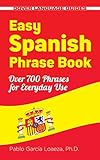
- Designed as a quick reference tool and an easy-to-use study guide, this inexpensive and up-to-date book offers fast, effective communications.
- The perfect companion for tourists and business travelers in Spain and Latin America, it features words, phrases, and sentences that cover everything from asking directions to making reservations
- Over 700 conveniently organized expressions include terms for modern telecommunications as well as phrases related to transportation, shopping, services, medical and emergency situations, and other common circumstances.
- A phonetic pronunciation accompanies each phrase.
Ana: ¡Qué padre! ¿Vamos a celebrar con una chela?
“That’s great! Shall we celebrate with a beer?”
Diego: ¡Órale! Pero ahorita no puedo; tengo que terminar esto.
“All right! But I can’t right now—I have to finish this.”
Notice that ahorita is still open to interpretation: here it most naturally means “right now,” but in another exchange it could mean “in a little while.” Likewise, the dialogue is suitable for an informal relationship, not necessarily for a message to a supervisor.
Further reading for learners
A dedicated Mexican Spanish slang dictionary is the most direct next step if you want more examples, regional notes, and English equivalents. Titles researched for this article include The Mexican Slang Dictionary, described as a pocket-sized reference with hundreds of Mexican slang and colloquial expressions, and Quick Guide to Mexican Spanish, described as a dictionary-style guide with more than 450 terms and sayings. Check the current edition, price, and availability before purchasing.
Travelers who need slang alongside practical vocabulary, dialogues, customs, and etiquette may prefer The Rough Guide to Mexican Spanish Dictionary Phrasebook. It is broader than a dedicated slang reference, but that breadth can be useful in real travel situations.
Availability and editions of physical books change, so verify those details at publication time. A future language-learning course, tutor, pronunciation tool, or flashcard app could also help learners practice these expressions aloud, but the right service depends on whether it offers genuinely Mexican-Spanish-specific content rather than general Spanish alone.
Independent reader supportYour contribution helps us test, update, and keep practical guides available for everyone.Why Mexican slang keeps changing
Slang is shaped by location, generation, media, migration, and social identity. Some expressions travel beyond Mexico, while others acquire distinctive meanings or frequencies in Mexican usage. That is why a dictionary definition is useful but cannot replace listening to real conversations.
Use this list as a decoding guide: understand what you hear, notice who is speaking to whom, and ask a trusted native speaker about a phrase before using it in a sensitive situation. Neutral Spanish remains the better choice for formal communication.
Frequently Asked Questions
Is Mexican slang the same throughout Mexico?
No. Mexico’s regional, generational, and social differences affect how often expressions are used and what tone they carry. These are commonly heard informal expressions, not words used identically by every Mexican speaker.
What is the safest Mexican slang to start using?
Expressions such as chido, qué padre, and sale are generally easier starting points, provided the situation is informal. Learn güey, naco, and socially loaded uses of fresa mainly for recognition until you understand the relationship and tone.
Best Value
Does ahorita mean “right now” or “later”?
It can mean either, as well as “soon” or “in a little while.” Context, intonation, and local conversational habits determine the intended time.
Is güey a bad word?
It can be. Between close friends it may be a friendly form of address like “dude,” but it can also mean “fool” or “idiot” and sound disrespectful when used with strangers or in formal situations.
Free tools Windows power users keep installed
One-click scans. No signup required.
The Bottom Line
Mexican slang is most useful first as a listening tool. Learn the meaning, register, and social risk of each expression before using it; when the situation is formal or unfamiliar, choose standard Spanish instead.
Quick Recap
Product prices and availability are accurate as of the date/time indicated and are subject to change. Any price and availability information displayed on Amazon at the time of purchase will apply.