Episode 6 of 1923 doesn’t just escalate the season’s violence—it detonates it. After weeks of tightening screws and delayed reckonings, this hour finally removes any illusion that mercy still exists in Taylor Sheridan’s frontier. Seven deaths land with numbing force, not as shock tactics, but as the inevitable outcome of a world that has fully surrendered to brutality as its governing logic.
What makes the episode feel like a breaking point isn’t simply the body count, but how methodically the show strips meaning from survival itself. Characters don’t die heroically or accidentally; they are erased by systems of cruelty that no longer distinguish between the guilty, the innocent, or the merely inconvenient. The hour plays less like a Western adventure and more like a historical execution ledger being coldly updated in real time.
This is the moment when 1923 stops pretending it can course-correct. Episode 6 confirms that the season’s central thesis isn’t endurance or legacy, but attrition—how long people can last once mercy has been removed from the equation entirely.
The Season’s Violence Finally Loses Its Restraint
Up until now, Season 2 has treated violence as a looming inevitability, something constantly promised but strategically delayed. Episode 6 abandons that restraint, unleashing death across multiple storylines with a bluntness that feels almost punitive. The seven on-screen deaths arrive without narrative cushioning, reinforcing the idea that the frontier doesn’t reward virtue or patience, only force.
#1 Best Overall
![1923: A Yellowston Origin Story: Season Two [DVD]](https://m.media-amazon.com/images/I/61XZ8vKfxgL._SL160_.jpg)
- Genre: TV Drama
- Number of Discs: 3
- Number of Tracks: 0
- Playback Duration: 456
- Rating: NR
Crucially, the episode refuses to frame these losses as turning points toward justice. Each killing deepens the moral rot rather than resolving it, suggesting that every act of violence only widens the chasm between survival and humanity. By the time the hour ends, the audience is left with the same grim certainty as the characters: there is no balancing force coming to stop this descent.
In that sense, Episode 6 doesn’t just raise the stakes—it locks them in place. From here forward, 1923 is no longer about whether the bloodshed will continue, but how much more it will demand before anything resembling an ending becomes possible.
Death Toll Breakdown: All Seven Deaths Explained and Who Pulled the Trigger
Episode 6 doesn’t treat death as a single narrative event but as a cascading inevitability, spread across continents and conflicts. Each killing serves a different function, yet all point toward the same conclusion: power is maintained through extermination, not negotiation. Here’s how the episode accounts for its seven bodies—and why none of them feel accidental.
1. Marshal Kent – Executed by the System He Served
Marshal Kent’s death is the episode’s most overt indictment of institutional cruelty. After spending the season weaponizing the law against Teonna Rainwater, he’s summarily executed by corrupt fellow officers who decide he’s become a liability. No duel, no warning—just a bullet delivered off-screen and confirmed with chilling indifference.
Quick wins for a faster PC:
Scan for outdated or missing drivers - takes under a minuteDriver Scan →Repair Windows errors before they cause bigger problemsFix Now →Kent isn’t granted redemption or reflection. His end reinforces the episode’s thesis that violence, once normalized, eventually devours even its most enthusiastic participants.
2. Father Renaud – Killed by the Frontier’s Moral Vacuum
Renaud’s death comes abruptly during the manhunt, struck down by a local posse member eager to prove loyalty rather than justice. The priest who once embodied religious authority dies without ceremony, bleeding into the dirt he claimed to spiritually command.
The trigger is pulled not out of fear, but convenience. His death underscores how morality has been stripped of power, replaced by whoever holds the gun in that moment.
3. Pete Plenty Clouds – Gunned Down Protecting Teonna
Pete’s death is one of the hour’s most emotionally punishing moments. Ambushed while buying Teonna time to escape, he’s shot multiple times by bounty hunters who barely recognize him as human. The camera lingers just long enough to register the cost before moving on.
The Tool Desk
Outbyte PC Repair FREERepair Windows errors before they cause bigger problemsFix Now →Outbyte Driver Updater FREEScan for outdated or missing drivers - takes under a minuteDriver Scan →There’s no vengeance here, only loss. Pete dies not because of a mistake, but because the world of 1923 punishes compassion as weakness.
4. Whitfield’s Foreman – Killed by Banner Creighton
In the episode’s most overtly transactional killing, Banner Creighton executes Whitfield’s foreman during a dispute over land enforcement. The shot is deliberate, calculated, and meant to send a message rather than resolve conflict.
Creighton doesn’t hesitate, and the episode doesn’t soften the act. Violence is simply how negotiations conclude now.
5. One Dutton Ranch Hand – Casualty of Whitfield’s War
The Dutton ranch absorbs another quiet loss when one of Jacob’s men is killed during a nighttime raid. He’s shot from the darkness by Whitfield’s hired guns, never even seeing his killer.
Do these 3 things before closing this tab:
1Clear out junk files and repair common Windows errors2Scan for outdated or missing drivers - takes under a minute3Repair Windows errors before they cause bigger problemsThe anonymity of the death is the point. The ranch hand isn’t important to the story because his role could have been filled by anyone—another reminder that survival on the frontier is increasingly arbitrary.
6. African Guide – Left to Die by Colonial Indifference
Spencer’s African storyline adds its own grim tally when a local guide is fatally wounded during the hunt. The shot comes from unseen attackers, but the responsibility is shared by the colonial forces who treat native lives as expendable resources.
His death reinforces the episode’s global perspective on violence. Whether Montana or Africa, the same hierarchy applies: power survives, everyone else pays.
Rank #2
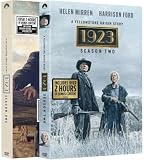
- 1923: A Yellowstone Origin Story: Season One and Two, Complete Box Set, DVD Disc Collection
7. British Officer – Killed by Spencer Dutton
The episode’s final death belongs to a British officer who underestimates Spencer Dutton’s resolve. When the confrontation turns lethal, Spencer pulls the trigger himself, ending the man’s life without hesitation.
It’s not framed as heroism or rage, but necessity. By this point, Spencer has fully internalized the season’s grim lesson—mercy is a luxury the world no longer allows.
Together, these seven deaths don’t build toward catharsis or justice. They accumulate like a ledger, each entry confirming that Episode 6 isn’t about who deserves to live or die, but about how quickly the frontier erases anyone who hesitates.
Jacob and Cara Dutton: Survival at the Cost of the Soul
If Episode 6 is a ledger of the dead, Jacob and Cara Dutton are forced to read every entry and keep moving anyway. The violence surrounding the ranch no longer shocks them; it instructs them. Survival has become less about holding land and more about accepting what must be sacrificed to keep it.
Jacob Dutton: Leadership Without Illusions
Jacob’s authority is no longer rooted in wisdom or patience, but in his willingness to outlast everyone else. The loss of another ranch hand barely registers as grief before it becomes strategy, folded into the grim arithmetic of what the Duttons can afford to lose. Every death hardens him further, not because he’s cruel, but because hesitation now invites annihilation.
Recommended Free Tools
This episode makes it clear that Jacob understands the war has already crossed a moral threshold. Whitfield, Creighton, and the forces circling the ranch aren’t interested in compromise or coexistence. Jacob’s survival depends on accepting that the old codes of honor he once lived by are liabilities in a world that now rewards only decisiveness and brutality.
Cara Dutton: The Quiet Architect of Endurance
Cara’s strength in Episode 6 is quieter, but no less devastating. She absorbs the accumulating losses with a composure that borders on emotional withdrawal, not because she feels less, but because feeling too much would break her. Cara has become the emotional ballast of the Dutton empire, holding everything steady while the moral ground collapses beneath them.
Her resolve underscores one of the episode’s most unsettling truths: survival doesn’t just demand violence, it demands emotional numbness. Cara understands that mourning openly, questioning the cost, or clinging to sentiment would only slow them down. In this version of the frontier, endurance itself is a kind of surrender.
Together, Jacob and Cara embody the episode’s bleakest insight. They are still standing, but each death strips away another piece of who they used to be. Episode 6 doesn’t ask whether the Duttons will survive this war; it asks what will be left of them when they do.
Crashes, No Sound, or Screen Glitches?
Random freezes, missing sound and display glitches usually trace back to one bad driver. Find and replace yours safely.Free scan · under a minuteWindows Errors? Fix Them Before They Spread
Repair common Windows errors and clear accumulated junk for a smoother, more stable PC - no reinstall needed.Free scan · no reinstallSpencer and Alexandra: Violence as the Only Language Left
If Jacob and Cara represent endurance through erosion, Spencer and Alexandra embody survival through escalation. Episode 6 strips away any lingering illusion that their journey back to Montana is a romantic odyssey. What remains is a brutal education in the same truth governing the ranch: mercy is a weakness, and hesitation is fatal.
The violence surrounding Spencer in this episode isn’t incidental or reactive. It’s constant, intimate, and increasingly unavoidable, forcing him to confront the reality that every mile closer to home demands blood as payment. Where earlier episodes allowed Spencer moments of restraint, Episode 6 removes that luxury entirely.
Spencer’s Return to the War He Never Escaped
Spencer’s arc in Episode 6 confirms that his exile never truly freed him from violence; it merely delayed its next eruption. Each confrontation reinforces that the world he’s moving through operates on the same ruthless logic as the one he left behind. Survival is dictated not by morality, but by who strikes first and who’s willing to finish the job.
The deaths surrounding Spencer carry a grim narrative function. They are not heroic sacrifices or tragic accidents, but transactions in an unforgiving economy where life is spent to buy passage, time, or safety. The episode makes it painfully clear that Spencer doesn’t just understand this system — he’s fluent in it.
What’s actually slowing this PC down?
Pick the symptom - the matching free tool is one click away.
Alexandra’s Awakening Through Bloodshed
Alexandra’s transformation in Episode 6 is quieter, but no less devastating. The violence she witnesses — and survives — strips away the last remnants of distance between her and Spencer’s world. This is no longer a journey she observes; it’s one she endures alongside him, with consequences that permanently alter her sense of self.
Rank #3

- 1923: A Yellowstone Origin Story
Her fear doesn’t disappear, but it hardens into resolve. By the end of the episode, Alexandra understands what the frontier has already taught the Duttons: survival demands complicity. Innocence isn’t lost in a single moment, but eroded through repeated exposure to brutality that offers no alternative path forward.
Love in a World That Rewards Brutality
What makes Spencer and Alexandra’s storyline so harrowing in Episode 6 is how violence becomes their shared language. Words, promises, and ideals mean little when every threat must be answered with force. Their bond deepens not through tenderness, but through mutual endurance in the face of relentless danger.
Episode 6 positions their relationship as both refuge and liability. Love motivates survival, but it also sharpens the stakes, making every violent encounter more desperate and unforgiving. In a season defined by moral collapse, Spencer and Alexandra aren’t spared by their humanity — they’re punished for it.
Free tools Windows power users keep installed
One-click scans. No signup required.
By the time the episode closes, their path mirrors the Duttons’ war back home. Different landscapes, same rules. Violence isn’t just inevitable; it’s the only language left that anyone seems willing to understand.
The Villains Ascendant: How Power, Greed, and Cruelty Win This Episode
If Spencer’s journey illustrates how violence becomes a survival tool, Episode 6 makes an even colder point elsewhere: cruelty is still the most effective path to power. While protagonists endure and adapt, the episode’s true momentum belongs to the villains who exploit the lawlessness of the era with chilling efficiency. Mercy doesn’t just fail here — it actively loses.
The seven deaths that punctuate the episode aren’t evenly distributed across the moral spectrum. They cluster around ambition, wealth, and unchecked authority, reinforcing the season’s bleak thesis that the world of 1923 rewards those willing to brutalize without hesitation.
Donald Whitfield and the Industrialization of Sadism
Donald Whitfield remains the franchise’s most unsettling antagonist because his violence is calculated, indulgent, and entirely unnecessary. In Episode 6, death becomes another luxury commodity for him — something purchased, arranged, and consumed at a safe emotional distance. The bodies left in his wake exist not to advance survival, but to satisfy entitlement.
What makes Whitfield’s cruelty so corrosive is how little resistance it encounters. Money insulates him from consequence, allowing his moral rot to metastasize unchecked. The episode doesn’t frame his victims as tragic anomalies; they are inevitable casualties of a system that confuses wealth with righteousness.
Banner Creighton and the Reward for Ruthlessness
Banner Creighton’s arc in Episode 6 underscores a different but equally damning truth: violence paired with persistence eventually pays. His ascent isn’t fueled by ideology or honor, but by a relentless willingness to outlast, outfight, and outmaneuver anyone weaker. Each death tied to his campaign feels transactional, a rung on a ladder built from corpses.
The episode offers no poetic justice here. Banner survives, advances, and consolidates power precisely because he abandons restraint. In a season obsessed with erosion — of land, of family, of morality — Banner represents what happens when nothing erodes at all except empathy.
Seven Deaths, Zero Reckoning
What binds the episode’s seven on-screen deaths together is the absence of narrative punishment. No lightning strike, no sudden reversal, no moral correction arrives to balance the scales. Instead, Episode 6 presents death as an administrative outcome, a cost absorbed by those without leverage.
This is where 1923 sharpens its most ruthless edge. The villains don’t merely survive the carnage; they benefit from it. Power consolidates, territory shifts, and fear does its work more effectively than any law ever could.
A World Where the Worst Men Thrive
By letting its antagonists dominate the episode’s outcomes, 1923 refuses the comfort of moral symmetry. Good people endure unimaginable loss just to remain standing, while the cruel advance with alarming momentum. Episode 6 doesn’t argue that evil is unstoppable — only that, in this world, it is currently winning.
The lack of mercy isn’t an oversight or shock tactic. It’s the point. In the brutal arithmetic of the frontier, those who exploit violence rather than react to it continue to write the rules, and everyone else bleeds in the margins.
No Mercy, No Redemption: Episode 6’s Central Theme of Moral Collapse
If Episode 6 feels especially suffocating, it’s because 1923 finally strips away any illusion that mercy still exists in this world. Every major action unfolds without hesitation, regret, or consequence, reinforcing a frontier reality where survival has completely eclipsed morality. What’s left is not chaos, but a chillingly efficient system that rewards cruelty and punishes compassion.
This episode doesn’t merely depict violence; it normalizes it. Death is no longer a turning point or a moral reckoning, but an operational necessity for those seeking power. By the end of the hour, mercy isn’t just absent — it’s functionally extinct.
Rank #4
![1923 - A Yellowstone Origin Story: Season Two [DVD]](https://m.media-amazon.com/images/I/51rARI9eCvL._SL160_.jpg)
- 1923: A Yellowstone Origin Story
- Season Two
Violence as Currency, Not Tragedy
Episode 6 reframes violence as transactional rather than emotional. Lives are exchanged for leverage, territory, or silence, and the narrative treats these exchanges with cold clarity. The seven deaths aren’t designed to shock individually; they accumulate into a ledger that measures who is winning and who is being erased.
This approach strips death of its traditional dramatic weight. Victims rarely receive final moments of reflection or narrative dignity, reinforcing how insignificant human life has become within this power structure. In 1923’s world, the only lives that matter are the ones capable of inflicting harm.
The Collapse of Moral Inheritance
Much of Yellowstone’s broader mythology hinges on the idea of legacy — land passed down, values inherited, bloodlines preserved. Episode 6 suggests that morality is the one inheritance that no longer survives the transfer. The older codes of honor, restraint, and justice have rotted under economic pressure and unchecked ambition.
Free tools Windows power users keep installed
One-click scans. No signup required.
Characters who attempt to operate by outdated principles are either sidelined or destroyed. The frontier doesn’t reject morality outright; it simply makes it unaffordable. Episode 6 makes clear that ethical restraint is now a liability, not a virtue.
No Redemption Arcs, Only Survival Arcs
Perhaps the episode’s most unsettling choice is its refusal to offer redemption to anyone. There are no last-second reversals, no characters saved by conscience, no acts of mercy that alter the outcome. Everyone is locked into momentum, and that momentum only moves forward through bloodshed.
By denying redemption, 1923 denies its audience emotional relief. Survival replaces absolution as the only goal worth pursuing, and even that comes at an unbearable cost. Episode 6 doesn’t ask whether characters deserve to live — only whether they are ruthless enough to do so.
A Frontier That Devours Its Own
The cumulative effect of Episode 6 is a world cannibalizing itself. Power grows more concentrated, violence more normalized, and empathy increasingly irrelevant. Even those who benefit from the bloodshed are shown to be trapped within it, sustaining dominance only by perpetuating the same cruelty that built it.
Windows Errors? Fix Them Before They Spread
Repair common Windows errors and clear accumulated junk for a smoother, more stable PC - no reinstall needed.Free scan · no reinstallCrashes, No Sound, or Screen Glitches?
Random freezes, missing sound and display glitches usually trace back to one bad driver. Find and replace yours safely.Free scan · under a minuteThis is moral collapse not as a sudden catastrophe, but as a slow, grinding process. Episode 6 shows a frontier that has already crossed its point of no return, where mercy isn’t punished because it’s wrong, but because it no longer fits the rules of survival.
Independent reader supportYour contribution helps us test, update, and keep practical guides available for everyone.Blood on the Frontier: How Episode 6 Reframes the Meaning of the Dutton Legacy
Episode 6 doesn’t just escalate the body count — it interrogates what that bloodshed means for the name at the center of it all. The Dutton legacy, long framed as a hard-earned inheritance built on sacrifice, is redefined here as something far darker. What survives isn’t principle or stewardship, but an institutional tolerance for violence as the price of ownership.
The seven deaths scattered across the episode are not treated as individual tragedies. They function as currency, spent to secure territory, silence resistance, or reinforce hierarchy. In that sense, Episode 6 positions the Dutton legacy less as a lineage and more as an operating system — one that converts human life into leverage.
The Cost of Holding the Line
For generations, the Duttons have justified brutality as defensive necessity. Episode 6 strips that rationale bare by showing how often violence is preemptive, strategic, or simply convenient. The deaths tied to protecting land or authority feel less like last resorts and more like maintenance.
Recommended Free Tools
This reframing is crucial. The land is no longer preserved through grit and endurance, but through a willingness to erase obstacles without hesitation. Episode 6 suggests that the legacy isn’t about who the Duttons were, but about what they’re now willing to normalize to remain standing.
Seven Deaths, Zero Martyrs
What’s striking about Episode 6’s fatalities is how deliberately unromantic they are. No one dies to inspire change, halt the violence, or expose a higher truth. Each death reinforces the same grim message: resistance is futile, mercy is fatal, and meaning is irrelevant.
By denying martyrdom, the episode denies legacy its traditional narrative fuel. These deaths don’t echo forward as lessons; they vanish into the frontier’s noise. The Dutton world absorbs them without reflection, just as it has absorbed generations of loss before.
Best Value

- 1883 & 1923: A Yellowstone Origin Complete DVD Disc Collection (Bonus Content Included)
Inheritance Without Honor
Episode 6 quietly dismantles the idea that the Dutton legacy carries moral weight simply because it has endured. Survival alone is no longer proof of righteousness. The episode implies that endurance, unchecked by accountability, curdles into entitlement.
What’s being passed down now isn’t land bound by duty, but power stripped of conscience. The legacy survives, yes — but hollowed out, sustained by fear rather than loyalty. In that context, the blood on the frontier isn’t a tragic byproduct of history. It is the history.
What Comes After the Slaughter: Fallout, Consequences, and What Episode 6 Sets Up Next
Episode 6 doesn’t pause to mourn its dead, and neither does the world it depicts. The bodies are cleared, the land remains contested, and power calcifies around whoever is still standing. The absence of grief is itself the fallout, signaling that the frontier has moved beyond shock and into routine annihilation.
This is an episode designed to leave scars rather than answers. Its true purpose isn’t closure, but calibration — resetting the board so that everything that follows is shaped by fear, retaliation, and inevitability.
The Vacuum Left by Violence
Seven deaths don’t resolve conflicts in 1923; they create vacancies. Power structures exposed in Episode 6 are brittle, maintained only by intimidation and proximity to violence. With so many players erased, the remaining figures are no longer negotiating from strength, but from desperation.
The Tool Desk
Outbyte Driver Updater FREEFix the driver behind crashes, sound loss and screen glitchesFind Drivers →Outbyte PC Repair FREEClear out junk files and repair common Windows errorsFree Scan →That vacuum invites escalation. Alliances harden, enemies grow less visible, and decisions become increasingly preemptive. Episode 6 makes it clear that the next wave of bloodshed won’t be reactive — it will be anticipatory.
Survivors Are Not Victors
Those who walk away alive from Episode 6 are not framed as winners. They are framed as compromised. Survival now comes with a moral debt that can’t be paid down, only deferred through more violence.
The episode quietly suggests that endurance is becoming its own trap. Every act taken to ensure survival deepens the moral collapse, making retreat impossible without surrendering everything the characters have already destroyed to protect.
The Frontier Tightens Its Grip
Episode 6 reinforces that the frontier is no longer a space of opportunity, but a closed system. There is no room left to expand, only territory to defend and enemies to erase. This claustrophobia intensifies the season’s central tension: when land stops offering freedom, it starts demanding blood.
Do these 3 things before closing this tab:
1Fix the driver behind crashes, sound loss and screen glitches2Repair Windows errors before they cause bigger problems3Scan for outdated or missing drivers - takes under a minuteThat pressure reshapes every future decision. Mercy isn’t just risky — it’s structurally incompatible with the world the characters have built. The episode makes clear that anyone who hesitates next will be the next body removed from the equation.
What Episode 6 Signals for the Endgame
Narratively, Episode 6 is a turning point from conflict to consequence. The season is no longer asking who will fight, but who will endure the cost of winning. The violence ahead won’t be shocking because it’s sudden, but because it’s inevitable.
1923 is positioning its endgame as a reckoning without redemption. Episode 6 strips away illusions of honor, legacy, or moral high ground, leaving only momentum. What comes next isn’t justice or resolution — it’s continuation, fueled by the same system that has already proven it cannot stop itself.
In that sense, the episode’s true cruelty isn’t in how many die, but in how clearly it tells us that none of it will be enough. The slaughter doesn’t end stories in 1923. It simply clears the way for the next chapter of ruin.
Quick Recap
Product prices and availability are accurate as of the date/time indicated and are subject to change. Any price and availability information displayed on Amazon at the time of purchase will apply.