Open the Aa/Page Display menu first: it contains the controls that most improve Kindle reading, including font size, boldness, spacing, themes, progress indicators, and some accessibility options. Then use Page Flip, search, Smart Lookup, X-Ray, annotations, syncing, and Send to Kindle to get more from the device.
One important qualification: Kindle features are not universal. Availability can change with the exact e-reader generation, Kindle app, book layout, language, marketplace, account, and title metadata. The compatibility limit is included with each trick below.
Most Kindle improvements are hidden in a few menus: Aa/Page Display for reading comfort, the reading toolbar for search and Page Flip, and More or Settings for dictionaries, syncing, and accessibility. The exact controls are not universal, however. They can vary by Kindle generation, Kindle app, book format, language, marketplace, and the book’s own features.
The instructions below describe the current Kindle experience as a practical guide rather than a promise that every Kindle will show every option. If a setting is missing, check the compatibility notes beside it before assuming the device is faulty.
#1 Best Overall
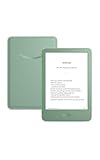
- Light and compact - With adjustable brightness, high contrast ratio, and fast page turns.
- Effortless reading in any light - Read comfortably with a 6“ glare-free display, adjustable front light—now 25% brighter at max setting—and dark mode.
- Escape into your books - Tune out messages, emails, and social media with a distraction-free reading experience.
- Read for a while - Get up to 6 weeks of battery life on a single charge.
- Take your library with you – 16 GB storage holds thousands of books.
Quick reference: the 18 Kindle tricks
| Trick | Where to find it | Main limitation |
|---|---|---|
| 1. Open the Aa menu | Tap the top of the page, then Aa/Page Display | Labels and available controls vary by device and app |
| 2. Resize text with a pinch | Pinch in or out while reading | Touch and device support vary |
| 3. Increase boldness | Aa > Font | Supported reflowable books and devices only |
| 4. Change spacing and alignment | Aa > Layout | Fixed-layout books may lock the design |
| 5. Save a theme | Aa > Themes | Not every app or title exposes identical controls |
| 6. Try dark mode | Aa or display settings | Model-dependent |
| 7. Show the clock and progress | Aa > More | Time remaining is an estimate |
| 8. Skim with Page Flip | Reading toolbar > Page Flip | Controls differ between e-readers and apps |
| 9. Search the open book | Reading toolbar > Search | Search scope must be set correctly |
| 10. Search Everywhere | Search from the Home screen | Available scopes vary by software and device |
| 11. Look up a word | Press and hold a word | Dictionary, X-Ray, and Wikipedia results may differ |
| 12. Change the dictionary | Settings > Language & Dictionaries | Installed dictionaries depend on language and marketplace |
| 13. Use X-Ray | Reading toolbar or book menu > X-Ray | Title-specific metadata is required |
| 14. Turn on Word Wise | Aa > More or reading settings | Compatible English-language titles only |
| 15. Review Vocabulary Builder | Reading menu > Vocabulary Builder | Supported Kindle experiences and dictionary lookups required |
| 16. Highlight, annotate, and bookmark | Press and hold text; tap the bookmark icon | Handwritten Scribe notes behave differently from text annotations |
| 17. Sync before switching devices | More > Sync Your Kindle | Requires an internet connection for pending updates |
| 18. Send documents to Kindle | Wireless Send to Kindle | File, size, account, and destination requirements apply |
Display and reading-comfort tricks
1. Open the Aa menu before changing anything
While reading, tap near the top of the page and select the Aa or Page Display icon. This is the Kindle’s main reading-control panel. Depending on the device and title, it contains controls for font, text size, boldness, layout, themes, reading progress, and reading aids.
Starting here is better than hunting through the general Settings menu because these controls are designed to change the current reading experience. On supported Kindle e-readers, some display combinations can also be saved or applied across books. On the Kindle app, the equivalent menu may use slightly different wording.
2. Change font size with a pinch
You can resize text from Aa > Font, but on supported touch devices you can also place two fingers on the page and pinch in or out. Pinch outward to make the type larger and inward to make it smaller.
This is useful when you need a temporary change—for example, when reading in dim light or showing a passage to someone—without navigating through several controls. Device-level text-size controls are available on Kindle e-readers from the 11th generation onward, Kindle Scribe, and Kindle Colorsoft. Book-level text controls are broader, but a fixed-layout title can still restrict them.
3. Make a supported font bolder
If larger text is comfortable but too much of it changes the page rhythm, adjust letter weight instead. Open Aa > Font and move the boldness control upward.
Supported Kindle e-readers provide five boldness levels. A moderate increase can make thin letterforms easier to distinguish without forcing you to reduce the number of words on each page. The control applies to books that permit ordinary text reflow; it will not redraw a scanned page, comic panel, or other fixed design.
4. Adjust margins, line spacing, paragraph spacing, and alignment
Open Aa > Layout. Depending on the book and device, you can adjust:
- line spacing;
- paragraph spacing;
- margin width;
- word spacing;
- page orientation; and
- left or justified alignment.
For many readers, spacing is more important than font size. Wider line spacing can reduce the chance of losing your place, while narrower margins can make a small screen feel less cramped. Left alignment can also create a more predictable reading edge than full justification.
These settings mainly work with reflowable books, where Kindle can rearrange the text. They may be unavailable or have little effect in fixed-layout books, including many comics, manga, textbooks, cookbooks, print-replica editions, and image-heavy titles. Kindle cannot override the original page design of a fixed-layout book.
5. Save a reading theme
After you have found a combination that works, open the Themes tab in the Aa menu and save it. A theme can preserve a group of font and layout choices so you do not have to rebuild them one by one.
Useful theme names might include:
- Large print: larger text with increased line spacing;
- Night reading: a darker display setting and comfortable brightness;
- Wide spacing: generous margins and paragraph separation; and
- Reference: compact spacing for nonfiction that you frequently scan.
Theme support and the exact save or apply controls vary by Kindle software. If Themes does not appear, use the individual Font and Layout controls instead.
6. Try a background-color setting or Dark Mode
Kindle’s display settings may let you change the page background or turn on Dark Mode, which reverses the usual light-page, dark-text presentation. Dark Mode can be more comfortable in a dark room, although some readers prefer a low-brightness light page for sharper text.
Quick wins for a faster PC:
Fix the driver behind crashes, sound loss and screen glitchesFind Drivers →Repair Windows errors before they cause bigger problemsFix Now →Scan for outdated or missing drivers - takes under a minuteDriver Scan →Rank #2

- Light and compact - With adjustable brightness, high contrast ratio, and fast page turns.
- Effortless reading in any light - Read comfortably with a 6“ glare-free display, adjustable front light—now 25% brighter at max setting—and dark mode.
- Escape into your books - Tune out messages, emails, and social media with a distraction-free reading experience.
- Read for a while - Get up to 6 weeks of battery life on a single charge.
- Take your library with you - 16 GB storage holds thousands of books.
Amazon lists Dark Mode on several current and recent devices, including various Kindle Paperwhite generations, Kindle Oasis, Kindle Colorsoft, and some Kindle Scribe devices. It is not a universal Kindle feature. If you do not see it under Aa or the device’s display settings, your model or software may not support it.
7. Turn on the clock and choose a progress indicator
In the reading controls, open More and look for the clock and reading-progress options. You can often choose to display progress through the current chapter, the book, or neither. A clock can be helpful when you are trying to finish a chapter before an appointment without repeatedly leaving the page.
Kindle’s time-left displays are estimates based on your reading behavior. They can change when you stop, skim, switch books, or read a particularly difficult passage. Treat the number as a rough guide, not a fixed countdown.
Navigation and search tricks
8. Use Page Flip to skim without losing your place
When you need to check something elsewhere in a book, open the reading toolbar and select Page Flip. This lets you browse page by page, scan a chapter, or jump through the book without permanently abandoning your original position.
What’s actually slowing this PC down?
Pick the symptom - the matching free tool is one click away.
Page Flip is especially useful for:
- checking a character’s earlier appearance;
- returning to a map, diagram, or illustration;
- comparing an earlier argument in a nonfiction book;
- rechecking a recipe ingredient or instruction; or
- looking back at a family tree, glossary, or chronology.
When you finish, close Page Flip or use its return control to go back to the page where you started. The appearance of the control differs between Kindle e-readers and Kindle apps, but the purpose is the same: explore without losing your reading position.
9. Search inside the current book
From the reading toolbar, tap Search, enter a word or phrase, and confirm that the search is limited to the book you are currently reading. Results can take you directly to mentions of a character, topic, place, quotation, or technical term.
In nonfiction, this is often faster than using the index—especially when you want to find every occurrence rather than only the references selected by the author. Search can also help when you remember an idea but not the chapter where you read it.
Search results depend on the book’s text. A scanned or unusual edition may produce less reliable results than a properly reflowable ebook.
The Tool Desk
Outbyte PC Repair FREERepair Windows errors before they cause bigger problemsFix Now →Outbyte Driver Updater FREEFix the driver behind crashes, sound loss and screen glitchesFind Drivers →10. Use Search Everywhere from the Home screen
A Home-screen search is broader than an in-book search. Depending on the Kindle model and software, Search Everywhere can search your library, the Kindle Store, Goodreads, dictionary results, and Wikipedia.
Use it when you are trying to locate a book, author, or new title. Use the in-book Search command when you are looking for a term in the book already open. Before reviewing results, check the selected scope: a search that appears to have failed may simply be searching the wrong location.
11. Long-press a word for Smart Lookup
Press and hold a word while reading to open its dictionary definition. On supported titles and devices, Smart Lookup can combine dictionary information with X-Ray and Wikipedia, giving you additional context without making you leave the page.
Rank #3
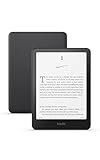
- Our fastest Kindle Paperwhite ever – The next-generation 7“ Paperwhite display has a higher contrast ratio and 25% faster page turns.
- Ready for travel – The ultra-thin design has a larger glare-free screen so pages stay sharp no matter where you are.
- Escape into your books – Your Kindle doesn’t have social media, notifications, or other distracting apps.
- Battery life for your longest novel – A single charge via USB-C lasts up to 12 weeks.
- Read in any light – Adjust the display from white to amber to read in bright sunlight or in the dark.
This is useful for unfamiliar names, places, historical references, and technical terms—not just ordinary vocabulary. Select the most relevant panel if several are offered, and remember that a short definition is a starting point rather than a substitute for a full explanation.
Do these 3 things before closing this tab:
1Scan for outdated or missing drivers - takes under a minute2Repair Windows errors before they cause bigger problems3Fix the driver behind crashes, sound loss and screen glitchesIf a lookup is incomplete, check whether the word is hyphenated, part of an image, or written in a form the dictionary does not recognize. You can also try searching the full book or choosing another installed dictionary.
12. Change the default dictionary
Kindle normally uses a dictionary associated with the reading language, but you can choose another installed dictionary through Settings > Language & Dictionaries > Dictionaries, with wording that may differ by model.
A bilingual dictionary can be particularly useful for language learners because it reduces the need to switch away from the book. You may also prefer a specialist dictionary for older language, technical terminology, or a particular regional usage.
The list of available dictionaries depends on the device, account marketplace, language settings, and dictionaries already installed. Changing the default dictionary does not add a dictionary that is absent from the Kindle.
Recommended Free Tools
13. Use X-Ray for characters, topics, and recurring terms
X-Ray is designed to show the important people, places, concepts, and recurring terms in a book. It can expose related passages and entries—the useful structural elements sometimes described as the book’s “bones”—so you can understand who or what a reference points to.
Look for X-Ray in the reading toolbar or book menu when it is available. It is valuable in novels with large casts and in nonfiction containing repeated names or specialized topics. You can use it to refresh your memory without rereading several chapters.
X-Ray is not generated identically for every title. Amazon relies on book-specific metadata and prepared content, so a book may have limited coverage or no X-Ray option at all. Its absence does not indicate a problem with your Kindle.
Language-learning and study tools
14. Turn on Word Wise when reading challenging English
Word Wise places short explanations above some difficult words, allowing you to keep reading instead of opening a dictionary for every unfamiliar term. It is particularly useful for people learning English or readers who want help with difficult vocabulary without interrupting the story.
On a compatible title, look for Word Wise in the reading settings, often under Aa > More. You can generally adjust how much help appears. A lower level keeps the page cleaner; a higher level provides more assistance.
Word Wise is title- and language-dependent. Amazon’s current consumer information identifies the relevant supported experience for English-language books in the United States, so availability may differ by country, account marketplace, book, device, and app. Do not expect it to appear in every English book or in every translated edition.
Rank #4

- Our fastest Kindle Paperwhite ever – The next-generation 7“ Paperwhite display has a higher contrast ratio and 25% faster page turns.
- Ready for travel – The ultra-thin design has a larger glare-free screen so pages stay sharp no matter where you are.
- Escape into your books – Your Kindle doesn’t have social media, notifications, or other distracting apps.
- Battery life for your longest novel – A single charge via USB-C lasts up to 12 weeks.
- Read in any light – Adjust the display from white to amber to read in bright sunlight or in the dark.
15. Review Vocabulary Builder as a study list
When you look up words in the dictionary, Kindle can collect them in Vocabulary Builder. Open the feature from the reading menu to review the words, see them in context, and in supported experiences use flashcards to test your recall.
This turns incidental lookups into a simple study list. It works best if you periodically review the words rather than treating the list as a passive archive. For language learning, write down your own example sentence or revisit the original passage after learning the definition.
Free tools Windows power users keep installed
One-click scans. No signup required.
Vocabulary Builder is not guaranteed across every Kindle app, title, account configuration, or device. It also depends on using the dictionary lookup function; words you understand without looking up will not automatically become entries.
Annotations, syncing, and personal documents
16. Highlight passages, add notes, and bookmark pages
Press and hold on text, drag the selection handles, and choose the highlight or note option. You can use highlights for quotations, notes for your own interpretation, and bookmarks for pages you want to revisit without marking the text.
These tools are useful for:
- preparing for a book-club discussion;
- collecting quotations for a research project;
- marking evidence in a nonfiction book;
- recording questions while studying; and
- saving a passage you want to share or review later.
Text-based highlights and notes can be accessed across supported Kindle surfaces when they sync. Handwritten annotations are different: Amazon currently describes handwriting as a Kindle Scribe feature that syncs across Kindle Scribe devices, rather than a universal annotation format for every Kindle app and e-reader.
You do not need a Scribe for ordinary highlighting, typed notes, or bookmarks. If handwriting is the reason you are considering an upgrade, the Kindle Scribe for handwritten notes is the relevant device category to compare, but confirm the exact model and software features before buying.
Outdated Drivers Are Slowing You Down
One free scan finds every outdated or missing driver and matches the right update for your exact hardware.Free scan · exact hardware matchPC Slower Than It Used to Be?
A free scan shows the junk files, broken settings and background clutter dragging Windows down - then fixes them in one click.Free scan · Windows 10 & 1117. Sync before switching devices
Before moving from a Kindle e-reader to a phone, tablet, or another supported Kindle surface, connect to the internet and choose More > Sync Your Kindle, or use the equivalent sync command in the app.
Sync can download pending books and updates and align your furthest page read, highlights, and text notes. It is particularly important after reading offline, adding annotations on an airplane, or opening the same book on two devices in quick succession.
If the other device opens to an older page, first verify that both devices use the same Amazon account and that the book is the same edition. Then connect both devices and sync again. A device that has not had an internet connection may not yet have uploaded its latest position or annotations.
18. Send personal documents to Kindle
Amazon’s wireless Send to Kindle service is the easiest general method for moving personal reading material to a Kindle e-reader or Kindle app. Send the file through the supported Send to Kindle route, then open the destination device or app associated with the Amazon account used for the transfer.
Amazon’s current support list includes these formats:
- PDF;
- DOC and DOCX;
- TXT and RTF;
- HTM and HTML;
- PNG, GIF, JPG, JPEG, and BMP; and
- EPUB.
The listed maximum is 200 MB per file. Large files, unusual formatting, image-heavy documents, and documents with complex layouts may still display differently after conversion. A PDF that depends on its original page dimensions may be easier to read in its fixed form, while a text document may be more comfortable after conversion to a reflowable Kindle format.
Best Value
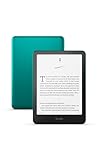
- Our fastest Kindle Paperwhite ever – The next-generation 7“ Paperwhite display has a higher contrast ratio and 25% faster page turns.
- Upgrade your reading experience – The Signature Edition features an auto-adjusting front light, wireless charging, and 32 GB storage.
- Ready for travel – The ultra-thin design has a larger glare-free screen so pages stay sharp no matter where you are.
- Escape into your books – Your Kindle doesn’t have social media, notifications, or other distracting apps.
- Adapts to your surroundings – The auto-adjusting front light lets you read in the brightest sunlight or late into the night.
If the document does not appear, check four things: the file is within the size limit, the format is supported, the destination Kindle or app is registered to the correct Amazon account, and the device has an internet connection. Then sync the Kindle manually.
Independent reader supportYour contribution helps us test, update, and keep practical guides available for everyone.Two useful Kindle ecosystem extras
Goodreads reading progress
Linking Amazon and Goodreads can add reading-progress features and support Kindle Reading Challenges. It is useful if you want your Kindle activity and Goodreads reading record to stay connected, but challenge eligibility, achievements, and available features can vary by account and marketplace.
Assistive Reader
On Kindle e-readers from the 11th generation onward, Kindle Scribe, and Kindle Colorsoft, Assistive Reader can read compatible books aloud while underlining words. Amazon lists support for English, Spanish, French, German, and Italian, and says the book must use Enhanced Typesetting.
This is not the same as assuming that every Kindle book can be converted into an audiobook. Compatibility depends on the title, language, device, and typesetting support. Look for Assistive Reader in the reading settings if your device and book qualify.
Which Kindle is right for these tricks?
You do not need a new Kindle to use ordinary features such as changing font size, searching a book, highlighting text, or sending documents. An upgrade becomes more relevant when you specifically need a newer display control, Assistive Reader, Dark Mode on a supported model, or handwritten annotation.
The Kindle Paperwhite 12th Generation is the most obvious upgrade path to investigate if your current device lacks newer display or accessibility controls. It is not necessary merely to adjust font size, search, sync, or highlight books, and you should compare the exact feature list for your current generation before purchasing.
The Tool Desk
Outbyte Driver Updater FREEFix the driver behind crashes, sound loss and screen glitchesFind Drivers →Outbyte PC Repair FREEClear out junk files and repair common Windows errorsFree Scan →For handwriting, compare a Kindle Scribe instead of treating it as a requirement for ordinary Kindle notes. For color display or particular accessibility and display features, Kindle Colorsoft may be relevant, but color is not needed for X-Ray, dictionary lookup, syncing, or Send to Kindle.
Any case should be matched to the exact Kindle model and generation. A cover designed for one Paperwhite generation or for Scribe is not automatically compatible with another device simply because the product names look similar.
Kindle compatibility checklist
When a trick is missing or behaves differently, work through this list:
- Identify the device. Check the exact model and generation, not just the word Kindle. Current and recent Amazon device families include Kindle 11th Generation, Kindle Paperwhite 12th Generation, Kindle Colorsoft, and several Kindle Scribe generations.
- Check whether you are using an e-reader or an app. Kindle apps can have different menus and may not support every e-reader feature.
- Check the book format. Reflowable ebooks usually allow changes to font and layout. Fixed-layout, print-replica, comic, manga, textbook, and image-heavy books may preserve their original design.
- Check the title. Word Wise, X-Ray, Enhanced Typesetting, Assistive Reader, and some study features require book-specific preparation.
- Check the language and marketplace. Dictionaries, Word Wise, Goodreads features, accessibility tools, and available book metadata can vary by language, country, and account.
- Connect to the internet. Syncing, downloading a sent document, and receiving certain updates require connectivity.
- Confirm the account. A book, annotation, or personal document may appear to be missing when the device or app is registered to a different Amazon account.
- Update carefully. If a feature should be supported but is absent, install available device or app updates, restart, and check the relevant menu again.
What to try when a Kindle trick does not work
| Problem | Most likely explanation | What to do |
|---|---|---|
| No Font, Layout, or boldness control | The book may be fixed-layout | Test the Aa menu in a conventional reflowable ebook |
| No Dark Mode | The model or software may not support it | Identify the exact generation and check its display settings |
| No Word Wise or X-Ray | The title lacks the required metadata or language support | Try another compatible title; do not treat the missing option as a device failure |
| No Vocabulary Builder | The app, device, or account configuration may not support it | Use dictionary lookup on a supported Kindle experience and check the reading menu |
| Annotations are missing elsewhere | Devices have not synced or use different accounts | Connect both devices, sync, and verify the Amazon account and edition |
| A personal document is missing | Wrong account, unsupported format, oversized file, or no connection | Confirm the 200 MB limit, format, destination account, and internet connection |
Frequently Asked Questions
Where are the main Kindle reading settings?
Tap the top of the page while reading, then select the Aa or Page Display icon. Font, layout, themes, progress, and some reading aids are located there. The exact label and available controls vary by Kindle model, app, and book.
Quick wins for a faster PC:
Fix the driver behind crashes, sound loss and screen glitchesFind Drivers →Clear out junk files and repair common Windows errorsFree Scan →Scan for outdated or missing drivers - takes under a minuteDriver Scan →Why can’t I find Dark Mode on my Kindle?
Not every Kindle supports Dark Mode. Amazon lists it for several Paperwhite generations, Kindle Oasis, Kindle Colorsoft, and some Kindle Scribe devices. Check the exact model and generation under the device information before troubleshooting further.
Why is X-Ray missing from my Kindle book?
X-Ray depends on book-specific metadata and preparation. A title can have limited X-Ray coverage or no X-Ray option even when the Kindle itself supports the feature.
Do I need a Kindle Scribe to highlight or take notes?
No. Ordinary text highlights, typed notes, and bookmarks work on supported Kindle experiences without a Scribe. Kindle Scribe is relevant when you specifically want handwritten annotations, which have different syncing behavior from text-based notes.
How do I put my own documents on a Kindle?
Use Amazon’s wireless Send to Kindle service and make sure the destination Kindle or app is associated with the same Amazon account. Supported formats include PDF, DOC, DOCX, TXT, RTF, HTM, HTML, PNG, GIF, JPG, JPEG, BMP, and EPUB, with files listed up to 200 MB each.
PC Slower Than It Used to Be?
A free scan shows the junk files, broken settings and background clutter dragging Windows down - then fixes them in one click.Free scan · Windows 10 & 11Crashes, No Sound, or Screen Glitches?
Random freezes, missing sound and display glitches usually trace back to one bad driver. Find and replace yours safely.Free scan · under a minuteThe Bottom Line
Start with the Aa menu: font size, boldness, spacing, themes, progress, and some accessibility controls are concentrated there. Then use Page Flip, search, Smart Lookup, X-Ray, annotations, syncing, and Send to Kindle to make the Kindle more useful beyond simply turning pages. When a feature is absent, check the device generation, app, book layout, language, title metadata, and Amazon account before assuming every Kindle should have it.
Quick Recap
Product prices and availability are accurate as of the date/time indicated and are subject to change. Any price and availability information displayed on Amazon at the time of purchase will apply.