Quick wins for a faster PC:
Repair Windows errors before they cause bigger problemsFix Now →Scan for outdated or missing drivers - takes under a minuteDriver Scan →Clear out junk files and repair common Windows errorsFree Scan →Spoilers for the manga’s ending, including chapter 431, “More.”
My Hero Academia earns its ending not by making every loss disappear or answering every reader’s wish for individual closure, but by widening the meaning of heroism. Its final stretch looks beyond the decisive battle to the work of rebuilding, learning, and helping one another. That choice makes the conclusion feel like more than a finish: it reframes what the series has been asking its heroes—and its society—to become.


What makes the ending feel redemptive?
The series could have ended with victory as the whole answer: the villain defeated, the crisis over, and the heroes celebrated. Instead, the official synopsis for VIZ’s final volume, My Hero Academia, Vol. 42, points readers toward what comes afterward: the characters rebuilding their lives and a society confronting whether it has learned the lessons of the war.
That aftermath changes the emphasis of the story. Heroism is no longer only the spectacular act of standing between danger and its victims. It also means accepting responsibility for the conditions that let harm grow, and taking part in the slower work of repair. The ending’s hopeful note is therefore conditional: survival matters, but so does what people choose to do with the world they have saved.
The Tool Desk
Outbyte PC Repair FREEClear out junk files and repair common Windows errorsFree Scan →Outbyte Driver Updater FREEFix the driver behind crashes, sound loss and screen glitchesFind Drivers →#1 Best Overall
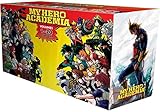
- MHA Fandom: Midoriya inherits the superpower of the world’s greatest hero, but greatness won’t come easy.
- Includes: The first 20 volumes of the bestselling My Hero Academia manga.
- Format: Softcover, 3840 pages.
The ending expands who gets to be a hero
There is a direct thematic bridge between that focus on rebuilding and Kōhei Horikoshi’s own description of how his view of heroism changed. In a VIZ interview published July 22, 2024, he said:
“But as I entered my 30s, I began to appreciate those people nearby who offer support, which ties into the current story of My Hero Academia. My appreciation has been growing toward the people who extend a helping hand or offer encouragement. For example, Imamura-san, my editor, has been a huge supporter. I’ve grown to see these everyday helpers like him as heroes too. So now, I think anyone can be a hero, including those who support me closely.”
That is not a specific explanation of the final chapter; Horikoshi did not describe its plot in this interview. But it gives the ending’s emphasis a useful context. When the story turns toward people helping one another after catastrophe, it treats support not as a lesser substitute for heroism but as part of heroism itself. The work of recovery belongs to more than the celebrated few.
Why the aftermath matters more than a perfect victory lap
For a long-running battle series, a reader may expect the finale to settle accounts through recognition: who became the greatest hero, who received the most satisfying personal resolution, and how every major relationship ended. Those are understandable hopes. But they are not the only measure of whether a conclusion works.
My Hero Academia directs attention toward collective consequences. A victory does not automatically repair a society, and a climactic act cannot carry all the responsibility for preventing the next crisis. By allowing the ending to dwell on life after the conflict, the story makes room for a less glamorous kind of resolution: people must learn, reconnect, and keep showing up for one another.
This is where the “redeeming” reading has force. The ending does not need to erase earlier frustrations to make the series’ central idea land more clearly. It can instead gather the story’s concern with courage and turn it outward, toward a shared obligation. A hero may save someone in a moment of danger; a community has to make care possible in ordinary life.
Chapter 430 and the expanded ending in volume 42
The distinction between the manga’s original final chapter and its collected ending matters. Chapter 430 is the manga’s original final chapter. Volume 42, identified by VIZ as the final volume, also contains Horikoshi’s additional chapter 431, “More.” According to the official anime announcement, “More” continues the former Class 1-A students’ story eight years after graduation.
That extra chapter gives the collected edition more room to revisit the characters after the main finale. It is not a magic fix that makes every objection disappear; rather, it extends the ending’s interest in what comes after the victory. For readers who felt chapter 430 moved too quickly past the characters’ later lives, “More” is meaningful additional closure. For readers satisfied with the original endpoint, it is an epilogue rather than a replacement for the story’s final chapter.
Recommended Free Tools
VIZ lists the English paperback of volume 42 as 184 pages, ISBN 978-1-9747-5918-7, with paperback and digital options on its volume page. The volume is the relevant edition for readers who want to read the collected ending, including chapter 431.
Rank #4
How the manga ending differs from the anime finale
The original television finale and the later special are separate milestones, not interchangeable descriptions of the anime’s ending. The official anime site says the 2025 TV finale adapted the manga through chapter 430. Its last episode was episode 170, following eight seasons, and aired December 13, 2025, according to a separate official notice.
The anime announcement says chapter 431, “More,” would receive its own TV special adaptation on May 2, 2026. That date is a scheduled broadcast detail, not a statement about current streaming availability. The distinction is useful if you are comparing endings: the 2025 episode concludes the main run through chapter 430, while “More” supplies a later continuation.
Independent reader supportYour contribution helps us test, update, and keep practical guides available for everyone.What the ending cannot prove
Calling the ending redemptive is a critical judgment, not a measured consensus. Discussion spaces include the search-style question “Why did people dislike the ending?”, but such examples do not establish how common any particular reaction is. No reliable audience statistic in the cited material measures approval of the ending.
Likewise, the 100 million copies in circulation worldwide mentioned in VIZ’s 2024 interview is a circulation milestone, not a survey of readers’ opinions. It says nothing by itself about whether the finale pleased them. Horikoshi’s comments about everyday helpers support a thematic interpretation, but they do not establish that he deliberately designed the final chapter to redeem earlier shortcomings.
Those limits do not weaken the argument so much as clarify what it is: the ending can be read as a persuasive culmination of the series’ interest in shared care and social responsibility, without claiming that every reader agrees or that every earlier narrative choice is resolved. Its strongest answer to the question of what heroes leave behind is not simply a reputation. It is a world where more people can help.
Quick Recap
Product prices and availability are accurate as of the date/time indicated and are subject to change. Any price and availability information displayed on Amazon at the time of purchase will apply.