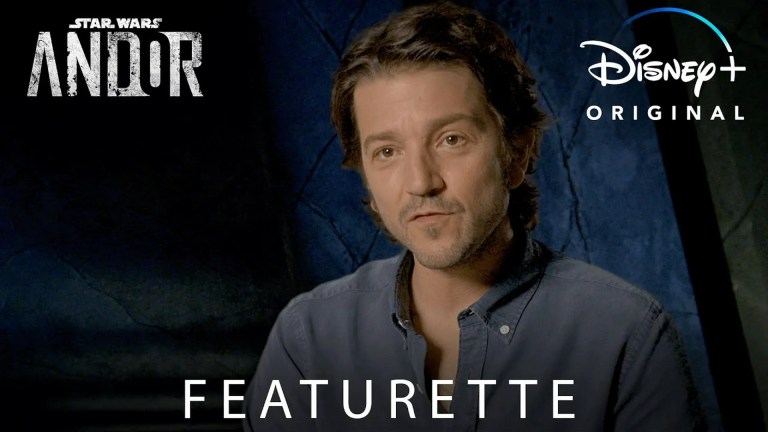
Andor’s second-season episodes 4–6 make the Ghorman conflict feel frightening not through constant action, but through pressure that keeps accumulating: Imperial attention, clandestine work, uncertain loyalties and private lives strained by the cause. The three-part arc is tense and absorbing, with the ceremony of a Chandrilan wedding supplying a bright, uneasy counterpoint to its surveillance and political danger.
Episode titles and release
The three episodes are “Ever Been to Ghorman?” (episode 4), “I Have Friends Everywhere” (episode 5) and “What a Festive Evening” (episode 6). Disney Plus Press scheduled all three for April 29, 2025, at 6 p.m. PT, continuing the season’s three-episode release pattern (Disney Plus Press). The season is a prequel to Rogue One: A Star Wars Story; Disney describes Cassian as becoming a key Rebel Alliance player as the horizon of war draws near (Disney Plus Press).
![Andor - The Complete First Season Limited Edition Steelbook [Blu-ray]](https://m.media-amazon.com/images/I/51brO+NZjeL._SL160_.jpg)


Spoilers: Ghorman moves from concern to conflict
The arc’s political center is Ghorman. The official StarWars.com episode explainer frames the planet as a focus of attention for both rebels and the Empire (StarWars.com). Across these installments, that attention begins to feel less like distant context and more like pressure closing in. Cassian works undercover, while Syril Karn serves the Empire on Ghorman. Elsewhere, Luthen and Kleya attempt to recover a listening device during a social gathering.
That movement is the source of the arc’s dread. The danger grows through what characters must conceal, what they cannot safely say, and how seemingly ordinary settings can become part of an operation. The show lets political interference and covert maneuvering tighten the atmosphere before spectacle takes over. The result is not simply a story about a looming clash; it is a portrait of how power makes people live inside anticipation.
The Tool Desk
Outbyte Driver Updater FREEFix the driver behind crashes, sound loss and screen glitchesFind Drivers →Outbyte PC Repair FREERepair Windows errors before they cause bigger problemsFix Now →Why the wedding makes the danger sharper
The Chandrilan wedding gives the arc a deliberately different texture: ceremony, elegance and public performance sit alongside surveillance and clandestine tradecraft. Creator and showrunner Tony Gilroy described it as, “It’s jazzy, it’s big, it’s lively, and it plays really well as a counterpoint to the other more sterile things that we get in the arc,” in an interview with StarWars.com.
That contrast works because the celebration does not erase the danger. Instead, the formality and brightness make the surrounding unease more visible. A room full of ritual and social expectations is also a place where people have to watch themselves—and one another. The episode’s tension comes from holding those registers together rather than treating the wedding as a pause from the political story.
Rank #2
![Mandalorian: Season 1, 2, 3 Complete Collection (SteelBook, Limited Collector's Edition - 6-Disc Set) [4K Ultra HD + Blu-ray] [Region Free]](https://m.media-amazon.com/images/I/51mTnp-QUsL._SL160_.jpg)
- Complete Seasons 1–3 Collection: Features all 24 episodes of Lucasfilm's live-action Star Wars series across three 2-disc 4K Ultra HD sets in a US edition bundle.
- Collector's SteelBook Packaging: Housed in three individual collectible SteelBooks with exclusive custom artwork and a total of nine collectible concept art cards (three per season).
- Cinematic 4K UHD Presentation: Delivers 2160p Ultra HD video in 2.39:1 widescreen, paired with immersive English Dolby Atmos audio and Dolby Digital 5.1 tracks.
- Exclusive Behind-the-Scenes Features: Packed with bonus documentaries covering Grogu, Imperial remnants, Mandalorian culture, practical effects, droids, and a tribute to Carl Weathers.
- Star-Studded Cast & Creators: Created by Jon Favreau and Dave Filoni, starring Pedro Pascal alongside Katee Sackhoff, Carl Weathers, Giancarlo Esposito, Rosario Dawson, and Temuera Morrison.
Private losses keep the rebellion human
The arc also asks what clandestine work does to people who are trying to maintain a life beyond it. Cassian and Bix attempt to sustain their relationship under the strain of secrecy and danger. Bix is also coping with trauma in harmful ways, a difficult thread that gives her pain weight beyond its usefulness to the plot. It is not a decorative sign of toughness: it suggests a person trying to endure consequences that cannot be neatly set aside when an operation begins.
This personal cost helps the political story land. Cassian and Bix are not only pieces moved around a strategic board; the relationship gives the cause a human scale and exposes what the work takes from those involved. The writing is strongest when the private strain and the public stakes press on each other without pretending that one can be cleanly separated from the other.
What’s actually slowing this PC down?
Pick the symptom - the matching free tool is one click away.
Rank #3
Ensemble, pacing and the three-episode arc
The episodes build as a unit: the first establishes the political focus and the pressures around it, the middle deepens the covert and personal complications, and the final installment brings the listening-device operation into sharper focus against the social event. That structure gives the three-episode release a clear escalation rather than making the installments feel like interchangeable chapters.
The arc’s characters occupy different degrees of commitment, compromise and uncertainty. Syril’s position within the Imperial presence on Ghorman, set against the rebels’ covert work, helps make divided loyalties more legible without reducing every character to a simple symbol. Suspense depends on that uncertainty: the audience has to weigh what people want against the roles they have chosen or been drawn into.
Rank #4
The operation in “What a Festive Evening” delivers on the preceding setup by making social proximity and secrecy part of the suspense. The pacing is patient, sometimes deliberately so, but that patience suits a story interested in incremental pressure more than constant action. The payoff is less about a sudden release of tension than about seeing how much risk has accumulated in the room.
Verdict: a patient, effective study in pressure
Episodes 4–6 are a strong stretch of Andor because they connect political escalation to intimate cost. Ghorman gives the arc a clear direction; covert operations turn that direction into suspense; the wedding adds a striking visual and social contrast; and Cassian and Bix’s strained relationship keeps the stakes personal. Its measured pace will not suit viewers looking for nonstop action, but the slow tightening is precisely what makes the dread persuasive.
Gilroy has said of the series’ endpoint, “the reason I think the show is good is because we’ve known where we’re going to end,” and described its layered construction this way: “So much attention has been paid to each deep frame of the story that you can find other things in it every time you see it” (StarWars.com). This arc benefits from that sense of direction: its intimate moments and political maneuvers feel like parts of a story moving somewhere consequential.
Quick Recap
Product prices and availability are accurate as of the date/time indicated and are subject to change. Any price and availability information displayed on Amazon at the time of purchase will apply.