The Tool Desk
Outbyte Driver Updater FREEScan for outdated or missing drivers - takes under a minuteDriver Scan →Outbyte PC Repair FREERepair Windows errors before they cause bigger problemsFix Now →There is no definitive ranking of horror’s ten greatest soundtracks. This selection instead follows three useful tests: recognizability, influence on later scoring, and a distinctive musical method. Together, these films show how fear can come from a piercing string gesture, a repeated two-note warning, a choral mass, a lullaby, or sound design that blurs the line between music and noise.
“Soundtrack” here means the film’s overall musical and sonic world. It may include original score, pre-existing compositions, songs, and designed effects; those are not interchangeable credits. The list is curated rather than ranked, and Jaws is included as a horror-adjacent thriller whose music demonstrates a defining suspense technique.

What makes a horror soundtrack memorable?
Horror music does not rely on volume alone. A motif can become threatening through repetition and context; dissonance and unusual timbres can unsettle; editing and silence can stretch expectation; and music can become so closely associated with an image that the two are difficult to separate. PBS’s discussion of horror scoring points to methods ranging from leitmotifs and stingers to experimental tone clusters and a heartbeat-like bass pulse (PBS).
The ten films below are arranged chronologically, not by rank. Each offers a different answer to the question of how sound makes fear linger.
What’s actually slowing this PC down?
Pick the symptom - the matching free tool is one click away.
#1 Best Overall

- Format: Vinyl...
- Handling Note: **Please allow an additional 72 hours for this item's shipment.**...
- Format: Vinyl...
- Format Detail: LP...
- Internal ID: JITRE...
10 iconic horror film soundtracks
1. Psycho (1960) — Bernard Herrmann
In the shower scene, the piercing, sliding strings are more than a burst of noise: they are a sharply defined musical gesture attached to a moment of violence. PBS describes the scene as a famous example of a stinger effect (PBS). The strings make the attack feel immediate, while their unmistakable sound keeps the scene vivid in memory.
John Carpenter has said Herrmann’s Psycho score inspired his work on Halloween, and that Herrmann’s ability to create a powerful score with limited orchestral means impressed him (The Guardian).
2. Rosemary’s Baby (1968) — Krzysztof Komeda
Komeda’s recurring vocal theme has the contour of a lullaby, but its sweetness sits uneasily alongside the film’s growing dread. High-piano textures and the returning voice make this an unsettling counterpoint to horror scores built around loud stingers or abrasive sound (Classic FM). The music unsettles by making the familiar feel wrong, rather than announcing danger with a sudden blow.
3. The Exorcist (1973) — pre-existing and experimental music
The Exorcist is a useful example of why a film’s soundtrack should not be confused with a single composer’s original score. William Friedkin used Mike Oldfield’s pre-existing piece Tubular Bells; it was not composed for the film. The film also uses experimental music by Krzysztof Penderecki, whose tone clusters and sound masses create a far harsher kind of unease (The Guardian; PBS).
That contrast matters: one recognizable existing piece can acquire new associations through its placement, while experimental textures can make the familiar rules of melody and harmony feel unstable. Claudio Simonetti, whose band Goblin later scored Suspiria, observed of Oldfield’s work, “I know it wasn’t composed for the film, but it fitted so well” (Louder).
Rank #2
![Little Shop of Horrors (Original Motion Picture Soundtrack)[LP]](https://m.media-amazon.com/images/I/51ro5MIqb4L._SL160_.jpg)
- One of the most well-known musical horror comedies of all time, the soundtrack to Little Shop of Horrors is a lively and upbeat souvenir for those who adore the 1986 film
4. The Texas Chain Saw Massacre (1974) — music and sound design
This film’s claustrophobic sonic world does not fit neatly into the idea of a conventional composed score. Cues, screams, chainsaw noise, and other sounds combine into an expressionistic texture that keeps the viewer inside the characters’ distress (The Guardian). Its place on this list rests on that overall sound design and musical texture—not on a claim that every frightening sound was written as music.
5. Jaws (1975) — John Williams
Jaws is often treated as a thriller or adventure as well as horror, so its inclusion is a deliberate border case. Its two-note shark motif is a model of economical suspense: as the notes accelerate, the audience understands that the threat is drawing closer. PBS explains the motif’s function as a signal of the shark’s proximity; Classic FM describes the alternating notes as a semitone apart and played on a tuba (PBS; Classic FM).
The idea is simple, but the changing pace turns repetition into anticipation. The music does not need to show the shark for the audience to feel its approach.
Do these 3 things before closing this tab:
1Scan for outdated or missing drivers - takes under a minute2Repair Windows errors before they cause bigger problems3Fix the driver behind crashes, sound loss and screen glitches6. The Omen (1976) — Jerry Goldsmith
Goldsmith’s score makes choral writing central to its threat, setting voices alongside winds, strings, bells, and timpani (Classic FM). The choir gives the music a ritual character, while the orchestral forces supply weight and menace. It offers a striking contrast to the spare pulse of Carpenter’s later work and the rock textures Goblin brought to Suspiria.
7. Suspiria (1977) — Goblin
Goblin’s score for Dario Argento’s film makes progressive rock part of the horror rather than a background decoration. Its conspicuous musical identity suits the film’s saturated visual style, and composer Claudio Simonetti has recalled that scenes felt less scary before the band added the music (The Guardian; San Francisco Conservatory of Music; Louder).
Rank #3
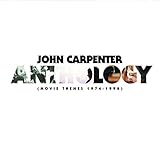
- HEILIGE KNOCHEN
- Anthologie: Filmthemen 1974 1998 Vinyl
- ABIS MUSIK
Simonetti’s account makes the score-image relationship clear: the music changes how the scenes land. As he puts it, “You don’t need big orchestras and lots of notes to make things come alive. Just three notes will do, if they’re the right ones” (Louder).
8. Halloween (1978) — John Carpenter, with Dan Wyman
Carpenter composed and performed the score, drawing on influences including Herrmann and Ennio Morricone. His official soundtrack notes credit Dan Wyman as creative consultant and musical co-producer, so the score’s authorship should not be reduced to Carpenter alone (John Carpenter). The theme’s insistent pulse and five-beat bar give it a rhythmic unease that is easy to recognize and hard to settle into (The Guardian).
Free tools Windows power users keep installed
One-click scans. No signup required.
Carpenter has described deciding to “save it with the music” after a screening without music failed to scare a viewer (John Carpenter). That account captures the score’s role: it does not merely accompany the images; it helps create their menace.
9. The Shining (1980) — Wendy Carlos, Rachel Elkind, and existing compositions
The film’s sound world draws on more than commissioned score. Wendy Carlos and Rachel Elkind collaborated on music for the film, while selected pre-existing works include compositions by György Ligeti and Krzysztof Penderecki (Classic FM). PBS also discusses Penderecki’s music in The Shining (PBS).
Keeping those categories distinct helps explain the effect: film-specific music and already-existing experimental compositions share the soundtrack, but they do not share the same origin. Their strange textures make the film’s spaces feel psychologically unstable.
10. The Thing (1982) — Ennio Morricone
Morricone’s score uses low plucked strings, percussion, tense strings, organ, and low-frequency sounds to create a sense of threat that is often restrained rather than triumphant (Classic FM). PBS describes Carpenter’s use of a heartbeat-like bassline technique in the film (PBS).
Carpenter praised Morricone’s contribution for adding a “deep, tragic sense” that fit the film (Classic FM). That quality sets The Thing apart from scores that make fear feel purely kinetic: beneath the tension is a feeling of isolation and loss.
Independent reader supportYour contribution helps us test, update, and keep practical guides available for everyone.How the ten scores create different kinds of fear
The contrast between these films is more revealing than any single ranking. Some make danger legible through a repeated musical signal; others make the audience doubt what it is hearing. A few important distinctions help explain why their approaches remain memorable:
- Motif and stinger: Herrmann’s sharp string gesture in Psycho punctuates violence, while Williams’s two-note figure in Jaws signals an approaching threat.
- Experimental texture: Penderecki’s tone clusters in The Exorcist and The Shining unsettle through sound masses rather than a familiar tune.
- Pulse and restraint: Carpenter’s Halloween theme and the heartbeat-like bass associated with The Thing build tension through repetition and rhythm.
- Musical contrast: Komeda’s vocal theme in Rosemary’s Baby uses lullaby-like familiarity to make unease feel intimate.
- Soundtrack as a whole: The Exorcist and The Shining combine film-specific work with pre-existing compositions, while The Texas Chain Saw Massacre shows how sound design and music can merge into one claustrophobic effect.
Across the selection, the memorable element is not always the loudest one. A sound becomes frightening through what the film places around it: an image, a cut, a silence, or the expectation built by hearing it again.
Quick Recap
Product prices and availability are accurate as of the date/time indicated and are subject to change. Any price and availability information displayed on Amazon at the time of purchase will apply.