Do these 3 things before closing this tab:
1Scan for outdated or missing drivers - takes under a minute2Repair Windows errors before they cause bigger problems3Fix the driver behind crashes, sound loss and screen glitchesProject Mercury and SpaceShipOne both sent people into space, but they pursued fundamentally different goals. Mercury was NASA’s first human-spaceflight program, built to establish crewed orbital flight and prepare the way for later U.S. missions. SpaceShipOne was a privately developed suborbital vehicle that won the Ansari X Prize. Their achievements are best compared by purpose, flight profile, and legacy—not as competing versions of the same spacecraft.
What was Project Mercury?
Initiated in 1958 and completed in 1963, Project Mercury was the United States’ first human-spaceflight program. NASA’s stated objectives were to place a crewed spacecraft in Earth orbit, investigate human performance in space, and recover both the astronaut and spacecraft safely. NASA’s Project Mercury overview sets out those goals and the program’s flight record.
Mercury’s six crewed missions progressed from short suborbital flights to orbital missions. Alan Shepard’s Freedom 7 was NASA’s first human spaceflight. John Glenn became the first American to orbit Earth on Friendship 7, completing three orbits; Walter Schirra completed six orbits in Sigma 7; and Gordon Cooper’s Faith 7, the final crewed mission, completed 22 orbits.
| Mission | Astronaut | Flight milestone |
|---|---|---|
| Mercury-Redstone 3, Freedom 7 | Alan Shepard | NASA’s first human spaceflight; suborbital |
| Mercury-Redstone 4, Liberty Bell 7 | Gus Grissom | Second crewed Mercury flight; suborbital |
| Mercury-Atlas 6, Friendship 7 | John Glenn | First American orbital flight; three orbits |
| Mercury-Atlas 7, Aurora 7 | Scott Carpenter | Orbital flight |
| Mercury-Atlas 8, Sigma 7 | Walter Schirra | Six orbits |
| Mercury-Atlas 9, Faith 7 | Gordon Cooper | Final crewed Mercury flight; 22 orbits |
NASA’s overview gives Mercury’s total crewed flight time as 53 hours, 55 minutes, and 27 seconds. That figure covers the six crewed flights, not the project’s automated missions.
Quick wins for a faster PC:
Scan for outdated or missing drivers - takes under a minuteDriver Scan →Clear out junk files and repair common Windows errorsFree Scan →#1 Best Overall

- BEGINNER MODEL-ROCKET LAUNCH SET: The Tandem-X rocket-model launch set offers adults and kids ages 10+ hours of fun during the holidays as they complete and launch our Amazon and Crossfire ISX rocket models. This set includes the easy-to-assemble Amazon model parts, the Crossfire ISX model parts, parachutes, and the launch pad system. It requires rocket engines, Starters, Recovery Wadding, and 4 high-quality 1.5-volt AA alkaline batteries for launch use (sold separately).
- 2 SOARING ALTITUDE HEIGHTS: Our Tandem X set offers a high-performing power duo with our giant 30-inch Amazon model (600-foot projected altitude with a C6-5 rocket engine) and our streamlined 15.6-inch Crossfire ISX model (1,150-foot projected altitude with a C6-7 rocket engine). Other compatible Estes model-rocket engines for Amazon model: B4-2, B4-4, B6-2, B6-4, C5-3, and C6-3. Other compatible engines for Crossfire ISX: A8-3, B4-4, B6-4, and C6-5. All engines sold separately.
- READY TO ASSEMBLE: Our beginner model-rocket launch set comes with 2 build options. The precolored Amazon model features plastic fins and self-stick graphics and can be built in an hour. The Crossfire ISX model comes with laser-cut wood fins, self-stick decals, and aerodynamic parts. Pair the rockets with the included Porta Pad II Launch Pad and Electron Beam Launch Controller for a hands-on educational activity or a unique Christmas gift for a budding scientist or a space aficionado.
- SAFETY FIRST, FUN ALWAYS: Our rockets and rocket launch accessories are designed to be used with the NAR (National Association of Rocketry) model-rocket safety code. Always ensure you have an appropriate launch site, stand back at least 15 ft., insert the safety key, issue a countdown, and then you can let your rocket fly!
- WE IGNITE IMAGINATIONS: Since 1958, Estes has created educational rocket kits and displays designed for an unforgettable aerospace experience. As a family-owned company, we have grown to offer exciting STEM products that engage aspiring rocketeers and the future minds of aerospace.
How did SpaceShipOne win the Ansari X Prize?
SpaceShipOne was developed by Mojave Aerospace Ventures, a partnership between Burt Rutan’s Scaled Composites and Paul Allen. Rather than launch vertically from the ground, the spacecraft was carried aloft by its carrier aircraft, White Knight. After release, SpaceShipOne ignited its hybrid rocket motor and flew a suborbital trajectory. It arced through space but did not enter Earth orbit.
To claim the $10 million Ansari X Prize, the same vehicle had to complete two qualifying flights to 100 kilometers within two weeks. Mike Melvill piloted the first qualifying flight on September 29, 2004, and Brian Binnie piloted the second on October 4, 2004. NASA Johnson Space Center’s account of SpaceShipOne describes the flights and the prize. NASA reports that Rutan retired the vehicle after its prize-winning flight and turned to the next project.
Rank #2

- ICONIC NASA ARTEMIS I ROCKET MODEL KIT - Recreate the historic Artemis I mission with this highly detailed 1:144 scale Space Launch System (SLS)—a must-have for space enthusiasts, collectors, and model builders.
- AUTHENTIC MULTI-STAGE DETAILING - Features twin solid rocket boosters, detailed core stage with external hydrogen lines, separate stage assembly, and four RS‑25 engines for a realistic, true-to-life build.
- IMPRESSIVE 28" DISPLAY CENTERPIECE - Standing nearly 28 inches tall, this model delivers a striking vertical display that commands attention in any room, office, or collection.
- SKILL LEVEL 4 – ADVANCED BUILD EXPERIENCE - Designed for experienced hobbyists ages 12+ seeking a challenging, rewarding project with intricate parts and detailed assembly.
- READY FOR CUSTOM PAINT FINISH - Molded in light gray plastic so you can paint and detail to your exact preferences for a museum-quality appearance. (Paint & glue required, not included.)
How were Mercury and SpaceShipOne different?
The crucial difference is what each program set out to prove. Mercury aimed to establish U.S. crewed orbital flight, learn how people function in space, and demonstrate safe recovery. SpaceShipOne’s prize challenge centered on repeatable suborbital flights to a specified altitude. The aircraft-assisted launch and rocket-powered flight of SpaceShipOne were not an alternative route to Mercury’s orbital objective.
| Comparison | Project Mercury | SpaceShipOne |
|---|---|---|
| Purpose | Build crewed orbital capability, study human performance, and recover the astronaut and spacecraft safely. | Complete two qualifying suborbital flights to win the Ansari X Prize. |
| Setting | NASA’s first human-spaceflight program. | Privately developed by Mojave Aerospace Ventures; carried aloft by White Knight. |
| Flight profile | Six crewed flights progressed from suborbital missions to orbital flights. | Released from a carrier aircraft, then powered by a hybrid rocket motor on a suborbital trajectory. |
| Legacy established by NASA’s accounts | NASA says Mercury paved the way for Gemini and Apollo. | The documented achievement is the X Prize win; NASA says the vehicle was retired after the winning flight. |
What legacy did Mercury leave, and what can be said about SpaceShipOne?
Mercury’s work fed directly into the next stages of NASA’s human-spaceflight effort. NASA’s Mercury Seven retrospective says the project’s missions paved the way for Gemini and Apollo. The program also included automated flights: NASA’s retrospective counts six human-tended and eight automated flights across the project, alongside the six crewed missions.
Rank #3

- BEGINNER MODEL ROCKET LAUNCH SET: The Estes Alpha III launch set lets kids ages 10+ and hobbyists easily build and launch this iconic model rocket. The model rocket kit includes rocket parts, engine mount, decals, a parachute, a launch pad system, and instructions. For blastoff, you’ll need Estes rocket engines, Starters, Recovery Wadding, and 4 high-quality 1.5-volt AA alkaline batteries (not included).
- SOARS UP TO 1,150 FT.: Our Alpha III model rocket is designed for first-time STEM kit builders and climbs up to a projected altitude of 1,150 ft. (351 m). It’s compatible with 1/2A6-2, A8-3, A8-5, B4-4, B6-4, B6-6, C6-5, or C6-7 Estes rocket engines (sold separately).
- READY TO ASSEMBLE: Rocket building sparks creativity and a love for science and outer space! This beginner Alpha III model kit is easily put together with 1 hour of preparation and includes decals. It comes with a Porta-Pad II Launch Pad and Electron Beam Launch Controller for an unforgettable blastoff for first-time rocketeers.
- SAFETY FIRST, FUN ALWAYS: Our rockets are designed to be used with the NAR (National Association of Rocketry) model-rocket safety code. Always ensure you have an appropriate launch site, stand back at least 15 ft., insert the safety key, issue a countdown, and then you can let your rocket fly!
- ESTES EDUCATION: Since 1958, Estes has created educational rocket kits designed for an unforgettable launch experience. As a family-owned, US-based company, we offer exciting and engaging STEM products for all interests, skills, and power levels.
That retrospective describes the astronaut-selection funnel as 508 service records screened, 110 candidates assembled, 32 remaining after interviews and written tests, and 18 recommended without medical reservations. The last number refers to candidates recommended without medical reservations; it does not mean that all 18 were ultimately selected as astronauts.
SpaceShipOne’s documented milestone is different: it demonstrated the prize-winning suborbital flights and then was retired. These NASA accounts do not establish a later-program legacy equivalent to Mercury’s role in the path to Gemini and Apollo, so the two vehicles should not be assigned parallel historical influence simply because both reached space.
Quick Recap
Best Value
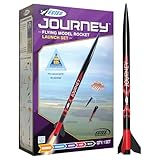
- BEGINNER MODEL ROCKET LAUNCH SET: The Estes Journey Launch Set gives kids ages 10+ and beginner model rocket fans the excitement of an outer-space-like adventure. This kit includes rocket parts, decals, a launch pad, a launch controller, and a parachute. For launch, you’ll need rocket engines, Starters, Recovery Wadding, and 4 high-quality 1.5-volt AA alkaline batteries (sold separately).
- SOARS UP TO 1,100 FT.: The included Estes Porta-Pad II Launch Pad and Electron Beam Launch Controller make it easy for kids and beginners to aim for the stars. The Journey rocket model reaches up to 1,100 ft. (335 m) with a C6-7 Estes rocket engine (sold separately). It’s also compatible with the Estes A8-3, B4-4, B6-4, and C6-5 rocket engines.
- READY TO ASSEMBLE: Rocket building inspires creativity and a passion for science and outer space! Each of our beginner rocket kits can be completed in approximately 1 hour. It comes with a Porta-Pad II Launch Pad and Electron Beam Launch Controller for an unforgettable blastoff for first-time rocketeers.
- SAFETY FIRST, FUN ALWAYS: Our rockets and rocket launch accessories are designed to be used with the NAR (National Association of Rocketry) model-rocket safety code. Always ensure you have an appropriate launch site, stand back at least 15 ft., insert the safety key, issue a countdown, and then you can let your rocket fly!
- WE IGNITE IMAGINATIONS: Since 1958, Estes has created educational rocket kits and displays designed for an unforgettable aerospace experience. As a family-owned company, we have grown to offer exciting STEM products that engage aspiring rocketeers and the future minds of aerospace.
Rank #4
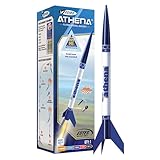
- BEGINNER MODEL ROCKET SET: The Estes Athena model rocket gives kids ages 10+ and beginners an easy way to experience real rocket launches with no building required! This ready-to-fly model rocket kit includes a fully prepared rocket with a parachute. This rocket requires Estes rocket engines, a launch pad system, Starters, Recovery Wadding, and 4 high-quality 1.5-volt AA alkaline batteries (sold separately) for launch use.
- SOARS UP TO 1,125 FT.: Our high-flying Athena rocket features a bright 12-inch parachute for safe recovery and soars up to a projected altitude of 1,125 ft. (343 m) with a C6-7 engine (sold separately). It is also compatible with the A8-3, B4-4, B6-4, and C6-5 rocket engines.
- READY TO FLY: Rocket-building kits are creative, educational gift ideas for Christmas or special-occasion surprises! This beginner-friendly Athena rocket comes fully assembled and just takes 15 minutes of preparation time. This model pairs with the Porta Pad II Launch Pad and Electron Beam Launch Controller (sold separately) for blastoff.SAFETY FIRST, FUN ALWAYS: Our rockets are designed to be used with the NAR (National Association of Rocketry) model-rocket safety code. Always ensure you have an appropriate launch site, stand back at least 15 ft., insert the safety key, issue a countdown, and then you can let your rocket fly!
- SAFETY FIRST, FUN ALWAYS: Our rockets are designed to be used with the NAR (National Association of Rocketry) model-rocket safety code. Always ensure you have an appropriate launch site, stand back at least 15 ft., insert the safety key, issue a countdown, and then you can let your rocket fly!
- ESTES EDUCATION: Since 1958, Estes has created educational rocket kits designed for an unforgettable launch experience. As a family-owned, US-based company, we offer exciting and engaging STEM products for all interests, skills, and power levels.
Product prices and availability are accurate as of the date/time indicated and are subject to change. Any price and availability information displayed on Amazon at the time of purchase will apply.