The Tool Desk
Outbyte PC Repair FREERepair Windows errors before they cause bigger problemsFix Now →Outbyte Driver Updater FREEFix the driver behind crashes, sound loss and screen glitchesFind Drivers →To make a USB drive available at the same path every time a Raspberry Pi boots, identify its partition by UUID and add a matching entry to /etc/fstab. Then configure your playback or encoder software to use that path. Mounting a drive only makes its files accessible; it does not start playback, encode video, or begin a YouTube Live broadcast.
Choose between desktop automounting and a fixed path
Raspberry Pi OS desktop can automatically mount some common filesystems at a label-based path under /media/pi. That may be sufficient if your application can use the path the desktop assigns. Raspberry Pi OS Lite does not implement desktop automounting, and a predictable path for an application is a separate requirement. For either case, an explicit mount configured in /etc/fstab can give the partition a fixed location.
Raspberry Pi’s documentation explains: “You can modify the fstab file to define the location where the storage device will be automatically mounted when the Raspberry Pi starts up.” See Raspberry Pi’s external storage documentation.
Automatically mount the USB drive at a fixed path
1. Identify the partition, filesystem, and UUID
Connect the drive and inspect its partitions before editing system configuration:
Windows Errors? Fix Them Before They Spread
Repair common Windows errors and clear accumulated junk for a smoother, more stable PC - no reinstall needed.Free scan · no reinstallCrashes, No Sound, or Screen Glitches?
Random freezes, missing sound and display glitches usually trace back to one bad driver. Find and replace yours safely.Free scan · under a minute#1 Best Overall

- 【High-Capacity Storage】Effortlessly store all your files with this spacious 128GB flash drive, offering ample room for high-resolution photos, 4K videos, music libraries, graphic design projects, large documents, and more
- 【Fast Transmission】Harness the power of USB 3.0 technology for rapid file transfers, with read speeds up to 90MB/s and write speeds of 30MB/s. Boost your productivity with quick access to your data—perfect for professionals and creatives alike
- 【Rugged & Waterproof Design】Built to last, our usb jump drive features advanced UDP packaging technology, ensuring superior durability and waterproof protection. Keep your valuable data safe from spills, rain, and everyday wear and tear
- 【Universal Compatibility】This USB drive works flawlessly across Windows, Android, Linux, Chrome, and Mac OS. Enjoy plug-and-play convenience with laptops, smart TVs, car audio systems, gaming consoles, and other USB-enabled devices
- 【Mini and Portable】Compact and lightweight, this mini USB 3.0 flash drive includes a keyring hole for easy attachment to keys, backpacks, or lanyards. Take your files anywhere while ensuring they stay secure and within reach at all times
sudo lsblk -o UUID,NAME,FSTYPE,SIZE,MOUNTPOINT,LABEL,MODELYou can also use sudo blkid to find filesystem UUIDs. Match the UUID, filesystem type, and size to the intended partition. Do not assume the partition will always be named /dev/sda1: device names can vary, while an entry keyed to the partition’s UUID avoids relying on that name. Do not copy a sample UUID or guess the filesystem type.
2. Create the mount point
Choose a descriptive, stable directory that your playback or streaming workflow can use. For example:
sudo mkdir -p /mnt/stream-mediaThe mount-point directory should be empty before the drive is mounted. Use the same path later in the application that reads media from the drive.
3. Back up and edit /etc/fstab
Back up the file before editing it, then add one entry using the actual partition UUID, mount point, and filesystem type. Raspberry Pi’s documentation gives this as an example:
UUID=5C24-1453 /mnt/mydisk fstype defaults,auto,users,rw,nofail 0 0This is a template, not a ready-to-use line. Replace 5C24-1453 with the UUID you identified, /mnt/mydisk with your chosen mount point, and fstype with the actual filesystem type. The UUID-based entry lets the system start whether or not the storage device is attached, according to Raspberry Pi’s documentation.
Rank #2

- High-speed USB 3.0 performance of up to 150MB/s(1) [(1) Write to drive up to 15x faster than standard USB 2.0 drives (4MB/s); varies by drive capacity. Up to 150MB/s read speed. USB 3.0 port required. Based on internal testing; performance may be lower depending on host device, usage conditions, and other factors; 1MB=1,000,000 bytes]
- Transfer a full-length movie in less than 30 seconds(2) [(2) Based on 1.2GB MPEG-4 video transfer with USB 3.0 host device. Results may vary based on host device, file attributes and other factors]
- Transfer to drive up to 15 times faster than standard USB 2.0 drives(1)
- Sleek, durable metal casing
- Easy-to-use password protection for your private files(3) [(3)Password protection uses 128-bit AES encryption and is supported by Windows 7, Windows 8, Windows 10, and Mac OS X v10.9 plus; Software download required for Mac, visit the SanDisk SecureAccess support page]
For FAT or NTFS, that documentation says to add ,umask=000 immediately after nofail if you want full read/write access for every user. This is permissive: it allows all users to read and write the mounted files. Do not apply it by default if access should be restricted. Filesystem helpers, ownership, permissions, and exFAT package requirements can vary with the operating-system release and filesystem, so use mount options appropriate to the system actually installed rather than treating one example as universal.
4. Test the entry before rebooting
Ask the system to process the configured mounts, then check whether the expected partition is mounted at the intended path:
sudo mount -a
findmnt /mnt/stream-media
ls -la /mnt/stream-media
If mount -a reports an error, correct the entry before rebooting; a malformed fstab line can cause boot-time problems. Confirm that the account running the playback or encoder software can read the media. Reboot and check that /mnt/stream-media is mounted again. If the drive may be disconnected during startup, test that case too.
Recommended Free Tools
Point the YouTube Live workflow at the mounted media
Mounting is a Linux storage step, not a streaming setup. Separately configure the application that plays or captures content and the encoder that sends the live feed. If the workflow reads files from the USB drive, point its media input to the fixed mount path—for example, /mnt/stream-media—and verify that the intended files are accessible to the application.
Configure YouTube and the encoder
-
In YouTube Live Control Room, create or select the live stream.
Rank #3
 SANDISK 128GB Ultra Fit, USB Type-A Flash Drive, Up to 400MB/s Read Speeds
- Compact plug-and-stay design to instantly add storage to your laptop, game console, in-car audio, and more
- Save time with ultra-fast transfer speeds up to 400MB/s (Based on read speed. 1 MB/s = 1 million bytes per second. Based on internal testing; performance may vary depending upon host device, usage conditions, drive capacity, and other factors. USB 3.0 port required.)
- Transfer a full-length movie to the drive in less than 30 seconds (Based on 1.2GB MPEG-4 video transfer with USB 3.2 Gen 1 or USB 3.0 host device.)
- Get space for your high-resolution photos, videos, and more at a great value with up to 128GB of storage (1GB=1,000,000,000 bytes. Actual user storage less.)
- Password-protect files using a downloadable software (Password protection uses 128-bit AES encryption and is supported by Windows 10+ and macOS v10.9+ (Software download required, see Password Protection page on SanDisk site).)
-
Configure the encoder with YouTube’s stream URL and stream key. Treat the key like a password: do not publish a real key in a tutorial, terminal output, or screenshot. YouTube explains connection settings in Manage live stream settings and the encoder workflow in Create a YouTube live stream with an encoder.
-
Set the encoder’s media input to the mounted path when your workflow uses files stored on the USB drive. The exact application controls and commands depend on the encoder and playback method; no particular application or command is assumed here.
Special offer. See more information about Outbyte and uninstall instructions. Please review EULA and Privacy policy.
Use settings the encoder and connection can sustain
YouTube’s encoder guidance supports RTMP/RTMPS and H.264, H.265/HEVC, or AV1 video, up to 60 fps, with constant-bitrate encoding. YouTube recommends RTMPS, a two-second keyframe interval, and no more than four seconds between keyframes. It recommends AAC or MP3 audio. These are YouTube’s platform requirements and recommendations, not evidence that an unspecified Raspberry Pi model can encode every combination.
For H.264, YouTube recommends 10 Mbps for 1080p at 30 fps and 6 Mbps for 720p at 30 fps; the year of the cited guidance is not stated. These are platform recommendations, not measured Raspberry Pi performance. Choose a resolution, frame rate, bitrate, and codec that the actual encoder and network can sustain.
Before an event, test representative audio and moving video, check the encoder preview, and monitor stream health. YouTube’s guidance says: “Make sure to test before you start your live stream. Tests should include audio and movement in the video similar to what you’ll be doing in the stream.” See Choose live encoder settings, bitrates, and resolutions.
Rank #4
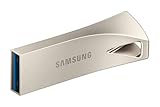
- MOVE FILES IN A FLASH: Fast and convenient read speeds up to 300 MB/s* with the latest USB 3.1 standard give you more time to work, play, watch, and create; Send a 3GB 4K UHD video file from your Bar Plus to your PC in just 10 seconds**
- RUGGED REFINEMENT: As strong as it is stylish; The sturdy metal body keeps your data safe and intact, and the integrated keyring prevents accidental misplacement or loss; The Bar Plus is the ideal combination of stunning design and worry-free durability
- TOUGH & TRUSTED: The Bar Plus a trustworthy drive to store your valuable data; It works through it all with a waterproof, shock-proof, temperature-proof, magnet-proof, and X-ray-proof body, all backed by a 5-year limited warranty***
- WORLD'S #1 FLASH MEMORY BRAND: Experience the performance and reliability from the world's #1 brand for flash memory since 2003;**** All firmware & components, including Samsung's world-renowned DRAM & NAND, are produced in-house
Troubleshoot mount and stream problems separately
The drive is missing from the expected path
-
Check
lsblkto confirm that the partition is detected and compare its UUID and filesystem type with the/etc/fstabentry.Quick wins for a faster PC:
Repair Windows errors before they cause bigger problemsFix Now →Fix the driver behind crashes, sound loss and screen glitchesFind Drivers →Special offer. See more information about Outbyte and uninstall instructions. Please review EULA and Privacy policy. -
Check the mount with
findmnt /mnt/stream-media. If the entry fails, runsudo mount -aand address its error before rebooting. -
Confirm that the mount-point directory exists and is empty before mounting. On Raspberry Pi OS desktop, a label-based automount under
/media/pimay be a different path from the fixed path the application expects.
The drive mounts but the application cannot read files
-
Check that the configured media path matches the actual mount point and that the intended account has permission to read the files.
-
Review filesystem-specific ownership and permission behavior. Do not use a permissive option such as
umask=000unless access for every user is intended.Special offer. See more information about Outbyte and uninstall instructions. Please review EULA and Privacy policy.Best Value
Sale Verbatim 32GB USB Drive Store 'n' Stay Nano USB 3.2 Gen 1 Flash Drive
- 32GB STORAGE CAPACITY: Provides convenient additional storage for documents, music, photos, and other everyday files on compatible USB-enabled devices.
- USB 3.0 CONNECTIVITY: The USB-A interface supports fast file transfers between compatible computers, notebooks, car stereos, and other devices.
- LOW-PROFILE PLUG-IN DESIGN: The compact, snag-free Nano drive is small enough to remain connected to a notebook or car stereo without getting in the way.
- BROAD SYSTEM COMPATIBILITY: Works with compatible Windows, macOS, and Linux systems for flexible file storage and sharing.
- COMPACT AND RELIABLE: The dime-sized design can be removed easily when needed for file sharing and is backed by a Verbatim Limited Lifetime Warranty.
The media is available but the live stream does not work
-
Confirm separately that playback or capture is configured, the encoder uses the correct YouTube stream URL and key, and its media input points to the mounted files if applicable.
-
Check codec, keyframe interval, audio, bitrate, preview, and stream health. A successful mount does not confirm that the encoder or network is working.
Or let it run in the cloud
If your goal is to keep uploaded videos looping on a YouTube channel, StreamNeo is a different workflow: upload a recording or build a playlist, add your YouTube stream key, and go live. StreamNeo runs the loop in the cloud, so nothing has to stay on at home. Each slot streams the upload at its original quality up to 4K 60fps for one flat price, with no re-encode or quality tiers; it also automatically recovers if YouTube drops the stream. The first day is free with no card, one free day per account. Monthly pricing is $9.99 per month.
StreamNeo plays uploaded videos and streams to YouTube; it does not replace a camera-based live setup or mount a USB drive on your Pi. Learn more at StreamNeo, or start the free first day.
What’s actually slowing this PC down?
Pick the symptom - the matching free tool is one click away.
Quick Recap
Product prices and availability are accurate as of the date/time indicated and are subject to change. Any price and availability information displayed on Amazon at the time of purchase will apply.