Steve Jobs would have turned 71 on Tuesday, February 24, 2026. He died at 56 on October 5, 2011, but the products and companies he helped shape still define how millions of people use computers, phones, music players and animated films. Remembering Jobs honestly means holding two truths together: he made technology feel personal and culturally meaningful, and his demanding, sometimes damaging conduct should not be excused by his successes.
The person before the legend
Steven Paul Jobs was born in San Francisco on February 24, 1955, and adopted by Paul and Clara Jobs. He grew up in the Silicon Valley area, where electronics and engineering were part of the surrounding culture. His own account of his early life is preserved in the Smithsonian oral history.
| # | Preview | Product | Price | |
|---|---|---|---|---|
| 1 |

|
Steve Jobs | $11.85 | Buy on Amazon |
| 2 |
|
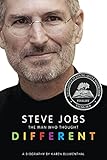
Steve Jobs: The Man Who Thought Different: A Biography | $8.79 | Buy on Amazon |
| 3 |

|
Steve Jobs | $19.95 | Buy on Amazon |
| 4 |

|
Steve Jobs Biography: The life of a visionary | $14.98 | Buy on Amazon |
| 5 |

|
Becoming Steve Jobs: The Evolution of a Reckless Upstart into a Visionary Leader | $16.41 | Buy on Amazon |
As a young man, Jobs met Steve Wozniak. Their partnership became central to Apple’s origin, but the familiar story is often simplified. Jobs and Wozniak began assembling the Apple I in 1976, with Ronald Wayne also involved in the original company formation. Wozniak was the principal engineer behind the early computer designs; Jobs’s contribution included product positioning, presentation, commercial ambition and the insistence that the technology become a finished consumer product. The garage belongs to the origin story, but Apple’s development depended on a wider network of people, suppliers and locations.
The Steve Jobs Archive repeatedly presents Jobs’s interest in joining technology with the arts. That combination—not solitary invention—offers a more accurate way to understand his career.
#1 Best Overall
Making technology legible: Apple and the Macintosh
Jobs’s influence was often editorial. He selected, combined and simplified technologies developed by many people, then presented them as a coherent experience. The Macintosh helped popularize graphical, mouse-driven personal computing for a broad consumer audience. Jobs did not invent the mouse or graphical user interface; earlier work, including research at Xerox PARC, was crucial. Apple’s achievement was to package such ideas with approachable software, typography, industrial design and an emotionally legible story.
Product demonstrations became part of that story. A launch was not merely an announcement but a carefully staged explanation of why a complicated machine should matter in ordinary life. That emphasis on clarity extended to naming, packaging, retail presentation and the removal of options that Jobs considered distracting.
Leaving Apple and learning in the wilderness
A power struggle forced Jobs out of Apple in 1985. The years that followed were not simply a failed detour. He founded NeXT, where the company’s software and hardware work later became important to Apple’s operating-system strategy. In 1986, he purchased Lucasfilm’s Computer Division and established it as an independent company called Pixar, as Pixar’s history records.
Pixar: technology serving storytelling
Jobs owned and chaired Pixar and acted as its principal business strategist, helping the company move from a technology venture toward a leading animation studio. Pixar’s creative and technical achievements belonged to a large team that included John Lasseter, Ed Catmull, animators, engineers, directors and production staff. Toy Story became Pixar’s first computer-animated feature, not a one-person creation.
Free tools Windows power users keep installed
One-click scans. No signup required.
Disney acquired Pixar in 2006. Jobs became a major Disney shareholder and a board member, extending his influence beyond personal computing into the economics and culture of mainstream animation. D23’s account of his role is available at the Walt Disney family archive.
The return to Apple
Apple acquired NeXT in 1996, bringing Jobs back to the company. He became interim chief executive before taking the permanent role and simplified a sprawling product strategy around a smaller number of products. The iMac made that refocusing visible: hardware, software, color, packaging and marketing were treated as one proposition.
Rank #3
Apple’s 2011 succession announcement describes Jobs’s return and his recommendation that Tim Cook succeed him. The revival was not a one-person rescue. It required designers, engineers, operations leaders, manufacturers, retail teams and developers, with Jobs supplying a demanding direction and an unusually consistent standard for the finished experience.
Three products that changed daily technology
The iPod: an ecosystem, not just a player
The iPod mattered because it connected a small device to iTunes, content purchasing, synchronization and industrial design. Portable digital music players and online music existed before it; Apple made the process substantially easier and more mainstream by integrating the pieces. Apple’s 2006 announcement, “Apple Introduces the New iPod,” shows how the company presented that expanding media strategy.
Quick wins for a faster PC:
Scan for outdated or missing drivers - takes under a minuteDriver Scan →Clear out junk files and repair common Windows errorsFree Scan →The iPhone: familiar technologies made coherent
Apple introduced the iPhone on January 9, 2007, describing it as a combination of a mobile phone, a widescreen iPod and an internet communications device. Its multi-touch interface and software integration changed expectations for smartphones. It was not the first smartphone, touchscreen device or mobile-internet product. Its lasting influence came from the total package: interface behavior, operating system, media, web access, hardware design, app distribution and carrier reach. The original announcement is preserved at Apple Newsroom.
Jobs’s achievement was less the invention of every component than the ability to combine emerging and familiar technologies into something coherent, desirable and easy to use.
The iPad: computing beyond the phone
The iPad extended Apple’s mobile strategy into a larger screen, blurring boundaries among computer, media device and software platform. It helped establish tablets as a major consumer-computing category, although it did not single-handedly replace the personal computer. Apple’s own 2011 materials describe that mobile-media direction in its succession announcement.
Independent reader supportYour contribution helps us test, update, and keep practical guides available for everyone.The worldview behind the products
Jobs emphasized simplicity over feature accumulation, control of the whole user experience and the intersection of technology with the liberal arts. He pushed teams to edit relentlessly and to avoid shipping products he regarded as unfinished. Those habits could produce remarkable focus, but they also concentrated decision-making and intensified pressure on colleagues.
The Tool Desk
Outbyte PC Repair FREEClear out junk files and repair common Windows errorsFree Scan →Outbyte Driver Updater FREEFix the driver behind crashes, sound loss and screen glitchesFind Drivers →What the Stanford speech actually says
On June 12, 2005, Jobs delivered Stanford’s commencement address. He had not graduated from college, and he organized the speech around three stories: connecting the dots, love and loss, and death. The speech drew on adoption, his decision to leave Reed College, Apple, NeXT, Pixar, illness and mortality. “Stay hungry. Stay foolish.” is its closing line, not a substitute for the argument about uncertainty, grief and the limited nature of time. Read the official Stanford transcript alongside the Steve Jobs Archive.
Illness, resignation and death
Jobs resigned as Apple CEO on August 24, 2011, recommending Tim Cook as his successor. Apple announced his death on October 5, 2011; he was 56. The company’s original documents are his resignation letter and the board’s statement. A respectful account should avoid speculation about medical details and should not turn his illness or treatment decisions into a lesson for other patients.
The cost of the lone-genius myth
Biographical accounts describe Jobs as intensely perfectionist, confrontational and capable of humiliating or alienating colleagues. High standards can coexist with harmful conduct; success does not make mistreatment acceptable. The authorized biography by Walter Isaacson, whose publisher description notes interviews with Jobs and more than 100 others, presents both his creative achievements and damaging interpersonal traits (Apple Books).
Alex Gibney’s documentary Steve Jobs: The Man in the Machine offers another critical perspective on the gap between public icon and private behavior. Neither a celebratory tribute nor a hostile takedown is complete on its own. The Macintosh, Pixar films, iPod, iPhone and iPad depended on vast collaborations among engineers, designers, artists, executives, suppliers, developers and customers. Naming those contributors does not diminish Jobs; it describes leadership accurately.
What remains at 71
Jobs’s durable legacy is a method as much as a product list: combine technology, design, storytelling and distribution; remove unnecessary complexity; and make the result understandable to people who did not build it. That method helped reshape personal computing, digital music, mobile phones, tablets and computer animation.
It also carries a warning. Taste, vision and execution can be powerful without turning a leader into a saint. On what would have been Jobs’s 71st birthday, the fairest remembrance is therefore neither “genius” worship nor total debunking. It is recognition of transformative work, credit to the teams who made it possible, and an honest account of the human costs attached to the legend.
Quick Recap
Product prices and availability are accurate as of the date/time indicated and are subject to change. Any price and availability information displayed on Amazon at the time of purchase will apply.