Some links on this page are affiliate links: if you buy through them we may earn a commission, at no extra cost to you.
Spotify Lossless is available to eligible Premium subscribers, and it works with existing playlists: there is no separate lossless playlist to find or build. Spotify streams supported music in FLAC at up to 24-bit/44.1 kHz, but the actual playback quality depends on the track, account, app, network, and listening device. A Bluetooth connection compresses the audio, so the setting alone does not guarantee a lossless signal reaches your headphones.
What Spotify Lossless changes—and what it does not
Spotify began rolling out Lossless to Premium subscribers on September 10, 2025, and said it had reached more than 50 markets by October 6, 2025. The United States was among the initial markets. Spotify describes the format as FLAC, up to 24-bit/44.1 kHz, and includes it with eligible Premium access rather than identifying a separate lossless-only tier. Availability can still vary by account market, plan eligibility, app, track, and playback device. Spotify’s launch announcement and its Premium benefits page have the current details.
Lossless compression reduces file size while preserving the audio data in the encoded source. It affects fidelity, not volume: Spotify says loudness normalization can still apply regardless of format. And a lossless stream cannot improve the quality of the original recording or master. Spotify’s lossless documentation explains these playback conditions.
What’s actually slowing this PC down?
Pick the symptom - the matching free tool is one click away.
Does Lossless work with existing playlists?
Yes. Existing playlists can play losslessly when they contain an eligible track and the account and playback path support the feature. You do not need to rebuild a playlist or look for a special “lossless edition.” Spotify selects the best available format for the circumstances; listeners without eligible access or supported hardware receive a compressed version. Because a selected setting is not proof of the final format, check for the Lossless indicator while music is playing.
#1 Best Overall
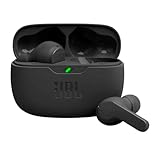
- JBL Deep Bass Sound: Get the most from your mixes with high-quality audio from secure, reliable earbuds with 8mm drivers featuring JBL Deep Bass Sound
- Comfortable fit: The ergonomic, stick-closed design of the JBL Vibe Beam fits so comfortably you may forget you're wearing them. The closed design excludes external sounds, enhancing the bass performance
- Up to 32 (8h + 24h) hours of battery life and speed charging: With 8 hours of battery life in the earbuds and 24 in the case, the JBL Vibe Beam provide all-day audio. When you need more power, you can speed charge an extra two hours in just 10 minutes.
- Hands-free calls with VoiceAware: When you're making hands-free stereo calls on the go, VoiceAware lets you balance how much of your own voice you hear while talking with others
- Water and dust resistant: From the beach to the bike trail, the IP54-certified earbuds and IPX2 charging case are water and dust resistant for all-day experiences
Spotify says Lossless covers most of its music catalog, not every track. It does not apply to music videos, podcasts, or audiobooks. Spotify’s format guidance and audio-quality support page describe these limits.
How to turn on Lossless
On a phone or tablet
- Open Spotify and tap your profile icon in the top-left corner.
- Open Settings & Privacy, then find Audio Quality on iOS or Media Quality on Android. Labels can vary with the platform and app version.
- Choose Lossless separately for Wi-Fi, cellular streaming, and downloads. Set only the options that suit your data plan and available storage.
Spotify says the option is available across mobile, desktop, and tablet apps. On desktop, open Spotify’s settings and look for the audio- or media-quality controls; the exact menu path can differ by operating system and app version. The setting is per device, so check it on each device you use. Spotify’s launch instructions and Premium support provide platform information.
Rank #2
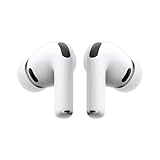
- WORLD’S BEST IN-EAR ACTIVE NOISE CANCELLATION — Removes up to 2x more unwanted noise than AirPods Pro 2* so you can stay fully immersed in the moment.*
- BREAKTHROUGH AUDIO PERFORMANCE — Experience breathtaking, three-dimensional audio with AirPods Pro 3. A new acoustic architecture delivers transformed bass, detailed clarity so you can hear every instrument, and stunningly vivid vocals.
- HEART RATE SENSING — Built-in heart rate sensing lets you track your heart rate and calories burned for up to 50 different workout types.* With iPhone, you will have access to the Move ring, step count, and the new Workout Buddy,* powered by Apple Intelligence.*
- LIVE TRANSLATION — Communicate across language barriers using Live Translation,* enabled by Apple Intelligence.*
- EXTENDED BATTERY LIFE — Get up to 8 hours of listening time with Active Noise Cancellation on a single charge. Or up to 10 hours in Transparency using the Hearing Aid feature.*
When using Spotify Connect
- Start playback and open the device picker.
- Select the receiving device, then open its audio- or file-quality control if available.
- Choose Lossless where the device supports it, and look for the Lossless label during playback.
Connect compatibility does not automatically mean that a particular device supports Lossless. Spotify says lossless may need to be enabled in the connected device’s settings. Check the exact model and confirm the indicator in the app. See Spotify Connect Lossless and Spotify’s audio-quality support page.
The Tool Desk
Outbyte Driver Updater FREEFix the driver behind crashes, sound loss and screen glitchesFind Drivers →Outbyte PC Repair FREERepair Windows errors before they cause bigger problemsFix Now →How to tell whether playback is actually lossless
Look for the Lossless label in Now Playing or in the Spotify Connect device picker. That is more useful than relying on the quality setting alone: Spotify can choose a lower available format if the track, device, connection, or network conditions do not support lossless playback. The indicator is Spotify’s practical confirmation, not a guarantee that every part of a wireless signal chain preserves the data.
Rank #3
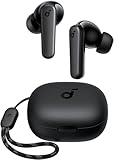
- Powerful Bass: soundcore P20i true wireless earbuds have oversized 10mm drivers that deliver powerful sound with boosted bass so you can lose yourself in your favorite songs.
- Personalized Listening Experience: Use the soundcore app to customize the controls and choose from 22 EQ presets. With "Find My Earbuds", a lost earbud can emit noise to help you locate it.
- Long Playtime, Fast Charging: Get 10 hours of battery life on a single charge with a case that extends it to 30 hours. If P20i true wireless earbuds are low on power, a quick 10-minute charge will give you 2 hours of playtime.
- Portable On-the-Go Design: soundcore P20i true wireless earbuds and the charging case are compact and lightweight with a lanyard attached. It's small enough to slip in your pocket, or clip on your bag or keys–so you never worry about space.
- AI-Enhanced Clear Calls: 2 built-in mics and an AI algorithm work together to pick up your voice so that you never have to shout over the phone.
- If the label is missing, check that you are playing music rather than a podcast, audiobook, or music video.
- Confirm that the account is on an eligible Premium plan and that Lossless is enabled on the device you are using.
- Check whether the exact track and receiving device support Lossless.
- If you are using Bluetooth, the final transmission is compressed even if Spotify’s app is set to Lossless.
- If playback is unstable, check the network and allow the app time to cache or adapt.
Spotify says it supports Lossless on many Spotify Connect-compatible devices, including products from brands such as Sony, Bose, Samsung, and Sennheiser, with additional support announced for Sonos and Amazon products. This is not a guarantee for every model from those brands; confirm the specific device. Spotify’s announcement describes the rollout and device support.
What equipment gives you a lossless playback path?
Think about the whole route: Spotify app → network → playback device → headphones or speakers. Every link matters. Spotify recommends a stable Wi-Fi connection and wired headphones or speakers, or a compatible non-Bluetooth route such as Spotify Connect. You do not need expensive equipment just to enable the setting; compatibility is more important than price.
Rank #4

- REBUILT FOR COMFORT — AirPods 4 have been redesigned for exceptional all-day comfort and greater stability. With a refined contour, shorter stem, and quick-press controls for music or calls.
- ACTIVE NOISE CANCELLATION — AirPods 4 with Active Noise Cancellation help reduce outside noise before it reaches your ears, so you can immerse yourself in what you’re listening to.*
- HEAR THE WORLD AROUND YOU — The powerful H2 chip comes to AirPods 4. Adaptive Audio seamlessly blends ANC and Transparency mode — which lets you comfortably hear and interact with the world around you exactly as it sounds — to provide the best listening experience in any environment.* And when you’re speaking with someone nearby, Conversation Awareness automatically lowers the volume of what’s playing.*
- IMPROVED SOUND AND CALL QUALITY — Voice Isolation improves the quality of calls in loud conditions. Using advanced computational audio, it reduces background noise while isolating and clarifying the sound of your voice for whomever you’re speaking to.*
- MAGICAL EXPERIENCE — Just say “Siri” or “Hey Siri” to play a song, make a call, or check your schedule.* And with Siri Interactions, now you can respond to Siri by simply nodding your head yes or shaking your head no.* Pair AirPods 4 by simply placing them near your device and tapping Connect on your screen.* Easily share a song or show between two sets of AirPods.* An optical in-ear sensor knows to play audio only when you’re wearing AirPods and pauses when you take them off. And you can track down your AirPods and Charging Case with the Find My app.*
- Wired headphones or speakers: These avoid Bluetooth compression, provided the playback device and any adapter or DAC in the chain can handle the stream.
- Bluetooth headphones: They can still sound good, but Spotify says Bluetooth does not provide enough bandwidth to transmit its lossless stream without compression. A headphone’s “high-quality” Bluetooth branding does not make this particular Spotify connection lossless.
- Spotify Connect: A compatible networked receiver, speaker, or other supported device can provide a non-Bluetooth route. Verify lossless support for the exact model; ordinary Connect support alone is not enough.
A DAC can convert digital audio for wired listening, but it cannot restore data lost through a compressed source or Bluetooth link. Spotify’s launch announcement explains the Bluetooth limitation and recommended setup.
Recommended Free Tools
Data use, downloads, and connection stability
Lossless files are larger than compressed streams. That can mean more cellular data, more storage for offline music, and sometimes longer loading or caching. Spotify support recommends roughly 1.5–2 Mbps of stable bandwidth for the best lossless listening experience; actual use can vary with the track and conditions. Spotify’s audio-quality support provides the bandwidth guidance.
Best Value

- LED Power Display and 50H Playback: Dual digital LED power display outside of the case is to show the power level for charging case and earbuds. When charging for the case, the LED light will start to flash from 1 to 100. When you put wireless Bluetooth earbuds into the case, then the Bluetooth earbuds will start charging. The 470mAh battery capacity charging case can provide extra 4 times full charging for both earbuds; each earbud can last 6H on a single charge. So, you can enjoy 50H music time in total by using them in turn
- 2026 Upgraded Bluetooth 5.4 and Ultra-Low Latency: S58 Pro wireless earbuds with mics feature the next-generation Bluetooth 5.4 chip. Compared to version 5.3, it offers 30% lower power consumption and 35% stronger signal penetration. Equipped with a high-sensitivity antenna and a Hall switch, wireless Bluetooth headphones auto-pair as soon as you open the charging case, with a stable connection within 15 meters. Whether you're gaming or binge-watching, enjoy smooth, flawlessly synced audio
- Hi-Fi Stereo and 4 ENC Mics: The wireless earbuds feature triple-layer 13mm coil dynamic drivers and a polymer diaphragm, resulting in sufficiently strong bass that naturally connects to the mid and high frequencies, supporting AAC/SBC audio coding technology and Qualcomm aptX Adaptive Audio technology. Noise Cancelling Earbuds adopt a 4-mic design and ENC noise cancelling technology that picks up your voice precisely and blocks out 80% background noise, providing a crystal clear call experience
- Smart Touch Control and Wide Compatibility: These wireless Bluetooth earbuds feature a high-precision touch sensor, offering greater accuracy than similar products. A simple tap allows you to control playback/pause, volume, song switching, calls, and voice assistants, minimizing accidental touches. The in-ear running headphones are compatible with most Bluetooth devices, including smartphones, tablets and laptops, and connect effortlessly with Android 4.4, iOS 8.0 and above, or Bluetooth 4.0 and above
- Ergonomic and IPX7 Waterproof: Thanks to an ultra-light nano coating, these wireless Bluetooth earbuds are IPX7 waterproof and dustproof—perfect for workouts or outdoor adventures. The ergonomic in-ear design provides a secure, comfortable fit while keeping outside noise out, letting you immerse yourself fully in your music
- Choose Lossless for Wi-Fi if your home connection is stable.
- For a limited cellular plan, leave mobile streaming at a lower quality while keeping Wi-Fi at Lossless.
- Use Lossless downloads selectively and check free storage before saving large playlists.
- If playback drops out, try a more stable connection or a lower streaming quality rather than assuming the hardware is faulty.
How Spotify compares with other lossless services
Spotify’s stated ceiling is up to 24-bit/44.1 kHz FLAC. Apple Music advertises lossless options up to 24-bit/192 kHz; Amazon Music Unlimited, TIDAL, and Qobuz also advertise catalogs or tiers reaching higher sample rates. Those maximum specifications do not establish that a listener will hear a difference: the recording, playback chain, and listening conditions matter. Bluetooth remains a limiting link for lossless playback, including on Apple devices. Compare the service fit as well as the format.
| Service | What its official information says | May suit listeners who |
|---|---|---|
| Spotify | Up to 24-bit/44.1 kHz FLAC with eligible Premium access. Spotify | Want Lossless alongside their existing playlists, recommendations, and Spotify device control. |
| Apple Music | Advertises lossless audio from 16-bit/44.1 kHz up to 24-bit/192 kHz, as well as Spatial Audio. Apple Music · Apple Support | Want Apple’s catalog and Spatial Audio, or a higher advertised maximum resolution. |
| Amazon Music Unlimited | Its FAQ describes HD and Ultra HD music, including tracks at higher resolutions than Spotify’s stated ceiling. Amazon Music FAQ | Prefer Amazon’s service and catalog or are comparing Ultra HD options. |
| TIDAL | Advertises Lossless and HiRes FLAC. U.S. pricing changed for billing dates on or after August 3, 2026; check its current page for the applicable price. TIDAL sound quality · TIDAL price update | Want a service centered on high-fidelity playback and HiRes FLAC. |
| Qobuz | Offers hi-res streaming and permanent album and track purchases. Qobuz | Want streaming alongside music purchases they can keep. |
Format ceilings do not tell the whole story. Catalog availability, mastering, loudness normalization, discovery features, and device support can all affect the experience. The official format specifications establish technical capabilities, not that one service will sound better to every listener. Spotify’s U.S. Premium page has current signup and offer details; introductory promotions can change.
Is Spotify Lossless worth using?
It is most relevant if you already have wired headphones, suitable speakers, or a verified lossless-capable Spotify Connect setup and want to preserve the source signal. If you mainly listen over Bluetooth, in noisy places, or through basic built-in speakers, changing the setting may bring little practical value. Do not buy new headphones or a DAC solely because Lossless has appeared in the app unless you also plan to use a wired or compatible networked connection.
Spotify is a sensible choice if its playlists, recommendations, and cross-device control matter most and its 24-bit/44.1 kHz ceiling suits you. Consider Apple Music, Amazon Music Unlimited, or TIDAL if higher advertised resolution or other ecosystem features matter more; consider Qobuz if buying downloadable albums and tracks to keep is important. No format specification guarantees an audible improvement for every listener or recording.
Quick Recap
Product prices and availability are accurate as of the date/time indicated and are subject to change. Any price and availability information displayed on Amazon at the time of purchase will apply.

