Quick wins for a faster PC:
Clear out junk files and repair common Windows errorsFree Scan →Scan for outdated or missing drivers - takes under a minuteDriver Scan →Some links on this page are affiliate links: if you buy through them we may earn a commission, at no extra cost to you.
Yes—Spotify is taking more steps against AI-related abuse, but it is not banning AI-made music. Its measures target spam uploads, royalty manipulation, unauthorized voice impersonation and deceptive artist identities. New AI credits and planned “AI Persona” labels add transparency, but neither gives listeners a complete way to identify every AI-made track.
What Spotify means by “AI slop”
“AI slop” is a shorthand, not a formal Spotify category. It generally refers to large volumes of low-effort, often AI-assisted uploads intended to exploit search, recommendations or royalties. The underlying problems are broader than how a recording was made: they include duplicate tracks, mass uploads, misleading artist identities, artificial streaming and unauthorized voice clones.
Spotify says AI can help artists at many points in making music, from a production task to generated vocals or instrumentation. Its stated approach is to allow creative AI use while addressing deception, spam and abuse. The company’s September 2025 announcement set out several parts of that approach.
Do these 3 things before closing this tab:
1Clear out junk files and repair common Windows errors2Scan for outdated or missing drivers - takes under a minute3Repair Windows errors before they cause bigger problemsWhat has changed—and when
- September 25, 2025: Spotify announced a music-spam filter, protections against unauthorized AI vocal impersonation and plans for AI-use credits.
- April 16, 2026: AI credits began appearing in mobile Song Credits when the information is supplied through participating labels, distributors or other music partners.
- April 30, 2026: Spotify announced “Verified by Spotify,” an artist authenticity signal. It should not be read as a guarantee that an artist’s recordings contain no AI.
- Mid-September 2026, planned: Spotify is scheduled to begin rolling out AI Persona labels for profiles that appear to represent photorealistic AI-generated identities. As of August 18, 2026, that rollout is still in the future and may not be available to every listener at once.
Spotify’s Verified by Spotify announcement describes an identity and authenticity signal, not a production-method certification.
#1 Best Overall

- Block the World, Keep the Music: Four built-in mics work together to filter out background noise — whether you're in a packed office, on a crowded commute, or moving through a busy street — so every beat comes through clean and clear. (Not available in AUX-in mode.)
- Two Ways to Hear More: BassUp technology delivers deep, punchy bass and crisp highs in wireless mode — then step it up further by plugging in the included AUX cable to unlock Hi‑Res certified audio for studio-level clarity.
- 40-Hour Long Battery Life and Fast Charging: With 40 hours of battery life with ANC on and 60 hours in normal mode, you can commute in peace with your Bluetooth headphones without thinking about recharging. Fast charge for 5 mins to get an extra 4 hours of music listening for daily users.
- Two Devices, Zero Hassle: Stay connected to your laptop and phone at the same time. Audio switches automatically to whichever device needs you — so a call never interrupts your flow, and getting back to your playlist is just as easy. Designed for commuters and remote workers who move smoothly between work and personal listening throughout the day.
- Your Sound, Your Rules: The soundcore app puts everything at your fingertips — dials your ideal EQ with presets or build your own, flip between ANC, Normal, and Transparency modes on the fly, or wind down with built-in white noise. One app, total control.
AI Persona labels identify profiles, not necessarily songs
Spotify’s planned labels are meant to tell listeners when an artist identity appears synthetic. A voluntarily disclosed profile may receive an “AI Persona” label. Spotify may also review profiles that seem to depict photorealistic AI-generated identities; a profile it believes may be synthetic could receive a “Likely AI Persona” label. Reported details say the artist would be notified and could disclose the identity or appeal.
The labels are expected to appear in places such as an artist-profile banner and About section, in search results, and alongside songs in playlists. Reporting also says labeled artists are intended to be excluded from personalized recommendations by default. The precise review criteria and how consistently this treatment will work across users and surfaces have not been publicly detailed, so the planned behavior should not be mistaken for a universal control already available today.
Most importantly, this is an identity signal. It does not establish that every track by the artist was made with AI—or that an unlabeled artist’s recordings were made without AI. A real human artist could use AI extensively in recordings; a disclosed fictional persona could release licensed music.
Free tools Windows power users keep installed
One-click scans. No signup required.
AI credits help, but depend on disclosure
Spotify’s AI credits can describe use in areas such as vocals, lyrics, production, instrumentation, composition or post-production. They appear in Song Credits on mobile when submitted through a participating music partner. That can give listeners useful context, but the feature is not a comprehensive AI detector: support varies, and disclosure depends on artists, labels or distributors passing the information along.
Therefore, a missing AI credit does not prove that a track was made without AI. A credit indicating some AI use also does not, by itself, mean the entire song was generated by AI. The information may describe a limited contribution.
Rank #2
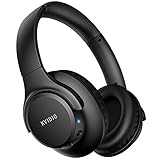
- Stereo sound headphones: KVIDIO bluetooth headphones with dual 40mm drivers, offers an almost concert hall-like feel to your favorite music as close as you're watching it live. Provide low latency high-quality reproduction of sound for listeners, audiophiles, and home audio enthusiasts
- Unmatched comfortable headphones: Over ear earmuff made by softest memory-protein foam gives you all day comfort. Adjustable headband and flexible earmuffs can easily fit any head shape without putting pressure on the ear. Foldable and ONLY 0.44lbs Lightweight design makes it the best choice for Travel, Workout and Every day use by College Students
- Wide compatibility: Simply press multi-function button 2s and the over ear headphones with mic will be in ready to pair. KVIDIO wireless headsets are compatible with all devices that support Bluetooth or 3.5 mm plug cables. With the built-in microphone, you can easily make hands-free calls or facetime meetings while working at home
- Seamless wireless connection: Bluetooth version V6.0 ensures an ultra fast and virtually unbreakable connection up to 33 feet (10 meters). Rechargeable 500mAh battery can be quick charged within 2.5 hours. After 65 hours of playtime, you can switch KVIDIO Cordless Headset from wireless to wired mode and enjoy your music NON-STOP. No worry for power shortage problem during long trip
- Package: Package include a Foldable Deep Bass Headphone, 3.5mm backup audio cable, USB charging cable and User Manual.
The spam filter is aimed at behavior
Spotify’s music-spam filter is intended to identify tracks and uploaders associated with tactics such as mass uploads, duplicates or near-duplicates, search-engine-optimization manipulation, artificially short tracks and other attempts to game discovery or royalties. Spotify says it will use the filter to stop recommending identified content, roll it out conservatively to limit false positives, and update detection as abuse changes.
That distinction matters: the filter is aimed at suspicious distribution and platform manipulation, not simply at whether AI appears in a recording. A high-volume uploader is not automatically a bad actor. Ambient producers, sound designers and legitimate catalog owners may also release many tracks, so enforcement has to distinguish volume from abusive patterns.
What’s actually slowing this PC down?
Pick the symptom - the matching free tool is one click away.
Spotify said it removed more than 75 million spam tracks during the previous 12 months in its 2025 announcement. That is Spotify’s figure for spam tracks—not a claim that it removed 75 million fully AI-generated songs.
Why royalties are part of the issue
Spotify’s recorded-music royalties use a streamshare model: a track’s share of eligible streams helps determine how the royalty pool is allocated, rather than each play earning a fixed public per-stream rate. Rights holders then pay artists under their agreements. Artificial streaming and catalog flooding can therefore affect the pool even when the individual tracks attract little genuine interest.
Rank #3
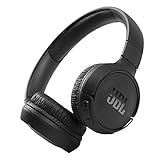
- The Tune 510BT wireless headphones feature renowned JBL Pure Bass sound, which can be found in the most famous venues all around the world.
- With Wireless Bluetooth 5.0 Streaming, you can stream wirelessly from your device and even switch between two devices so that you don't miss a call.
- For long-lasting fun, listen wirelessly for up to 40 hours and recharge the battery in as little as 2 hours with the convenient Type-C USB cable. A quick 5-minute recharge gives you 2 additional hours of music.
- Easily control your sound and manage your calls from your headphones with the convenient buttons on the ear-cup.
- Siri or Hey Google is just a button away: activate the voice assistant of your device by pushing the multi-function button.
Since April 2024, a track has needed at least 1,000 streams in the previous 12 months to qualify for Spotify’s recorded-music royalty-pool calculation. Spotify says the threshold redirects very small payments toward tracks with more meaningful activity. It does not apply to publishing royalties. Earlier reforms also set a two-minute minimum for functional-noise recordings to be royalty-eligible and introduced consequences for flagrant artificial streaming. These measures predate the current AI labels and are not AI bans, but they address incentives that can make cheap, mass-produced catalogs attractive to abusers.
Spotify projected that its royalty reforms could direct about $1 billion toward emerging and professional artists over five years. That was the company’s estimate, not a verified report of money already delivered. Details are available in Spotify’s royalties guide and its pages on royalty-system changes and artificial streaming.
Voice cloning is a separate question
Spotify says AI vocal impersonation is allowed only when the impersonated artist has authorized it. The policy gives artists a route to report unauthorized clones and releases that mislead listeners into thinking a famous artist approved or released a track. It does not prohibit synthetic vocals as such: an artist may license a voice or participate in an authorized AI project.
Independent reader supportYour contribution helps us test, update, and keep practical guides available for everyone.Why fight some AI while developing other AI products?
Spotify’s position is better described as anti-abuse but open to authorized AI than as anti-AI. It says it wants to curb impersonation, spam and royalty manipulation while supporting responsible creative uses, giving listeners more information and working with rights holders on licensed products.
Rank #4

- EASY TO ENJOY MUSIC: With Tayogo T6, you can stream music from your smartphone directly to your W25 waterproof headphones while swimming. No more cumbersome downloads or conversions; just connect and enjoy seamless music playback.
- Pairs perfectly with waterproof headphones: Tayogo T6 is designed specifically for the W25 to ensure optimal performance in the pool. Whether you're training or swimming at the beach, this transmitter ensures clear audio transmission so you can immerse yourself in your favourite music.
- WATERPROOF DESIGN: Fully waterproof bone conduction headphones with IPX8 rating for swimming. DUAL Mode: Bluetooth & Receiving, for normal use the bluetooth and for swimming, Switch to Receiving Mode to get signal transmitted from your mobile phone.
- LONG TIME PLAY: the Transmitter can plays up to 8 hours and the receving Headphones can play up to 15 hours for Bluetooth and 8 Hours for Receiving Mode.
- EASY OPERATION: Digital display screen with touch-sensitive buttons for easy Channel selection and volume adjustment. Up to 16 Channels avaible, always get your private channels in the pool.
In May 2026, Spotify and Universal Music Group announced licensing agreements involving fan-made covers and remixes, with a model intended to let artists and songwriters share in value from licensed AI-driven creations. That is a different proposition from an unlicensed voice clone or a flood of deceptive uploads: rights holders participate in the licensing framework rather than having their work or identities used without permission. See the Spotify–UMG announcement.
How large is the AI-music problem?
A June 2026 preprint study examined AI music on Spotify and reported that 93% of the AI music it identified received few or no listener plays. The researchers described a high-volume “spray and pray” strategy and examined distribution through 11 independent distributors. They also found inconsistent distributor policies and said existing AI-music detection methods lacked accuracy or robustness.
Windows Errors? Fix Them Before They Spread
Repair common Windows errors and clear accumulated junk for a smoother, more stable PC - no reinstall needed.Free scan · no reinstallOutdated Drivers Are Slowing You Down
One free scan finds every outdated or missing driver and matches the right update for your exact hardware.Free scan · exact hardware matchThe study is a preprint, not settled industry consensus. Its findings support a measured conclusion: large quantities of AI music may be uploaded without becoming popular, but low generation and distribution costs can still make spam and manipulation scalable. Reliable automated classification remains a challenge; neither a label nor a detector should be treated as infallible. The paper is available at arXiv.
What listeners can do now
- Check mobile Song Credits for AI-use information where it is available, but do not infer “no AI” when a credit is absent.
- Read an AI Persona or Likely AI Persona label as information about the profile’s identity, not a verdict on every recording.
- Be cautious with unfamiliar profiles that publish unusually large numbers of tracks, while remembering that volume alone does not prove abuse.
- Report suspected impersonation or deceptive releases through Spotify’s reporting channels.
- Use direct artist pages, established catalogs and manually curated playlists if you want more control over what you encounter. Spam filtering may reduce recommendations without removing every track from search or direct access.
Spotify does not currently offer a guaranteed, universal “AI-free” listening mode. Its measures may reduce exposure to some abuse, but they do not let a listener reliably exclude every AI-assisted or AI-generated recording.
How Spotify compares with other services
Other platforms have taken different approaches, but they are not interchangeable and their policies can change. Secondary coverage describes Deezer as offering more explicit track-level AI labeling; it may suit listeners whose priority is identifying AI tracks rather than keeping Spotify’s playlists and integrations. Reporting says TIDAL has announced that it will withhold royalties from tracks it identifies as 100% AI-generated. Bandcamp is reported to prohibit music wholly or substantially generated by AI, but it is a direct-to-fan marketplace rather than a Spotify-style streaming service. Check each service’s current terms and implementation before choosing on that basis; none of these distinctions alone proves that a catalog is free of AI music.
The verdict
Spotify is moving beyond a largely hands-off approach with measures aimed at spam, unauthorized impersonation, royalty abuse and opaque artist identities. But it is not banning AI-made music, and its most visible new labels concern artist profiles rather than track-by-track authorship. AI credits are useful when supplied; absent credits are inconclusive. Spotify’s response is meaningful for platform integrity, but it does not yet give listeners a complete way to know—or avoid—every song made with AI.
Quick Recap
Product prices and availability are accurate as of the date/time indicated and are subject to change. Any price and availability information displayed on Amazon at the time of purchase will apply.

