Some links on this page are affiliate links: if you buy through them we may earn a commission, at no extra cost to you.
On Windows 10 and 11, open File Explorer with Windows + E, choose Music in the left navigation pane, then copy or move your audio files into that folder. “My Music” is older Windows terminology; the current folder is generally labeled Music. Its usual location is C:Users<your-user-name>Music, though it may have been moved. Microsoft’s File Explorer guide describes the standard Music folder and its navigation.
Putting a file there stores it on your computer; it does not guarantee that every music app will add it to its library. If you use a player, you may also need to import the folder or rescan the library.
Copy or move existing music into the Music folder
- Press Windows + E to open File Explorer.
- Go to the folder that contains the songs. Common locations include Downloads, the Desktop, a USB drive, or a folder you selected in a download prompt.
- Select the audio files. To select several adjacent files, click the first, hold Shift, and click the last; to select separate files, hold Ctrl while clicking.
- Choose Copy if you want to keep the originals, or Cut if you want to move them and leave only one copy.
- Select Music in File Explorer’s left pane. Open a subfolder or create one, then right-click an empty area and choose Paste.
- Wait for the transfer to finish, especially if the files are coming from a USB drive or network location. Open a song from the destination folder to confirm it plays.
Copying is the safer choice if you are unsure whether another app or playlist depends on the current file location. Moving saves space, but playlists or libraries that point to the old path may lose track of the songs. If you already manage a collection in Apple Music, a DJ app, or another player, copy first or use that app’s own import and move tools.
Crashes, No Sound, or Screen Glitches?
Random freezes, missing sound and display glitches usually trace back to one bad driver. Find and replace yours safely.Free scan · under a minutePC Slower Than It Used to Be?
A free scan shows the junk files, broken settings and background clutter dragging Windows down - then fixes them in one click.Free scan · Windows 10 & 11A simple optional layout is MusicArtistAlbum, with track numbers in filenames if useful. Folders make browsing easier, but many apps rely on embedded tags—such as artist, album, title, and track number—to organize the library. Renaming or reorganizing tracks after creating playlists can break links to their old locations.
#1 Best Overall

- What You Get - 2 pack 64GB genuine USB 2.0 flash drives, 12-month warranty and lifetime friendly customer service
- Great for All Ages and Purposes – the thumb drives are suitable for storing digital data for school, business or daily usage. Apply to data storage of music, photos, movies and other files
- Easy to Use - Plug and play USB memory stick, no need to install any software. Support Windows 7 / 8 / 10 / Vista / XP / Unix / 2000 / ME / NT Linux and Mac OS, compatible with USB 2.0 and 1.1 ports
- Convenient Design - 360°metal swivel cap with matt surface and ring designed zip drive can protect USB connector, avoid to leave your fingerprint and easily attach to your key chain to avoid from losing and for easy carrying
- Brand Yourself - Brand the flash drive with your company's name and provide company's overview, policies, etc. to the newly joined employees or your customers
Save a future download there
If a legitimate site offers an ordinary audio file and a Save as option, choose Music as the destination and select or create a subfolder. Check that the download completes and has an audio extension such as .mp3, .m4a, .flac, .wav, or .wma. Browsers often save automatically to Downloads; that does not mean the Music folder is missing—you can copy the completed file afterward.
Subscription streaming downloads are different. They are generally managed by the service’s app and are not ordinary audio files you can move freely into Music. For example, Apple Music’s Windows guide explains adding catalog music to its library and downloading it for offline playback. Those app-managed downloads should not be treated as unrestricted MP3s. Apple also documents importing personal music files into Apple Music for Windows here.
Rank #2

- High-speed USB 3.0 performance of up to 150MB/s(1) [(1) Write to drive up to 15x faster than standard USB 2.0 drives (4MB/s); varies by drive capacity. Up to 150MB/s read speed. USB 3.0 port required. Based on internal testing; performance may be lower depending on host device, usage conditions, and other factors; 1MB=1,000,000 bytes]
- Transfer a full-length movie in less than 30 seconds(2) [(2) Based on 1.2GB MPEG-4 video transfer with USB 3.0 host device. Results may vary based on host device, file attributes and other factors]
- Transfer to drive up to 15 times faster than standard USB 2.0 drives(1)
- Sleek, durable metal casing
- Easy-to-use password protection for your private files(3) [(3)Password protection uses 128-bit AES encryption and is supported by Windows 7, Windows 8, Windows 10, and Mac OS X v10.9 plus; Software download required for Mac, visit the SanDisk SecureAccess support page]
Rip an audio CD into Music
Windows Media Player can create audio files from a CD, and Microsoft says its default destination is the Music folder. The precise interface depends on the Windows Media Player version installed.
Do these 3 things before closing this tab:
1Fix the driver behind crashes, sound loss and screen glitches2Clear out junk files and repair common Windows errors3Scan for outdated or missing drivers - takes under a minute- Open Windows Media Player and insert an audio CD.
- Select Rip CD. Use Rip settings to choose a format and audio quality if you want to change the defaults.
- Start the rip, then check the resulting files in Music.
Microsoft lists WMA, WAV, and MP3 among the available ripping formats, with format and quality choices in Rip settings. Album and track details may be retrieved over the internet, but information is not guaranteed to be complete or correct. Ripping creates local files; it is not a way to copy a streaming subscription. Only reproduce music you have the right to copy; Microsoft warns that unauthorized duplication of copyrighted music may violate copyright law. See its CD ripping guide for details.
Rank #3
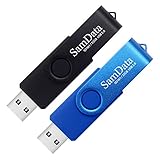
- [Package Offer]: 2 Pack USB 2.0 Flash Drive 32GB Available in 2 different colors - Black and Blue. The different colors can help you to store different content.
- [Plug and Play]: No need to install any software, Just plug in and use it. The metal clip rotates 360° round the ABS plastic body which. The capless design can avoid lossing of cap, and providing efficient protection to the USB port.
- [Compatibilty and Interface]: Supports Windows 7 / 8 / 10 / Vista / XP / 2000 / ME / NT Linux and Mac OS. Compatible with USB 2.0 and below. High speed USB 2.0, LED Indicator - Transfer status at a glance.
- [Suitable for All Uses and Data]: Suitable for storing digital data for school, business or daily usage. Apply to data storage of music, photos, movies, software, and other files.
- [Warranty Policy]: 12-month warranty, our products are of good quality and we promise that any problem about the product within one year since you buy, it will be guaranteed for free.
If your music is in Music but missing from the player
First verify in File Explorer that the file is actually in the folder and that it opens when you double-click it. Then try these checks:
- Confirm the file has a recognizable audio extension and is not a shortcut or an online-only placeholder.
- Restart the player. Look for an option such as Add folder, Monitor folders, Import, or Rescan library; the label and location vary by app.
- Make sure the song is not on a disconnected external drive or unavailable network location.
- If you moved it after adding it to the library, use the player’s locate or relink option if available, or remove the broken entry and add the song again.
A folder and a player library are separate things: an app may index only selected locations, or maintain its own database. Microsoft’s older media-center troubleshooting guidance notes that missing music folders and unavailable network locations can prevent music from appearing.
Rank #4

- 【16GB Flash Drive】USB flash drives with 16GB capacity, meet your needs of daily use on work, school, home and travelling for photos, music, videos, files storage and transfer. IMEASON thumb drives can be used to store different files, easy to data backup.
- 【Metal Swivel Cap Design】USB thumb drive is metal swivel cover provides extra protection for the usb thumbdrive connector, no usb drive cap to lose; keychain design makes it easier to carry without worrying lose it.
- 【Wide Compatibility】USB drive supports Windows 7/8/10/11 / Vista / XP / Unix / 2000 / ME / NT Linux and Mac OS, also Supports USB 2.0 and 1.1 ports. USB Stick support TV, desktop, notebook computer, car, audio and other device. The USB Memory Stick is your great data storage and transfer companion with traveling and working.
- 【Easy to use】usb memory stick is plug and play without any software installation. Just simply plug the Flashdrive into the port of your USB-compatible devices such as computer, laptop to start data storage or transmission.
- 【What You Get】16 GB USB Flash Drive Thumb Drive, The default format of the usb storage flash drive is FAT32.
If Windows Media Player is unavailable, check which player your PC has. Windows Media Player and Windows Media Player Legacy are distinct interfaces on some Windows installations. Windows N editions omit certain media features unless the Media Feature Pack is installed; this requirement applies to N editions, not standard editions.
Which audio format should you use?
File placement does not convert a song, improve its sound, or guarantee that every app can play it. MP3 is a practical compatibility choice for many devices and older players. WAV is widely supported but can use substantially more storage. M4A commonly contains AAC or lossless audio, though some older players may not support it. FLAC is lossless but not supported by every legacy player or device. WMA works with Windows Media Player but is less universal than MP3. If a file will not play, check the player’s supported formats, whether the file is damaged, and whether it is protected or controlled by an app.
Best Value

- USB-C 2-in-1 storage OTG: The Lexar JumpDrive Dual Drive D40E features USB Type-A and Type-C connectors in a slim, portable form factor for easy device compatibility
- Transfer speeds up to 100MB/s: Based on internal testing, performance may vary depending upon the host device, interface, and usage conditions. 1MB=1,000,000 bytes
- Plug and Play: Widely compatible with USB Type-C smartphones, tablets, laptops, Macs, and traditional Type-A devices, no software installation required. The 360° swivel design allows for easy switching between connectors without the hassle of losing a cap
- Durable & Compact: The Lexar D40E USB memory stick features a metal enclosure, withstands temperatures from 0° to 50° C (32°F to 122°F), and is lightweight at 26g with dimensions of 70.4 x 16.9 x 11.7mm
- Security & Warranty: Securely protects files using an advanced security software solution with 256-bit AES encryption. Backed by a Lexar 3-year limited warranty
Can’t find “My Music”?
Look for Music instead. On Windows 11 version 22H2 and later, known folders such as Music are normally available in Quick access and the left navigation pane; the exact arrangement can vary. If Music is not visible, browse to your user profile at C:Users<your-user-name>, search in File Explorer, and check that you are using the right Windows account. The folder may also have been redirected to another drive. Avoid creating a second folder called “My Music” unless a particular program specifically requires it.
Move a large collection to another drive
If the system drive is running low, you can store music on another internal drive or external storage. Back up the collection before moving it, then update the media folder or library location in each player that uses it. Existing playlists may still point to the old paths and need to be relinked. Keep an external drive connected while playing or scanning its files; they will be unavailable when it is unplugged unless another copy exists. Cloud-synced folders can also create duplicates or online-only placeholders. Microsoft’s guidance on freeing drive space and using external storage covers moving personal files.
Windows 10 support ended on October 14, 2025, but its Music folder and File Explorer workflow are covered here for readers still using it. For current folder behavior, see Microsoft’s File Explorer documentation.
Quick Recap
Product prices and availability are accurate as of the date/time indicated and are subject to change. Any price and availability information displayed on Amazon at the time of purchase will apply.

