Some links on this page are affiliate links: if you buy through them we may earn a commission, at no extra cost to you.
For most professional documentary, event and field work, the Sony FX6 is the safest run-and-gun cinema-camera pick: its built-in electronic variable ND, professional audio connections and cinema-oriented controls reduce the number of things an operator has to stop and adjust. Choose the Sony FX3 when minimum size, handheld stabilization and autofocus matter more; the Canon EOS C50 when you want a compact body with internal ND, open-gate recording and a full-size XLR handle; or the Canon EOS C80 when you need a more production-ready body with SDI and timecode.
The Nikon RED ZR is a distinctive new contender with REDCODE RAW, built-in 32-bit-float audio and stabilization, while the Panasonic Lumix S5IIX is a strong value-oriented video hybrid. The Blackmagic PYXIS 6K makes more sense for a modular, planned setup than for a camera that must be ready at a moment’s notice. This guide reflects the cameras and specifications in the supplied research current through August 2026; prices are omitted because current prices were not reliably available across the shortlist.
What makes a camera good for run-and-gun?
Run-and-gun is not just a small camera body. It is a working setup that lets you manage exposure, focus, sound, monitoring, power and media while the scene keeps moving. A compact body can be slow in practice if it needs a cage, external ND, audio adapter, monitor and extra power before it is ready. Conversely, a larger camera can be faster to operate if it has the controls and connections you need built in.
The Tool Desk
Outbyte Driver Updater FREEFix the driver behind crashes, sound loss and screen glitchesFind Drivers →Outbyte PC Repair FREERepair Windows errors before they cause bigger problemsFix Now →For field shooting, the key trade-off is often internal ND versus handheld stabilization. Internal ND lets you respond to changing light without changing aperture or reaching for filters. Sensor stabilization can make unsupported handheld shots more usable, but electronic stabilization may crop or alter the image. Neither feature is a universal substitute for the other.
#1 Best Overall

- Canon USA Authorized. Items Include: Canon EOS C70 Cinema Camera – Compact 4K Super 35 RF-Mount Camera with Dual Pixel AF, 16+ Stops DR, ND Filters & C-Log 2, 64GB SF-G TOUGH Series UHS-II SDXC Memory Card
- Super 35 Sensor with 16+ Stops DR: Capture cinematic images with exceptional latitude, dynamic range, and low-light performance in a compact cinema body.
- Built-In ND Filters + XLR Audio: Integrated ND filters and dual mini-XLR inputs support professional filmmaking in both studio and run-and-gun scenarios.
- RF Mount Flexibility: Enjoy access to Canon's growing RF lens ecosystem—or adapt to EF for even broader creative options.
- C-Log 2 & High Frame Rates : Support for C-Log 2 and up to 120fps in 4K allows for beautiful color grading and smooth slow-motion capture.
- Exposure: Check for built-in ND, direct access to exposure controls, and useful monitoring tools such as waveform, zebras or false color.
- Focus: Look beyond the presence of autofocus. Subject recognition, tracking behavior, transition control, compatible lenses and performance in backlight or low light all matter.
- Stability: Distinguish lens optical stabilization, sensor-shift stabilization and electronic modes. Electronic modes can narrow the field of view.
- Audio: Count the inputs and find out whether they are full-size or mini-XLR, whether phantom power is available, and whether the handle carrying them is included or detachable.
- Monitoring and operation: Consider display visibility, a viewfinder, physical controls, record-button placement, timecode and SDI—not just the menu specification.
- Power and media: High-bitrate and RAW modes can require faster, more expensive cards and more storage. A body’s purchase price does not capture the cost of batteries, media, microphones, ND and support.
- Working weight: Compare the body with a realistic ready-to-shoot configuration. For example, Canon lists the C50 at about 670 g body-only and about 1,120 g with handle, microphone holder, battery and cards.
Resolution should be a secondary criterion unless you have a defined need for reframing, extraction or a particular delivery format. More pixels do not make exposure faster, audio cleaner or autofocus more dependable.
Quick picks
| Camera | Best fit | Main reason to shortlist it | Key compromise |
|---|---|---|---|
| Sony FX6 | Professional documentary, events and field work | Electronic variable ND and production-focused handling | Larger and less gimbal-friendly than compact bodies |
| Sony FX3 | Compact full-frame handheld and gimbal work | Small body, strong autofocus and five-axis stabilization | No built-in ND or viewfinder |
| Canon EOS C50 | Compact cinema setup with internal ND and XLR audio | Full-frame open gate, Canon AF and detachable full-size XLR handle | Working configuration is heavier than the bare body; RAW needs CFexpress Type B |
| Canon EOS C80 | Professional compact production and multicamera work | Internal ND, 4K/120p, 12G-SDI and timecode | More camera and cost than many solo operators need |
| Nikon RED ZR | Solo field shooters drawn to RAW and integrated audio | REDCODE RAW, 32-bit-float audio and stabilization in a compact body | Workflow and long-duration field behavior deserve careful consideration |
| Panasonic Lumix S5IIX | Budget-conscious hybrid and handheld video work | Full-frame video features and stabilization at a value-oriented tier | No internal cinema-style ND; less purpose-built for production |
| Blackmagic PYXIS 6K | Modular cinema and controlled narrative work | Full-frame RAW-oriented cinema workflow | Typically needs more accessories and operator intervention |
Best run-and-gun cinema cameras
Sony FX6 — best overall for professional field work
The FX6 is the strongest default recommendation when you value fast operation over the smallest possible footprint. Its built-in electronic variable ND is the standout practical advantage: it lets an operator adjust exposure as light changes while keeping a chosen aperture and shutter. Sony Cinema Line comparison material identifies the FX6 as having a seven-stop electronic variable ND, unlike the FX3 and FX30, which lack internal ND (Sony Cinema Line comparison).
That advantage is especially useful for documentary scenes that move between shade and sun, outdoor interviews, events and news work. Add the FX6’s professional audio and cinema-oriented operating design and it is a capable camera to keep ready rather than rebuild for each setup. Its best case is speed and field handling—not a claim that it produces the best image in every circumstance.
Choose it for: documentary crews, event and wedding shooters, corporate field production, interviews in changing light and operators who need integrated ND and professional connections.
Think twice if: most of your work is on a small gimbal, discreet travel shooting or a lightweight support system. The FX6 is larger than the FX3 and brings a higher system investment in lenses, media and batteries. Compare its operating strengths with the FX6 and other cinema-camera handling considerations.
Sony FX3 — best compact full-frame cinema camera
The FX3 is a strong choice when carrying less matters more than having internal ND. Sony lists its weight at approximately 715 g with battery and memory card, or approximately 630 g body-only. It offers five-axis stabilization, Active stabilization modes, autofocus and 4K high-frame-rate recording including 120p modes; it also supports 10-bit 4:2:2 recording in several codecs (Sony FX3 specifications).
Rank #2

- Niceyrig Camera Shoulder Support S483 fits for industry standard 15mm rod rail system
- [ ALUMINUM CHEESE PLATE ] Features M4, 1/4'' and 3/8'' threaded holes and plenty room for easy DIY installation of various photographic equipment accessories
- Can be attached to multi accessories like dovetails, rod clamps, cheese plates, or other 1/4" - 20 accessories.
- Integrated with ergonomics, that made you feel very soft and comfortable !
- Material: Quality Aluminum Alloy + Sponge.
That makes the FX3 attractive for travel documentaries, gimbal work, small crews, low-light jobs and operators already invested in Sony E-mount lenses. Its compact body is easy to place where a larger camera is impractical, and stabilization can help when you cannot use a support system.
The key compromise is exposure control. The FX3 has no built-in ND and no built-in viewfinder. In bright conditions, you may need a variable-ND filter or matte-box solution; handling that filter adds cost and can slow a fast change of location. Its XLR audio option depends on a detachable handle, so compare the intended handle configuration rather than assuming the bare body has the same connections as a full cinema body.
The FX3 is not a smaller FX6 in every meaningful sense. Pick the FX6 for integrated exposure and production handling; pick the FX3 for portability and stabilization.
Canon EOS C50 — best compact cinema camera with built-in ND
The C50 is a particularly relevant choice for a solo operator who wants cinema functions in a relatively compact body. Canon specifies a 7K full-frame sensor, 3:2 open-gate recording, oversampled 4K and dual base ISO values of 800 and 6400 in Canon Log 2. Its Dual Pixel CMOS AF II supports detection and tracking features for people and animals (Canon EOS C50 specifications).
The detachable handle is important to the camera’s real-world usefulness: it includes two full-size XLR inputs with 48V phantom power, as well as a record button and zoom rocker. Canon lists about 670 g body-only, about 765 g with battery and cards, and about 1,120 g with the handle, microphone holder, battery and cards. The last number is the more honest reference for a ready-to-shoot comparison.
Open gate can be useful when you need to reframe one capture for different aspect ratios, and built-in ND removes a common external-filter step. The trade-offs are that CFexpress Type B is required for the highest-data-rate modes, RF-mount lenses can be a meaningful system expense, and an external monitor or cage may still be desirable. Canon’s June 2026 firmware update added USB gimbal control for functions including record start/stop, iris, shutter, ISO and focus, plus playback view assist and SRT auto-reconnect improvements (Canon C50 product and update information).
Rank #3

- Sony USA Authorized. Bundle Includes: Sony FX3 Full-Frame Cinema Camera + Sony FE 24-70mm f/2.8 GM II Lens, 64GB Extreme PRO SDXC Memory Card, 3 Piece Filter Kit, Soft Bag, NP-FZ100 Battery, Memory Card Reader, Corel Photo Software, Flexible Tripod, Hand Strap, Memory Card Wallet, Cleaning Kit, HDMI Cable, Lens Cap Keeper
- Compact Cinema Line design combines a full-frame sensor with professional video tools for creators who need cinematic results in a handheld form. Its 10.2MP back-illuminated sensor offers 15+ stops of dynamic range and clean low-light imagery.
- Records 4K up to 120p in 10-bit 4:2:2 internally with S-Cinetone and S-Log3 support for precise grading and rich cinematic color. Ideal for independent filmmakers, documentary shooters, and YouTubers producing professional-level visuals.
- Advanced autofocus with Real-Time Eye and subject tracking maintains reliable focus across movement and shallow depth scenes. Active Mode stabilization ensures smooth handheld footage for dynamic run-and-gun setups.
- Built for production with full-size HDMI, XLR audio via handle, and unlimited recording time. A cooling fan, dual CFexpress/SD slots, and customizable controls make the FX3 efficient for extended shoots in any setting.
Choose it for: Canon RF users, compact documentary work, internal ND plus XLR audio, and projects that benefit from open-gate reframing or Cinema RAW Light. Do not infer that its AF is universally better than Sony’s from the feature list alone; detection categories do not prove tracking performance in every scene.
Canon EOS C80 — best premium compact cinema body
The C80 is aimed at operators who want a compact cinema camera without giving up production connectivity. Canon specifies a 6K full-frame back-illuminated stacked sensor, internal ND, 4K/120p, Cinema RAW Light, Dual Pixel CMOS AF II and a 12G-SDI interface. Its connections include timecode, two mini-XLR inputs and full-size HDMI (Canon EOS C80 specifications).
That combination makes the C80 more compelling than a mirrorless-style body for crews that need SDI feeds, timecode, internal ND and a more substantial production setup. It is a good candidate for documentary and commercial work, multicamera environments and Canon crews already working in RF. Canon’s June 2026 firmware update added USB camera control, playback view assist and SRT auto-reconnect improvements (Canon C80 product and update information).
Choose it over the C50 when SDI, timecode and the more production-oriented interface set matter more than the lightest compact arrangement. The C50’s full-size XLR handle may be more convenient for a solo operator; the C80’s mini-XLR inputs are a detail to factor into the audio kit. The C80 is a premium compact cinema choice, not a budget alternative.
Nikon RED ZR — most distinctive new all-in-one field option
The Nikon RED ZR brings a different combination of features to this shortlist: a full-frame 35.9 × 23.9 mm sensor, 12-bit R3D NE REDCODE RAW recording, up to 6K/60p, built-in 32-bit-float audio, stabilization and subject-detection autofocus. Nikon specifies up to 7.5 stops of vibration reduction and lists detection for people, birds, dogs, cats, cars, motorcycles, bicycles, trains and airplanes (Nikon RED ZR specifications).
For a solo documentary shooter, the appeal is integration: RAW flexibility, stabilization and an audio format designed to reduce clipping risk are available in one compact camera. But 32-bit-float recording does not solve poor microphone placement, wind or noisy surroundings, and RAW can mean larger media requirements and a heavier post-production workload. The available specification information is not a substitute for long-form field evidence about autofocus behavior, thermal reliability or workflow cost. Treat the ZR as a serious contender, not an automatic winner.
Rank #4
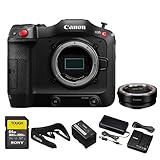
- Canon USA Authorized. Items Include: Canon EOS C70 Cinema Camera – Compact 4K Super 35 RF-Mount Camera with Dual Pixel AF, 16+ Stops DR, ND Filters & C-Log 2, Canon Mount Adapter EF-EOS R, 64GB SF-G TOUGH Series UHS-II SDXC Memory Card
- Super 35 Sensor with 16+ Stops DR: Capture cinematic images with exceptional latitude, dynamic range, and low-light performance in a compact cinema body.
- Built-In ND Filters + XLR Audio: Integrated ND filters and dual mini-XLR inputs support professional filmmaking in both studio and run-and-gun scenarios.
- RF Mount Flexibility: Enjoy access to Canon's growing RF lens ecosystem—or adapt to EF for even broader creative options.
- C-Log 2 & High Frame Rates : Support for C-Log 2 and up to 120fps in 4K allows for beautiful color grading and smooth slow-motion capture.
Before choosing it for fast-turnaround work, confirm the camera’s ND approach for your intended configuration, estimate card and storage needs for the recording modes you plan to use, and check that your post workflow can handle REDCODE RAW.
Do these 3 things before closing this tab:
1Clear out junk files and repair common Windows errors2Scan for outdated or missing drivers - takes under a minute3Repair Windows errors before they cause bigger problemsPanasonic Lumix S5IIX — best value video hybrid
The S5IIX is a sensible shortlist option for filmmakers who want strong video features, full-frame imaging and stabilization without starting with a dedicated cinema body. It is a value-oriented hybrid rather than a camera designed around integrated cinema controls and connections. Current comparison coverage includes it among the video-capable cameras worth considering (Tom’s Guide camera coverage).
It suits hybrid shooters, handheld creators and people who already own L-mount lenses. The main compromises are familiar: no internal cinema-style ND, and depending on the job, audio and monitoring may call for accessories. Assess Panasonic autofocus on its own merits rather than assuming it matches Canon or Sony in unpredictable tracking situations. The camera can be a strong value, but the complete system still depends on lens, audio, ND, media and power choices.
Blackmagic PYXIS 6K — best modular RAW platform, not the easiest grab-and-go camera
The PYXIS 6K is relevant to filmmakers who prioritize a full-frame cinema workflow and modularity, especially if they already own monitoring, rigging and power equipment. Its box-camera design, however, often demands more setup than a body with integrated handling, ND and audio facilities. It is better suited to controlled narrative work or a planned documentary configuration than to an operator who must react instantly and work alone.
Do not let a RAW-oriented workflow or resolution headline obscure the basic field question: how many accessories and adjustments will it take to get a usable shot? The PYXIS can be the right camera for an operator who values modularity and grading flexibility, but the FX6 is the more natural default for fast field operation.
Free tools Windows power users keep installed
One-click scans. No signup required.
How the main choices differ
Sony FX6 vs. Canon C80
Both target professional production, and both offer internal ND and production connections. The FX6 is the safer pick if your priority is its electronic variable-ND workflow and Sony Cinema Line operation. The C80 is attractive when Canon RF, 6K capture, 4K/120p, Cinema RAW Light, 12G-SDI and timecode fit your crew and post workflow. The available dossier does not establish a universal image-quality or autofocus winner, so choose on handling, lenses, connections and recording workflow.
Best Value
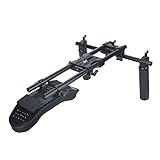
- [ SHOULDER RIG BUILT WITH 15MM RODS ] Universal for DSLR camera, cinema camcorder such as BMPCC 4K/6K/6K Pro, Panasonic G7/G9/GH5, Canon C100/C200/C300, Sony FS7/FS5/F55, BMD URSA Mini, RED, etc. Maximum Payload 22lb
- [ LOTS OF MOUNTING OPTION ] Features a cheese plate with plenty room and 1/4'' & 3/8'' threaded holes, which allows you to add accessories like counter-weights, v-mount batteries, magic arm on your shoulder mount
- [ EASY TO SETUP AND TAKE OFF ] Quick release via both wingnuts, so you can move the camera from shoulder system to tripod. Secure your camera gear to the base plate with a 1/4'' or 3/8'' screw
- [ STEADY HANDHELD SUPPORT ] The 15mm rail-mounted handle set provides a good support for your entire shoulder rig. Made of cow leather, comfortable to hold.
- [ SUITABLE TO USE ALL DAY ] Constructed from solid aluminum alloy, the rig is light that you won't feel it heavy on your shoulder. Help to release pressure when you do Run-and-Gun shooting or need to keep long time shoots
Sony FX3 vs. Canon C50
The FX3 is the lighter-leaning, stabilization-forward choice with Sony autofocus and a broad E-mount ecosystem, but it lacks internal ND. The C50 offers internal ND, open gate and an included detachable handle configuration with two full-size XLR inputs, but its working weight and CFexpress Type B requirements need to be counted. Choose FX3 for compact handheld/gimbal work; choose C50 when integrated exposure and audio reduce the number of external pieces you need.
Canon C50 vs. Canon C80
The C50 emphasizes compactness and a useful solo-operator package, including full-size XLR on its handle and open-gate capture. The C80 steps toward professional crew integration with 12G-SDI, timecode, mini-XLR inputs, 6K full-frame capture and a more substantial body. Neither is a simple upgrade for every user: choose the C50 when weight and integrated handle audio matter; choose the C80 when interfaces and production infrastructure matter more.
Sony FX3 vs. Nikon RED ZR
The FX3 is the established compact Sony option, with five-axis stabilization, autofocus and known E-mount compatibility, but no built-in ND. The ZR’s standout feature mix is REDCODE RAW, 32-bit-float audio and Nikon-specified stabilization in a compact full-frame body. Choose according to lens ecosystem and workflow: the ZR’s feature set is compelling if you can absorb RAW storage and processing demands, while the FX3 is a straightforward fit for existing Sony kits. Do not treat specification lists as proof of comparative real-world AF performance.
Windows Errors? Fix Them Before They Spread
Repair common Windows errors and clear accumulated junk for a smoother, more stable PC - no reinstall needed.Free scan · no reinstallOutdated Drivers Are Slowing You Down
One free scan finds every outdated or missing driver and matches the right update for your exact hardware.Free scan · exact hardware matchPanasonic S5IIX vs. Sony FX3
The S5IIX is the value-oriented hybrid for buyers balancing video and stills or building around L-mount lenses. The FX3 is the more cinema-oriented compact option for Sony users who value its stabilization and autofocus ecosystem. Both lack internal ND, so outdoor operators should budget for a filter solution and account for the time and handling it adds.
Blackmagic PYXIS 6K vs. Sony FX6
The PYXIS makes sense if you want a modular RAW platform and already have the accessories and workflow to support it. The FX6 is better suited to fast field work where internal ND, production handling and fewer setup steps matter. The deciding question is not which camera can deliver a cinematic image; it is which one can be operated quickly in the conditions you actually face.
Choose by shooting scenario
- Documentary and vérité: Start with the FX6 if changing light and professional operation dominate; consider the C50 for a smaller Canon package with internal ND and XLR audio.
- Events and weddings: The FX6’s variable ND and production handling are useful when lighting changes quickly. The C80 is a strong alternative when Canon and SDI/timecode integration matter.
- Travel: The FX3 is a strong compact choice when size and stabilization lead. The C50 is worth the extra working weight if internal ND and XLR are more important than the smallest kit.
- Low light: Consider sensor behavior, lens speed, autofocus and the actual shooting conditions together. The dossier supports the FX3 as a strong low-light option but does not provide a controlled comparative test that establishes a definitive winner.
- Gimbal work: The FX3’s small body is a natural starting point; the C50 and FX2 may also fit depending on the complete lens and rig weight. Confirm balance and usable control before committing. The C50’s June 2026 firmware update added USB gimbal controls.
- Solo audio: The C50’s handle supplies two full-size XLR inputs with phantom power. The C80 has two mini-XLR inputs. For any detachable-handle design, make sure the handle stays attached in the configuration you will actually shoot.
- RAW-focused workflow: Consider Nikon RED ZR or Blackmagic PYXIS 6K only if media, storage and post-production time suit the job. RAW is not automatically the fastest or most useful field format.
- Long takes: Verify maximum recording duration, thermal behavior, fan noise, battery runtime and high-frame-rate limits for your exact mode. The available research does not establish comparative long-take test results, so do not assume a short demonstration predicts an all-day interview.
- Existing lens system: Sony E-mount owners have a natural path into FX3/FX6; Canon RF users should compare C50/C80; Nikon Z owners have an obvious ecosystem match with ZR; L-mount owners may find the S5IIX the lowest-friction fit.
Budget for a working kit, not just a body
A useful cost comparison should include the complete camera package: body, lens, batteries, cards, audio microphone and wind protection, ND solution, monitoring, cage or handle, support and charging. The required accessories vary considerably by camera.
- FX6: Its internal ND and production-oriented design can reduce the need for an external daylight filter setup, though lenses, batteries, media and audio gear remain real costs.
- FX3: Plan for an ND solution for daylight, and account for the handle or audio setup you need. An external monitor can improve exposure monitoring but adds weight and setup.
- C50: The handle provides XLR inputs and controls, but the fully equipped configuration is heavier than the bare body. Include CFexpress Type B cost if your selected mode requires it.
- C80: Factor in mini-XLR cabling and the media and power needs of your chosen recording modes, as well as the value of SDI/timecode in your production.
- Nikon RED ZR or PYXIS: Estimate RAW media, backup storage and post-production capacity before buying on headline recording capability alone.
- S5IIX: A lower-cost body does not eliminate the need to budget for external ND, audio and any monitoring accessories your work requires.
Prices are intentionally not listed here: the supplied price research did not reliably establish current U.S. prices for the full shortlist. Any comparison should specify geography, body versus kit, retailer and the date checked; promotions can change quickly.
Quick wins for a faster PC:
Scan for outdated or missing drivers - takes under a minuteDriver Scan →Repair Windows errors before they cause bigger problemsFix Now →Fix the driver behind crashes, sound loss and screen glitchesFind Drivers →Final verdict
Choose the Sony FX6 if your run-and-gun work is professional field production and fast exposure changes matter more than compact size. Choose the Sony FX3 when portability, stabilization and a small Sony setup matter most. Choose the Canon C50 for a compact cinema body that combines internal ND, open gate and a practical XLR handle; choose the C80 when SDI, timecode and a more production-ready Canon body are worth the added size and cost.
The Nikon RED ZR is a serious new option for shooters who want RAW, integrated 32-bit-float audio and stabilization, but its storage demands and real-world field behavior should be weighed carefully. The Panasonic S5IIX remains a strong value hybrid, and the Blackmagic PYXIS 6K is better understood as a modular cinema platform than a grab-and-go default. The right choice is the camera that leaves you with the fewest operational compromises in your actual shooting conditions—not the one with the biggest resolution number.
Quick Recap
Product prices and availability are accurate as of the date/time indicated and are subject to change. Any price and availability information displayed on Amazon at the time of purchase will apply.

