Some links on this page are affiliate links: if you buy through them we may earn a commission, at no extra cost to you.
Spotify Lossless is no longer about to launch. Spotify began rolling it out to eligible Premium subscribers on September 10, 2025, and said it had reached more than 50 markets by October 6. It arrived not as a separate HiFi or “Supremium” subscription, but as a feature included with eligible Premium plans.
Spotify’s current lossless stream supports up to 24-bit/44.1 kHz FLAC. That is a substantial change from Spotify’s long-running compressed-quality options, but it does not automatically mean every account, track, device, or connection will deliver bit-perfect audio.
The short answer
- Is Spotify Lossless real? Yes. The rollout began on September 10, 2025.
- Is it a separate plan? Spotify’s current U.S. offering lists Lossless as a Premium benefit, not as a separately branded HiFi tier.
- What quality does it offer? Up to 24-bit/44.1 kHz FLAC, depending on the track and playback path.
- How much does it cost? It is included with eligible Premium plans. Spotify’s U.S. page showed Premium Individual at $12.99 per month when accessed on August 18, 2026.
- Does Bluetooth preserve it? Generally no. Bluetooth commonly compresses the signal before it reaches wireless headphones or speakers.
Spotify’s official announcement is available in its newsroom release.
What happened to Spotify HiFi?
Spotify first announced a future high-fidelity service in February 2021. The original announcement described a planned HiFi experience, but the service did not arrive then—and it did not eventually launch under that standalone branding.
#1 Best Overall
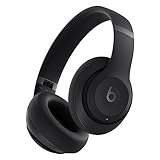
- INCREDIBLE SOUND: Custom acoustic platform delivers rich, balanced audio for music, calls and everyday listening.
- LOSSLESS AUDIO SUPPORT: USB-C lossless audio and sound profiles optimize music quality across devices and environments. Additional option to use the 3.5 mm cable for a standard analog experience.
- ACTIVE NOISE CANCELLING (ANC): block distractions at work, on flights or during your daily commute. Or use Transparency mode to let the sounds of your environment mix in with your music.
- SEAMLESS WIRELESS CONNECTIVITY: One-touch pairing with Apple & Android for easy switching across devices.
- SPATIAL AUDIO IMMERSION: Personalized dynamic head tracking, 360-degree sound for movies, music and immersive everyday listening.
After years of delay, Spotify introduced Lossless inside eligible Premium plans instead. That distinction matters: references to “Spotify HiFi,” “Supremium,” or “Music Pro” describe earlier announcements, reported ideas, surveys, or speculation—not the current product presented on Spotify’s plan page.
The timeline is straightforward:
- February 2021: Spotify announces a future HiFi service in its Q1 2021 shareholder letter.
- September 10, 2025: Lossless begins rolling out to Premium subscribers in selected markets.
- October 6, 2025: Spotify says Lossless is available to Premium users in more than 50 markets.
- August 2026: Lossless is an existing Premium feature, not an imminent launch.
What Spotify Lossless actually offers
Up to 24-bit/44.1 kHz FLAC
Spotify describes Lossless as FLAC audio at up to 24-bit/44.1 kHz. The phrase up to is important. It does not mean every track is supplied at that resolution, nor does it make Spotify a 24-bit/96 kHz or 24-bit/192 kHz service.
Lossless removes one form of lossy compression from the source-to-app portion of playback. It cannot improve a poor recording or mastering, and it cannot preserve lossless quality through a connection that later compresses or resamples the signal.
Free tools Windows power users keep installed
One-click scans. No signup required.
Who is eligible?
The safe description is: Lossless is available to listeners with an eligible Premium plan, in a supported market, using supported hardware and a supported playback path. Spotify’s support documentation does not justify assuming that every paid Spotify product, bundled subscription, audiobook-focused plan, or promotional account qualifies automatically.
Spotify’s current U.S. Premium page lists Individual, Student, Duo, and Family plans, with prices shown as $12.99, $6.99, $18.99, and $21.99 per month respectively when accessed on August 18, 2026. Prices, trials, eligibility, and plan structures can change by country, account, and date, so check the official U.S. Premium page or the equivalent page for your market.
How to turn on Lossless
Spotify requires the setting to be enabled manually on each device. The menu wording varies slightly by platform.
Rank #2

- INCREDIBLE SOUND: Custom acoustic platform delivers rich, balanced audio for music, calls and everyday listening.
- LOSSLESS AUDIO SUPPORT: USB-C lossless audio and sound profiles optimize music quality across devices and environments. Additional option to use the 3.5 mm cable for a standard analog experience.
- ACTIVE NOISE CANCELLING (ANC): block distractions at work, on flights or during your daily commute. Or use Transparency mode to let the sounds of your environment mix in with your music.
- SEAMLESS WIRELESS CONNECTIVITY: One-touch pairing with Apple & Android for easy switching across devices.
- SPATIAL AUDIO IMMERSION: Personalized dynamic head tracking, 360-degree sound for movies, music and immersive everyday listening.
- Open Spotify.
- Tap or click your profile icon.
- Open Settings & Privacy on mobile, or Settings on desktop.
- Open Media Quality on Android, or Audio Quality on iOS.
- Choose Lossless separately for Wi-Fi streaming, cellular streaming, and downloads.
On desktop, quality and output controls are found under Settings. When Lossless is actually active, Spotify should show a Lossless indicator in the Now Playing interface or Connect Picker. Selecting the setting alone is not proof that the entire output chain remains lossless.
Spotify’s current benefit and quality guidance is documented here.
The playback chain matters more than the badge
Audio quality is determined by the whole chain:
- The source file Spotify supplies.
- The quality setting in the app.
- The network connection or downloaded file.
- The transport: wired output, USB, Spotify Connect, AUX, or Bluetooth.
- The operating-system mixer and any resampling or effects.
- The DAC and amplifier.
- The headphones, speakers, and listening environment.
The weakest link determines what reaches the final transducer. A Lossless label in Spotify cannot turn an unsupported speaker, a Bluetooth codec, or an operating-system conversion stage into a bit-perfect connection.
Bluetooth: the most common misunderstanding
Enabling Lossless in Spotify does not make Bluetooth lossless. Bluetooth audio codecs typically compress the stream before playback. Even a high-quality codec should not automatically be described as end-to-end, bit-perfect lossless.
For the best chance of preserving the source, Spotify recommends wired headphones or speakers, or a supported non-Bluetooth connection. Its support documentation also notes that Bluetooth, AUX, Spotify Connect, and other connection types can affect the quality actually delivered. See Spotify’s lossless quality guidance.
The Tool Desk
Outbyte PC Repair FREERepair Windows errors before they cause bigger problemsFix Now →Outbyte Driver Updater FREEScan for outdated or missing drivers - takes under a minuteDriver Scan →Spotify Connect
Spotify Connect can be a better route than Bluetooth for compatible equipment because playback may be handled directly by the connected speaker, receiver, or other device. But Connect compatibility alone is not enough. Spotify supports more than 2,000 Connect devices, and not every Connect device supports Lossless.
Rank #3

- INCREDIBLE SOUND: Custom acoustic platform delivers rich, balanced audio for music, calls and everyday listening.
- LOSSLESS AUDIO SUPPORT: USB-C lossless audio and sound profiles optimize music quality across devices and environments. Additional option to use the 3.5 mm cable for a standard analog experience.
- ACTIVE NOISE CANCELLING (ANC): block distractions at work, on flights or during your daily commute. Or use Transparency mode to let the sounds of your environment mix in with your music.
- SEAMLESS WIRELESS CONNECTIVITY: One-touch pairing with Apple & Android for easy switching across devices.
- SPATIAL AUDIO IMMERSION: Personalized dynamic head tracking, 360-degree sound for movies, music and immersive everyday listening.
Check the exact model, firmware, app version, connection method, and region in Spotify’s Lossless device compatibility checker. Spotify has identified ecosystems including Sony, Bose, Samsung, Sennheiser, Sonos, and Amazon, but a brand name is not a guarantee for every model.
Windows Exclusive Mode for a more controlled desktop setup
Windows users with an external DAC or audio interface can use Spotify’s Exclusive Mode. It gives Spotify exclusive control of the selected audio device, preventing other applications from sharing that output until the mode is disabled.
How to enable it
- Connect a compatible external DAC or audio interface.
- Open Spotify and go to Settings.
- Scroll to Playback.
- Under Audio output, select the external device.
- Turn on Exclusive mode.
Spotify says the option appears only for compatible external devices. It is not intended for Bluetooth headphones, built-in computer speakers, or virtual audio devices. Its Exclusive Mode support page also recommends considering volume normalization, equalization, and Automix off for a purist listening setup. Those choices are optional and may be undesirable for podcasts, parties, or playlists where seamless transitions matter.
Recommended Free Tools
If there is no sound, check the DAC connection, switch to another output and back, and update device drivers. If playback cuts out, close other audio applications, update device firmware, and reconnect the device.
Expect more data, storage, and buffering
Lossless files are larger than Spotify’s compressed-quality streams. In practical terms, users may encounter:
- Higher cellular data use.
- Larger offline downloads.
- More storage consumption.
- Longer initial loading or buffering.
Spotify recommends Wi-Fi for the best experience and notes that tracks may take a moment to begin while larger files are cached. There is no single reliable megabytes-per-minute figure: file size varies with track duration, encoding, and source material.
Rank #4

- Hi-Res Audio & Titanium-Coated Drivers: Delivering 96kHz/24-bit Hi-Res audio through 40mm titanium-coated drivers, reproducing musical details with clarity across wired and wireless connections; Support LDAC/SBC codecs for preserving audio quality during wireless streaming
- Hybrid ANC & Multiple Modes: Advanced -49dB active noise cancellation with multiple ANC modes that adjust to your environment; Convenient physical buttons let you quickly switch between ANC levels, while the EDIFIER ConneX app offers additional customization with specialized modes for sport, office, and travel scenarios
- Spatial Sound & Volume Guard: Immerse yourself with dynamic spatial sound technology, while the EDIFIER ConneX App offers customized EQ presets for tailored listening; The volume guard feature helps maintain comfortable listening levels by letting you set a preferred maximum volume
- Multipoint Bluetooth & Simultaneous Play/Charge: Enjoy enhanced wireless stability with both Bluetooth V6.1 and USB-C wired connections; The stable wireless link supports simultaneous two-device pairing for seamless switching between calls and media, while the wired mode enables continuous playback with charging; Gaming Mode reduces latency for responsive audio
- Long Battery Life & Fast Charging: Engineered for endurance with up to 88 hours of continuous use (49hrs with ANC), supported by fast charging that delivers 15 hours of playback from just 15 minutes of charging
Will Lossless sound better?
It can preserve more source information, but it does not guarantee a dramatic audible improvement for every listener.
Quick wins for a faster PC:
Scan for outdated or missing drivers - takes under a minuteDriver Scan →Repair Windows errors before they cause bigger problemsFix Now →Fix the driver behind crashes, sound loss and screen glitchesFind Drivers →What you hear depends on the recording and mastering, your headphones or speakers, the DAC and amplifier, volume matching, the listening environment, Bluetooth or other transmission compression, and your hearing. A different master of the same album may matter more than the difference between a compressed and lossless file.
The most defensible conclusion is simple: Lossless is a technical improvement, not a promise of night-and-day sound. It removes one possible source of degradation, but it cannot repair a poor master or overcome a compromised output chain. Spotify’s descriptions of a “richer” or “more detailed” experience should be understood as the company’s product language, not as a guarantee that every listener will hear the same change.
Spotify Lossless versus competing services
There is no universal winner. The useful comparison depends on what you value:
| Criterion | Spotify Lossless | What to compare elsewhere |
|---|---|---|
| Maximum stated quality | Up to 24-bit/44.1 kHz FLAC | Whether higher-resolution files matter to you |
| Price | Included in eligible Premium plans | Current country-specific plan prices and benefits |
| Discovery | Spotify’s recommendation and playlist ecosystem | Whether discovery outweighs format specifications |
| Device support | Broad ecosystem, with model-level Lossless limitations | Exact support for your speakers, receiver, DAC, and app |
| Wireless playback | Bluetooth generally does not preserve lossless end to end | Supported wired, Wi-Fi, or proprietary playback paths |
| Desktop control | Windows Exclusive Mode is available for compatible external devices | Whether your operating system and DAC support the desired output mode |
| Catalog and mastering | Track- and master-dependent | The actual albums and versions you listen to |
| Spatial audio | Do not assume it is included with Lossless | Check each service’s current spatial-audio offering |
Apple Music, TIDAL, Qobuz, and Amazon Music are credible alternatives for readers whose priority is audio formats or an audiophile-focused catalog. Their current pricing, maximum-resolution claims, and feature sets should be checked on their official pages—Apple Music, TIDAL, Qobuz, and Amazon Music—because those details vary by market and change over time.
Who should use Spotify Lossless?
- Existing Premium subscribers who already value Spotify’s playlists, recommendations, and library.
- Listeners using wired headphones, powered speakers, a receiver, or a DAC.
- Desktop users who can use Windows Exclusive Mode.
- Spotify Connect users with confirmed Lossless-compatible hardware.
- People who want higher source fidelity without moving their library to another service.
Who should not buy new equipment solely for it?
- Bluetooth-only listeners who will still receive a compressed wireless stream.
- People listening mainly through inexpensive earbuds in noisy environments.
- Users whose priority is the highest available resolution rather than Spotify’s ecosystem.
- Listeners with limited cellular data or storage.
- Anyone expecting Lossless itself to provide spatial audio.
- People who do not care about the difference or whose existing playback system is the larger limitation.
Common problems and fixes
The Lossless setting is visible, but playback is not truly lossless
Check for an unsupported device, Bluetooth transmission, unsupported Connect hardware, an unstable connection, a track that is not available at the maximum quality, or operating-system resampling.
Best Value
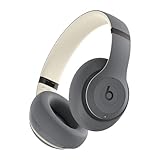
- INCREDIBLE SOUND: Custom acoustic platform delivers rich, balanced audio for music, calls and everyday listening.
- LOSSLESS AUDIO SUPPORT: USB-C lossless audio and sound profiles optimize music quality across devices and environments. Additional option to use the 3.5 mm cable for a standard analog experience.
- ACTIVE NOISE CANCELLING (ANC): block distractions at work, on flights or during your daily commute. Or use Transparency mode to let the sounds of your environment mix in with your music.
- SEAMLESS WIRELESS CONNECTIVITY: One-touch pairing with Apple & Android for easy switching across devices.
- SPATIAL AUDIO IMMERSION: Personalized dynamic head tracking, 360-degree sound for movies, music and immersive everyday listening.
The Lossless control is missing
Possible explanations include an unsupported market or account, an outdated app, a different menu label on your platform, an ineligible plan, or a device that does not support Lossless. Update Spotify, verify the plan and market, and check the device compatibility page.
Tracks buffer or start slowly
Lossless uses larger files. Try Wi-Fi, check available storage, confirm that downloads are configured for Lossless if you listen offline, and avoid assuming that a temporary slow start means the feature is broken.
You expected “hi-res” 24-bit/96 kHz audio
Spotify’s stated maximum is up to 24-bit/44.1 kHz FLAC. Do not describe the current offering as 24-bit/96 kHz or 24-bit/192 kHz streaming.
Do these 3 things before closing this tab:
1Fix the driver behind crashes, sound loss and screen glitches2Clear out junk files and repair common Windows errors3Scan for outdated or missing drivers - takes under a minuteFinal verdict
Spotify’s long-delayed high-fidelity feature finally arrived—but as Lossless inside eligible Premium plans, not as the standalone HiFi subscription many readers expected. For an existing Premium subscriber with wired equipment or confirmed Lossless Spotify Connect hardware, it is a useful upgrade that requires no separate lossless subscription.
It is not, by itself, a reason to replace a phone, buy expensive Bluetooth headphones, or abandon another service. The practical benefit depends on the complete playback chain, the quality of the original master, your data and storage limits, and whether you can actually hear a difference.
Quick Recap
Product prices and availability are accurate as of the date/time indicated and are subject to change. Any price and availability information displayed on Amazon at the time of purchase will apply.

