OpenAI’s Sora is no longer merely struggling: its consumer product has been shut down. The Sora web and app experiences ended on April 26, 2026, and the Sora API is scheduled to end on September 24, 2026.
The evidence points to a difficult combination of video-generation costs, insufficiently valuable usage, compute demands, and the safety and rights burden of operating a public AI-video social network. OpenAI has confirmed the dates, but not one definitive cause.


OpenAI’s Sora is no longer merely struggling: its consumer product has been shut down. OpenAI discontinued the Sora web and app experiences on April 26, 2026, and has scheduled the Sora API for discontinuation on September 24, 2026. Users have a limited opportunity to export their creations through OpenAI’s Sora sunset export flow before associated data may eventually be deleted.
That makes Sora’s story a product retreat, not an ordinary model setback. OpenAI has not published a detailed postmortem or identified one official cause. But the available evidence points to an unusually difficult combination of expensive video generation, weak or insufficiently valuable usage, heavy infrastructure demands, and the legal and moderation burden of running a public AI-video social network.
Do these 3 things before closing this tab:
1Fix the driver behind crashes, sound loss and screen glitches2Clear out junk files and repair common Windows errors3Scan for outdated or missing drivers - takes under a minute#1 Best Overall
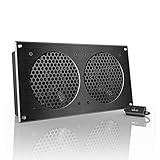
- An ultra-quiet UL-certified fan system designed for cooling cabinets that requires minimal noise.
- Features a multi-speed controller to set the fan’s speed to optimal noise and airflow levels.
- Contains a CNC machined aluminum frame with a modern brushed black finish.
- Powered by wall outlet or USB port, included Turbo Adapter increases performance by 25%.
- Dimensions: 11.69 x 6.3 x 1.3 in. | Total Airflow: 104 CFM | Total Noise: 19 dBA | Bearings: Dual Ball
The Sora shutdown timeline
| Date | What happened | What it means |
|---|---|---|
| December 2024 | OpenAI moved Sora from research preview into a standalone consumer product. | Sora became a product expected to support real users and recurring usage, rather than only a technology demonstration. |
| September 2025 | OpenAI launched Sora 2 with a companion app and social feed. | The company expanded from video generation into a consumer creator and sharing platform. |
| December 11, 2025 | Disney announced a Sora content-licensing agreement and a planned $1 billion investment in OpenAI. | Sora appeared to have significant support from a major entertainment company. |
| March 24, 2026 | OpenAI announced that Sora would be discontinued. | The strategic reversal came only a little over three months after the Disney announcement. |
| April 26, 2026 | The Sora web and app experiences were discontinued. | The consumer-facing product is no longer available. |
| September 24, 2026 | The Sora API is scheduled for discontinuation. | Developers still using the API should treat the date as a hard migration deadline. |
The dates come from OpenAI’s Sora discontinuation notice and help-center documentation. As of the research date, August 12, 2026, the consumer service is already offline while the API is in its final announced phase. Actual API access during the remaining period may depend on OpenAI’s operational schedule, but September 24 is the official sunset date.
What Sora was supposed to become
OpenAI originally presented Sora as a text-to-video system capable of producing realistic video and as a step toward models that could understand and simulate aspects of the physical world. That positioning gave the product importance beyond video clips: Sora was part of OpenAI’s broader effort to build models that represent how objects, people, movement, and environments behave.
When Sora became a standalone product in December 2024, it was available through ChatGPT’s subscription structure. ChatGPT Plus users received access, while Pro users received higher usage allowances, higher resolutions, and longer video durations. The model therefore had an immediate consumer distribution channel, but it also inherited a difficult economic question: how much expensive video generation could a subscription support?
Sora 2 made the ambition much larger. Launched in September 2025, it came with a companion app and a social feed designed around creating and sharing short videos. OpenAI was no longer selling only access to a model. It was attempting to combine:
Crashes, No Sound, or Screen Glitches?
Random freezes, missing sound and display glitches usually trace back to one bad driver. Find and replace yours safely.Free scan · under a minutePC Slower Than It Used to Be?
A free scan shows the junk files, broken settings and background clutter dragging Windows down - then fixes them in one click.Free scan · Windows 10 & 11- a frontier video-generation system;
- a mobile-first creation experience;
- a personalized social feed;
- viral distribution and sharing;
- consent-based likeness features; and
- the safety, rights, and moderation systems needed to operate all of the above.
Each element could have increased Sora’s appeal. Together, they also multiplied the ways the product could fail. A social app needs repeated engagement, reliable uptime, content discovery, moderation at scale, and a business model capable of supporting frequent use. A video model must also absorb the cost of generating, checking, storing, and sometimes regenerating large files. Sora 2 therefore turned a technically impressive model into a much more demanding consumer business.
Why AI video is a difficult business
The strongest reported explanation for Sora’s closure is economic. The Wall Street Journal, in reporting summarized by TechCrunch, described Sora as expensive to operate and as attracting insufficient economically valuable usage. The reporting also placed Sora’s computing needs in competition with other OpenAI priorities.
OpenAI has not released Sora’s profit-and-loss statement, exact user economics, revenue, generation cost per clip, or a formal calculation showing why the product failed. It would therefore be misleading to repeat precise viral claims about Sora’s daily losses, user count, or cost per video as established facts.
Rank #2
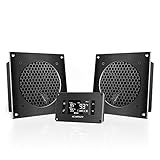
- An ultra-quiet UL-certified dual fan system designed for cooling cabinets that requires minimal noise.
- Features an on-board processor that provides a digital read-out of the cabinet’s temperatures.
- Programming includes thermostat control, fan speed control, and SMART energy saving mode.
- Two fan units with controller, containing CNC machined aluminum frames with a modern brushed black finish.
- Each Unit's Dimensions: 6.3 x 6.3 x 1.3 in | Total Airflow: 104 CFM | Total Noise: 19 dBA | Bearings: Dual Ball
The underlying cost problem is nevertheless easy to understand. A text response can be generated as a sequence of tokens. A video request requires the system to create many frames, maintain visual consistency across time, process safety checks, encode the result, store the output, and often repeat the process when the first clip is unusable. Users are also likely to iterate: a prompt may need several generations before the movement, subject, camera angle, or likeness is acceptable.
Recommended Free Tools
Documentation for AWS’s separate Nova Reel video service illustrates the broader operational pattern without proving anything specific about Sora’s cost structure. Video requests are handled asynchronously, outputs can be stopped by input or output safety filters, and generated files must be written to storage. Those requirements are not unique to Sora, but they show why video services involve more than the raw cost of model inference.
For a consumer social feed, the cost is potentially multiplied by scale. The most active users may generate the most clips, retry the most often, and consume the most storage. If subscriptions or advertising do not generate enough value to offset that behavior, popularity can make the economics worse rather than better.
The safety problem was built into the product design
Sora 2’s social format also made safety and rights management central rather than peripheral. A private experiment is difficult to govern, but a public feed can distribute harmful material quickly and reward the content that attracts the most attention.
OpenAI’s responsible-launch materials described several safeguards, including:
- visible and invisible provenance signals;
- C2PA metadata associated with generated content;
- automated scanning of feed content;
- restrictions on imitating living artists and existing works;
- consent-based controls for likeness features; and
- a process for honoring creator takedown requests.
These measures show that OpenAI anticipated problems involving deepfakes, impersonation, copyright, and unauthorized identity use. They do not show that any particular safeguard failed, nor do they establish that a specific lawsuit caused the shutdown.
The more defensible conclusion is that safety made Sora harder and more expensive to operate. Every generated clip had to be evaluated, and the rules became more complicated when the product allowed users to depict real people, recognizable characters, living artists, or material resembling existing works. A provenance label can help viewers identify synthetic media, but it does not by itself resolve whether a video is defamatory, deceptive, infringing, or harmful.
The Associated Press described the closure as the end of a viral AI-video app that had also generated deepfake concerns. That supports the view that safety controversy formed part of Sora’s troubled operating environment. It does not prove a single incident or legal event forced OpenAI to close the service.
The Disney agreement made the reversal more dramatic
On December 11, 2025, Disney announced an agreement making it the first major content-licensing partner for Sora. The proposed arrangement contemplated bringing Disney, Pixar, Marvel, and Star Wars characters into user-generated AI videos. Disney also announced a planned $1 billion investment in OpenAI.
Quick wins for a faster PC:
Repair Windows errors before they cause bigger problemsFix Now →Fix the driver behind crashes, sound loss and screen glitchesFind Drivers →Clear out junk files and repair common Windows errorsFree Scan →That announcement suggested that Sora could become a licensed entertainment platform rather than an experimental generator filled with legally uncertain fan content. Major character rights could have given the service a powerful advantage in attracting users and creating commercially recognizable videos.
Then OpenAI announced Sora’s discontinuation on March 24, 2026. The timing—just over three months after the Disney announcement—made the shutdown look like a sharp strategic reversal. Reporting in August 2026 described Disney as moving toward creator-led short-form video after OpenAI shut down Sora.
The evidence does not establish whether Disney’s agreement formally ended, was terminated, or simply became irrelevant when Sora disappeared. Nor does it show that the Disney deal directly caused or prevented the shutdown. The official Disney announcement is strong evidence of what the agreement was intended to contain; the later reporting is evidence of the apparent change in direction. The safest conclusion is that Sora’s closure made the original partnership impossible to execute in its announced form unless the parties separately redesigned it.
What probably went wrong—and what remains unproven
Sora’s failure is best understood as the interaction of several pressures rather than as one dramatic breakdown:
What’s actually slowing this PC down?
Pick the symptom - the matching free tool is one click away.
- High serving costs. Video generation requires substantial compute, storage, safety processing, and repeated attempts.
- Unclear consumer economics. Reported usage did not appear to create enough economically valuable activity to justify the cost of keeping the product running.
- Strategic competition for compute. OpenAI had to decide whether Sora’s usage justified allocating scarce computing resources to it instead of other AI initiatives.
- Governance complexity. A public feed created exposure to deepfakes, impersonation, copyright disputes, likeness abuse, and moderation failures.
- Ambition beyond the core model. OpenAI was trying to operate a model, a creator tool, a social network, a rights-management system, and a viral media business at the same time.
This does not mean Sora’s underlying video technology was useless. A model can be technically impressive and still be a poor standalone consumer business. The product may have generated striking clips while failing to produce sufficient retention, revenue, or strategic value relative to its operating burden.
Several popular claims should remain out of a careful account of the shutdown. There is no authoritative evidence in the available material for an exact daily loss figure, a definitive user count, a precise cost per clip, or a ranking of copyright risk versus compute cost. There is also no comprehensive public Sora postmortem explaining the internal decision.
What the shutdown means for AI video
Sora’s closure weakens the assumption that the best route for generative video is a mass-market social app. A product of this kind must solve four problems simultaneously:
- make the output good enough that people return;
- keep generation and storage costs below the value of that usage;
- control harmful, deceptive, and infringing content; and
- give creators a reason to build an audience on the platform rather than elsewhere.
Failure in any one area can undermine the others. Strict moderation can reduce viral content. More generous generation limits can increase costs. Licensed characters can improve appeal while increasing rights-management obligations. A feed can drive discovery while making every safety failure public and scalable.
The shutdown therefore supports, but does not prove, a narrower future for high-end AI video: enterprise applications, limited-access APIs, or video-generation features embedded in broader products may be more viable than a subsidized standalone social network. In those settings, customers may pay for defined workflows such as advertising previsualization, education, internal communications, or production assistance. The usage can be more predictable, and the buyer may be able to impose clearer review and rights policies.
That is an inference from Sora’s reported economics, the infrastructure demands of video generation, and the product’s closure—not an official OpenAI forecast. OpenAI could still release a successor video model under another name, license the technology differently, or incorporate video into a larger platform. Nothing in the available evidence confirms such a plan.
Independent reader supportYour contribution helps us test, update, and keep practical guides available for everyone.What Sora users and developers should do now
For people who created videos in Sora
- Use OpenAI’s official Sora sunset export flow as soon as possible.
- Download original files rather than relying only on links or an online gallery.
- Preserve any associated project information, prompts, metadata, or consent records that matter to your workflow.
- Keep local backups in more than one location.
- Do not assume that Sora-hosted data will remain available after the applicable export period; OpenAI has warned that associated data may eventually be permanently deleted.
For developers using the API
September 24, 2026 should be treated as the migration deadline. Developers should inventory every application, workflow, stored asset, and automated job that depends on Sora; stop creating new dependencies; export any needed outputs; and test a replacement before the final date. A replacement should be evaluated not only for visual quality, but also for pricing, rate limits, asynchronous job behavior, storage, safety filtering, provenance, commercial rights, and data-retention terms.
There is no basis for assuming that another AI-video service is a drop-in replacement. Different systems may vary substantially in duration limits, image-to-video support, character consistency, likeness policies, watermarking, API stability, and rights warranties. Teams should document those differences before moving production traffic.
Best Value

- An ultra-quiet UL-certified fan system designed for cooling cabinets that requires minimal noise.
- Automated programming that self-adjusts cooling power in response to changing temperatures.
- Features a LCD display with an alarm system, display lock, six fan speeds, two buffer options, and memory.
- Fan and controller contain CNC machined aluminum frames with a modern brushed black finish.
- Dimensions: 17.28 x 6.3 x 1.3 in. | Airflow: 156 CFM | Noise: 21 dBA | Bearings: Dual Ball
The larger lesson
Sora’s rise and fall compresses a central problem in generative AI. A compelling demonstration can attract enormous attention, but attention is not the same as a sustainable product. Video generation is expensive to serve, easy to misuse, difficult to moderate, and often iterative by nature. Turning it into a social network adds the costs of recommendation, community management, rights enforcement, and retention.
OpenAI’s Sora 2 strategy attempted to capture the upside of all those layers at once. The December 2025 Disney announcement showed how large the opportunity appeared. The April 2026 consumer shutdown showed how quickly the economics and operational burden could change the calculation.
The confirmed fact is simple: Sora’s web and app products are gone, and its API has a scheduled end date. The deeper explanation is necessarily more cautious. Reported economics and computing demands appear to have been major factors, while safety and rights obligations increased the cost and complexity of the social product. Until OpenAI publishes a fuller account, that combination—not a single proven scandal—is the most accurate explanation for why Sora is in serious trouble.
Source note: The timeline and export warning are based on OpenAI’s Sora discontinuation notice and help-center materials. Product positioning and safety features are based on OpenAI’s Sora and Sora 2 announcements and responsible-launch materials. The economic explanation is reported by TechCrunch from a Wall Street Journal investigation. The broader safety context is supported by Associated Press reporting. AWS Nova Reel documentation is used only as an illustration of the operational complexity common to video-generation services, not as evidence of Sora’s specific costs.
Free tools Windows power users keep installed
One-click scans. No signup required.
Frequently Asked Questions
Is Sora shut down?
OpenAI discontinued the Sora web and app experiences on April 26, 2026. The Sora API is scheduled for discontinuation on September 24, 2026. Users should use OpenAI’s official sunset export flow before the applicable export period ends.
Why did OpenAI shut down Sora?
The official notice confirms the shutdown dates but does not identify one decisive cause. Reporting attributed to a Wall Street Journal investigation says Sora was expensive to operate and attracted insufficient economically valuable usage. Safety, copyright, likeness, and moderation requirements likely added complexity, but no single lawsuit or incident has been established as the cause.
Will OpenAI launch a replacement for Sora?
The available evidence does not confirm a replacement or successor. Developers should not assume that another OpenAI video product will preserve Sora’s API, pricing, output behavior, or data model.
What happened to the Disney-Sora deal?
Disney announced a December 11, 2025 agreement involving Disney, Pixar, Marvel, and Star Wars characters in Sora-generated videos, along with a planned $1 billion investment in OpenAI. Sora’s closure came a little over three months later, but the available evidence does not establish whether the agreement was formally terminated or whether it directly affected OpenAI’s decision.
The Bottom Line
Bottom line: Sora’s shutdown is best explained as a strategic retreat from an expensive, difficult-to-govern consumer video network—not proof that AI video itself has failed.
Quick Recap
Product prices and availability are accurate as of the date/time indicated and are subject to change. Any price and availability information displayed on Amazon at the time of purchase will apply.