The Fenians in House of Guinness are based on a real nineteenth-century Irish republican movement, but the Netflix drama fictionalizes the group’s direct relationship with the Guinness family and its role at Sir Benjamin Lee Guinness’s funeral. The Irish Republican Brotherhood, the 1867 rising, and the republican goal are historical; The Irish Times assessment does not support the funeral riot.
House of Guinness on Netflix is described as a drama inspired by the Guinness family and set in nineteenth-century Dublin and New York after Sir Benjamin Guinness’s death. Understanding the Fenians requires separating the real Irish Republican Brotherhood and Fenian Brotherhood from the series’ invented characters, compressed chronology, and fictional Guinness-Fenian dealings.


Key takeaways
- The Irish Republican Brotherhood was founded in Dublin on 17 March 1858, while the related Fenian Brotherhood organized primarily in the United States.
- The historical Fenians sought an independent Irish republic, not simply limited home rule; an official parliamentary record reproduces their declaration, “Herewith we proclaim the Irish Republic.”
- The Fenian Rising of 1867 was a real republican uprising suppressed by British authorities, with the Royal Irish Constabulary involved in quashing it.
- Sir Benjamin Lee Guinness was a major Dublin civic figure: he was Lord Mayor in 1851, became an MP for Dublin City in 1865, and contributed £150,000 toward restoring St Patrick’s Cathedral in 1865.
- House of Guinness uses the real Fenian movement and Guinness family prominence as historical foundations, but its direct Guinness-Fenian dealings and named Fenian characters are dramatized.
- The alleged Fenian riot at Benjamin Guinness’s 1868 funeral is a major historical inaccuracy according to the independent assessment consulted.
Who were the Fenians in House of Guinness?
The Fenians in House of Guinness are the series’ fictionalized representation of a real nineteenth-century Irish republican movement. Netflix’s official character guide identifies Patrick Cochrane as the leader of the Fenians in the drama and presents the group as a revolutionary nationalist organization working across Ireland, America, and Britain. The real movement was more complicated: the Irish Republican Brotherhood operated in Ireland, while the Fenian Brotherhood organized mainly in the United States.
Patrick Cochrane, Ellen Cochrane, Sean Rafferty, and Byron Hedges should therefore be treated as characters in the television story rather than automatically accepted as documented historical figures. The research available for this fact-check does not establish those specific people, their personal relationships, or their dealings with the Guinness family as historical fact. Netflix’s own material presents the series as drama inspired by the family and period, not as a documentary reconstruction.
Quick wins for a faster PC:
Fix the driver behind crashes, sound loss and screen glitchesFind Drivers →Clear out junk files and repair common Windows errorsFree Scan →#1 Best Overall
The official Netflix feature also includes actor Seamus O’Hara’s line, “The Fenians loved Guinness.” O’Hara is explaining the show’s interpretation of Patrick Cochrane; the sentence is production commentary, not evidence that the historical Fenian organization had a documented special relationship with the Guinness brewery.
Were the Fenians a real historical organization?
Yes. The Fenians were real nineteenth-century Irish republicans, although Fenian is a broad label for related organizations rather than the exact name of one unified body. The Irish Republican Brotherhood, commonly known as the IRB, was founded in Dublin on 17 March 1858. The Fenian Brotherhood was its American counterpart and supported the wider republican cause.
The distinction matters when reading the Netflix storyline. The IRB was an Irish organization operating within Ireland, whereas the Fenian Brotherhood developed primarily among Irish Americans in the United States. Both branches belonged to the same wider republican tradition, and members of both were commonly called Fenians, but the labels are not perfectly interchangeable.
| Historical body | Primary base | Role in the wider movement | Connection with House of Guinness |
|---|---|---|---|
| Irish Republican Brotherhood | Ireland | Secret republican organization founded in Dublin on 17 March 1858 | Provides the Irish political and revolutionary background used by the drama |
| Fenian Brotherhood | United States | Irish-American nationalist organization linked to fundraising, veterans, planned action, and the wider republican cause | Provides the American and transatlantic dimension of the show’s Fenian network |
The Irish Republican Brotherhood’s historical account describes the organization’s origins and republican purpose. The distinction between the two branches is also important because the series presents a more unified, character-centered network than the historical organizations actually were.
Do these 3 things before closing this tab:
1Fix the driver behind crashes, sound loss and screen glitches2Clear out junk files and repair common Windows errors3Scan for outdated or missing drivers - takes under a minuteWhat did the historical Fenians want?
The historical Fenians wanted an independent Irish republic. Their objective went beyond a constitutional adjustment or a limited home-rule settlement. A Houses of the Oireachtas parliamentary record reproduces the Fenian proclamation’s declaration: “Herewith we proclaim the Irish Republic.”
The republican goal explains why the group in House of Guinness is portrayed as a revolutionary force rather than merely an opposition political club. The show draws on a real conflict between British rule and Irish republican nationalism, but the personal schemes and commercial arrangements assigned to its characters belong to the drama unless independent documentation proves otherwise.
Rank #2

- 1 subject notebook comes with 70 wide ruled, double-sided sheets. Wide ruling is ideal for the younger student who needs more space between lines.
- Sheets measure 7-1/2" x 10-1/2" when torn out with an overall size of 8" x 10-1/2". Perforation easily tears out with clean edges.
- Notebook is 3-hole punched to store in your favorite binder. Covers are coated for durability and have writable label on front cover.
- Includes 6 notebooks in randomly selected colors: Red, Blue, Green, Yellow, Purple or Black. Colors will vary with each purchase.
- Assembled in U.S.A. with U.S. and foreign parts
The official Oireachtas debate record reproducing the Fenian proclamation is useful evidence for the movement’s stated political objective. The wording makes the central ambition unambiguous: the movement claimed the right to proclaim an Irish republic.
What was the Fenian Rising of 1867?
The Fenian Rising of 1867 was a real attempt associated with the Irish republican movement, and British authorities suppressed it. The Royal Irish Constabulary played a role in quashing the rising, according to the historical material preserved by the Houses of the Oireachtas.
The rising gives House of Guinness a genuine historical atmosphere of militancy, surveillance, and political danger. The series can therefore be historically grounded in its depiction of Fenian revolutionary pressure even when it moves particular confrontations, people, or consequences into the Guinness family plot.
| Date | Historical event | Relevance to the series |
|---|---|---|
| 17 March 1858 | The Irish Republican Brotherhood was founded in Dublin | Establishes the real Irish republican organization behind the Fenian background |
| 1867 | The Fenian Rising was suppressed by British authorities, with the Royal Irish Constabulary involved in quashing it | Supplies the real revolutionary tension that the drama reshapes |
| 1868 | Sir Benjamin Lee Guinness died and his funeral took place | Provides the historical date around which the show places its opening Fenian unrest |
| After Benjamin Guinness’s death | Netflix describes the series as continuing in nineteenth-century Dublin and New York | Frames the drama’s fictional political and family conflicts |
The chronology is crucial. The IRB was founded in 1858, the rising took place in 1867, and Benjamin Guinness died in 1868. The drama compresses and rearranges the tensions surrounding those dates, which is one reason a scene can feel historically plausible while still being inaccurate in its specific timing.
How important was the American Fenian Brotherhood?
The American Fenian Brotherhood was an important part of the movement’s transatlantic history. It connected Irish-American nationalism with fundraising, military veterans, and plans for action against British interests. The organization is also associated with Fenian invasions of Canada, making the United States more than a backdrop for the Irish struggle.
That American connection helps explain why Netflix places part of the story in New York and describes Fenian activity across Ireland, America, and Britain. The existence of this transatlantic network is historical; the show’s particular leaders, negotiations, and financial arrangements are not established by the sources used here.
Rank #3
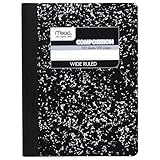
- Composition book contains 100 double-sided sheets; A classic favorite for journaling and lab notes
- Wide ruling gives you plenty of writing space for notetaking
- Sewn binding is smooth, helps keep pages securely in place and lays flat when open
- Inside covers feature a class schedule, multiplication tables, conversion tables and grammar rules
- Pages measure 7.5" x 9.75"; Black Marble Soft Cover
Readers seeking a detailed history of the American Fenians can look for William D’Arcy’s The Fenian Movement in the United States: 1858–1886. The National Library of Ireland catalogue record identifies the book’s subjects as the Fenians, Irish Americans, and the Fenian invasions of Canada. According to the Google Books bibliographic record, the 1947 Catholic University of America Press edition has 453 pages. The book is a history of the American Fenian movement, not a companion to House of Guinness.
Who was Sir Benjamin Lee Guinness in real life?
Sir Benjamin Lee Guinness was a prominent Dublin brewer, civic leader, politician, and philanthropist. Guinness’s official history identifies him as Lord Mayor of Dublin in 1851 and as a Member of Parliament for Dublin City from 1865.
His public importance was not limited to the brewery. The Guinness Storehouse records that, in 1865, Benjamin Guinness contributed £150,000 toward the restoration of St Patrick’s Cathedral. According to the Guinness Storehouse institutional history, the £150,000 contribution was made in 1865. The official Guinness history of Benjamin Guinness records his civic offices.
That civic and philanthropic profile gives the drama a solid historical foundation. The Guinness family was deeply connected with Dublin’s economic, religious, civic, and political life. However, prominence is not proof of a secret alliance with the Fenians. A wealthy public figure could be central to the period’s social tensions without having the exact conspiratorial relationships shown on screen.
Is House of Guinness based on a true story?
House of Guinness is inspired by the real Guinness family and nineteenth-century events, but it is not a literal account of the Fenian movement or Benjamin Guinness’s final days. Netflix’s official description places the story in nineteenth-century Dublin and New York after Sir Benjamin Guinness’s death and labels the production a drama inspired by the family.
The most accurate description is historical fiction built on real political and social foundations. The IRB, Fenian Brotherhood, republican objective, 1867 rising, Guinness family prominence, and Dublin-New York connection all have historical bases. The show then uses invented characters and dramatic relationships to turn that material into a serialized plot.
What does the show change about the Fenians and the Guinness family?
The series presents the Fenians as a more unified and immediately accessible organization than the historical distinction between the Irish IRB and the American Fenian Brotherhood suggests. Netflix’s official material makes Patrick Cochrane the narrative leader, allowing viewers to experience a broad political movement through a small group of characters.
Rank #4

- Upgraded Two Zipper Pockets: Forvencer server books feature two secure zipper pockets for better organization of coins, cash, and receipts, ensuring that everything you collect has a safe and secure place
- Smart Storage & Quick Access: Designed with 8 multi-functional compartments, the right side includes a guest receipt pad, while the left has a money pocket, ticket pocket, and credit card slot. Two small clear pockets store bills, receipts, and other visible items. A stitched pen loop ensures you always have your favorite pen ready
- High-quality & Easy to Clean: Crafted from high-quality PU leather with heavy-duty stitching, this server book is built to last. It resists tears, scratches, and its waterproof surface makes cleaning easy with just a damp cloth or a non-chlorine sanitizer
- Perfect Fit for Your Apron: Measuring 5” x 8”, this compact organizer is slightly smaller than other models, making it ideal for bending or sitting while carrying in your server apron. It holds everything a waitress needs—a place for everything
- What's Included: This server organizer comes with multiple open and zippered pockets to store money, receipts, tips, etc. Clear sleeves are perfect for keeping menus or special lists while serving. Available in a variety of colors, allowing you to express yourself even when in uniform
Netflix’s episode explanation also describes a proposed arrangement involving a commission on Guinness beer sales in several American cities. That proposal is a plot device in the series. The research cited for this article does not establish it as a documented historical transaction between the Guinness family and Fenian leaders.
| Question | Historical record | Series treatment | Verdict |
|---|---|---|---|
| Were the Fenians real? | The IRB and Fenian Brotherhood were real related organizations | Netflix uses a named, character-led Fenian network | Historical movement, dramatized presentation |
| What did they want? | An independent Irish republic | Revolutionary nationalist politics drive the Fenian storyline | Political objective is historically grounded |
| Did the 1867 rising happen? | Yes; British authorities suppressed it and the RIC helped quash it | The drama draws on the rising and its atmosphere of militancy | Real event, reshaped dramatic context |
| Did the Guinness family have civic influence? | Benjamin Guinness was Lord Mayor, an MP, and a major philanthropist | The family is placed at the center of Dublin’s political and commercial tensions | Historical prominence, fictionalized connections |
| Was there a Fenian-Guinness beer commission deal? | The cited historical sources do not establish such a transaction | The proposed commission on American beer sales appears in Netflix’s episode explanation | Plot device, not established history |
| Did Fenians riot at Benjamin Guinness’s funeral? | The cited Irish historical assessment says the depiction is inaccurate | The opening depicts Fenian unrest around the funeral | Major historical inaccuracy |
| Were Patrick Cochrane and the other named Fenian characters real? | The cited research does not document them as historical figures | They function as the show’s principal Fenian characters | Do not treat them as verified historical people |
The Netflix episode explanation is the appropriate source for describing the proposed beer-sales arrangement as part of the show’s plot. It should not be used as evidence that the arrangement occurred in nineteenth-century history.
Independent reader supportYour contribution helps us test, update, and keep practical guides available for everyone.Did Fenians riot at Benjamin Guinness’s funeral?
No. The depiction of an active Fenian riot at Benjamin Guinness’s 1868 funeral is not supported by the historical assessment cited for this article. The Irish Times fact-check reports that the Fenians had gone underground by 1867, the year before the funeral, and describes the actual event as a somber occasion attended by people from different backgrounds and classes.
This correction does not erase the real Fenian threat or the political tension of the period. It corrects one specific claim: the show’s funeral sequence should not be read as a faithful reconstruction of what happened in 1868.
The funeral scene is especially misleading because it joins three real elements—the Fenians, Benjamin Guinness, and Dublin’s political tensions—into one event that the cited historical account says did not happen in that form. Historical plausibility is not the same as documentary accuracy.
Recommended Free Tools
How accurate is the Fenian storyline in House of Guinness?
The Fenian storyline is accurate in its broad historical scaffolding and substantially fictional in its close-up plot. The movement, its republican aim, its American branch, and the 1867 rising are real. The series’ unified network, named personal relationships, proposed commercial deal, and funeral riot are dramatized or contradicted by the historical assessment.
Best Value
| Element | Accuracy assessment | Why |
|---|---|---|
| Existence of the Fenians | Accurate | The IRB and Fenian Brotherhood were real nineteenth-century organizations |
| Republican political objective | Accurate | The movement proclaimed an Irish republic |
| Fenian Rising of 1867 | Accurate as historical background | The rising occurred and was suppressed by British authorities |
| Irish-American and transatlantic activity | Accurate in broad outline | The American branch connected Irish-American nationalism with fundraising, veterans, and action against British interests |
| Benjamin Guinness’s public prominence | Accurate | He held civic and parliamentary office and supported major philanthropy |
| Direct Guinness-Fenian financial relationship | Unverified and dramatized | The cited sources describe the arrangement as part of the show’s plot, not established history |
| Fenian riot at the 1868 funeral | Inaccurate according to the cited fact-check | The historical assessment describes a somber, socially mixed funeral and says the show’s depiction is inaccurate |
Viewers can consequently trust the show for a starting sense of the period’s competing forces, but not for every named person, conversation, business proposal, or public disturbance. The correct verdict is not that House of Guinness is wholly false; it is that the series uses real history as a framework for a heavily dramatized family and political story.
How can viewers research the real Guinness history?
The Guinness Storehouse provides institutional resources for readers who want to move beyond the drama’s fictional plot. Its archive and genealogy material includes digitized collections, historical exhibits, genealogy resources, and employee records. The Guinness employee archive search is particularly relevant for researching the brewery and the people connected with it.
Institutional Guinness sources are useful for understanding Benjamin Guinness’s public role and the company’s historical context, but they should be read alongside independent historical work when testing claims about Irish republican politics. The Guinness family’s civic influence is documented; that fact alone cannot verify the show’s Fenian conspiracies.
Free tools Windows power users keep installed
One-click scans. No signup required.
Further reading on the Fenians
William D’Arcy’s The Fenian Movement in the United States: 1858–1886 is the strongest directly relevant physical reading recommendation identified for this topic. The book focuses on the American Fenians, Irish Americans, and the Fenian invasions of Canada, so it supplies the transatlantic context that a television drama necessarily compresses.
Readers should use the National Library of Ireland and Google Books records to identify the edition before buying. The 1947 edition is listed as a 453-page volume, but current price, stock, and retailer availability require a fresh check and are not established by the historical sources.
The Bottom Line
Bottom line: The Fenians in House of Guinness are rooted in a real Irish republican movement with a real 1867 rising and a real American branch. The Guinness family’s civic prominence is historical, but the show’s direct Fenian-Guinness relationship and its riot at Benjamin Guinness’s 1868 funeral are fictionalized, with the funeral scene contradicted by the cited historical assessment.
Quick Recap
Product prices and availability are accurate as of the date/time indicated and are subject to change. Any price and availability information displayed on Amazon at the time of purchase will apply.
The Tool Desk
Outbyte Driver Updater FREEFix the driver behind crashes, sound loss and screen glitchesFind Drivers →Outbyte PC Repair FREERepair Windows errors before they cause bigger problemsFix Now →