What’s actually slowing this PC down?
Pick the symptom - the matching free tool is one click away.
The BMW Vision EfficientDynamics in Mission: Impossible 4 – Ghost Protocol was a futuristic prototype and plug-in-hybrid technology demonstrator, not the later production BMW i8. BMW officially identified the car supplied for Tom Cruise’s 2011 film as the Vision EfficientDynamics concept, which later became the design and engineering ancestor of the i8.
The distinction matters because the film car and the i8 share a clear lineage but are not interchangeable names. The Vision EfficientDynamics was BMW’s 2009 concept; the i8 was the production-oriented model developed afterward.
Key takeaways
- The BMW Vision EfficientDynamics concept—not a production BMW i8—was the futuristic car supplied for Mission: Impossible – Ghost Protocol.
- BMW’s 2009 concept used a three-cylinder turbodiesel engine and two electric motors, with an anticipated 356 hp, 800 Nm of torque, and 4.8-second 0–100 km/h acceleration.
- BMW presented the Vision EfficientDynamics as a 2+2 plug-in hybrid with gullwing-style doors, lightweight construction, and approximately 50 km of electric-only range.
- The BMW i8 was the later production descendant of the concept, not the exact vehicle driven in the 2011 film.
- Collectors should search specifically for a BMW Vision EfficientDynamics scale model car rather than assuming that an i8 model represents the movie vehicle.
What BMW concept car did Tom Cruise drive in Ghost Protocol?
The BMW Vision EfficientDynamics in Mission: Impossible 4 – Ghost Protocol was a futuristic prototype and plug-in-hybrid technology demonstrator, not the later production BMW i8. BMW officially identified the car supplied for Tom Cruise’s 2011 film as the Vision EfficientDynamics concept, which later became the design and engineering ancestor of the i8.
BMW’s June 30, 2011 announcement stated: One of the BMW vehicles provided for Tom Cruise ́s next film is the BMW Vision EfficientDynamics concept car.
BMW’s later film-marketing release also described the vehicle as the concept car for the forthcoming BMW i8 and said that the Vision EfficientDynamics and other BMW vehicles were driven by Ethan Hunt in prominent action sequences. Read BMW’s official film-placement announcement and its November 2011 Ghost Protocol release.
Do these 3 things before closing this tab:
1Fix the driver behind crashes, sound loss and screen glitches2Clear out junk files and repair common Windows errors3Scan for outdated or missing drivers - takes under a minute#1 Best Overall

- Pullback Action: Experience realistic racing with the pullback action feature.
- Opening Doors: Explore the intricate interior details with the opening door feature.
- 1:38 Scale: Enjoy a detailed 1:38 scale die-cast model (approx. 5 inches long).
- Authentic Design: Modeled after the iconic 1967 Ford Shelby Mustang GT500.
- Display Piece: A must-have collectible for car enthusiasts and model collectors.
Why do people call the Ghost Protocol car a BMW i8?
People call the film car a BMW i8 because the Vision EfficientDynamics concept established the visual and technical direction that BMW later developed into the i8. The connection is real, but the names describe different stages of BMW’s development process.
BMW’s 2010 announcement for the BMW i sub-brand said, The BMW i8, meanwhile, is based on the BMW Vision EfficientDynamics concept study.
BMW’s 2011 material also called the BMW i8 Concept the successor to the Vision EfficientDynamics car featured in Mission: Impossible – Ghost Protocol. The accurate short version is: the film featured the Vision EfficientDynamics prototype, while the i8 was its later production descendant. See BMW’s BMW i announcement for the company’s description of that relationship.
| Question | Accurate answer |
|---|---|
| What was the movie car? | BMW Vision EfficientDynamics concept car |
| Was it a production BMW i8? | No; it was a pre-production concept and technology demonstrator |
| What was the i8’s connection? | The production i8 followed the concept’s design and plug-in-hybrid development direction |
| Can an i8 model be called an exact movie replica? | No; an i8 model represents the related production descendant, not the precise film concept |
What was the BMW Vision EfficientDynamics concept?
The BMW Vision EfficientDynamics was a 2+2-seat plug-in full-hybrid concept unveiled by BMW in 2009. BMW designed the concept to combine supercar-like performance with low fuel consumption, electric driving capability, lightweight construction, and highly aerodynamic bodywork.
The concept used a three-cylinder turbodiesel engine together with two electric motors. BMW described the rear axle as using the diesel engine and a rear electric motor, while a second electric motor powered the front axle. The arrangement allowed the concept to operate with electric power, diesel power, or a combination of the power sources, while also providing all-wheel drive. BMW’s 2009 Vision EfficientDynamics technical press material provides the historical specifications.
Rank #2

- Highly detailed 1:24 scale diecast model kit of 1929 Ford Model A
- Comes with everything needed for assembly including screwdriver
- Features opening parts, rolling wheels and pre-painted metal body
- Easy to assemble, creates fully functional rolling replica model car
- Fun and educational STEM activity for kids to build realistic miniature vehicle
How powerful was the Vision EfficientDynamics?
According to BMW Group (2009), the Vision EfficientDynamics had an anticipated system output of 262 kW, or 356 hp, and anticipated maximum torque of 800 Nm, or 590 lb-ft. BMW gave the concept an anticipated 0–100 km/h time of 4.8 seconds and an electronically limited top speed of 250 km/h, or 155 mph.
Those figures were BMW’s projected specifications for a concept vehicle. They were not independent road-test results, and they should not be transferred automatically to every later BMW i8.
| BMW-published concept figure | Vision EfficientDynamics value | Qualification |
|---|---|---|
| Anticipated system output | 262 kW / 356 hp | BMW Group concept specification, 2009 |
| Anticipated maximum torque | 800 Nm / 590 lb-ft | BMW Group concept specification, 2009 |
| Anticipated 0–100 km/h acceleration | 4.8 seconds | Manufacturer projection |
| Electronically limited top speed | 250 km/h / 155 mph | Manufacturer-stated concept figure |
| Claimed EU-cycle fuel consumption | 3.76 L/100 km | Historical manufacturer claim |
| Claimed CO2 emissions | 99 g/km | Historical manufacturer claim |
| Electric-only range | Approximately 50 km / 31 miles | BMW’s approximate concept figure |
| Claimed drag coefficient | 0.22 | BMW concept specification |
| Battery cells | 98 lithium-polymer cells | BMW concept specification |
What did the movie car look like?
The Vision EfficientDynamics had the low, aerodynamic profile that made it look more like a science-fiction vehicle than a conventional BMW. BMW described the concept as a 2+2-seater with gullwing-style doors, an aluminum chassis, and extensive lightweight construction.
BMW’s U.S. technical description listed the concept at 181.1 inches long, 74.8 inches wide, and 48.8 inches high, with a stated curb weight of 3,076 pounds. The dramatic proportions, narrow aerodynamic body, unusual door design, and blue-and-white visual treatment helped the car stand out during the film’s action sequences.
Windows Errors? Fix Them Before They Spread
Repair common Windows errors and clear accumulated junk for a smoother, more stable PC - no reinstall needed.Free scan · no reinstallCrashes, No Sound, or Screen Glitches?
Random freezes, missing sound and display glitches usually trace back to one bad driver. Find and replace yours safely.Free scan · under a minuteRank #3
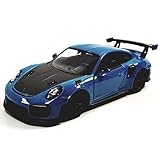
- Doors Open
- Pullback Action
- Die Cast Metal Body
- PULL BACK ACTION WITH FREE ROLLING WHEELS
How is the Vision EfficientDynamics different from the BMW i8?
The Vision EfficientDynamics was a prototype and design statement; the BMW i8 was the later production-oriented model. The two cars share a clear design lineage, but they were not the same physical vehicle and did not have identical powertrain specifications.
| Comparison | Vision EfficientDynamics | BMW i8 |
|---|---|---|
| Development stage | 2009 concept and technology demonstrator | Later series-production plug-in-hybrid sports car |
| Film identity | Vehicle featured in Mission: Impossible – Ghost Protocol | Not the exact car used in the film |
| Concept powertrain description | Three-cylinder turbodiesel engine plus two electric motors | Production plug-in-hybrid configuration developed for series manufacture |
| Design relationship | Original futuristic design and technology study | Production descendant based on the concept’s direction |
| How to describe a scale model | Exact concept identity for the movie-car search | Related i8 lineage, not an exact Vision EfficientDynamics replica |
BMW’s own historical account describes the 2009 Frankfurt Motor Show unveiling, the 2011 film appearance, and the subsequent development toward the i8. The chronology is therefore straightforward: BMW unveiled the Vision EfficientDynamics in 2009, used it in Ghost Protocol in 2011, and developed the concept’s ideas into the later BMW i8 family. BMW’s historical account of the concept and BMW i8 development documents that progression.
What film was the BMW Vision EfficientDynamics in?
The concept appeared in Mission: Impossible – Ghost Protocol, the fourth film in the Mission: Impossible series. Paramount identifies the film as a 2011 PG-13 action/adventure/thriller with a 133-minute runtime. The film stars Tom Cruise as Ethan Hunt, whose character drives and uses several BMW vehicles during the story. Paramount’s official film page confirms the movie’s basic metadata.
BMW’s involvement was part of a broader automotive partnership rather than a claim that the concept had entered normal customer production. The Vision EfficientDynamics was valuable to the film because its futuristic appearance communicated advanced technology immediately, while its relationship to the forthcoming i8 gave BMW a bridge between concept-car design and its future electrified performance range.
Rank #4
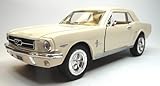
- Authentic 1:36 Scale: Meticulously crafted 1964 1/2 Ford Mustang model car with impressive 5-inch length.
- Realistic Details: Die-cast metal body with opening doors and eye-catching blue finish.
- Interactive Play: Engaging pull-back action for thrilling motion across smooth surfaces.
- Collectible Quality: Ideal for model car enthusiasts and collectors seeking miniature automotive replicas.
- Brand: KiNSMART, a trusted name in die-cast vehicle models and toys.
Can I buy a BMW Vision EfficientDynamics scale model car?
Documented BMW-branded scale models of the exact Vision EfficientDynamics concept exist, although availability, price, seller, scale, and condition require checking at the time of purchase. A collector searching for the movie car should use the specific phrase BMW Vision EfficientDynamics scale model car rather than searching only for “BMW i8 model.”
BMW parts and lifestyle material document examples including a 1:43 white-and-blue model, a 1:64 model, and a 1:14 remote-controlled model. One documented 1:43 example is listed under BMW part number 80 42 2 225 391, while the cited retailer marks the 1:64 example as no longer available. These references establish that the models have existed; they do not guarantee current stock or verify any particular marketplace listing.
For a collector, the most useful search terms are BMW Vision EfficientDynamics die-cast model and 1:43 BMW Vision EfficientDynamics model. A BMW i8 model can be a good related purchase for someone interested in the production descendant, but it should not be advertised as the exact Ghost Protocol vehicle. BMW’s lifestyle catalog includes the documented model references, while retailer records show the 1:43 and 1:64 examples: BMW i Lifestyle catalog, documented 1:43 model listing, and documented Vision EfficientDynamics model listing.
Was the Mission: Impossible 4 BMW really an i8?
No. The BMW in Mission: Impossible – Ghost Protocol was the BMW Vision EfficientDynamics concept car. The BMW i8 was the later production descendant based on that concept, so calling the film car “an i8” is understandable as shorthand for its lineage but inaccurate as a precise identification.
Best Value

- Opening parts and rolling wheels
- Easy assembly, pre-painted metal body
- When finished the vehicles are fully functional
- Rolling diecast replica
- Skill level: intermediate
The best description for captions, scripts, and collector listings is: The BMW in Ghost Protocol is the BMW Vision EfficientDynamics concept, the futuristic prototype that BMW later developed into the i8.
Frequently Asked Questions
What is the BMW Vision EfficientDynamics?
The BMW Vision EfficientDynamics concept was a 2+2 plug-in full-hybrid prototype unveiled in 2009. BMW equipped the concept with a three-cylinder turbodiesel engine, two electric motors, gullwing-style doors, and lightweight aerodynamic construction.
Can I buy a model of the BMW Vision EfficientDynamics?
Yes, documented BMW-branded Vision EfficientDynamics models include 1:43, 1:64, and 1:14 remote-controlled examples. Current availability, price, seller, scale, and condition must be checked before purchase because the cited 1:64 retailer listing is marked unavailable.
Is the BMW from Ghost Protocol the same as the i8?
The BMW i8 was based on the Vision EfficientDynamics concept and became its later production descendant, but the i8 was not the exact physical vehicle featured in Mission: Impossible – Ghost Protocol.
The Tool Desk
Outbyte PC Repair FREEClear out junk files and repair common Windows errorsFree Scan →Outbyte Driver Updater FREEScan for outdated or missing drivers - takes under a minuteDriver Scan →The Bottom Line
Bottom line: Mission: Impossible – Ghost Protocol featured the BMW Vision EfficientDynamics concept, not a production BMW i8. The Vision was a 2+2 plug-in-hybrid prototype with a three-cylinder turbodiesel engine and two electric motors; the BMW i8 came later as its production descendant.
Quick Recap
Product prices and availability are accurate as of the date/time indicated and are subject to change. Any price and availability information displayed on Amazon at the time of purchase will apply.