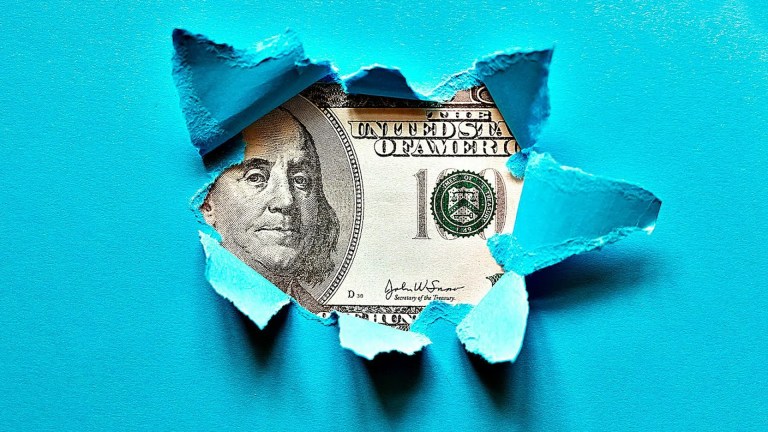
The 2014 celebrity-image disclosures were widely called an “iCloud hack,” but the strongest public evidence points to targeted credential theft and unauthorized access to individual accounts—not a confirmed breach of Apple’s core iCloud systems. The incident is more accurately understood as a landmark case of phishing, account compromise, and nonconsensual intimate-image abuse.
This explainer examines what Apple and federal prosecutions established, what they did not establish, and what account-security and removal options exist today. It does not identify alleged victims or link to intimate material.
What happened in September 2014?
In late August and early September 2014, private intimate photographs and videos linked to a number of celebrities were stolen from online accounts and circulated without permission. The episode is often described as an “iCloud hack,” but that label is too broad: Apple said its investigation found targeted attacks against individual usernames, passwords, and security questions—not a breach of iCloud or the Find My iPhone service.
The public record also does not establish that every image attributed to the incident was authentic, that every person named in online reposts was a victim, or that one person was responsible for every disclosure. The most accurate description is the 2014 celebrity-image leak or, more broadly, a case of unauthorized account access followed by the nonconsensual disclosure of intimate material.
Do these 3 things before closing this tab:
1Clear out junk files and repair common Windows errors2Scan for outdated or missing drivers - takes under a minute3Repair Windows errors before they cause bigger problems#1 Best Overall

- Computer lock for HP, Lenovo, Acer, Asus and other brands; not compatible with Dell or Alienware (see part # K68008WW)
- Resettable 4-wheel Number code with 10, 000 possible combinations. Push-button design for one-handed engagement to easily attach lock
- 6’ long carbon steel cable is cut-resistant and anchors to desks, tables, or any fixed structure
- Attaches to laptops, desktops, TVs, monitors, hard drives, docking stations, projectors or any other device featuring a Kensington standard size security slot
- Independently verified and tested for industry-leading standards in torque/pull, foreign implements, lock lifecycle, corrosion, key strength and other environmental condition
This distinction matters. It separates three questions that were frequently collapsed into one sensational story: how accounts were accessed, who obtained particular files, and who ultimately published or redistributed them.
Was iCloud itself hacked?
According to Apple’s contemporaneous statement, the cases it investigated involved attackers obtaining or guessing account credentials and security answers through targeted methods. Apple said the incidents were not caused by a compromise of its core iCloud or Find My iPhone systems.
That does not mean the accounts were safe or that the stolen material was less serious. An attacker who obtains a valid password can often enter an account as if they were the account holder. Depending on the account and its settings, that may expose photographs, videos, email, contacts, backups, or other personal information without requiring a flaw in the cloud provider’s central infrastructure.
The incident therefore became a major lesson in account authentication and social engineering. A platform can have strong infrastructure while individual accounts remain vulnerable to phishing, reused passwords, exposed security answers, or deceptive login prompts.
What the federal cases establish—and what they do not
Later federal prosecutions provide documented examples of how celebrity-linked and other accounts were targeted. They also show why it is inaccurate to treat the entire 2014 episode as one proven operation.
Ryan Collins
The U.S. Department of Justice said Ryan Collins used phishing to access more than 100 Apple and Google email accounts. The accounts included at least 50 iCloud accounts and 72 Gmail accounts. After gaining access, he obtained personal information including nude photographs and videos; in some instances, prosecutors said he used software to download entire iCloud backups.
Rank #2

- 5-Foot (1.5m) Carbon Steel Cable - Resists cutting attempts and provides ample length for easily anchoring your laptop to desks, tables, and other attachment points. Incorporates anti-shearing plastic sleeve to protect surfaces
- Slim Lock Head - Designed to support thin laptops using standard lock slots, lock secures while allowing your device to lie flat and stable
- Resettable 4-Wheel Number Code - Set or reset your personal number code from 10,000 possible combinations
- Pivoting Head and Rotating Anchor - The lock tip rotates 360º and the cable rotates up to 90º—allowing access to the ports near the lock slot on most devices and providing a convenient locking and unlocking experience
- One-Handed Attachment - Convenient slider allows for quick and easy attachment to the laptop with one hand
Critically, the DOJ’s account said investigators had not found evidence linking Collins to the actual public leaks or proving that he shared or uploaded the material. His case documents unauthorized access and theft of private information. They do not prove that he published every image later circulated online.
George Garofano
A separate case involving George Garofano describes another credential-phishing scheme. From April 2013 through October 2014, prosecutors said he sent emails that appeared to come from Apple security accounts. The messages induced victims either to provide their usernames and passwords or to enter them on a third-party website.
The DOJ said Garofano used those credentials to access approximately 240 iCloud accounts. He admitted stealing private photographs and videos and, according to prosecutors, trading credentials and stolen materials with other people. He pleaded guilty in April 2018 and was sentenced to eight months in federal prison in August 2018.
Garofano’s case demonstrates the mechanics of phishing and the scale that credential theft could reach. It still does not establish that every image associated with the 2014 disclosures came from his activity or that a single defendant controlled the entire chain from account access to online publication.
Why “nonconsensual intimate-image abuse” is the better framing
The people depicted did not consent to the theft or publication of their private material. Their profession, fame, or decision to create an intimate image does not make that image public property. The relevant wrong is unauthorized access, acquisition, publication, or distribution—not the private act of taking the photograph.
The Federal Trade Commission uses the term image-based abuse for intimate images that are created, shared, or threatened without the depicted person’s permission. The category can include real images, digitally altered images, and AI-generated material. The FTC notes that the effects may be psychological, financial, and reputational, and can persist long after an individual post disappears.
What’s actually slowing this PC down?
Pick the symptom - the matching free tool is one click away.
Rank #3

- ✔ANTI-THEFT: The lock head is made of super strong stainless steel and can be rotated 360 degrees. The cable is made of cut-resistant stranded steel and is covered with PVC coating. The extra length of 6.5 feet can help you easily move the device and fully meet your daily needs. Please note: The computer cable lock is fit for standard lock slots (7x3mm), not applicable to wedge-shaped lock slots and Nano-shaped lock slots
- ✔WITH 2 KEYS: The unique lock engagement creates the strongest connection between the lock and the lock slot. The interface between the lock and the cable can be freely rotated.
- ✔WIDE APPLICATION: Suitable for most tablets and laptops. There is an anchor plate, which can be applied to devices without a security keyhole. It also fits for most laptops that have standard slots. Works with the standard Security Slot (7x3mm). Note: Not all Laptop lock slots are the same size
- ✔EASY TO USE: For devices without lock slot: Bound the anchor plate, which is lined with strong adhesive, to the hard surface of the devices, then insert the locking head into the plate with keys and loop the cable around a fixed object. For laptops with a lock slot, simply insert the lock head into the slot, and then wind the cable around a fixed object
- ✔PACKAGE: 10*Anchor Plate,10*6.5ft Cable Lock. There are some Models need to be used with I3C Security Plate!Above, without a standard slot(size of slot: 3✖7mm) could not use it directly, need to be used I3C anchor plate
That language also avoids a common reporting failure: treating the incident as celebrity entertainment or as an opportunity to identify alleged victims. This article does not name people merely because their names appeared in low-quality reposts, and it does not link to, reproduce, describe, or help locate intimate material.
What the incident revealed about phishing
The documented attack patterns relied on deception rather than a publicly established vulnerability in Apple’s cloud infrastructure. A phishing message may imitate a trusted company, warn that an account is at risk, and direct the recipient to a counterfeit sign-in page. If the victim enters a password there, the attacker can use the credential on the real service.
Security questions create another risk. Answers are sometimes predictable, reused, or discoverable from public information. Password reuse is equally dangerous: a password exposed in an unrelated breach can become a key to an email account, cloud account, or recovery channel elsewhere.
Once an attacker controls an email or cloud account, the damage may extend beyond one file. The attacker can search messages, download backups, identify other accounts, reset passwords, or use stolen credentials to target additional people. This is why the response must protect both the cloud account and the email account associated with it.
Free tools Windows power users keep installed
One-click scans. No signup required.
How Apple’s security guidance has changed
Apple’s 2014 statement recommended strong passwords and two-step verification. Current Apple guidance describes two-factor authentication as requiring the account password plus a six-digit verification code when someone signs in on a new device or through the web.
For an Apple Account, the practical baseline is:
- Use a long, unique password that is not reused for email or another service.
- Enable two-factor authentication and protect the verification method.
- Never provide a password or verification code in response to an unexpected security email, phone call, or message.
- Review account-recovery details and trusted devices periodically.
- Secure the email account connected to the Apple Account with a unique password and multifactor authentication as well.
Two-factor authentication is not a reason to trust every login prompt. An attacker who has obtained a password may try to persuade a user to disclose a code or approve an unexpected sign-in. Treat an unsolicited request for a code as a warning sign.
Rank #4

- 5-Foot (1.5m) Carbon Steel Cable - Resists cutting attempts and provides ample length for easily anchoring your laptop to desks, tables, and other attachment points. Incorporates anti-shearing plastic sleeve to protect surfaces
- Slim Lock Head - Designed to support thin laptops using nano sized lock slots (see images for sizing), lock secures while allowing your device to lie flat and stable
- Resettable 4-Wheel Number Code - Set or reset your personal number code from 10,000 possible combinations
- Pivoting Head and Rotating Anchor - The lock tip rotates 360º and the cable rotates up to 90º—allowing access to the ports near the lock slot on most devices and providing a convenient locking and unlocking experience
When a physical security key may help
Apple now offers an optional security-key feature designed for people facing elevated risks from targeted phishing and social engineering. A compatible physical key replaces the normal six-digit verification code as the second factor. Apple requires at least two compatible keys when the feature is enabled, so one can serve as a backup if the other is lost.
Readers researching this option can compare a FIDO2 security key, but compatibility should be checked before purchase and a backup key should be maintained. A physical key is intended to make remote credential-phishing attacks harder because the attacker also needs the physical device. It would be inaccurate to claim that any particular security measure would certainly have prevented the 2014 incidents, or that owning a key makes an account invulnerable.
Recommended Free Tools
What U.S. law now provides
The TAKE IT DOWN Act became Public Law 119-12 on May 19, 2025. Among other provisions, it criminalizes certain intentional online disclosures of nonconsensual intimate visual depictions and addresses certain digitally forged depictions.
The law also requires covered platforms to establish a notice-and-removal process. After receiving a valid removal request, a covered platform generally must remove the depiction and make reasonable efforts to remove known identical copies as soon as possible and no later than 48 hours.
That is an important remedy, but it is not a guarantee that every copy will vanish immediately. The law applies to covered platforms and defined circumstances. It does not promise instant removal from every website, mirror, search result, private message, offline device, or service outside the law’s scope. It also does not replace the need to preserve evidence and seek appropriate professional or law-enforcement assistance.
The FTC’s enforcement history reinforces that principle. In 2018, the agency’s order against MyEx.com prohibited dissemination of intimate material without verifiable affirmative written consent and required the destruction of improperly obtained material. The case illustrates that building a service around nonconsensual intimate images and personal information can create serious consumer-protection consequences.
What to do if private intimate material is posted today
Anyone affected should prioritize safety and avoid increasing the material’s reach. The following steps are general information, not individualized legal advice:
Best Value

- Laptop Lock for Dell laptops fits seamlessly into Dell and Alienware laptops with the wedge type lock slot
- Resettable 4-wheel Number code with 10, 000 possible combinations. Push-button design for one-handed engagement to easily attach lock
- Unique lock engagement creates the strongest connection between the lock head and slot; 6' long carbon steel cable is cut-resistant and anchors to desk, table or any fixed structure
- Independently verified and tested for industry-leading standards in torque/pull, foreign implements, lock lifecycle, corrosion, key strength and other environmental condition
- Do not forward or repost the material. Preserve non-intimate evidence such as usernames, post URLs, dates, messages, threats, and platform notices where doing so is safe. Avoid creating additional copies of the image or video merely to document it.
- Secure the relevant accounts. Change the Apple Account and email passwords from a trusted device, make each password unique, enable two-factor authentication, and review recovery information and trusted devices for changes you did not make.
- Use the platform’s privacy or nonconsensual-intimate-image reporting channel. Provide the information requested by the platform and make a formal removal request. In the United States, the TAKE IT DOWN Act may provide an additional notice-and-removal framework when its requirements apply.
- Consult official support and reporting resources. The FTC’s image-based-abuse guidance explains removal requests and directs affected people toward further assistance. Local or federal law enforcement may also be appropriate, particularly when there are threats, extortion, stalking, unauthorized account access, or continuing distribution.
- Get qualified help for legal or safety questions. The law’s application depends on the conduct, platform, jurisdiction, and other facts. A qualified attorney, victim-support organization, or law-enforcement agency can address circumstances that a general article cannot.
Removal efforts can reduce circulation, but no responsible source should promise complete erasure. Search results, reposts, screenshots, private storage, and copies on services outside a platform’s control may require separate action.
The lasting lesson
The 2014 disclosures were not simply a story about photographs appearing online. They exposed how targeted credential theft can turn a private account into a source of highly personal information, and how rapidly stolen material can be redistributed once it enters the public internet.
Apple and DOJ records support a careful account centered on phishing and unauthorized account access. They do not support the broader claim that Apple’s core systems were breached or that one defendant published every image. Current FTC guidance and federal law place the continuing issue in the correct category: image-based abuse, privacy violation, and cybercrime—not entertainment.
PC Slower Than It Used to Be?
A free scan shows the junk files, broken settings and background clutter dragging Windows down - then fixes them in one click.Free scan · Windows 10 & 11Crashes, No Sound, or Screen Glitches?
Random freezes, missing sound and display glitches usually trace back to one bad driver. Find and replace yours safely.Free scan · under a minutePrimary records behind this explainer
- Apple’s contemporaneous statement concerning its 2014 investigation of targeted account attacks.
- U.S. Department of Justice records concerning Ryan Collins’s phishing and unauthorized access to Apple and Google accounts.
- U.S. Department of Justice records concerning George Garofano’s access to approximately 240 iCloud accounts, guilty plea, and sentence.
- Federal Trade Commission guidance on image-based abuse and the FTC’s 2018 MyEx.com enforcement order.
- The TAKE IT DOWN Act, Public Law 119-12, enacted May 19, 2025.
Frequently Asked Questions
Apple said its investigation found targeted attacks against individual usernames, passwords, and security questions, not a breach of iCloud or Find My iPhone systems. Individual account compromises can still expose cloud-stored material without a core platform breach.
Was Apple’s iCloud service itself breached in 2014?
The public record does not establish that. The Ryan Collins case documented unauthorized access but, according to the DOJ, did not uncover evidence linking him to the actual leaks. The George Garofano case documented access to approximately 240 iCloud accounts and theft of private material, but it does not prove that he was responsible for every disclosure.
Did one person leak all of the images associated with the incident?
For covered platforms and qualifying circumstances, the law requires a platform to remove material after a valid removal request and make reasonable efforts to remove known identical copies as soon as possible and no later than 48 hours. It does not guarantee removal from every website, search result, mirror, or offline copy.
What is the TAKE IT DOWN Act’s 48-hour rule?
Do not repost or forward it. Preserve safe, non-intimate evidence, secure the affected Apple and email accounts, use the platform’s privacy or nonconsensual-intimate-image reporting process, and consult FTC, law-enforcement, victim-support, or qualified legal resources.
What should someone do if intimate material is shared without permission?
The Bottom Line
Bottom line: The 2014 celebrity-image leak is best understood as a case of targeted credential theft, unauthorized account access, and nonconsensual intimate-image abuse—not as a proven platform-wide iCloud breach. Strong unique passwords, two-factor authentication, phishing awareness, and—where compatible—phishing-resistant security keys can reduce risk, while victims today may have platform, FTC, law-enforcement, and statutory removal options without any guarantee of instant or complete erasure.
The Tool Desk
Outbyte PC Repair FREERepair Windows errors before they cause bigger problemsFix Now →Outbyte Driver Updater FREEFix the driver behind crashes, sound loss and screen glitchesFind Drivers →Quick Recap
Product prices and availability are accurate as of the date/time indicated and are subject to change. Any price and availability information displayed on Amazon at the time of purchase will apply.