Free tools Windows power users keep installed
One-click scans. No signup required.
Usher’s best songs combine controlled R&B vocals, emotionally clear storytelling, and commanding pop performance. This editorial ranking puts “Yeah!” at No. 1, followed by “U Got It Bad,” “You Make Me Wanna…,” “Burn,” and “Confessions Part II,” while making room for essential album cuts and later experiments such as “Climax” and “There Goes My Baby.”
Usher’s best songs do more than alternate between slow jams and club hits. At his strongest, he is simultaneously a precise R&B vocalist, an emotionally exposed storyteller, and a performer who can make a record feel physical. This editorial ranking weighs cultural impact, songwriting and emotional clarity, vocal and performance quality, production, and replay value—not chart position alone.
If you want to start with the album that contains the largest cluster of essentials, look for an Usher Confessions CD or a verified vinyl edition. Check the exact edition and track list before buying: no single album contains every song below.
The 25 best Usher songs, ranked
1. “Yeah!” — Confessions (2004)
“Yeah!” is the defining Usher party record because it makes several seemingly different identities work at once. Lil Jon’s Atlanta crunk production supplies the unmistakable snap, Ludacris brings a memorable guest verse, and Usher’s polished R&B presence gives the song its crossover center. The chorus is immediate, the groove is physical, and the arrangement is built for collective reaction. It is not merely one of Usher’s biggest songs; it is the clearest document of his superstar peak and the best entry point into his catalog.
Windows Errors? Fix Them Before They Spread
Repair common Windows errors and clear accumulated junk for a smoother, more stable PC - no reinstall needed.Free scan · no reinstallOutdated Drivers Are Slowing You Down
One free scan finds every outdated or missing driver and matches the right update for your exact hardware.Free scan · exact hardware match2. “U Got It Bad” — 8701 (2001)
“U Got It Bad” may be Usher’s definitive obsession song. The verses are controlled and almost conversational, but the chorus keeps expanding into something more desperate. His elastic phrasing makes emotional turmoil sound sleek without making it feel remote. That balance—an arena-sized performance that still sounds like one person admitting he has lost control—is central to Usher’s appeal.
#1 Best Overall
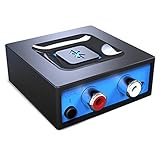
- Listen music wireless: Connect with computer speakers, home stereo systems or other speaker systems via the 3.5 mm or RCA cable, then pair with the Bluetooth audio devices such as smartphones or tablet for streaming music.
- Easy setup and automatic reconnect: There is a big bluetooth symbol button in bluetooth receiver middle. Pair your bluetooth device to this adapter with a single button press. Click once means Bluetooth Connect/Disconnect. Hold the botton 3 second mean ON/OFF. It can reconnect automatically with the previously paired device.
- Wireless range: Indoors(without obstacles) connect rang up 30-40 ft (10-12 m).
- Works with most device: Bluetooth enabled device including smartphones, tablets, computers, laptops upon and any powered PC speakers, home stereo systems and A/V receivers.
- NOTE: This adapter doesn't have built-in battery, power by AC to DC power adapter or USB cable. This product is a bluetooth receiver ONLY, not a bluetooth transmitter. Only to give Bluetooth capabilities to an existing stereo / powered speaker / PA. If you have any problems, please contact us at any time by Amazon Order, and we will speed up the process to resolve the issue.
3. “You Make Me Wanna…” — My Way (1997)
This is the record that announced Usher’s mature identity. Its premise is familiar: desire colliding with an existing relationship. But the performance is direct, youthful, and persuasive rather than melodramatic. The silky melody and clean vocal arrangement also show why My Way represented such a leap forward from his tentative early period. Usher sounds like a singer who has found both his subject and his confidence.
4. “Burn” — Confessions (2004)
“Burn” understands that a breakup can be both necessary and painful. Usher sings as someone who knows the relationship is ending but cannot make the emotional decision feel simple. The vocal is carefully controlled—resigned in the verses, more openly wounded as the song grows—and the production gives the central contradiction room to land. Within the larger Confessions narrative, it is one of the album’s most precise emotional statements.
5. “Confessions Part II” — Confessions (2004)
The dramatic centerpiece of Confessions is effective because it feels like pressure building in real time. Rather than presenting its revelation as detached information, Usher delivers it with escalating anxiety and guilt. The song also demonstrates the unusual narrative ambition of the album: a hit single can function as a chapter in a larger story rather than as an isolated mood. Few Usher performances are this exposed or this structurally consequential.
What’s actually slowing this PC down?
Pick the symptom - the matching free tool is one click away.
6. “My Boo” — Confessions (2004), with Alicia Keys
Many R&B duets make one singer feel like the guest. “My Boo” does not. Alicia Keys has an equally memorable countervoice, and the two performances give the song the feeling of a conversation between two people whose affection has survived separation. Its nostalgia is not purely comforting; there is unresolved feeling underneath it. That emotional ambiguity is why the song has lasted beyond the normal life of a duet built around remembrance.
7. “Nice & Slow” — My Way (1997)
“Nice & Slow” is a foundational Usher slow jam and, according to the established catalog history around My Way, his first U.S. Billboard Hot 100 No. 1. Its appeal is not based on vocal excess. The production leaves space, Usher sounds confident without overworking the seduction, and the melody gives the performance an easy, intimate pull. It remains one of the clearest examples of the young singer’s emerging command.
Rank #2

- POWERFUL 5.1 SURROUND SOUND: Delivers 1000W peak power with five satellite speakers and an 8" subwoofer for rich, immersive audio in your home theater setup.
- MULTIPLE INPUT OPTIONS: Connect via Bluetooth, USB, SD, RCA, or optical input-ideal for TVs, smartphones, DVD players, and more.
- BUILT-IN KARAOKE FEATURES: Includes 2 mic inputs with echo control, a 5-band EQ, and FM radio for karaoke parties and audio customization.
- LED LIGHT MODES + REMOTE: Features an LED display and subwoofer/satellite LED lights with modes like blink-to-beat and spectrum analyzer, all controllable via the included remote.
- READY TO SET UP: Includes all speaker cables (up to 30 ft), mounting kits, signal and antenna cables, and a setup manual for fast and easy installation.
8. “U Remind Me” — 8701 (2001)
“U Remind Me” turns emotional caution into pop architecture. Usher is attracted to someone who reminds him of a painful former relationship, so the bright, clean hook carries a more complicated idea about projection and self-protection. That tension gives the song depth without weighing it down. It is breezy on the surface, but the narrator is trying very deliberately not to repeat an old mistake.
9. “Climax” — Looking 4 Myself (2012)
“Climax” belongs this high because it takes a real artistic risk. The sparse electronic-R&B production makes Usher’s falsetto and phrasing feel unusually exposed, while the arrangement keeps intensifying without offering the conventional release its title seems to promise. The result is tense rather than explosive. It shows that Usher could still reinvent the emotional mechanics of his sound instead of simply reproducing the formulas that made him famous.
Quick wins for a faster PC:
Repair Windows errors before they cause bigger problemsFix Now →Fix the driver behind crashes, sound loss and screen glitchesFind Drivers →Clear out junk files and repair common Windows errorsFree Scan →10. “Love in This Club” — Here I Stand (2008)
“Love in This Club” is a late-2000s club record with a distinctly Usher-like sense of control. The song begins as an invitation and gradually becomes an anthem, but the verses retain a conversational, sensual quality. Its large-room design never completely overwhelms the singer’s personality. The record is polished and commercially minded, yet Usher remains the focus rather than just another voice on a fashionable production.
11. “Caught Up” — Confessions (2004)
“Caught Up” is the kinetic side of the Confessions era. Instead of dwelling on guilt or romantic damage, it emphasizes movement, swagger, and the thrill of being overwhelmed by attraction. Usher sounds playful but technically exact, riding the beat with the kind of physical confidence that made his dancing and stage presence inseparable from his music. It is one of his best records for demonstrating that performance energy can be a compositional element.
12. “OMG” — Raymond v Raymond (2010)
“OMG” is not the most traditionally R&B song in Usher’s catalog, but that is part of its importance. It commits to maximalist pop, spectacle, and a production designed to fill a large space. Usher does not hedge or try to make the song more understated than it is. He performs at its scale, making it a useful example of his willingness to occupy mainstream pop territory even when it sits outside the sound that first established him.
Rank #3
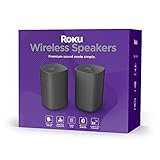
- Add cinematic sound to your Roku TV or surround sound to your Roku audio system. Requires Roku TV, Roku Streambar, Roku Streambar Pro, or Roku Smart Soundbar—sold separately. Only works with Roku TV or Roku Audio. Roku Streambar SE is not compatible.
- Powerful, premium audio: With high frequencies and dynamic bass, Roku Wireless Speakers are meticulously engineered to deliver full, clear sound and crisp dialogue with seamless audio/video sync to your Roku TV or Roku Smart Soundbar
- Be immersed in your TV: Experience room-filling audio that moves with the action, conversations like you’re in the room, and soundscapes that transport you to another world—it's cinematic sound for your entertainment
- Elevate your music: Listen to your music come to life with clear highs and volume without distortion—simply tune into your favorite music channels or stream via Bluetooth
- Fine-tune your sound: Easily boost the volume of voices with Speech Clarity, lower loud commercials for consistent sound with Volume Leveling, and enjoy your TV without waking the house using Night Mode
13. “Trading Places” — Here I Stand (2008)
“Trading Places” is an underappreciated showcase for intimacy. Its appeal comes less from an oversized chorus than from the role reversal at its center and the sense of two people negotiating closeness in real time. Usher’s vocal detail makes the sensuality conversational rather than generic. It rewards listeners who are more interested in phrasing, atmosphere, and character than in a song’s immediate chart footprint.
Recommended Free Tools
14. “Superstar” — Confessions (2004)
“Superstar” provides a warm counterweight to the album’s more painful songs. Usher’s vocal is affectionate and smooth, and the central compliment is unusually clear: the person he loves is not merely attractive or desired but elevated. That directness gives the song its charm. It is a quieter essential from Confessions, built around admiration rather than crisis.
15. “There Goes My Baby” — Raymond v Raymond (2010)
“There Goes My Baby” is a slow-burning romantic performance for listeners who prefer Usher’s control to his biggest hooks. The melody moves patiently, allowing the vocal runs and small changes in emphasis to do the expressive work. It is not trying to recreate the event-sized impact of “Yeah!” or “OMG.” Instead, it shows how effectively Usher could make restraint feel luxurious and emotionally complete.
16. “Moving Mountains” — Here I Stand (2008)
“Moving Mountains” reaches for a cinematic scale. The song treats relational distance as something almost physical—an obstacle that requires extraordinary effort to overcome—and Usher commits to that size emotionally. It is more atmospheric than the album’s club singles, with a dramatic arrangement that lets him sound determined, wounded, and grand at once. The result broadens the picture of what Here I Stand was attempting.
17. “You Don’t Have to Call” — 8701 (2001)
The intelligence of “You Don’t Have to Call” is in its lightness. It is a post-breakup song that refuses to wallow, turning independence into an easygoing groove rather than a speech about personal strength. Usher sounds relaxed and socially unburdened, which makes the emotional boundary feel believable. The track is a reminder that his catalog is not only about grand declarations, guilt, and romantic drama.
Rank #4
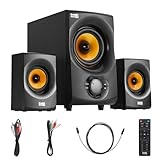
- BLUETOOTH 2.1 MULTIMEDIA SPEAKER SYSTEM - Stream music from your phone to the built in Bluetooth receiver, integrated power amp with 350 watts system power
- EASY PLUG AND PLAY CONNECTIONS - Optical and Standard dual RCA stereo inputs connect to most audio sources, illuminated front panel controls, USB drive and SD card input, full function remote
- HIGHEST QUALITY - Powered subwoofer speaker is 12.25" x 6.75" x 12.5", 40Hz-20 kHz, 2 wired satellite speakers are 6.75" x 4.125" x 3.75" each, satellite speakers have 15 foot single RCA cables
- SYSTEM REQUIREMENTS - Standard US 110V grounded wall plug, any audio device with a standard 3.5mm headphone, Optical or RCA stereo audio outputs. Use for TV, home entertainment, cell phone, laptop, PC, DVD, MP3 player or gaming
- WHAT'S IN THE BOX - Acoustic Audio by Goldwood AA2170 powered subwoofer speaker, 2 passive wired satellite speakers, full function remote, Digital/Optical Cable, 3.5mm to RCA cable, RCA to RCA cable, instruction manual
18. “My Way” — My Way (1997)
The title track crystallizes the confidence of Usher’s breakthrough period. It is not quite as foundational as “You Make Me Wanna…” or “Nice & Slow,” but its self-assured tone and polished arrangement make it an important statement. The song captures an artist moving decisively into his own identity: less tentative, more stylish, and ready to make romantic certainty part of his brand.
19. “Separated” — 8701 (2001)
“Separated” works through directness. Usher sounds hurt and frustrated, but also ready to draw a line, and the lack of excessive ornament gives the breakup its sing-along force. It is emotionally legible from the first verse: the relationship has reached a point where explanation is less useful than separation. That clarity makes it durable even beside the more elaborate productions on 8701.
20. “Scream” — Looking 4 Myself (2012)
“Scream” reconnects Usher with the physicality of his club records. It is concise, energetic, and built around performance momentum rather than a complicated narrative. The song succeeds because he commits fully to its high-gloss pop-R&B scale. It is less distinctive than “Climax,” but it remains an effective reminder that Usher’s ability to command a dance floor survived well beyond his early-2000s peak.
21. “Good Kisser” — single (2014)
“Good Kisser” is a groove-first record with a deliberately tactile feel. Usher sounds relaxed, playful, and comfortable letting rhythm carry the song. The production gives it enough character to avoid becoming a generic contemporary R&B single, while the vocal remains nimble and confident. Its place here reflects the strength of the performance and groove rather than a claim that every later release matched his classic period.
22. “Can U Get Wit It” — Usher (1994)
“Can U Get Wit It” earns a place because a career-spanning list should document the starting point as well as the peak. The song comes from before Usher’s mature voice and catalog identity were fully formed, so it is less refined than the records that follow. Its value is historical and developmental: you can hear an early-career performer beginning to move toward the rhythmic confidence and melodic personality that would define My Way.
Best Value

- Powerful 1000W Sound System: Elevate your music experience with this large bluetooth speaker featuring a built-in 1000-watt amplifier for crisp, clear audio; Speaker dimensions: 14"L x 16"W x 27"H.
- Dynamic LED Light Display: Crank up the music and enjoy a vibrant multi-colored LED flashing light show that reacts to your music with a built-in on/off switch to match the mood of any event.
- Versatile Playback: Stream music via Bluetooth or connect with RCA, mic, instrument, or AUX inputs; Plus, the FM tuner, USB, and SD card slots offer versatile playback options; Requires a standard 110V grounded wall plug for use.
- Convenient Features: Built for convenience with rear wheels, handles, and an adjustable stand mount; Perfect for outdoor events, tailgating, and beach parties.
- Complete Setup Included: Comes with everything you need—bluetooth speaker with power cord, sturdy stand, wired microphone with cable, MP3 remote, and detailed instruction manual.
23. “Don’t Waste My Time” — A (2018), with Ella Mai
“Don’t Waste My Time” shows Usher adapting to a younger contemporary R&B setting without sounding like a guest in his own song. Ella Mai gives the duet a complementary presence, while Usher’s vocal remains assured and recognizable. It is a later-catalog inclusion, not an argument that the song reaches the artistic heights of 8701 or Confessions. Its achievement is the ease with which a veteran fits a newer rhythmic environment.
24. “I Cry” — Hard II Love (2016)
“I Cry” broadens the portrait of Usher beyond romance, swagger, and dance-floor performance. Its reflective subject matter brings his vulnerable side into a more openly social and personal register. The track is not included because it was a defining crossover single; it is here because a 25-song career list should leave room for the later work that reveals a different kind of emotional exposure.
25. “Bedtime” — 8701 (2001)
“Bedtime” is a fitting closer because it represents the album-cut side of Usher’s catalog. Its appeal is atmosphere, phrasing, and intimacy rather than crossover scale. The song helps explain why 8701 mattered as a bridge between the confidence of My Way and the narrative ambition of Confessions. It is not the loudest selection here, but it leaves the list in the private, controlled space where Usher’s voice often works best.
What this ranking says about Usher’s catalog
The strongest Usher songs tend to combine three identities: the controlled R&B vocalist, the emotionally exposed relationship narrator, and the physically commanding pop performer. “U Got It Bad,” “Burn,” “Confessions Part II,” and “Climax” represent the first two identities at their most precise. “Yeah!,” “Caught Up,” “Love in This Club,” and “Scream” represent the third.
Confessions receives the largest concentration of entries because its singles combine narrative cohesion, crossover reach, and unusually durable public recognition. That concentration should not be mistaken for a claim that every great Usher song came from one album. My Way established his mature romantic and vocal identity; 8701 refined it; Here I Stand, Raymond v Raymond, Looking 4 Myself, and his later releases show him testing different balances of intimacy, spectacle, electronic production, and contemporary R&B.
The near misses
“Pop Ya Collar,” “More,” “She Came to Give It to You,” “I Don’t Mind,” “Good Good,” “Boyfriend,” “A-Town Girl,” and “In the Air” are all defensible alternatives. They miss the final 25 because the list already contains substantial representation from their lanes: chart-driven pop, club energy, later-career material, and fan-favorite album cuts. A ranking that prioritizes chart reach, dance-floor impact, or recent relevance could reasonably replace several entries.
A useful listening path
- Start with the breakthrough: play “You Make Me Wanna…,” “Nice & Slow,” and “My Way” to hear the identity established by My Way.
- Move to the polished crossover era: listen to “U Got It Bad,” “U Remind Me,” “You Don’t Have to Call,” “Separated,” and “Bedtime” from 8701.
- Hear the full superstar peak: play Confessions in sequence, paying particular attention to “Yeah!,” “Burn,” “Confessions Part II,” “My Boo,” “Caught Up,” and “Superstar.”
- Compare scale and intimacy: put “Love in This Club,” “Trading Places,” and “Moving Mountains” alongside one another to hear the different sides of Here I Stand.
- Finish with experimentation and later range: listen to “Climax,” “Scream,” “There Goes My Baby,” “Good Kisser,” “Don’t Waste My Time,” and “I Cry.”
There is no objectively final order for a catalog this broad. If your priority is cultural impact, “Yeah!” has the strongest case for No. 1. If it is vocal vulnerability, “U Got It Bad” or “Burn” may be the better choice. If it is artistic risk, “Climax” rises sharply. The ranking’s central argument is that Usher’s legacy depends on all three strengths—not just the biggest singles.
Do these 3 things before closing this tab:
1Scan for outdated or missing drivers - takes under a minute2Clear out junk files and repair common Windows errors3Fix the driver behind crashes, sound loss and screen glitchesThe Bottom Line
Bottom line: “Yeah!” is Usher’s most defining song, but the complete picture runs from the breakthrough confidence of “You Make Me Wanna…” and “Nice & Slow” through the emotional architecture of Confessions and the later experimentation of “Climax.” His best catalog is the one that lets the vocalist, storyteller, and performer coexist.
Quick Recap
Product prices and availability are accurate as of the date/time indicated and are subject to change. Any price and availability information displayed on Amazon at the time of purchase will apply.