TIME’s 2014 feature The 19 Best Super Bowl Ads of All Time is best read as an editorial selection, not an official ranking by the NFL or an objective measurement of advertising performance. The commercials stand out for different reasons: emotional storytelling, ambitious production, celebrity casting, cultural timing, visual invention, and jokes that can be understood in seconds.
There is one important archival wrinkle. TIME’s accessible source page says “19,” but its visible text repeats FedEx’s “Stick” and reveals only 18 distinct commercial concepts. The rewatch queue below preserves every identifiable pick and does not invent a nineteenth title. An editor with access to TIME’s original image layout or carousel should verify the missing slot before publication.
| # | Preview | Product | Price | |
|---|---|---|---|---|
| 1 |

|
The Super Bowl of Advertising: How the Commercials Won the Game | $61.87 | Buy on Amazon |
| 2 |

|
When It Was Just a Game: Remembering the First Super Bowl | $14.99 | Buy on Amazon |
These are also not necessarily commercials that first appeared during a single game. By the time Volkswagen released “The Force” online before its broadcast, the Super Bowl ad had become a campaign: a teaser, an early digital release, a television premiere, and a wave of discussion afterward. Use this list as a pregame viewing queue, whether you watch the original spots or official uploads and archival clips where they remain available.
Why these commercials still matter
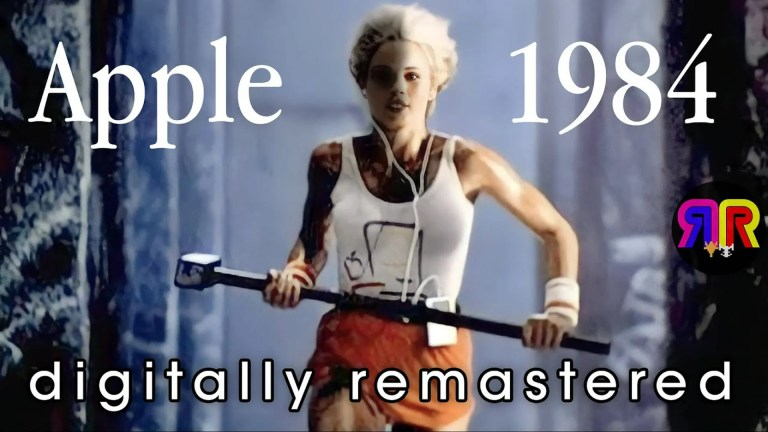
Super Bowl advertising became a cultural spectacle in the 1980s, with Apple’s “1984” often treated as a major turning point. The commercial was not part of TIME’s specific 19-ad feature, but it helps explain the tradition these later spots inherited: a commercial could be discussed as entertainment, filmmaking, comedy, or cultural commentary rather than merely as a sales message.
What’s actually slowing this PC down?
Pick the symptom - the matching free tool is one click away.
#1 Best Overall
TIME’s selection covers several eras and creative strategies. Some ads make the product almost secondary to a portrait of a place or a group of people. Others build a joke around a celebrity, an animal, a recognizable sports rivalry, or a visual premise that needs almost no explanation. The strongest entries make their commercial objective legible without letting it flatten the story.
The order below is a practical rewatch sequence, not a ranking.
The emotional and cinematic standouts
1. Ram — “Farmer” (2013)
Ram’s “Farmer” is a reverent portrait of American farm life rather than a conventional truck demonstration. Dodge commissioned photographers to document rural communities, then paired the images with broadcaster Paul Harvey’s 1978 “So God Made a Farmer” speech.
The ad’s central creative decision is restraint. Its photographs, pacing, and narration ask viewers to contemplate work, family, land, and endurance before the truck becomes the commercial endpoint. That approach gives the spot the tone of a short documentary and explains why its emotional appeal comes more from its depiction of rural identity than from specifications or performance claims.
Free tools Windows power users keep installed
One-click scans. No signup required.
Rewatch it for the way documentary-style imagery can make a product feel like a participant in a larger cultural story. It is also worth discussing critically: its idealized portrait of farming is persuasive because it is selective, polished, and intentionally ceremonial.
2. Chrysler — “Born of Fire” (2011)
“Born of Fire,” featuring Detroit rapper Eminem, turns a two-minute vehicle commercial into a civic statement. It was part of Chrysler’s “Imported from Detroit” campaign and uses Detroit locations, local production talent, and Eminem’s presence to connect the brand with the city’s identity and recovery.
TIME identified it as the Super Bowl’s first two-minute spot. That length matters. The ad has room to establish a mood, show the city, build its argument, and arrive at its slogan without behaving like a conventional 30-second joke. The car is presented less as an isolated object than as an emblem of place, labor, and resilience.
Its effectiveness depends on the audience accepting the connection between an automaker and a city’s revival. That makes it a useful comparison with “Farmer”: both sell a vehicle through a broader portrait of American identity.
Quick wins for a faster PC:
Clear out junk files and repair common Windows errorsFree Scan →Scan for outdated or missing drivers - takes under a minuteDriver Scan →Repair Windows errors before they cause bigger problemsFix Now →3. Volkswagen — “The Force” (2011)
A child in a Darth Vader costume tries to use the Force around the house, with increasingly comic failure. The apparent breakthrough comes when the child’s parent starts the Volkswagen Passat remotely, allowing the commercial to end on a perfectly timed reveal.
“The Force” is a compact lesson in setup and payoff. The costume immediately establishes the character and the fantasy. The household scenes expand the joke without explaining it. The car’s role arrives late, but the ending makes the product essential to the punch line rather than merely placing it in the background.
Its importance extends beyond the joke. TIME described the commercial as an early example of releasing a Super Bowl ad online before its television broadcast, where it attracted attention ahead of game day. That helped normalize the modern idea that a Super Bowl commercial can be a weeks-long digital event rather than a one-time broadcast surprise.
4. Google — “Parisian Love” (2010)
“Parisian Love” tells an entire relationship story through Google search queries. A viewer sees searches connected to Paris, study, romance, and family life, then infers the characters, setting, turning points, and conclusion without conventional dialogue.
The commercial’s discipline is its greatest strength. Search terms are usually functional and fragmented, but here they become the equivalent of narration. The audience supplies the emotional links between them. A few words can suggest a person arriving in a new city, meeting someone, building a life, and preparing for a child.
TIME described it as Google’s first television advertising appearance. The ad is a particularly clear example of turning an everyday interface into a storytelling device: the product is not just shown; its ordinary use becomes the structure of the narrative.
Visual concepts, stars, and absurdity
5. Audi — “The Chase” (2009)
Jason Statham moves through a stylized history of getaway-car movies before arriving at Audi’s supercharged A6. The commercial compresses several eras of action cinema into a fast-moving pursuit, with vehicles and visual styles changing as the chase progresses.
The premise gives Audi an elegant position in the story: the new car is presented as the modern successor to the memorable chase vehicles of film history. Statham supplies instant action credibility, but the ad’s real hook is the transformation structure. Viewers recognize the conventions of a car chase, then watch the commercial update them.
Outdated Drivers Are Slowing You Down
One free scan finds every outdated or missing driver and matches the right update for your exact hardware.Free scan · exact hardware matchPC Slower Than It Used to Be?
A free scan shows the junk files, broken settings and background clutter dragging Windows down - then fixes them in one click.Free scan · Windows 10 & 11It is a good example of celebrity use that serves a concept. Statham is not simply appearing to lend fame to the vehicle; his established screen persona helps the commercial communicate speed, danger, and cinematic authority almost immediately.
6. Emerald Nuts — “Goulet” (2007)
Robert Goulet appears as a surreal workplace menace who punishes employees for becoming drowsy. The absurdity comes from the mismatch between Goulet’s recognizable performer persona and the office setting, where fatigue becomes the trigger for an unexpected intervention.
The product message is simple: Emerald Nuts are associated with staying energized or alert. The commercial does not build a complicated story around that idea. Instead, it casts an instantly recognizable entertainer as the strange embodiment of workplace wakefulness.
“Goulet” demonstrates how a Super Bowl ad can turn a celebrity’s cultural identity into a visual joke. Its premise is memorable because viewers do not need much context to understand why the appearance is ridiculous.
The Tool Desk
Outbyte Driver Updater FREEScan for outdated or missing drivers - takes under a minuteDriver Scan →Outbyte PC Repair FREEClear out junk files and repair common Windows errorsFree Scan →7. General Motors — “All by Myself” (2007)
A factory robot drops a part, loses its job, and experiences a dark nightmare before waking back at work. The commercial uses the song “All by Myself” and melodramatic imagery to communicate GM’s concern with manufacturing quality and its warranty message.
The spot is also a reminder that attention and approval are not the same thing. TIME noted controversy from suicide-prevention advocates over the commercial’s imagery. That response should remain part of its history. The ad’s dark premise may make the message memorable, but it also risks treating severe emotional distress as a comic device.
It belongs in a historical rewatch because it shows both the reach and the limitations of high-concept Super Bowl advertising. A striking metaphor can make a quality claim vivid, but the metaphor still has ethical and emotional consequences.
8. Late Show with David Letterman — “Dave and Oprah” (2007)
David Letterman and Oprah Winfrey play an unexpectedly romantic couple. The spot is short, self-aware, and almost entirely dependent on the audience recognizing both television personalities immediately.
Do these 3 things before closing this tab:
1Fix the driver behind crashes, sound loss and screen glitches2Clear out junk files and repair common Windows errors3Scan for outdated or missing drivers - takes under a minuteThe joke is the collision between their public identities. Letterman’s comic persona and Winfrey’s stature create an implausible pairing, and the commercial needs very little explanation beyond that premise. TIME also noted a later follow-up that brought Jay Leno into the rivalry.
This is celebrity advertising in its most concentrated form: the stars are not supporting a story so much as the entire story is built from the audience’s assumptions about them.
9. McDonald’s — “Showdown” (1993)
Michael Jordan and Larry Bird play an increasingly impossible game of H-O-R-S-E for a Big Mac and fries. Each player keeps raising the difficulty of the shot, turning a simple lunch wager into a sequence of escalating athletic impossibilities.
The commercial works because the product gives the rivalry a deliberately trivial prize. Two enormous basketball stars are willing to keep competing over fast food, while the increasingly elaborate shots make the competition itself the spectacle.
Recommended Free Tools
“Showdown” later inspired remakes and parodies, including a 2010 McDonald’s commercial featuring NFL quarterbacks. Its lasting appeal comes from a clean premise, two instantly recognizable athletes, and a format that can keep escalating until the final joke.
Animals, sports, and broad comedy
10. Bridgestone — “Scream” (2008)
In Bridgestone’s “Scream,” a driver reacts with terror when an animal appears on the road. The tires’ handling becomes the practical reason the moment ends safely, while the animal-driven surprise supplies the laugh.
The commercial belongs to a long Super Bowl tradition of using unexpected animals and exaggerated reactions. The animal is not just decoration: it creates the emergency that allows the tire’s performance to become part of the punch line.
Its structure is efficient. Surprise creates the problem, panic creates the comedy, and the product resolves the situation. That formula is familiar, but its clarity is exactly what makes it work in a crowded commercial break.
11. FedEx — “Stick” (2006)
FedEx’s “Stick” uses cave people, animals, and a stick in a broad slapstick story about speed and convenience. The primitive setting lets the commercial exaggerate the difficulty of delivering or communicating something, then position FedEx as the modern solution.
TIME’s contemporary critic grouped it with classic Super Bowl ingredients: physical comedy, animals, and a spectacle large enough to read instantly on television. It is not subtle, but subtlety is not the goal. The ad builds a visual gag that can be understood even if a viewer misses part of the dialogue.
12. Budweiser — “Replay” (2003)
Budweiser’s Clydesdales appear in a commercial that connects the brand’s recurring horse tradition directly to football. The sports context gives the familiar animals a new job: they are not only symbols of sentiment or heritage but part of a play-like setup with a memorable punch line.
That variation is important. Long-running advertising icons can become predictable, so “Replay” refreshes the Clydesdales by placing them inside the culture of the game itself. The result keeps the emotional familiarity of the horses while adding a comic sports payoff.
13. Reebok — “Terry Tate: Office Linebacker” (2003)
Lester Speight plays Terry Tate, an office linebacker who physically enforces workplace rules, including the requirement to use a cover sheet on a TPS report. The commercial translates football aggression into office bureaucracy.
The comedy comes from treating minor workplace annoyances as if they were violations on a football field. Terry’s tackles and speeches give an ordinary office rule the scale and intensity of a sports highlight. Reebok’s product is not explained through a technical demonstration; instead, athletic force becomes the ad’s language.
TIME identified this as the first entry in the Terry Tate series. Its premise was strong enough to extend beyond one spot because every new office rule could become another football-style infraction.
14. Bud Light — “Magic Fridge” (2006)
A man hides his Bud Light behind a revolving wall, but the hiding place becomes a “magic fridge” for his friends. The gag turns a familiar party problem—keeping one’s beer away from guests—into a physical object that seems to produce an endless supply.
The product has a concrete role in the joke: the beer is not merely displayed at the end. It is the thing everyone wants to find, and the hidden refrigerator is the mechanism that drives the story.
“Magic Fridge” is a compact example of product-centered comedy. The premise is exaggerated, but the underlying behavior is recognizable enough to make the fantasy funny.
Independent reader supportYour contribution helps us test, update, and keep practical guides available for everyone.The dot-com era and self-aware advertising
15. E*Trade — “Monkey” (2000)
A monkey dances off-beat to “La Cucaracha,” followed by the blunt suggestion that E*Trade has wasted its advertising money. The commercial deliberately spends a large advertising opportunity on a simple, seemingly pointless spectacle, then turns that waste into the message.
That self-reference made the ad emblematic of the dot-com Super Bowl period. Instead of pretending every production choice is meaningful, E*Trade acknowledged the tradition of buying attention with something strange and expensive-looking. The joke was that the company could waste money on the ad and still present itself as a place where viewers should be more deliberate with theirs.
16. E*Trade — “Sad Monkey” (2001)
The follow-up “Sad Monkey” gives the earlier spectacle a more melancholy context. TIME’s critic interpreted it as E*Trade acknowledging the Nasdaq crash and the disappointment that followed the excesses of the internet boom.
Seen together, the two monkey commercials form a miniature advertising-history arc. The first captures the exuberance and absurdity of the dot-com era; the second looks back at that mood after the bubble’s collapse. Few Super Bowl campaigns make their own cultural moment such an explicit part of the joke.
17. Pepsi — “Coke vs. Pepsi” (1995)
Two cola delivery drivers appear to reach a moment of détente, but the Coke driver refuses to return a Pepsi after taking a sip. The commercial turns a familiar brand rivalry into a small betrayal story.
The competitive joke works because the competing product is visible and desirable enough to create temptation. Pepsi does not need an elaborate argument about taste. The ad lets the Coke driver’s behavior function as the verdict, while the rivalry supplies the conflict.
The Tool Desk
Outbyte Driver Updater FREEFix the driver behind crashes, sound loss and screen glitchesFind Drivers →Outbyte PC Repair FREERepair Windows errors before they cause bigger problemsFix Now →It is also a useful example of comparative advertising that keeps the competitor inside the story. The commercial is about Coke and Pepsi at the same time, but the final comic position belongs to Pepsi.
18. Bud Light — “Magic Fridge” and the source-page count note
TIME’s accessible text creates a cataloging problem: it displays a repeated “Stick” heading while the feature title says “19.” The distinct concepts identifiable in the source are the 17 entries above plus the other commercial concepts listed in this article, for 18 unique spots in total. The title’s nineteenth slot cannot be responsibly reconstructed from the visible text alone.
This is not a reason to fabricate an extra advertisement or silently replace one of TIME’s picks with a famous commercial from another list. Before publication, an editor should check the archived original layout, image carousel, or production record. Until then, the most accurate description is “TIME’s nineteen-ad feature with 18 uniquely recoverable entries.”
How to rewatch the list
- Start with the narrative experiments. Watch “Farmer,” “Born of Fire,” “The Force,” and “Parisian Love” together. They show four different ways to make a commercial feel larger than a product pitch: documentary portraiture, civic identity, cinematic fantasy, and interface-based storytelling.
- Compare celebrity with concept. “The Chase,” “Goulet,” “Dave and Oprah,” and “Showdown” use famous performers or athletes, but for different purposes. Ask whether the celebrity deepens the idea or simply supplies instant recognition.
- Finish with the joke-driven spots. “Scream,” “Stick,” “Replay,” “Terry Tate,” “Magic Fridge,” “Coke vs. Pepsi,” and the E*Trade monkey ads reveal how much Super Bowl comedy depends on a clean premise and a fast payoff.
- Use official sources where possible. Search the advertiser’s verified channel, official campaign page, or a reputable platform’s advertising archive. Historic commercials move between accounts, disappear, or survive only in uploads whose rights status is unclear, so availability should be checked rather than promised.
- Watch for the campaign around the commercial. Modern Super Bowl advertising often includes teasers, early online releases, social posts, and official video hubs. Volkswagen’s “The Force” is an especially useful case study in how pregame online attention changed the meaning of a “Super Bowl ad.” YouTube’s AdBlitz materials also document the broader shift toward digital-first discovery and engagement.
Editor’s note on the number 19
The source feature’s title and visible page copy do not align. The page says there are 19 ads, but its text repeats FedEx’s “Stick” and exposes 18 distinct concepts. This article preserves the supplied title, identifies the discrepancy, and avoids presenting an unverified nineteenth commercial as fact. The list should be updated if TIME’s archived visual layout confirms the missing entry.
Frequently Asked Questions
Are these officially the best Super Bowl commercials?
No. They are TIME’s editorial selections from its 2014 feature, not an NFL ranking, industry award, statistical list, or universal consensus.
Why does the article discuss only 18 distinct commercials?
The accessible TIME source page is titled “The 19 Best Super Bowl Ads of All Time,” but its visible text repeats FedEx’s “Stick” and reveals only 18 unique concepts. The missing nineteenth entry should be verified against TIME’s original archive rather than guessed.
Did all of these commercials premiere during the Super Bowl?
Not necessarily. The term “Super Bowl commercial” increasingly includes campaigns released online before the game. Volkswagen’s “The Force” is a notable early example of a spot generating digital attention before its television airing.
Where can I watch the commercials?
Availability changes. Look first for uploads from the advertiser’s verified channel, official campaign page, or a reputable advertising archive. Do not assume every historic spot remains available from an official account.
What other Super Bowl ads are important historical comparisons?
Apple’s “1984” is often treated as a watershed in Super Bowl advertising. TIME’s broader advertising history also discusses spots such as “Hey Kid, Catch” featuring Mean Joe Greene and Budweiser’s frogs. Those are useful comparisons but are not silently substituted for the specific selections in this feature.
The Bottom Line
TIME’s selection remains useful because it shows how Super Bowl commercials can function as miniature documentaries, action films, celebrity sketches, sports parodies, and cultural time capsules. Rewatch the 18 uniquely identifiable spots, treat the list as subjective, and verify the unresolved nineteenth entry before calling the source complete.
Quick Recap
Product prices and availability are accurate as of the date/time indicated and are subject to change. Any price and availability information displayed on Amazon at the time of purchase will apply.