What’s actually slowing this PC down?
Pick the symptom - the matching free tool is one click away.
Google’s documented April Fools’ Day tradition runs from MentalPlex in 2000 through a crowded final conventional slate in 2019. The company canceled its planned 2020 jokes because of the COVID-19 pandemic, and the traditional April 1 program had not returned by the research cutoff of August 11, 2026. The public chronology also has gaps: it identifies no comparable flagship prank for 2001 or 2003.
This is therefore a timeline of the major, publicly documented Google jokes—not a provably complete inventory of every local, internal, or short-lived gag. It also includes two important qualifications: Gmail was a real product despite its April Fools’ launch, and Google’s genuine 5 TB Google AI Pro storage increase on April 1, 2026 was a real announcement rather than a hoax.
2000–2006: From search parody to products that sounded impossible
2000 — MentalPlex
Google’s first widely documented April Fools’ hoax was MentalPlex, a parody of the search process that asked users to project a mental image of the information they wanted while staring at an animated graphic.
#1 Best Overall
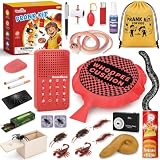
- Classic & Creative Pranks Kit: Packed with 20 funny gags and practical joke toys for nonstop laughter and fun for kids and families. From silly visual tricks to hilarious reaction-based pranks, this kit is perfect for surprising friends, boosting the party atmosphere, and creating immersive prank fun.
- Prank Kit with Sound Effects Machine: This prank kit includes a multi-scene sound effects device that simulates a variety of realistic sounds to elevate every prank moment. From unexpected noises to funny audio effects and scene-based surprises, it instantly enhances the atmosphere and makes every prank more convincing and exciting.
- Easy for Kids to Play: Designed for boys and girls ages 6–14, each prank gadget is easy to use, allowing kids to set up and enjoy the fun on their own.
- Safe & Durable Design: All prank items, including the whoopee cushion, trick toys, and surprise props, are made from safe materials with no strong electric shocks or sharp parts.
- Perfect for Parties & Gifts: Turn any gathering into a laughter-filled event! Packed with classic and creative prank tricks, this ultimate practical jokes prank kit is perfect for birthday parties, family gatherings, friend hangouts, and April Fools’ Day fun.
Instead of returning a meaningful search result, the page produced pseudo-diagnostic warnings. The alleged problems included weak brainwave signals, interference from aluminum foil, and insufficient conviction. The joke worked because it extended Google’s real promise—turning a person’s intention into information—into an absurd form of mind reading.
2001 — No verified major entry in the core chronology
The commonly cited consolidated public chronology does not identify a comparable flagship Google prank for 2001. That does not prove that nobody at Google made a joke that year; it means there is no verified major entry in the surviving public record used for this timeline.
2002 — PigeonRank
PigeonRank parodied Google’s real PageRank system by claiming that search results were ranked by pigeons. The fictional explanation used the style of a technical white paper, complete with references to pigeon food and a “lin/ax kernel.”
The central gag was that pigeons were supposedly a cheaper and more efficient ranking technology than conventional computing. It was an early example of Google’s most durable April Fools’ formula: take a serious technical concept, explain it with convincing jargon, and add one ridiculous premise.
2003 — No verified major entry in the core chronology
As with 2001, the consolidated public record does not list a comparable major Google April Fools’ release for 2003. It is more accurate to describe the year as lacking a verified flagship entry than to claim that Google made no joke anywhere.
2004 — Google Copernicus and the real launch of Gmail
Google advertised fictional employment opportunities at the Google Copernicus Center, supposedly a lunar research facility. The accompanying concept presented Copernicus as an operating system designed for work on the Moon.
But the major story of April 1, 2004 was Gmail. Google announced a real email service with 1 GB of free storage—an enormous figure compared with the limits common at the time. The announcement was written in a playful tone and appeared on April Fools’ Day, so many people assumed the entire thing was a joke.
Gmail became one of the classic April Fools’ “double fakes”: the company was telling the truth, but the truth sounded so implausible that it was mistaken for a prank. Gmail should never be listed as a fictional Google product.
Free tools Windows power users keep installed
One-click scans. No signup required.
2005 — Google Gulp
Google Gulp was a fictional beverage intended to make people more effective at searching. The mock drink supposedly used DNA analysis and neurotransmitter adjustments to improve intelligence and search performance.
Its invented flavors included Glutamate Grape, Sugar-Free Radical, Beta Carotty, and Sero-Tonic Water. Google also made the distribution model part of the joke: Gulp was invitation-only, echoing Gmail’s early access system. The gag turned the company’s data-driven language toward a soft drink that promised to optimize the user rather than the search engine.
2006 — Google Romance
Google Romance treated dating as a search problem. Its fictional “Soulmate Search” promised to locate compatible partners and create “Contextual Dates” from information supplied in a user profile.
The landing page mimicked the language of online dating services while applying search-engine logic to attraction. Profile-upload tools and deliberately overconfident matching claims made the joke less about a single absurd gadget and more about the idea that an algorithm could solve intimacy.
Quick wins for a faster PC:
Clear out junk files and repair common Windows errorsFree Scan →Fix the driver behind crashes, sound loss and screen glitchesFind Drivers →Repair Windows errors before they cause bigger problemsFix Now →2007–2012: Infrastructure, artificial intelligence, and increasingly elaborate worlds
2007 — Gmail Paper and Google TiSP
Google offered two of its most memorable infrastructure parodies in 2007.
Rank #2

- 【Prank Toy Set】 We have prepared 24 different prank props for you, including whoopee cushion and rubber snake, among other pranks. Whether it’s classic or novel pranks, these funny stuff will add endless fun to your event.
- 【Endless Fun】 Realistic fake roaches, surprise chips prank, and fake ice are among the props that will provide a genuinely funny experience, making everyone burst into laughter. These are the perfect prank tools to catch your friends and family off guard.
- 【Widely Used】 This fun prank stuff is an excellent choice for parties, whether it’s April fools pranks, Halloween, Christmas, or birthday parties. Using these pranks will quickly break the ice and easily lighten the mood, bringing joy to kids’ gatherings. It’s also an ideal choice for creating wonderful memories at family gatherings.
- 【Reusable】 Each prop in our prank toy set is carefully designed to ensure sturdy and provide more fun. Additionally, the included prank storage bag allows you to easily carry these props, making your prank activities more convenient and effective.
- 【Safety First】 Our prank toy set comes with a detailed instruction manual to help you understand the use of each prop. We have carefully considered child safety during the design process, eliminating potential hazards to ensure you can enjoy the fun of the game safely and easily.
Gmail Paper proposed printing a user’s email and delivering it through the postal system. Advertisements would appear on the reverse side of the printed messages, turning the supposedly free service into a paper-based advertising business.
Google TiSP—short for Toilet Internet Service Provider—claimed that broadband could be delivered through a home’s plumbing and sewage lines. The fictional installation involved fiber cable, a wireless router, and specialized plumbing hardware. The joke was especially effective because it treated a completely implausible physical installation with the language of a normal consumer broadband service.
2008 — A global slate of product and regional jokes
By 2008, Google’s April Fools’ program had become a collection of jokes from different products and countries rather than one central hoax. The documented examples included:
The Tool Desk
Outbyte Driver Updater FREEScan for outdated or missing drivers - takes under a minuteDriver Scan →Outbyte PC Repair FREEClear out junk files and repair common Windows errorsFree Scan →- Google Weblogs, or GWeblogs: Blogger was presented as having algorithmic blog editing and automatic content generation.
- Gmail Custom Time: Gmail supposedly allowed users to pre-date messages.
- Google Book Search Scratch and Sniff: book-search technology was extended into the physical world of smells.
- Google Calendar’s “I’m Feeling Lucky” dating appointments: the scheduling tool was recast as a way to arrange surprise dates.
- Google Manpower Search in China: a regional parody built around finding human resources through search.
- Google Saturi Translate: one of several regional translation jokes.
- Google Wake Up Kit: a fictional solution for getting users out of bed.
- Project Virgle: a fake Google–Virgin project proposing a settlement on Mars.
- Orkut’s “Yogurt” branding: Google’s social network received a temporary food-themed identity.
- YouTube’s international Rickroll: featured videos redirected viewers to Rick Astley’s “Never Gonna Give You Up.”
The year showed how easily the format could travel: some jokes targeted Google products, some parodied science and space exploration, and others relied on regional culture or internet memes.
2009 — CADIE and the manipulation of Google interfaces
The centerpiece of 2009 was CADIE, a fictional artificial-intelligence system presented across several Google properties. CADIE was not limited to a single landing page; the character appeared as a unifying explanation for multiple product jokes.
Related gags included Brain Search, CADIE-enhanced Google Docs features, AI-themed HTTP headers, and a Google Earth experience supposedly powered by CADIE. Google also presented a fake Chrome 3D experience, an oil-tanker data-center concept, and YouTube pages that appeared upside down.
These jokes reflected a shift in Google’s style. The company was no longer simply inventing a fake product; it was making the interface itself behave strangely and using a fictional AI as the connective tissue.
Windows Errors? Fix Them Before They Spread
Repair common Windows errors and clear accumulated junk for a smoother, more stable PC - no reinstall needed.Free scan · no reinstallCrashes, No Sound, or Screen Glitches?
Random freezes, missing sound and display glitches usually trace back to one bad driver. Find and replace yours safely.Free scan · under a minute2010 — Topeka, 3D Books, physical uploads, and animal translation
Google temporarily changed its name to Topeka. The gesture reversed a real naming move by Topeka, Kansas, during the competition surrounding Google’s planned fiber project. It was an April Fools’ joke built from an actual exchange between the company and a city.
The year’s other documented jokes included:
- Google Books in anaglyph 3D, which presented books through old-fashioned red-and-blue 3D imagery.
- Physical uploads to Google Docs, supposedly allowing users to upload real-world objects rather than digital files.
- Alternative units for search speed, turning an abstract performance measure into humorous new units.
- YouTube TEXTp, an ASCII-style video mode.
- Animal Translator beta, which claimed to interpret animal communication.
- Google Voice Standard Voicemail Mode, a parody of simplifying or reverting a modern communications service.
- An “evil bit” for APIs, a computer-science joke about labeling malicious behavior.
- Human-powered Google Wave notifications, replacing automated alerts with people.
- Google Analytics returning to “hits,” reviving an older web measurement term.
- Life-size Picasa cardboard cutouts.
- ReaderAdvantage, a fictional rewards program connected to Google Reader.
- Wingdings in AdSense, applying the famously hard-to-read typeface to advertising.
Rather than presenting a single theme, Google used 2010 to turn familiar settings, metrics, formats, and services upside down.
2011 — Gmail Motion, Chromercise, and a restrained Japan response
Gmail Motion claimed that users could send and read email through body gestures detected by a webcam. The fictional system treated movements in front of the camera as commands for composing, replying to, and managing messages. Google Docs Motion extended the same invented gesture technology to collaborative documents.
Chrome introduced Chromercise, a mock exercise program designed to strengthen the hands for faster browsing. YouTube offered a silent-film-style viewing mode, complete with a horse-drawn-carriage upload option.
Do these 3 things before closing this tab:
1Scan for outdated or missing drivers - takes under a minute2Clear out junk files and repair common Windows errors3Fix the driver behind crashes, sound loss and screen glitchesGoogle Japan handled the day differently after the Tōhoku earthquake and tsunami. Rather than publish a conventional prank in the immediate aftermath, it featured children’s drawings and said the usual joke had been postponed. That response is an important reminder that April Fools’ content was not treated as an automatic obligation when circumstances made it inappropriate.
2012 — Google Maps in 8-bit and edible fiber
Google Maps 8-bit transformed the mapping service into a retro role-playing-game-style experience. It included pixel graphics and a fictional quest narrative, making an everyday map look like an old video-game world.
Rank #3

- Mega Prank Box: Packed with a variety prank stuff and toys, our kit guarantees endless fun for kids and families.
- Fun for All Ages: Prank stuff for everyone. This set ensures that people of all ages can join in on the fun, featuring a specially designed prank kit.
- Family Fun: Whether it’s pranks for kids or fun tricks for teens, this kit is perfect for family bonding through humor and playful tricks, all packaged in a pranking set.
- Great Gift for Pranksters: Packed with unique gadgets and fun surprises, this prank kit makes a perfect gift for kids and prank enthusiasts.
- Perfect for April Fools: Get ready for the ultimate April Fools pranks with this kit, featuring classic april fools pranks for kids and new, exciting tricks all packed in funny prank kits.
Other documented 2012 jokes included:
- Google Voice for Pets: fictional collars supposedly translated animal vocalizations.
- Parking karma: a playful system built around the emotional or moral consequences of parking.
- Canine staffing at Google offices: dogs were presented as part of the workforce.
- Interplanetary analytics reports: Google Analytics was extended beyond Earth.
- A Google Panda plush assistant.
- Google Fiber’s edible-fiber parody: the joke deliberately confused dietary fiber with broadband fiber.
Google Maps 8-bit was a particularly successful example of a service being redesigned as a game rather than merely described in a fake press release.
2013–2019: Maps games, regional experiments, fake hardware, and product-team gags
2013 — YouTube’s shutdown hoax, Google Nose, and Pokémon
YouTube claimed it would stop accepting new uploads and spend years selecting the single best video. Everything else would supposedly be deleted once the judging process was complete.
Google Nose proposed a search system for smells, with “scent-based” results. It extended the company’s search metaphor into a sense that computers could not ordinarily deliver through a screen.
Google Maps also launched the Pokémon Challenge, inviting users to find Pokémon on the map. The fictional collaboration involved The Pokémon Company, Game Freak, and Nintendo. The concept later acquired an unusual afterlife: Pokémon Go became a real product in 2016, although it was not the same product as the 2013 April Fools’ project.
2014 — Auto Awesome Photobombs, Shelfies, and pirate productivity
Google+ introduced Auto Awesome Photobombs, applying the service’s image effects to the familiar problem of unwanted people appearing in photographs.
Gmail offered Shelfies, shareable selfies used as custom themes. Google Apps for Business presented fictional productivity tools designed for businesses such as pirates. Other Google teams contributed smaller interface and product jokes, continuing the move toward a distributed, international April Fools’ program.
Recommended Free Tools
2015 — Pac-Maps, Smartbox, com.google, and Dial-Up Mode
Pac-Man View, also known as Pac-Maps, turned real streets in Google Maps into playable Pac-Man levels. Users could play on selected locations rather than merely viewing a static game screen.
Inbox by Gmail announced Smartbox, a fictional physical mailbox that automatically sorted mail and offered features such as notifications, temperature control, and spam protection. The joke translated familiar digital inbox features into a piece of household hardware.
Google also launched com.google, a horizontally reflected version of Search. Google Fiber introduced Dial-Up Mode, which supposedly slowed the internet so users could appreciate life’s small moments. YouTube played with the recurring “Darude—Sandstorm” meme, and Google presented a talking Google Panda.
2016 — Gmail Mic Drop and Google Cardboard Plastic
Gmail Mic Drop added a minion-themed mic-drop animation and message to an email. It was intended as a playful way to end a conversation, but the joke became one of Google’s rare April Fools’ failures.
Users reported that the feature had been triggered accidentally in serious communications, including work and job-related exchanges. Google withdrew Mic Drop after the backlash. The episode demonstrated a real danger of interface jokes: when a prank is built into a live productivity tool, a single click can have consequences beyond the joke itself.
Google also announced Google Cardboard Plastic, a parody of premium hardware that inverted the cheap, accessible concept associated with Cardboard. Google Photos added emoji-based photo search, allowing users to look for images through combinations of emoji rather than conventional keywords.
2017 — Google’s high-volume global year
Google’s 2017 slate was among its largest and most international. It included:
Rank #4
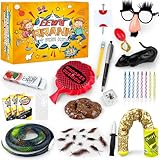
- Mega Prank Collection: Packed with 31 pcs of hilarious prank stuff and clever gags, this prank gifts set delivers non-stop laughs for friends and family
- Endless Laughter Guaranteed: Whether it’s classic pranks or fresh surprises, this kit is designed to bring fun to all ages, making every moment unforgettable
- Ultimate Prank Gift Box: A must-have for prank enthusiasts, featuring 31 pcs of unique tricks and gadgets-perfect for birthdays, holidays, or just because
- April Fools’ Essential: Dominate April Fools’ Day with this prank set, loaded with 31 pcs of clever gags, from harmless jokes to laugh-out-loud surprises
- Party & Social Fun: Ideal for gatherings, this 31 pcs prank kit keeps the energy high with playful tricks, ensuring everyone gets in on the fun
- Ms. Pac-Maps, another Google Maps game built around the Pac-Man format.
- Google Wind, a Google Netherlands concept that used windmills and machine learning to disperse clouds.
- Haptic Helpers, fictional assistants for adding taste, touch, and smell to virtual reality.
- Google Cloud’s Mars region and a fictional “Ziggy Stardust” data center.
- Chromebook mobile accessories.
- Google Translate for Heptapod B, the fictional language from the film and story associated with Arrival.
- Google Gnome, an outdoor Google Assistant product that could report environmental conditions and mow the lawn.
- Google Now for Dogs & Cats.
- Google Play for Pets.
Contemporary coverage also identified a Google Cloud Earth–Mars storage-region concept and other regional or product-team jokes. The year combined science fiction, smart-home parody, pet technology, cloud infrastructure, and pop culture.
2018 — Hummus API, physical Gboard, Waldo, and the Bad Joke Detector
Google Israel launched a fictional Cloud Hummus API for organizing information about hummus. The joke applied cloud-computing terminology to a food that has strong cultural and regional associations.
Google Japan proposed a physical handwriting board for Gboard. Google Maps hid Where’s Waldo scenes across the map, turning map exploration into a search-and-find game.
Files Go announced a Bad Joke Detector that would identify and delete poor jokes from a device. Google Australia presented Googz, while Search Console’s fictional Recrawl Now button redirected users to a Rickroll.
2019 — Snake, tulip translation, Spoon Bending, and Screen Cleaner
2019 was the last year in the documented conventional April Fools’ run. Google Maps offered Sssnakes on a Map, a Snake game playable in selected cities and in a worldwide mode.
Google Netherlands presented Google Tulip, a fictional system that translated signals from tulip roots into human speech. Google Calendar offered a game in which users cleared meetings one at a time. Google Japan presented a spoon that could type Japanese characters in Gboard by bending it.
Other 2019 jokes included:
- Google Assistant’s historical-prank response: the assistant could return an earlier April Fools’ joke when prompted about the occasion.
- Google Colab Power Mode: fictional effects added to the collaborative notebook environment.
- Gmail’s fifteenth-anniversary branding.
- A fake Aquaman 2 placement on YouTube that pointed viewers toward Shazam!.
- Files’ Screen Cleaner: a fictional feature that supposedly removed dirt through vibration and a pineapple-scented shield.
By this point, Google’s pranks could be games, fake scientific breakthroughs, regional cultural experiments, elaborate product announcements, or deliberately misleading interface controls.
Independent reader supportYour contribution helps us test, update, and keep practical guides available for everyone.Why Google’s pranks became so elaborate
The timeline shows several distinct phases rather than one unchanging tradition.
1. The early jokes parodied Google itself
MentalPlex, PigeonRank, Google Gulp, and Google Romance all took a familiar Google idea—search, ranking, optimization, or matching—and pushed it beyond credibility. Their humor came from pretending that an absurd premise was the logical next step in Google’s technology.
2. Gmail created the double-fake problem
Gmail changed how audiences approached every later announcement. A genuinely useful product with an implausibly generous feature set could look like a prank, while a fictional product could be presented with enough technical detail to look real. The company benefited from that uncertainty, but it also meant readers had to ask whether an April 1 announcement was a joke or an actual launch.
3. The interface became part of the punchline
Google did not always stop at a fake explanation. YouTube could appear upside down, Maps could become an 8-bit game, Search could be reflected, and Gmail could add an ill-advised mic-drop control. These jokes were more immersive because users interacted with the gag rather than simply reading about it.
4. Regional teams broadened the tradition
Later years included contributions from Google Japan, Google Netherlands, Google Israel, Google Australia, and other regional or product teams. That explains why the list contains tulips, hummus, handwriting hardware, windmills, Heptapod B, and Rickrolls alongside mainstream Google products.
5. Fictional AI and infrastructure became recurring subjects
CADIE, Google Nose, Google Gnome, the Mars cloud region, Google Wind, and Haptic Helpers all played with the boundary between a plausible research project and a comic impossibility. Google’s own areas of expertise—data centers, machine learning, cloud services, assistants, and search—provided the vocabulary for the jokes.
Best Value

- 【Prank Toy Set】Our prank kit includes 15 different prank props, such as whoopie cushions and insect ice cubes, featuring a variety of classic prank toys and new prank stuff, bringing endless fun and memories!
- 【Really & Funny】 Our 25 PCS prank kit features realistic fake roaches, fake tongues, and fake money. These realistic prank stuff are perfect for catching your friends and family off guard and bringing endless laughs with prank toys!
- 【Reusable】The prank gifts are made of sturdy material that is built to last and can be used over and over again. The prank kit even comes with a bag for easy storage, so you’re always ready to play pranks. It can bring continuous screams, heartbeats, and giggles!
- 【Easy to Prank】Our prank stuff includes clear instructions to help you play pranks better! The prank toys are made using safe and reliable materials and take into account all the possibilities of the prank process, making them safe and easy for kids to use!
- 【Wide Application】The prank kit is suitable for all occasions, whether it’s birthdays, April Fools, Christmas, or other themed parties! It’s not only suitable for familiar family and friends, but also great for breaking the ice between new friends. Children can quickly get familiar with each other through pranking and plan their next prank together!
2020: Google cancels its planned April Fools’ jokes
Google canceled its planned 2020 April Fools’ content because of the COVID-19 pandemic. Instead of publishing the usual jokes, the company asked teams to focus on helping people during the crisis.
This ended the uninterrupted-feeling run of large public pranks. It is not accurate to say that Google performed a conventional April Fools’ prank every year from 2000 through 2019: the core chronology has entries for 2000, 2002, and 2004 through 2019, but not a comparable flagship entry for 2001 or 2003. Nor is it accurate to describe the traditional program as having resumed after 2020. The researched record shows no return to that conventional April 1 program through August 11, 2026.
2021–2025: Google Japan’s novelty keyboards—but not April Fools’ releases
Google Japan did continue a related tradition of playful hardware concepts, but these should not be mislabeled as April Fools’ Day pranks. The documented releases were issued on October 1, not April 1:
| Year | Novelty keyboard | What it was |
|---|---|---|
| 2021 | Gboard Yunomi | A teacup-shaped keyboard. |
| 2022 | Gboard Bar Version | A 5.25-foot single-row keyboard. |
| 2023 | Gboard CAPS | A large wearable key-shaped hat. |
| 2024 | Double-sided Möbius-style keyboard | A keyboard inspired by a double-sided Möbius strip. |
| 2025 | Gboard Dial Version | A rotary-dial-inspired keyboard. |
These projects belong to Google’s broader culture of novelty hardware and experimental design. Their timing matters: an October release is evidence against grouping them into the company’s April Fools’ chronology.
April 1, 2026: a real Google AI Pro storage increase
On April 1, 2026, Google AI Pro storage increased from 2 TB to 5 TB at no additional cost. Google’s current Google One plan documentation and contemporary reporting confirmed that the change was genuine.
It was a real product announcement delivered on the one date when readers might reasonably doubt it. In that sense, it resembles Gmail’s 2004 launch as a modern “real-life double fake,” but it is not a fictional prank and should not be counted as one.
The short version of Google’s April Fools’ history
- 2000: MentalPlex claims to search by reading a user’s mind.
- 2001: No verified major entry in the core public chronology.
- 2002: PigeonRank says pigeons rank search results.
- 2003: No verified major entry in the core public chronology.
- 2004: Google Copernicus jokes about a lunar research center; Gmail launches for real.
- 2005: Google Gulp offers a fictional intelligence-enhancing drink.
- 2006: Google Romance turns dating into a search problem.
- 2007: Gmail Paper and Google TiSP parody postal mail and broadband infrastructure.
- 2008: A global collection includes GWeblogs, Virgle, Scratch and Sniff, Custom Time, and an international Rickroll.
- 2009: CADIE brings a fictional AI to multiple Google services.
- 2010: Google becomes Topeka, while products experiment with 3D, ASCII video, animal translation, and physical uploads.
- 2011: Gmail Motion and Chromercise turn gestures and exercise into product features; Google Japan postpones its usual joke after the Tōhoku disaster.
- 2012: Google Maps becomes an 8-bit adventure, joined by pet translation and edible-fiber jokes.
- 2013: YouTube announces a fake shutdown, Google Nose searches for smells, and Maps hosts the Pokémon Challenge.
- 2014: Auto Awesome Photobombs, Shelfies, and pirate productivity tools appear.
- 2015: Pac-Maps, Smartbox, com.google, and Dial-Up Mode parody games, hardware, Search, and internet speed.
- 2016: Gmail Mic Drop causes backlash; Google Cardboard Plastic parodies premium hardware.
- 2017: Google Wind, Google Gnome, Haptic Helpers, Mars cloud infrastructure, pet services, and other regional jokes create a high-volume global slate.
- 2018: Hummus API, physical Gboard, Where’s Waldo, Googz, and the Bad Joke Detector extend the format.
- 2019: Sssnakes on a Map, Google Tulip, Spoon Bending, Calendar’s meeting game, and Screen Cleaner close the conventional run.
- 2020 onward: The traditional April Fools’ program is suspended; Google Japan’s October keyboards continue a separate novelty tradition.
- 2026: Google AI Pro receives a real increase from 2 TB to 5 TB on April 1.
Frequently Asked Questions
Did Google really launch Gmail as an April Fools’ joke?
No. Gmail was a real Google product announced on April 1, 2004. Its 1 GB storage allowance and playful announcement made many people think it was fictional, which is why it is often described as an April Fools’ double fake.
Did Google make an April Fools’ prank every year from 2000 to 2019?
Not according to the commonly cited public chronology. It documents MentalPlex in 2000, PigeonRank in 2002, and entries from 2004 through 2019, but no comparable verified flagship prank for 2001 or 2003.
Why did Google stop its April Fools’ pranks?
Google canceled its planned 2020 jokes because of the COVID-19 pandemic and asked teams to focus on helping people. The conventional April 1 program had not returned by the research cutoff of August 11, 2026.
Were Google Japan’s novelty keyboards from 2021 to 2025 April Fools’ jokes?
They were related novelty projects, but they were released on October 1. Gboard Yunomi, Gboard Bar Version, Gboard CAPS, the double-sided Möbius-style keyboard, and Gboard Dial Version should therefore be treated as a separate October tradition.
Was Google’s 5 TB AI Pro storage announcement on April 1, 2026 real?
Yes. Google AI Pro storage increased from 2 TB to 5 TB at no additional cost. It was a genuine product change announced on April 1, not a fictional prank.
The Tool Desk
Outbyte Driver Updater FREEScan for outdated or missing drivers - takes under a minuteDriver Scan →Outbyte PC Repair FREERepair Windows errors before they cause bigger problemsFix Now →The Bottom Line
Google’s April Fools’ legacy began with clever search parodies, grew into global experiments that altered maps, email, video, hardware, and cloud services, and ended its conventional run after 2019. The most important lesson in the timeline is that the company sometimes made reality sound like a joke: Gmail in 2004 and the 5 TB Google AI Pro upgrade in 2026 were real, while products such as MentalPlex, PigeonRank, Google Nose, and Google TiSP were not.
Quick Recap
Product prices and availability are accurate as of the date/time indicated and are subject to change. Any price and availability information displayed on Amazon at the time of purchase will apply.