Outdated Drivers Are Slowing You Down
One free scan finds every outdated or missing driver and matches the right update for your exact hardware.Free scan · exact hardware matchWindows Errors? Fix Them Before They Spread
Repair common Windows errors and clear accumulated junk for a smoother, more stable PC - no reinstall needed.Free scan · no reinstallMalayalam writers remain influential public figures in Kerala, editor and translator AJ Thomas argues: “They are cultural icons, and their words carry weight; when they speak, they often become headlines.” In a 2024 interview with Scroll.in, Thomas connects that standing to more than celebrated authors. He describes a literary culture shaped by storytelling traditions, social change, magazines, publishing institutions and translation—and presents his anthology The Greatest Malayalam Stories Ever Told as an introduction to that larger world.
Why Thomas says writers still matter in Kerala
Thomas’s claim is not simply that Kerala has produced important writers. He says writers retain a place in popular culture: their public statements can become news, and their words carry influence beyond the literary page. In his account, this visibility reflects a literary ecosystem in which reading, debate and publishing have long been connected to public life.


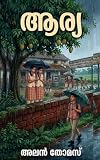


That ecosystem includes oral storytelling, political and social contexts, literary movements, magazines, cooperative publishing, and engagement with writing from elsewhere. Thomas’s portrait therefore treats the Malayalam short story not as the achievement of isolated individuals, but as a form sustained by institutions and readers as well as authors.
How Thomas traces the short story’s development
Thomas dates the beginning of the Malayalam short story to 1891 and says it developed a more recognizable modern structure around the middle of the 1930s. He also points to older oral and performative traditions, including Prabhandhakoothu, and to stories moving through Kerala by different cultural and linguistic routes. These dates and historical connections are Thomas’s account in the interview, rather than independently verified findings.
#1 Best Overall
Realism and varied voices
In Thomas’s telling, realism in Malayalam fiction was never a single fixed approach. He discusses writers including Lalithambika Antharjanam, Vaikom Muhammad Basheer, Ponkunnam Varkey, Karoor Neelakanta Pillai, Thakazhi Sivasankara Pillai and Kesava Dev, alongside K. Saraswathi Amma, Kamala Das, also known as Madhavikutty, S. K. Pottekkatt, Uroob and M. T. Vasudevan Nair. The range matters: the tradition he describes contains differing sensibilities and ways of representing everyday life.
Modernism and the reader’s role
Thomas says later modernist writing engaged with existential questions and international literary currents while adapting them to Malayalam and Kerala’s cultural setting. He sees subsequent stories as increasingly capable of evoking ordinary life without resolving every meaning for the reader. In his account, open endings and interpretive space reflect not only literary theory but also cinematic techniques and local narrative forms.
The magazines and institutions behind the stories
Periodicals gave writers places to publish and readers places to encounter fiction and literary debate. Thomas names Bhashaposhini, Mathrubhumi Weekly, Manorama Weekly, Deshabhimani, Janayugam and Kalakaumudi. He particularly credits M. T. Vasudevan Nair’s editorial work at Mathrubhumi with helping writers reach readers and nurturing talent. He also points to little magazines such as Sankramanam and Jwaala as significant outlets in later decades.
Thomas also emphasizes the writers’ cooperative Sahithya Pravarthaka Sahakarana Sangham as a publishing route for authors. Scroll’s interview reports his claim that the cooperative had published “More than 8,500 titles” and that “over 80 per cent of Kerala’s writers” were active members. Those are figures attributed to Thomas in the 2024 interview, not independently verified current statistics.
What makes a story Keralite when influences cross borders?
For Thomas, international influence does not erase local character. Modernist and other literary currents can be adapted to Malayalam and Kerala’s cultural setting; meanwhile, stories draw on local narrative forms and lived experience. A story’s identity, in this view, need not depend on isolation from outside ideas. It can emerge from the way a writer transforms those ideas within a particular language and society.
That openness also helps explain Thomas’s emphasis on stories as a form people continue to want. He puts it simply: “Everyone wants to read a story, hear a story, tell a story.” The claim is less a forecast about sales or publishing trends than an account of storytelling’s enduring appeal.
Rank #4
How Thomas approaches translation for English readers
Thomas argues that literary translation should make a work function for a reader in the new language, not reproduce every feature of the source mechanically. He recalls poet O. N. V. Kurup’s advice: “There’s no point in translating me faithfully. Just carry over what can be read as poetry in English from my work to the non-Malayali reader.” That principle does not mean ignoring the source; it means considering what the writing is doing and how an English-language reader can experience it.
Culturally specific expressions may not need a direct English equivalent. Thomas also discusses clarifying when dialogue originally takes place in another Indian language, a choice that can help preserve context without forcing a false sense that every character is speaking English. He says he consulted some living writers, while many contributors to the anthology had died.
What the anthology can—and cannot—offer
The Greatest Malayalam Stories Ever Told is presented as a curated selection for readers who may not be able to read Malayalam. Thomas likens the stories to samples from a much larger archive: a way into the literature, not a complete representation of it. The phrase “greatest” therefore names an editorial selection, not an exhaustive ranking of every significant Malayalam short story.
Thomas’s interview gives the anthology a double purpose. It makes individual stories accessible in English while pointing toward a literary tradition whose history, institutions and range exceed any one collection. Readers can treat it as an entry point, while recognizing that translation and selection necessarily leave much outside the frame.
What the interview establishes—and what it leaves attributed
The interview offers Thomas’s informed account of a literary history and contemporary culture, but its chronology and institutional figures should be read as his reported claims. In particular, its dates for the genre’s beginnings and modern development, as well as the cooperative’s title and membership figures, are not independently established by the interview itself. The strongest clear conclusion is Thomas’s view of writers’ continuing public stature and of the literary network that, in his account, helps sustain Malayalam short fiction.
Quick Recap
Product prices and availability are accurate as of the date/time indicated and are subject to change. Any price and availability information displayed on Amazon at the time of purchase will apply.
The Tool Desk
Outbyte PC Repair FREEClear out junk files and repair common Windows errorsFree Scan →Outbyte Driver Updater FREEScan for outdated or missing drivers - takes under a minuteDriver Scan →



