The Tool Desk
Outbyte Driver Updater FREEFix the driver behind crashes, sound loss and screen glitchesFind Drivers →Outbyte PC Repair FREEClear out junk files and repair common Windows errorsFree Scan →For longtime fans of the Broadway juggernaut, Wicked arriving in theaters was always going to be a moment. What made it a cultural event, rather than a standard adaptation, was Universal’s decision to split the story into two films. That choice instantly reframed expectations, positioning Wicked as a franchise-scale undertaking and priming audiences to think in chapters rather than a single, self-contained movie.
The question of a potential Wicked 3 exists largely because Wicked: Part One and Part Two were never marketed as a traditional “Part I” and “Part II” of a finite tale in the way audiences are used to. The films were framed as epic cinematic expansions of a beloved world, with blockbuster budgets, event-level marketing, and release windows designed to keep Oz in the conversation across multiple years. In modern franchise logic, once a studio commits to that scale, fans are conditioned to assume the door might stay open.


From One Broadway Show to Two Films
On a practical level, the two-part structure was born out of creative ambition rather than sequel planning. Director Jon M. Chu and Universal have consistently explained that compressing the entire stage musical into a single film would have meant cutting songs, character beats, and emotional arcs that define Wicked’s appeal. Splitting the adaptation allowed the filmmakers to honor the show’s scope while deepening Elphaba and Glinda’s relationship in a way the stage version can only suggest.
Still, the moment Wicked became a multi-film event, it entered the same speculative space as other modern fantasy franchises. Audiences now expect expanded universes, epilogues, and spin-offs, especially when box office performance and audience engagement justify further investment. That expectation, more than any official announcement, is what keeps the question of a third Wicked film alive.
#1 Best Overall

- Wicked: The Soundtrack features performances by the stars of Universal Pictures' cinematic event with music and lyrics by legendary composer/lyricist Stephen Schwartz
The Source Material Ceiling: What the Original Musical and Novel Actually Cover
At the heart of the Wicked 3 conversation is a simple but unavoidable reality: the core story has an endpoint. Both the Broadway musical and Gregory Maguire’s original novel tell a complete arc for Elphaba, Glinda, and the political mythology of Oz, even if they approach that arc very differently. Once Wicked: Part Two reaches its finale, the primary narrative that made the property famous will have been fully explored on screen.
What the Broadway Musical Actually Contains
The stage version of Wicked is structurally tight, unfolding across two acts that chart Elphaba’s rise, fall, and legacy within the familiar framework of The Wizard of Oz. Act One ends with Elphaba’s public break from the Wizard, while Act Two explores the consequences of that choice, including her relationship with Glinda and the moral cost of being labeled “wicked.” By the final curtain, the emotional and thematic questions the musical poses have been resolved.
This matters because Wicked: Part One and Part Two are designed to collectively adapt that entire structure. There is no hidden third act waiting in the wings of the Broadway show, no epilogue sequence left untouched. A hypothetical Wicked 3 would, by definition, have to move beyond the musical’s narrative boundaries.
The Gregory Maguire Novel Is Bigger, But Not Open-Ended
Maguire’s 1995 novel Wicked: The Life and Times of the Wicked Witch of the West is far denser and more politically complex than the musical adaptation. It spans Elphaba’s childhood, her ideological radicalization, and the long, often grim consequences of Oz’s authoritarian rule. Even so, the novel still arrives at a definitive endpoint that aligns, broadly, with Elphaba’s fate in the wider Oz mythology.
Do these 3 things before closing this tab:
1Repair Windows errors before they cause bigger problems2Scan for outdated or missing drivers - takes under a minute3Clear out junk files and repair common Windows errorsWhile Maguire did write sequels, including Son of a Witch, A Lion Among Men, and Out of Oz, those books shift focus away from Elphaba as a central protagonist. They explore the aftermath of her legacy and the ripple effects across Oz, rather than extending her personal story. Adapting those novels would be less about making Wicked 3 and more about launching an adjacent saga.
Rights, Tone, and the Limits of Adaptation
Another complicating factor is tone. The musical famously softens and romanticizes Maguire’s darker material, reshaping Wicked into a story of misunderstood heroism and friendship. The later novels grow increasingly bleak and philosophical, which would represent a tonal pivot for films that have been marketed as four-quadrant crowd-pleasers.
There is also the practical question of adaptation rights and creative intent. Universal’s current films are explicitly adaptations of the musical, not a comprehensive cinematic version of Maguire’s entire literary universe. Expanding beyond that foundation would require a new creative mandate, one that goes beyond simply finishing the story audiences already know.
Why the Source Material Still Shapes Expectations
For all the talk of franchise potential, Wicked is not an endlessly expandable mythos in the way comic book universes or original screen franchises are. Its power comes from a specific reinterpretation of a classic story, with a beginning, middle, and end. Once that reinterpretation is complete, any continuation risks feeling like an add-on rather than a natural next chapter.
What’s actually slowing this PC down?
Pick the symptom - the matching free tool is one click away.
That doesn’t make further films impossible, but it does explain why expectations around Wicked 3 need to be tempered. The source material provides a ceiling, and crossing it would mean stepping into entirely new narrative territory, with all the creative and commercial risks that entails.
Official Studio Position: What Universal, Jon M. Chu, and the Producers Have (and Haven’t) Said
If a third Wicked film were quietly in development, there would almost certainly be hints by now. Instead, the official messaging from Universal Pictures and the creative team has remained notably consistent, and carefully limited, since the project was first announced as a two-part adaptation.
Universal’s Framing: A Two-Part Event, Not an Open-Ended Franchise
From the outset, Universal has positioned Wicked as a singular cinematic event split into two films, rather than the launchpad for an ongoing franchise. Press materials, investor calls, and marketing language have all emphasized that Part One and Part Two together represent the complete adaptation of the Broadway musical.
Crucially, the studio has never used sequel-oriented language beyond Part Two. There has been no mention of “future installments,” “expanding the world of Oz,” or long-term franchise plans tied specifically to Wicked. In Hollywood, that silence is often as telling as an outright denial.
Free tools Windows power users keep installed
One-click scans. No signup required.
Jon M. Chu’s Consistent Creative Line
Director Jon M. Chu has been especially clear about his creative intent. In multiple interviews surrounding production and release, Chu has described the films as a faithful, expansive retelling of the musical’s full story, not a reinterpretation designed to extend beyond it.
Rank #2
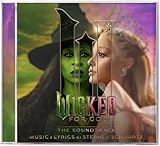
- Wicked: For Good - The Soundtrack features performances by the stars of the electrifying conclusion to Universal Pictures' global cinematic Wicked sensation, Wicked: For Good
Chu has spoken at length about why Wicked was split into two films, citing pacing, character depth, and emotional clarity. What he has not done is suggest that there is more story waiting after the curtain falls on Part Two. His comments consistently frame the ending as definitive, emotionally resolved, and aligned with audience expectations shaped by the stage version.
What the Producers Have (Carefully) Avoided Saying
Producers Marc Platt and David Stone, both deeply tied to the original Broadway production, have also avoided fueling sequel speculation. Their interviews tend to focus on honoring the legacy of the musical, translating its themes to the screen, and managing the scale of adaptation, not on building a multi-film universe.
Notably, when asked about the wider Oz canon or Gregory Maguire’s later novels, the producers have framed those works as adjacent inspirations rather than direct roadmaps. There has been no confirmation that Universal holds, or intends to exercise, adaptation rights beyond Wicked itself in this specific cinematic context.
The Absence of an Announcement Matters
In an era where studios aggressively plant franchise seeds early, the lack of even a soft tease is meaningful. No release window, no development confirmation, and no creative commitments have been announced for anything resembling Wicked 3, even after strong box office performance and sustained audience interest.
That does not mean Universal is closing the door forever. Studios rarely do. But as of now, the official position is one of completion, not continuation. Wicked Part One and Part Two are being treated as the full statement, not chapters one and two of a longer saga.
Separating Fan Hope From Studio Reality
Fans interpreting commercial success as an automatic greenlight for Wicked 3 are projecting modern franchise logic onto a property that has been handled more like a prestige adaptation. Universal’s restraint suggests an awareness that overextension could dilute what made Wicked resonate in the first place.
Until that messaging changes, the safest conclusion is also the most grounded one. There is no confirmed Wicked 3, no active development, and no public creative mandate to go beyond the musical. Anything beyond that remains speculation, not studio policy.
Recommended Free Tools
Box Office and Streaming Reality Check: Do the Numbers Justify a ‘Wicked 3’?
When franchise questions arise, studios ultimately follow the data. Creative intent matters, but ticket sales, audience retention, and long-term value across platforms are what determine whether a world expands or closes its curtain.
For Wicked, the financial conversation is more nuanced than a simple hit-or-flop binary. Universal positioned the adaptation as a two-part event from the outset, with budgets, marketing, and expectations calibrated to tell one complete story rather than launch an open-ended series.
Theatrical Performance: Success With Built-In Limits
Early box office performance for Wicked Part One confirmed strong demand, especially among fans of the musical and event-movie audiences. Premium formats, repeat viewings, and strong international turnout all reinforced the film’s status as a cultural moment rather than a modest adaptation.
However, success alone does not automatically justify expansion. Because Part Two was always part of the plan, its performance will be judged less as a sequel test and more as the completion of a pre-sold narrative. Studios typically look for upward momentum or unresolved story potential before considering additional installments.
Streaming Metrics Favor Longevity, Not Necessarily Sequels
On the streaming side, Wicked’s long-tail value may be even more important than theatrical grosses. Musical adaptations often thrive in home viewing, where repeat watching, soundtrack-driven engagement, and cross-generational appeal boost platform metrics over time.
That kind of sustained interest strengthens the brand, but it does not inherently demand a third film. For Universal, Wicked functions as a library asset and a prestige title as much as a franchise engine, similar to how Les Misérables or The Greatest Showman continue to perform without narrative continuation.
High Costs Raise the Sequel Threshold
Another factor quietly working against Wicked 3 is scale. These films are expensive, not just in production design and visual effects, but in talent commitments, music rights, and global marketing. Any continuation would need to justify that investment without the safety net of beloved source material already embraced by audiences.
Unlike superhero or action franchises, where story elasticity allows for endless chapters, Wicked’s world is emotionally and thematically finite. Without a clear narrative hook, financial risk increases sharply, even if the brand remains popular.
Outdated Drivers Are Slowing You Down
One free scan finds every outdated or missing driver and matches the right update for your exact hardware.Free scan · exact hardware matchPC Slower Than It Used to Be?
A free scan shows the junk files, broken settings and background clutter dragging Windows down - then fixes them in one click.Free scan · Windows 10 & 11Profitability Versus Purpose
From a purely financial standpoint, Wicked is likely to be profitable across theatrical, streaming, and ancillary markets. But profitability does not always equal necessity. Studios increasingly weigh whether a sequel adds value to the brand or simply extends it.
So far, Wicked’s numbers support the decision Universal already made: tell the full story well, then let it live. That is a different calculus than building a trilogy, and the data appears to reinforce restraint rather than expansion.
Cast Willingness and Contract Realities: Where Ariana Grande, Cynthia Erivo, and the Ensemble Stand
Even if Universal were creatively inclined to explore a Wicked 3, the conversation would immediately turn to the cast. Star power is not just a selling point here; it is the franchise. Any continuation without its central performers would fundamentally alter the appeal, making actor availability and interest as decisive as box office math.
Ariana Grande and Cynthia Erivo: Commitment Versus Closure
Ariana Grande and Cynthia Erivo both signed on for a two-part adaptation that faithfully covers the entirety of the stage musical. Publicly, both have spoken about the experience as a definitive, emotionally complete journey rather than the start of an open-ended franchise. Their comments consistently frame Wicked as a passion project with a clear endpoint, not a cinematic universe waiting to expand.
That distinction matters. While neither actor has ruled out revisiting Oz in absolute terms, there has been no indication of sequel clauses or extended options built into their contracts beyond the existing films. Any return would almost certainly require new negotiations, significant compensation increases, and a compelling creative justification.
Scheduling Conflicts and Career Trajectories
Practical realities also complicate the idea of a third film. Grande has returned to a phase of her career where music, touring, and selective acting roles take precedence, while Erivo continues to balance film, television, stage work, and awards-driven projects. Aligning their schedules for another large-scale production would be far more difficult than during the pre-planned two-film shoot.
For both performers, Wicked is likely to be viewed as a crown jewel rather than a recurring obligation. That status makes a return possible only if the material feels essential, not incremental.
The Supporting Cast and Ensemble Factor
The same logic applies to the broader ensemble. Jonathan Bailey, Michelle Yeoh, Jeff Goldblum, and other key players are all in high demand, many with ongoing franchise commitments elsewhere. Reassembling the full cast would be costly and logistically complex, especially without a built-in narrative mandate.
Quick wins for a faster PC:
Repair Windows errors before they cause bigger problemsFix Now →Scan for outdated or missing drivers - takes under a minuteDriver Scan →Studios can sometimes pivot to spin-offs or soft continuations when leads move on, but Wicked’s emotional core is inseparable from Elphaba and Glinda. Without both actresses at the center, a continuation would risk feeling like an epilogue rather than a true next chapter.
Willingness Is Not the Same as Readiness
Importantly, cast enthusiasm should not be mistaken for availability or intent. Actors frequently express affection for projects that defined them, but affection does not automatically translate into multi-year commitments. In the absence of public statements teasing future installments, the silence itself is telling.
At this stage, everything points to a cast that is proud of the work, satisfied with its conclusion, and open only to extraordinary circumstances. That reality aligns with Universal’s broader approach: treat Wicked as a singular cinematic event, not a platform designed for indefinite continuation.
Rank #4
Possible Paths Forward: Original Stories, Spin-Offs, and Expanded Oz Lore
If Wicked were ever to continue on screen, it would almost certainly do so by stepping outside the strict boundaries of the original stage musical. With the Broadway narrative fully accounted for across two films, any further expansion would require Universal to treat Oz less as a sequel-ready storyline and more as a narrative universe with multiple access points.
That distinction matters, because it reframes a hypothetical “Wicked 3” as one option among several, rather than the default next step.
An Original Sequel Beyond the Musical
The most straightforward, yet riskiest, path would be a direct continuation following the events of Wicked. This would mean crafting an entirely original story that extends Elphaba and Glinda’s arcs beyond their known fates, something neither the musical nor Gregory Maguire’s novel fully supports in cinematic terms.
Such a move would place enormous creative pressure on the filmmakers to honor established canon while justifying the emotional necessity of revisiting characters whose journeys were designed to end in tragedy and transformation. Historically, studios approach this kind of extension cautiously, especially when the original material has such a definitive emotional endpoint.
Spin-Offs Centered on Oz, Not Elphaba
A more realistic option would be spin-offs that shift focus away from the central duo. Oz is rich with supporting characters whose backstories remain largely unexplored on screen, including Madame Morrible, Fiyero, the Wizard himself, and even the political machinery that shapes the land’s authoritarian turn.
Quick wins for a faster PC:
Clear out junk files and repair common Windows errorsFree Scan →Fix the driver behind crashes, sound loss and screen glitchesFind Drivers →This approach would allow Universal to retain the Wicked brand identity without requiring Grande and Erivo to anchor another massive production. It also mirrors how studios often extend prestige franchises, using familiar worlds while allowing new protagonists to carry the narrative weight.
Mining Gregory Maguire’s Expanded Oz Canon
Maguire’s Wicked is just one entry in a broader literary universe that includes Son of a Witch, A Lion Among Men, and Out of Oz. These novels delve deeper into Oz’s moral complexity, exploring generational consequences, political fallout, and the lingering effects of Elphaba’s legacy.
Adapting this material would likely require a tonal shift, as the later books are darker, more philosophical, and less conventionally cinematic than Wicked itself. Still, they offer a built-in roadmap for expansion that doesn’t rely on inventing mythology from scratch.
Anthology or Limited-Series Storytelling
Another possibility lies outside traditional theatrical sequels altogether. A limited series or anthology format, whether theatrical-adjacent or streaming-focused, would allow for episodic exploration of Oz’s history, regions, and ideological fractures.
This model would give filmmakers narrative flexibility while lowering the stakes associated with a billion-dollar sequel. It also aligns with modern franchise strategies, where world-building increasingly happens across formats rather than exclusively on the big screen.
The Franchise Question Universal Must Answer
Ultimately, any continuation depends less on audience appetite and more on creative justification. Wicked’s power comes from its specificity, not its scalability, and Universal appears keenly aware of that balance.
For now, expanded Oz storytelling remains a theoretical exercise rather than an active development plan. The door is not locked, but it is intentionally left only slightly ajar, preserving the legacy of Wicked while allowing room for the right idea, should one ever emerge.
Independent reader supportYour contribution helps us test, update, and keep practical guides available for everyone.Why a Straightforward ‘Wicked 3’ Is Unlikely—But Not Impossible
The most immediate obstacle to a traditional Wicked 3 is structural. Wicked Part One and Part Two are designed to fully adapt the stage musical, which itself concludes Elphaba and Glinda’s central arc with deliberate finality. Unlike franchises engineered for open-ended continuation, Wicked was built around a closed narrative, and Universal has consistently framed the films as a complete two-part event rather than an ongoing series.
The Tool Desk
Outbyte Driver Updater FREEFix the driver behind crashes, sound loss and screen glitchesFind Drivers →Outbyte PC Repair FREERepair Windows errors before they cause bigger problemsFix Now →Best Value
The Source Material Simply Runs Out
Once the musical’s story is told, there is no direct sequel to adapt. Any Wicked 3 would require either pulling selectively from Gregory Maguire’s later novels or inventing new storylines outright, both of which introduce creative and tonal risks. The further Maguire’s books move from Wicked, the less they resemble the heightened musical fantasy audiences associate with the brand.
That shift matters. A third film that abandons songs, reorients its protagonists, or leans heavily into political allegory could feel less like a continuation and more like a spin-off wearing sequel clothing.
Cast Commitments and Creative Intent
Cynthia Erivo and Ariana Grande have both spoken about the emotional and physical intensity of making Wicked, emphasizing that the two films represent a complete journey. While neither has definitively ruled out returning in some capacity, there has been no indication of contractual obligations extending beyond Part Two.
Director Jon M. Chu has echoed that sentiment, framing the adaptation as a carefully calibrated diptych rather than the launchpad for a multi-film saga. That kind of creative clarity typically signals an endpoint, not a pause before the next chapter.
Recommended Free Tools
Box Office Success Doesn’t Automatically Equal a Sequel
Even if Wicked Part One and Part Two perform exceptionally well, financial success alone does not guarantee a Wicked 3. Universal has increasingly shown a willingness to protect premium brands from dilution, favoring long-term cultural value over rapid franchise expansion.
In this case, a third film that exists simply because the previous ones made money could undermine the prestige positioning Universal appears to be cultivating. The studio’s recent franchise decisions suggest restraint, especially with properties that lean more toward awards recognition and cultural staying power than repeatable blockbuster formulas.
The Narrow Path Where a ‘Wicked 3’ Could Exist
That said, a straightforward sequel is not entirely off the table. A time-jump epilogue, a Glinda-centered political reckoning, or a limited-scope continuation exploring Oz after Elphaba’s legacy settles could theoretically justify another film.
Such a project would likely be framed as an event extension rather than a true Part Three, marketed carefully to signal that it is additive, not essential. If the right creative hook emerges and the original team is willing to return, Wicked 3 remains possible, just highly conditional and far from inevitable.
Free tools Windows power users keep installed
One-click scans. No signup required.
The Most Realistic Future for the Wicked Franchise: Final Verdict and Fan Expectations
At this stage, the most honest answer to the Wicked 3 question is that the franchise appears intentionally designed to end where it began: with the full cinematic realization of the Broadway musical. Everything from the source material to the creative messaging points toward closure, not continuation. That doesn’t mean Universal will walk away from Oz entirely, but it does suggest the studio is being careful about how, or if, it returns.
Why the Two-Film Structure Is Likely the Endgame
Wicked was split into two films to serve storytelling, not franchise building. The musical’s emotional arcs, thematic reversals, and character transformations are fully accounted for across Part One and Part Two, leaving little narrative runway for a traditional sequel. Unlike franchises engineered with expandable mythology, Wicked is fundamentally a finite story with a clear endpoint.
From a creative standpoint, extending beyond that risks shifting the tone from mythic tragedy to franchise mechanics. That’s a line Jon M. Chu and the creative team have shown no interest in crossing, especially given how carefully the films have been positioned as prestige adaptations rather than commercial launchpads.
What Fans Should Actually Watch for Next
Rather than waiting for a Wicked 3 announcement, fans should pay attention to how Universal treats the brand post-release. Deluxe re-releases, expanded soundtracks, behind-the-scenes specials, or even limited-event theatrical returns are far more likely than a new feature film. These kinds of extensions allow the studio to capitalize on demand without altering the story’s integrity.
There is also a non-zero chance of a future Oz-related project that exists adjacent to Wicked rather than continuing it. That could mean a spin-off focused on new characters, or a reinterpretation of L. Frank Baum’s world that keeps distance from Elphaba and Glinda’s completed arcs.
The Verdict: Possible, but Not the Point
A Wicked 3 isn’t impossible, but it is not the plan. If it ever happens, it will be because a genuinely compelling creative reason emerged, not because the box office demanded it. In today’s franchise landscape, that distinction matters more than ever.
For now, fans can reasonably expect Wicked to stand as a two-part cinematic event, not the beginning of a sprawling saga. And in a Hollywood era crowded with endless sequels, there’s something quietly powerful about a blockbuster that knows exactly when to end.
Quick Recap
Product prices and availability are accurate as of the date/time indicated and are subject to change. Any price and availability information displayed on Amazon at the time of purchase will apply.




