Free tools Windows power users keep installed
One-click scans. No signup required.
Michael Jackson is important to history because he helped shape modern pop music as a singer, dancer and visual performer. His career spanned the Jackson 5 and a globally successful solo run; albums such as Thriller joined musical styles with ambitious videos, while his choreography and stagecraft became part of pop’s shared visual language. His records and institutional recognition show the scale of that impact, though they do not by themselves prove that he single-handedly changed the music industry.
From the Jackson 5 to a solo career
Jackson’s story began with childhood fame as a member of the Jackson 5, whose early chart success established him as a young performer. He later built a solo career that reached a much wider audience. The GRAMMY Museum’s account of his musical legacy traces that transition and notes the importance of producer Quincy Jones on Off the Wall and Thriller.




The shift matters historically because it shows how a performer could move from a successful group into a distinct solo identity without leaving behind the collaborative foundations of pop. Jackson’s career connected Motown-era group performance with a later period in which the album, music video and live show increasingly worked together to define a star.
How his music crossed genres
The Rock & Roll Hall of Fame characterizes Jackson’s music as a blend of rock, funk and electropop, and describes it as crossing cultural and racial boundaries. That is a useful description of his musical range and reach, not proof that one artist alone caused broader changes in the industry or society.
#1 Best Overall

- New
- Mint Condition
- Dispatch same day for order received before 12 noon
- Guaranteed packaging
- No quibbles returns
His recordings made those combinations accessible to a mass audience. Thriller is a particularly clear example: the Hall of Fame describes the album as joining genres and pairing songs with long-form videos, while the Library of Congress later selected it for the National Recording Registry.
Why performance and music videos mattered
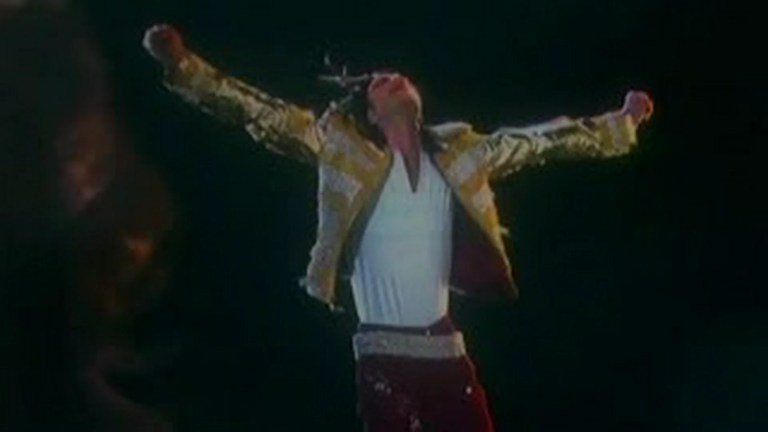
Jackson’s historical significance was not limited to what listeners heard on recordings. The Rock & Roll Hall of Fame emphasizes his choreography and live performance, and the Recording Academy highlights the role of his videos in shaping his public image. His moonwalk became familiar to a worldwide audience through performance, turning a dance step into one of pop culture’s most recognizable visual signatures.
His videos helped make visual storytelling an integral part of how audiences encountered pop songs. That contribution is best understood alongside his singing, dancing and stage presence: the performance was not an add-on to the music, but a major part of how the music reached and stayed with listeners.
Thriller and the evidence of commercial scale
Thriller became a landmark through more than sales. Its genre blend and extended videos made it a defining example of an album presented as both a collection of songs and a visual world. The Library of Congress selected it for the National Recording Registry; in its 2008 announcement, the Library called it the best-selling album of all time at that point. That is the Library’s characterization from 2008, not a current, independently verified sales ranking.
Do these 3 things before closing this tab:
1Scan for outdated or missing drivers - takes under a minute2Clear out junk files and repair common Windows errors3Fix the driver behind crashes, sound loss and screen glitchesChart records offer another measure of reach. In a 2017 retrospective, the Recording Academy reported that Thriller was the first album to produce seven Top 10 hits on the Billboard Hot 100, and that Bad was the first to yield five No. 1 hits. These milestones show the unusual breadth of Jackson’s chart success, though statistics alone cannot explain his artistic influence.
Awards and institutional recognition
The Recording Academy’s artist profile lists 13 Grammy wins and 38 nominations, totals that may be updated over time. It also records eight wins at the 1984 Grammy Awards. The Rock & Roll Hall of Fame’s recognition and the Library of Congress registry selection point to a legacy acknowledged by institutions concerned with music history and cultural preservation.
Such honors are evidence of recognition, not a complete account of why Jackson matters. Taken together with his group-to-solo career, genre-spanning recordings and performance innovations, they help explain why his work remains a reference point in histories of popular music.
Independent reader supportYour contribution helps us test, update, and keep practical guides available for everyone.What his historical importance does—and does not—mean
Jackson’s place in music history rests on several connected contributions: he carried a successful group career into a landmark solo run; made a distinctive blend of musical styles central to mainstream pop; joined choreography and visual storytelling to recorded songs; and achieved exceptional commercial reach. Those strands reinforce one another, but the evidence does not support reducing broad changes in the music business or television to a single cause or a single artist.
This account focuses on his musical career and cultural influence. It does not assess contested aspects of his personal legacy or related legal history, which require separate reporting and legal records.
Quick Recap
Sources
- Recording Academy: Michael Jackson artist profile
- Rock & Roll Hall of Fame: Michael Jackson
- Madonna’s attributed remarks, reproduced by the Rock & Roll Hall of Fame
- Recording Academy: “Remembering Michael Jackson’s Record-Setting Music Career” (May 15, 2017)
- GRAMMY Museum: “Michael Jackson: A Musical Legacy”
- Library of Congress: “’Thriller’ in the Library of Congress: 2007 National Recording Registry Announced” (2008)
Product prices and availability are accurate as of the date/time indicated and are subject to change. Any price and availability information displayed on Amazon at the time of purchase will apply.