Quick wins for a faster PC:
Fix the driver behind crashes, sound loss and screen glitchesFind Drivers →Clear out junk files and repair common Windows errorsFree Scan →Music feels powerful because it engages several brain systems at once. The brain hears and organizes sound, predicts what comes next, produces reward and emotional responses, links songs to memories, and coordinates movement with a beat. When music is shared through singing, dancing, or playing together, it may also strengthen feelings of social connection. No single brain region or chemical explains the effect on its own, and how strongly a piece moves a listener depends on the listener, the music, and the setting.
What the brain does with a piece of music
The mechanisms below are best understood as parts of one process. Each explains a different piece of why music registers so strongly.
Sound becomes structure, and structure creates expectation
Music unfolds over time, so listening involves more than detecting sound. The auditory system tracks pitch, timing, and the relationships between notes, while working memory lets a listener hold a phrase in mind and anticipate where it is heading. In a 2005 review in the Annual Review of Psychology, Isabelle Peretz and Robert Zatorre described music processing as spread across perception, memory, emotion, and performance rather than located in a single “music center” (Peretz and Zatorre, 2005). A review in the Proceedings of the National Academy of Sciences describes how perception of sound patterns and stored tonal patterns contribute to musical expectations, which connects perception to pleasure.
Expectation and reward
Music sets up expectations and then delays, bends, or resolves them. Stefan Koelsch’s 2014 review in Nature Reviews Neuroscience associates music-evoked pleasure with dopaminergic mesolimbic reward circuitry (Koelsch, 2014). This is a plausible account of why anticipation, surprise, and resolution can feel compelling. It is not a formula that predicts what any particular listener will enjoy.
#1 Best Overall

- Bass Sound: Enjoy clear sound and superior comfort with the OneOdio Studio Monitor Headphones. Equipped with large 50mm speaker drivers and neodymium magnets, pro-10 deliver powerful bass, clear vocals, and crisp highs for a balanced stereo sound.
- Built for Comfort: The soft, padded ear cushions are designed to provide long-lasting comfort and effective noise isolation. The adjustable, stretchable headband allows you to easily find the perfect fit and angle for your listening pleasure.
- Single-side Monitoring: The 90° swiveling ear cups allow for single-ear monitoring, making it ideal for DJing or mixing. The self-adjusting and flexible headband ensures a fatigue-free listening experience, even during extended sessions, making these headphones perfect for mastering and mixing.
- Compatibility: Pro-10 wired headphones work exclusively in wired mode and are compatible with a wide range of devices, including smartphones, laptops, tablets, desktop computers, audio interfaces, DJ mixers, amplifiers, and any device that features either a 3.5mm or 6.35mm audio jack.
- Share Audio Port: With a shared audio port, easily connect another pair to share music or videos—no splitters or special cables needed.
A network of emotional regions, not a single switch
The same review links music-evoked emotion with activity in regions used for emotional processing, including the amygdala, nucleus accumbens, hypothalamus, hippocampus, insula, cingulate cortex, and orbitofrontal cortex. The practical meaning is that music shifts activity across a network. One passage can produce chills, tension, comfort, sadness, or excitement, and the same passage need not affect two listeners in the same way.
Memory and personal meaning
The U.S. National Center for Complementary and Integrative Health (NCCIH) states that music can evoke memories and feelings. The American Psychological Association’s March 2026 feature also describes links between music, memory, cognition, and identity (APA, 2026). Familiarity and personal association explain why a song can become a cue for a particular person, place, or stage of life. The sources do not establish that every listener’s music-evoked memories work the same way.
Rank #2

- Advanced build quality and engineering; Designed for studio tracking and mixing
- 40 mm drivers with rare earth magnets and copper clad aluminum wire voice coils
- Tuned for enhanced low frequency performance
- Circumaural design contours around the ears for excellent sound isolation in loud environments
- Convenient single side cable exit
Rhythm, movement, and shared activity
A beat gives a group a shared timing structure for moving, dancing, singing, or playing together. Robin Dunbar and colleagues reviewed two proposed contributors to bonding in musical activity: interpersonal synchrony and endogenous opioid processes (Dunbar et al., 2014). They also caution that the bonding mechanisms are not fully settled and that many positive features of group activity are not unique to music.
A 2023 review organizes biological accounts of music around four elements: tonality, rhythm, reward, and sociality (“Biological principles for music and mental health,” 2023). These are useful organizing lenses rather than an exclusive or finished theory.
Rank #3

- JBL Pure Bass Sound: The JBL Tune 720BT features the renowned JBL Pure Bass sound, the same technology that powers the most famous venues all around the world.
- Wireless Bluetooth 5.3 technology: Wirelessly stream high-quality sound from your smartphone without messy cords with the help of the latest Bluetooth technology.
- Customize your listening experience: Download the free JBL Headphones App to tailor the sound to your taste with the EQ. Voice prompts in your desired language guide you through the Tune 720BT features.
- Customize your listening experience: Download the free JBL Headphones App to tailor the sound to your taste by choosing one of the pre-set EQ modes or adjusting the EQ curve according to your content, your style, your taste.
- Hands-free calls with Voice Aware: Easily control your sound and manage your calls from your headphones with the convenient buttons on the ear-cup. Hear your voice while talking, with the help of Voice Aware.
Why responses vary between people and cultures
Individual responsiveness matters, and no single scale, instrument, or genre can be assumed to feel the same to everyone. Peretz and Zatorre noted that research on musical macrostructure and cultural differences was scarce in the literature they surveyed, and that much of the material focused on musical phrases typical of Western popular music. A claim about how a specific musical form feels to all listeners therefore goes beyond what the evidence supports.
The breadth of music across human societies is well documented. Elizabeth Margulis, PhD, a music perception and cognition researcher and acting chair of Princeton University’s Department of Music, said: “There’s no known human culture that lacks something that we would probably want to call music, and people have really powerful experiences to music,” as quoted by the American Psychological Association in its March 2026 feature.
Rank #4

- Hybrid Active Noise Cancelling: 2 internal and 2 external mics work in tandem to detect external noise and effectively reduce up to 90% of it, no matter in trains or offices.
- Immerse Yourself in Detailed Audio: The noise cancelling headphones have oversized 40mm dynamic drivers that produce detailed sound and thumping beats with BassUp technology for your every travel, commuting and gaming. Compatible with Hi-Res certified audio via the AUX cable for more detail.
- 40-Hour Long Battery Life and Fast Charging: With 40 hours of battery life with ANC on and 60 hours in normal mode, you can commute in peace with your Bluetooth headphones without thinking about recharging. Fast charge for 5 mins to get an extra 4 hours of music listening for daily users.
- Dual-Connections: Connect to two devices simultaneously with Bluetooth 5.0 and instantly switch between them. Whether you're working on your laptop, or need to take a phone call, audio from your Bluetooth headphones will automatically play from the device you need to hear from.
- App for EQ Customization: Download the soundcore app to tailor your sound using the customizable EQ, with 22 presets, or adjust it yourself. You can also switch between 3 modes: ANC, Normal, and Transparency, and relax with white noise.
Why scientists study music at all
Robert Zatorre, PhD, a cognitive neuroscientist at McGill University, argued in the same APA feature that music belongs in the study of the mind: “If you really want to understand human cognition, you have to look at the whole gamut of processes, from the most basic to the most complex. And among the very top, I would place the arts, including music,” (APA, 2026).
Independent reader supportYour contribution helps us test, update, and keep practical guides available for everyone.What health studies show, and where the evidence stops
NCCIH’s public evidence summary describes preliminary research suggesting that music-based interventions may help with anxiety, depressive symptoms, and pain in some health contexts. The evidence varies by condition and outcome, and some findings are mixed or uncertain. These results concern specific interventions and patient groups. They do not show that listening to music replaces medical care or that it works the same way for everyone (NCCIH, “Music and Health: What You Need To Know”).
Recommended Free Tools
Best Value
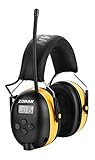
- Unrivaled Performance: Chip is the “brain” of an electronic product. The ZOHAN EM042 AM/FM radio hearing protector features a brand new internal chip which offers the stablest and the most powerful radio reception. Though increasing performance of products, it reduces power consuming at the same time. So unlike other brand users, you will never complain about your muffs eating battery
- Effective Noise Reduction & OSHA Compliant:Certified with a 25dB NRR, these digital radio earmuffs provide dependable hearing protection and comply with OSHA safety requirements. Enjoy clear radio or podcast audio while staying focused in loud environments like mowing, woodworking, welding, snow blowing, landscaping, and other noisy tasks. A practical and thoughtful gift for anyone who works with loud tools or enjoys DIY projects
- Distinguished Comfort: We redefine the headband of muffs, and it’s wider, thicker, softer, and much more comfortable. The muff’s ear cushion are snap-in design, and we make them easy to replace. So unlike other brand user, you don’t need to worry about your cushions cracked, getting hard or dirty. It is easy to replace them and keep them dry, clean and comfortable
- Unbelievable Durability: Customers always complain some “BRAND” (literally) products always lost their volume control knob and tuning knob. These will never happen to ours, for our tuning system are push-button design and our volume controls are extremely reinforced. Besides, the material of our products are military grade, very sturdy and durable
- User-Friendly Design: Requires 2 AA batteries (NOT included), last a longer time (do NOT eat battery). Digital AM/FM tuning with LCD display. On the one hand, you could always know what the station it is, and on the other hand, the muffs store up to 10 AM and 10 FM station in memory, and manual tuning and auto scanning make it easy for you to find and save your favorite stations. Please read the user manual, it will be easy for you to operate this radio headset
The figures below come from NCCIH’s summaries of individual reviews and trials. Each one is tied to its population and outcome, and none measures how powerful music is in general. The sources do not provide a general population statistic for music’s emotional effect.
| Review or trial (year as NCCIH reports it) | Population and size | What NCCIH reports, with its qualification |
|---|---|---|
| Review of music-based interventions for acute or chronic pain (2016) | 97 studies, 9,184 participants | Possible benefits for pain intensity and emotional distress, and possible reductions in use of pain-relieving medicine. Described as an overall review finding. |
| Review of music-based interventions for chronic pain (2017) | 14 randomized trials, 1,178 participants | Reduced self-reported pain and associated depressive symptoms. The effect was greater when participants chose the music rather than investigators choosing it. |
| Review of music interventions for adults with cancer (2021) | 81 trials, 5,576 participants | Possible benefits across anxiety, depression, pain, and quality of life. Described as review findings, not guaranteed outcomes. |
| Multinational music-therapy trial in children with autism spectrum disorder | 364 children across 9 countries | Social-communication symptom severity did not differ between music therapy plus standard care and standard care alone. Evidence quality is not stated in the NCCIH summary. |
| Analysis of rhythmic auditory stimulation for Parkinson’s disease (2021) | 5 studies, 209 participants | Significant improvement in gait speed and stride length. NCCIH notes low evidence quality and a small evidence base. |
Music therapy is a profession, not a playlist
NCCIH defines music therapy as a health profession in which music is used within a therapeutic relationship to address physical, emotional, cognitive, and social needs. The term refers to the education, training, and credentials of the therapist rather than to one specific intervention. Other health professionals also deliver music-based interventions that are not music therapy, and listening to a playlist alone does not automatically count as music therapy.
Known risks
- Volume: listening at excessive volume can contribute to noise-induced hearing loss.
- Distressing memories: music associated with strong memories may distress some people.
- Playing: extensive instrument playing can cause pain or injury.
How to read a music-and-health study
Five questions separate useful findings from overstated ones. The sources show that each matters, and none establishes a single best approach.
Quick Recap
- Is the music passive listening or active music-making?
- Did the person choose the music, or did researchers select it?
- Was the setting individual or group-based?
- Which outcome and which clinical population were studied?
- How strong is the evidence, and was a credentialed music therapist involved?
Product prices and availability are accurate as of the date/time indicated and are subject to change. Any price and availability information displayed on Amazon at the time of purchase will apply.