What’s actually slowing this PC down?
Pick the symptom - the matching free tool is one click away.
Peter makes Captain Hook say he is a codfish to humiliate him. In J. M. Barrie’s play, the taunt undermines Hook’s authority in front of his crew; in Disney’s 1953 film, Peter makes it the price of sparing Hook. It is a comic insult, not a literal description.
What does the codfish line mean?
Peter is forcing Hook to accept a humiliating label. Calling the feared captain “only a codfish” turns him into a figure of ridicule. The joke depends on the contrast between Hook’s grand self-image and the small, undignified role Peter assigns him.

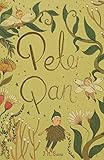
![Image de l'editeur PETER PAN [Mar 01, 2017] Barrie, Sir J. M.](https://m.media-amazon.com/images/I/51IpzIsUkyL._SL160_.jpg)


How does the scene work in Barrie’s play?
In Act 3 of J. M. Barrie’s Peter Pan; or, the Boy Who Would Not Grow Up, Peter uses mimicry to confuse Hook. When Hook demands to know who is speaking, Peter answers in Hook’s voice and calls him “A codfish, only a codfish.” The insult lands publicly: Barrie says Hook’s “proud spirit broke,” and the crew draws back from its captain. Peter’s trick therefore attacks not just Hook’s pride but his standing as leader. Read the Act 3 text of Barrie’s play.
Why does Hook say it in Disney’s 1953 film?
The film makes the humiliation more explicit. In the final exchange, Hook begs Peter to spare him and promises to do anything. Peter agrees on the condition that Hook say, “I’m a codfish.” Hook complies, and Peter tells him to say it louder. Disney’s official quote page records Hook’s line as “I’m a codfish.” Disney’s Peter Pan quotes page lists the quotation; a secondary transcript gives the fuller sequence.
#1 Best Overall
How the play and film differ
| Version | How the line is used | Effect on Hook |
|---|---|---|
| Barrie’s play | Peter impersonates Hook and calls him “A codfish, only a codfish.” | The crew hears the insult and begins to doubt Hook’s authority. |
| Disney’s 1953 film | Peter makes Hook say “I’m a codfish” as a condition of being spared. | Hook has to voice his own humiliation as part of surrendering. |
Is “codfish” a traditional insult?
The cited scenes establish what the word does in these moments: it is Peter’s deliberately belittling taunt. They do not establish a broader historical origin or settled etymology for “codfish” as an insult, so the scene’s dramatic purpose is the clearest explanation.
Quick Recap
Rank #4
Product prices and availability are accurate as of the date/time indicated and are subject to change. Any price and availability information displayed on Amazon at the time of purchase will apply.




