Free tools Windows power users keep installed
One-click scans. No signup required.
Streamers wear headphones so they can hear the game, chat, alerts and other audio without sending sound from room speakers back into the microphone. Headphones make it easier to control what the streamer hears and catch problems, but they are not a platform requirement—and they cannot fix every audio-routing mistake.
What headphones do in a streaming setup
Headphones are a private listening and monitoring device. They let a streamer hear the show without relying on speakers in the room, which reduces the chance that game sound, music, alerts or another person’s voice will be picked up by the microphone.
A useful way to picture the setup is as two related paths:
- Listening path: game, chat, alerts and other sources are mixed or routed to the streamer’s headphones.
- Broadcast path: microphone and captured audio sources are mixed in streaming software and sent to viewers.
The paths can differ. Hearing a game through a headset does not prove that the game audio is reaching the stream, and hearing a microphone through software monitoring does not prove that its level is right in the final broadcast.
What’s actually slowing this PC down?
Pick the symptom - the matching free tool is one click away.
#1 Best Overall

- Immersive 7.1 Surround Sound: This gaming headset delivering stereo surround sound for realistic audio. Whether you're in a high-speed FPS battle or losing yourself RPG adventures, this Ps5 headset provides crisp treble, punchy bass, and precise directional cues, giving you a competitive edge
- Great Humanized Design: Comfortable and breathable permeability protein over-ear pads perfectly on your head, adjustable headband distributes pressure evenly, you’ll enjoy lasting comfort during hours of gaming and suitable for all gaming players of all ages
- Sensitivity Noise-Cancelling Microphone: 360° omnidirectionally rotatable sensitive microphone, premium noise cancellation, sound localisation, your voice comes through loud and natural, ensuring your teammates catch every callout, even in chaotic battle scenes.
- Universal Compatibility: This gaming headphone support for PC, Ps5, Ps4, Xbox one, Xbox Series X/S, Switch, Laptop, Mobile Phone and other devices with 3.5mm jack.Note 1: When you use headset on your PC, be sure to connect the "1-to-2 3.5mm audio jack splitter cable" (Red-Mic, Green-audio). (Please note you need an extra Microsoft Adapter when connect with an old version Xbox One controller)
- Cool style gaming experience: Colorful RGB lights create a gorgeous gaming atmosphere, adding excitement to every match. Heightening immersion for FPS, MOBA, and action titles. These eye-catching lights give your setup a gamer-ready look while maintaining focus on performance. (*Note: The USB connector is for LED lighting only)
How headphones help prevent echo and microphone bleed
If a streamer plays game audio through speakers, a nearby microphone can pick up that sound and send it back into the broadcast. Viewers may hear the game twice, along with a delayed echo, or—in a poorly configured setup—feedback. Headphones avoid that common speaker-to-microphone loop by keeping the listening audio close to the streamer’s ears rather than filling the room.
They reduce the risk; they do not guarantee isolation. Sound can still leak from headphones, especially at high volume or with open-back designs. The result also depends on how sensitive the microphone is, its pattern and position, the room, and how well the headphones seal. Twitch’s broadcasting guidance describes cardioid microphones as favoring sound in front of the mic and picking up less from the sides and rear, but placement still matters (Twitch Sports: Getting Started).
- Place the microphone close to your mouth instead of turning up its gain from farther away.
- Keep headphone volume only as high as needed to hear clearly.
- Consider closed-back headphones when preventing leakage is a priority.
- When diagnosing bleed, temporarily disable a noise gate or other processing that could hide it, then make a short test recording.
Headphones address acoustic leakage, not duplicate software sources. Echo can persist if a live stream is playing on another device, a microphone or desktop source is captured twice, or the same game audio enters OBS through both a capture card and another source.
What streamers listen to
A streamer’s headphones may carry several sources at once. Depending on the setup, that can include:
Rank #2

- Enjoy expansive cinematic sound. Big 50 mm audio drivers deliver an incredible sound experience
- Hear Enemies From All Sides. DTS Headphone:X 2.0 surround sound(1) lets you hear enemies sneaking behind you, special ability cues, and immersive environments. It’s positional clarity that can make the difference between victory and defeat. Experience three-dimensional audio that goes beyond 7.1 channels to make you feel like you’re right in the middle of the action. (1) DTS Headphone:X 2.0 requires Logitech G HUB Software.
- Be Heard Loud and Clear. The big 6 mm boom mic makes sure you’re heard by gaming partners and mutes when flipped up.
- Use One Headset For Most Game Platforms. Your headphones work with your PC or Mac via USB DAC or 3.5 mm cable, mobile devices with 3.5 mm cable or with gaming consoles including PlayStationⓇ 5 and PlayStationⓇ 4 (USB wireless stereo sound only), Nintendo Switch (wireless stereo sound when docked)
- Game for Hours in Comfort. Everything about these headphones is about comfort: The deluxe lightweight leatherette ear cups and headband are made to keep pressure off your ears. Ear cups rotate up to 90 degrees for convenience.
- Game or application audio, including quiet environmental cues.
- Discord, console party chat, teammates, co-hosts or guests.
- Music, browser audio, sound effects and viewer alerts.
- The streamer’s own microphone, heard through sidetone or monitoring.
- A reference mix of the program being sent to the stream.
That private mix helps a streamer notice a teammate speaking, an alert firing or a sound becoming distorted. It is also a way to check whether the microphone is muted, too quiet, clipping, picking up unwanted noise, or being processed too aggressively. Not everyone wants to hear their own voice continuously; a noticeable delay can make it sound doubled or like a short slapback.
Listening locally is not the same as verifying the viewer mix. For example, a console headset may deliver game audio to the streamer while OBS receives none. OBS recommends listening both early in the signal path and as audio reaches OBS through Audio Monitoring; its guide locates the monitoring controls at Edit → Advanced Audio Properties. Available choices and device labels can vary by operating system, hardware and OBS version. Use a short recording or a private or unlisted stream to confirm what actually reaches the output (OBS Audio Mixer Guide).
Direct monitoring, sidetone and software monitoring
These terms describe different ways to hear a microphone or other input:
- Direct hardware monitoring: An audio interface or microphone sends the input to headphones before it travels through the computer’s processing path. It is generally very low latency, though the exact experience depends on the equipment and routing.
- Headset sidetone: The headset feeds some of the microphone signal back to the wearer. This can make it easier to speak naturally without hearing the room only through sealed earcups.
- Software monitoring: An application such as OBS sends an input back to the headphones after it enters the software path. This is useful for checking a processed signal, but processing and routing may add delay.
If your voice sounds late, first check whether you are monitoring through OBS, a digital mixer loopback, or a wireless connection rather than a direct hardware path. Turn off software monitoring if it is not needed, or use the microphone or interface’s direct-monitor output when available. Do not use the delayed audio from the live stream as your own voice monitor.
Crashes, No Sound, or Screen Glitches?
Random freezes, missing sound and display glitches usually trace back to one bad driver. Find and replace yours safely.Free scan · under a minuteWindows Errors? Fix Them Before They Spread
Repair common Windows errors and clear accumulated junk for a smoother, more stable PC - no reinstall needed.Free scan · no reinstallRank #3

- JBL QUANTUMSOUND SIGNATURE: From the faintest footsteps to the loudest explosion, this wired gaming headset puts you at the center of every scene—immersive, accurate audio that turns every match into a competitive edge.
- DETACHABLE DIRECTIONAL MICROPHONE: Rally your squad without repeating yourself. The voice-focus directional microphone detaches when you're flying solo and includes a mute option—because this mic headset knows when to talk and when to stay quiet.
- MEMORY FOAM COMFORT: Marathon sessions hit different in these over-ear headphones—lightweight build, breathable fabric ear cushions, and memory foam padding keep you locked in without the fatigue. Game longer. Complain less.
- SPATIAL SOUND COMPATIBILITY: Hear exactly where sound is coming from. This wired headset is fully compatible with Windows Sonic spatial sound on Windows 10 PCs and Xbox ONE—so the game world feels like it's happening around you.
- CROSS-PLATFORM READY: One 3.5mm jack, every platform—PC, PlayStation, Xbox, Nintendo Switch, Mobile, Mac, and VR. This cross-platform gaming headset goes wherever the game is.*
Do you need headphones to stream?
No. Headphones are a quality-control tool, not a streaming-platform requirement. Twitch says a creator can stream without a microphone or camera, while noting that audience interaction is an important part of the experience; it does not make headphones mandatory either (Twitch streaming FAQ).
Whether they are useful depends on the room and the kind of stream:
- Competitive or multiplayer gaming: Headphones are especially useful for game cues and teammate chat, and they avoid using room speakers next to the microphone.
- Console streaming with a capture card: Headphones help the streamer monitor game and party audio, but the console, headset and capture-card routing must still be configured so viewers receive the intended sound.
- Podcast, interview or co-stream: Headphones help prevent remote guests from coming out of speakers and feeding back into the host microphone.
- IRL or event streaming: One earcup partly off can help the streamer hear people and production cues nearby, but it offers less isolation and makes it harder to judge the stereo mix.
- Single-player stream in a controlled room: Speakers can work if they do not cause microphone pickup or echo and the streamer verifies the recorded mix.
Using a standalone microphone does not remove the value of headphones. A separate mic can offer more placement and upgrade flexibility, but a sensitive mic may also capture room reflections, keyboard noise, fans and speaker sound. Research on livestreaming setups from the University of California San Diego describes headset and webcam microphones as convenient, lower-fidelity options, while separate XLR setups allow more modular upgrades and additional audio hardware (UC San Diego livestreaming setup research).
Choose headphones for the setup, not the camera
| Type | Good fit | Trade-offs |
|---|---|---|
| Closed-back headphones | Reducing outward leakage near a microphone; gaming or monitoring in a noisy room. | Isolation and comfort vary by model; they can feel warm or tight during long sessions. |
| Open-back headphones | Quiet rooms and listeners who prefer a more spacious presentation or less of a sealed feeling. | Sound leaks out and can reach a nearby mic, so they are a weaker choice when isolation matters. |
| Wired headphones | Simple, predictable monitoring without battery management. | Cables restrict movement and may require an adapter or interface. |
| Wireless headphones | Freedom of movement and gaming systems with integrated chat controls or sidetone. | Require charging and can involve more routing complexity or latency. Bluetooth and dedicated wireless gaming connections are not interchangeable; check model-specific latency and compatibility rather than assuming all wireless sets behave alike. |
| Gaming headset | A straightforward all-in-one setup with headphones and a boom microphone. | Convenience may come at the cost of microphone choice and independent upgrade flexibility; individual headset mics vary. |
| Headphones plus USB microphone | Desktop streamers who want separate listening and vocal-capture devices without an XLR interface. | Requires more desk space and correct software routing. |
| Headphones plus XLR microphone and interface | More advanced setups needing separate gain control, routing and hardware monitoring. | Costs more and adds configuration, cables and equipment. |
| In-ear monitors | A low-profile option with strong isolation and less heat around the ears. | Fit and comfort are personal, and cables can be inconvenient. |
Active noise cancellation helps the wearer hear in a noisy environment, but it does not automatically stop headphone audio from leaking into a microphone. If bleed is the concern, passive isolation, headphone volume and mic placement matter more directly.
Do these 3 things before closing this tab:
1Scan for outdated or missing drivers - takes under a minute2Repair Windows errors before they cause bigger problems3Fix the driver behind crashes, sound loss and screen glitchesRank #4
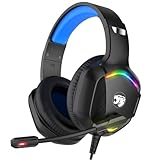
- 【Multi-platform Compatible】 Gaming headset with microphone for PC, PS4, PS5, Xbox One Series X/S (older version requires adapter), Nintendo 3DS, Switch, Laptop, PSP, Tablet, iPad, Computer, Mobile Phone, 3.5mm jack device.
- 【Surrounding Stereo Subwoofer】 Gaming headset with high power 50mm neodymium magnet drivers, greatly enhance the expressiveness and sense of depth of voice playback details, powerful sound quality provide you immersive gaming experience.
- 【Noise Isolating Microphone】Headset integrated onmi-directional microphone can transmit high quality communication with its premium noise isolating function, which enables you to clearly deliver or receive messages while you are in a gamer.
- 【Humanised Design】 Soft and skin-friendly ear cushions, flexible headband with thickening pads, headset weight is only 0.77lb, lightweight and comfortable design provides you with a long-lasting excellent gaming experience.
- 【Professional Gaming Headset】Gaming headphones with 6.5ft high tensile strength, anti-tangle braided cable, rotary volume control and button microphone mute.
Set up and check the audio path
- Connect the listening device to the source you intend to monitor. Decide whether game and chat audio should come from the PC, console, capture setup or interface. On consoles, plugging in a headset can change where game audio is sent; the right arrangement depends on the console, capture card and connection points.
- Confirm that each source enters the broadcast mixer. In OBS, watch the mixer meters while game audio, chat and microphone audio are active. A sound heard in your headphones may not be entering OBS. OBS warns that audio reaching the final stream or recording must stay below 0 dBFS to avoid clipping and audible distortion (OBS Audio Mixer Technical Details).
- Listen to the OBS mix deliberately. In OBS, open Edit → Advanced Audio Properties and configure Audio Monitoring for the sources you need to check. Monitoring is not proof that the broadcast is correct; make a short recording or private test and listen back.
- Keep capture paths distinct where possible. On Windows 10 version 2004 or later and Windows 11, OBS documents per-application audio capture. Application audio capture is also available as part of Window Capture or Game Capture starting with OBS Studio 30.1. Separate sources can make independent control and separate recording or VOD tracks easier; these version-specific capabilities are described in the OBS Application Audio Capture Guide.
- Test at the volume and mic position you will actually use. Listen for game sound leaking into the microphone, clipping, missing chat or a doubled source. A gate can mask bleed in a test, so diagnose with processing disabled before deciding whether the room and placement are under control.
Troubleshoot common headphone and stream-audio problems
The microphone picks up game sound
- Check whether the game is playing through external speakers as well as headphones.
- Lower headphone volume to the minimum that still gives clear cues.
- Move the microphone closer to your mouth and point it correctly; avoid compensating for a distant mic by raising gain.
- Check for a loopback or duplicate desktop-audio source, then make a test recording.
You hear the game, but viewers do not
Check whether the game is routed only to a headset or controller, whether OBS is capturing the correct device, and whether the relevant mixer source is muted. With a console, verify that audio is reaching the capture card as well as the headphones. Use OBS’s mixer meters to confirm that the source enters the broadcast path rather than relying on what you hear locally.
Viewers hear an echo
Look for a live preview playing on a second device, duplicate microphone or desktop sources, the same game audio arriving through two capture paths, or OBS monitoring routed back into the broadcast. Also check whether someone in the room is listening through speakers. Headphones can remove the speaker-to-mic cause, but not software duplication.
Your voice sounds delayed
Check for OBS software monitoring, Bluetooth or wireless processing, digital-mixer loopback, or plug-ins adding latency. Turn off monitoring that you do not need, use direct monitoring from the microphone or interface when available, and avoid listening to your voice through the live stream.
Game audio disappears when a console headset is connected
Some consoles change their audio output when a headset is plugged in. The console may send sound only to the headset while the capture card receives none. The remedy depends on the console, capture card, chat adapter and where the headphones connect; check the routing for that specific setup rather than applying a universal fix.
Best Value

- 【Multi-Platform Compatible】Support PlayStation 4, PlayStation 5, Xbox, Xbox Series X|S, Xbox One, PC, Nintendo 3DS, Laptop, PSP, Tablet, iPad, Computer, Mobile Phone. Please note you need an extra Microsoft Adapter (Not Included) when connect with an old version Xbox One controller.
- 【7.1 Surround Sound】Clear sound operating strong brass, splendid ambient noise isolation and high precision 40mm magnetic neodymium driver, acoustic positioning precision enhance the sensitivity of the speaker unit, bringing you vivid sound field, sound clarity, shock feeling sound. Perfect for various games like Halo 5 Guardians, Metal Gear Solid, Call of Duty, Star Wars Battlefront, Overwatch, World of Warcraft Legion, etc.
- 【Noise Isolating Microphone】Headset integrated onmi-directional microphone can transmits high quality communication with its premium noise-concellng feature, can pick up sounds with great sensitivity and remove the noise, which enables you clearly deliver or receive messages while you are in a game. Long flexible mic design very convenient to adjust angle of the microphone.
- 【Great Humanized Design】Superior comfortable and good air permeability protein over-ear pads, muti-points headbeam, acord with human body engineering specification can reduce hearing impairment and heat sweat.Skin friendly leather material for a longer period of wearing. Glaring LED lights desigend on the earcups to highlight game atmosphere.
- 【Effortlessly Volume Control】High tensile strength, anti-winding braided USB cable with rotary volume controller and key microphone mute effectively prevents the 49-inches long cable from twining and allows you to control the volume easily and mute the mic as effortless volume control one key mute.
Headphones become uncomfortable
Clamp force, weight, pad material, heat and fit all matter in long sessions. Consider a lighter or less tightly fitting model, replaceable or more breathable pads, an on-ear or in-ear alternative, shorter breaks, and lower volume. A setup is not useful if it becomes painful to wear.
Headphone monitoring is not stream delay
Monitoring latency is the delay between an input and what the streamer hears locally. Stream delay is a buffer between an event and what viewers see. Headphones can affect the local listening path; they do not remove the platform’s delivery delay. Twitch says Partners can set native stream delay up to 15 minutes, while competitive streams may use much shorter delays (Twitch Stream Delay Help).
The practical takeaway
Headphones are mainly a way to hear the production mix privately while keeping room speakers out of the microphone. They are most valuable when game audio, chat or guests are loud, when the microphone is nearby, or when the streamer needs to catch audio problems in real time. Choose a design that suits the room and routing, then verify the actual broadcast with a recording: what reaches your ears and what reaches viewers are separate things.
Quick Recap
Product prices and availability are accurate as of the date/time indicated and are subject to change. Any price and availability information displayed on Amazon at the time of purchase will apply.

